
Description
Japanese Porcelain Teapot Possibly Kutani Geisha Scenic Decoration Red & Gold Early 20th Century
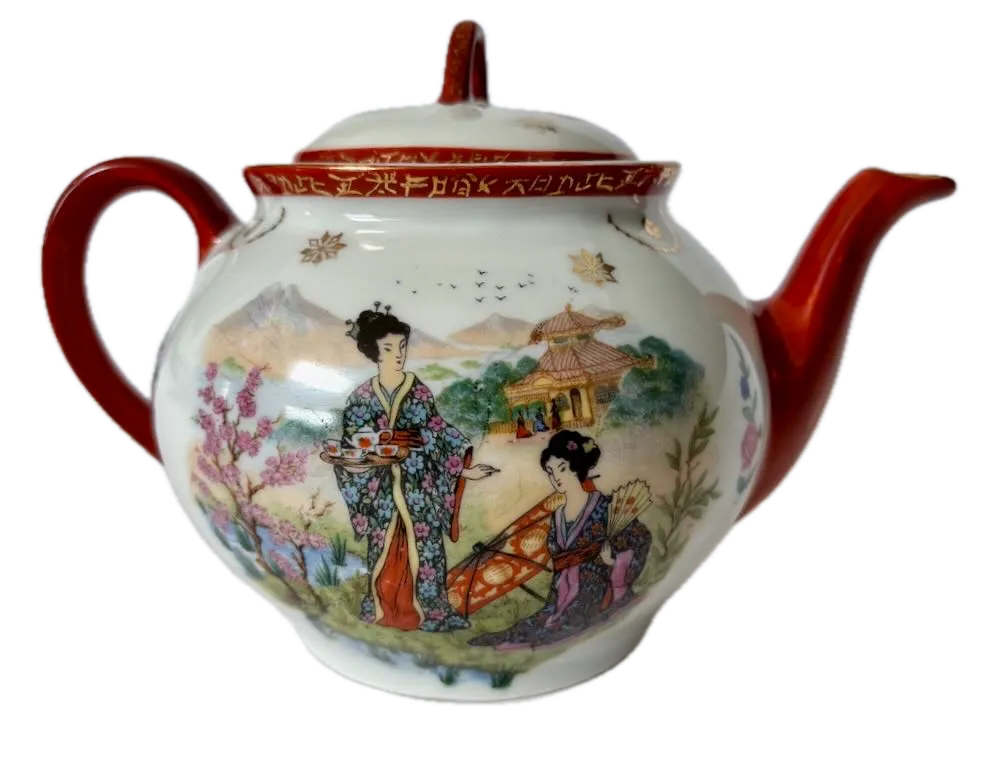
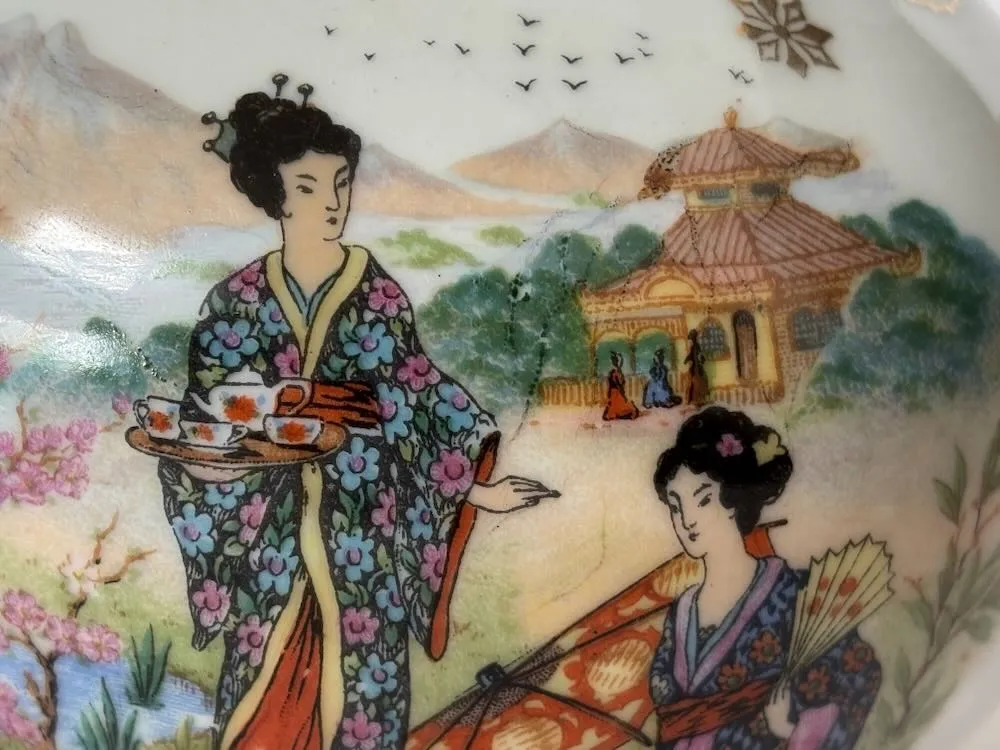
This Japanese porcelain teapot, possibly Kutani, features a finely detailed scenic composition with women in kimono (Geisha) set within a garden landscape of flowering trees, distant mountains, birds, and a pavilion. The imagery wraps naturally around the rounded body, creating a continuous and engaging scene.
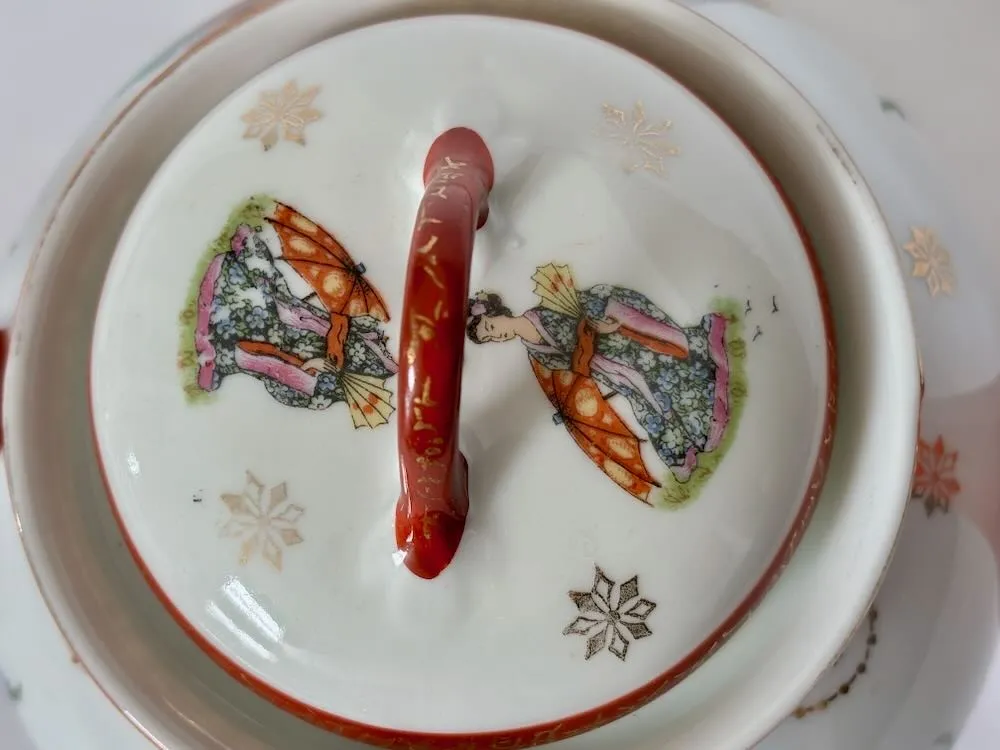
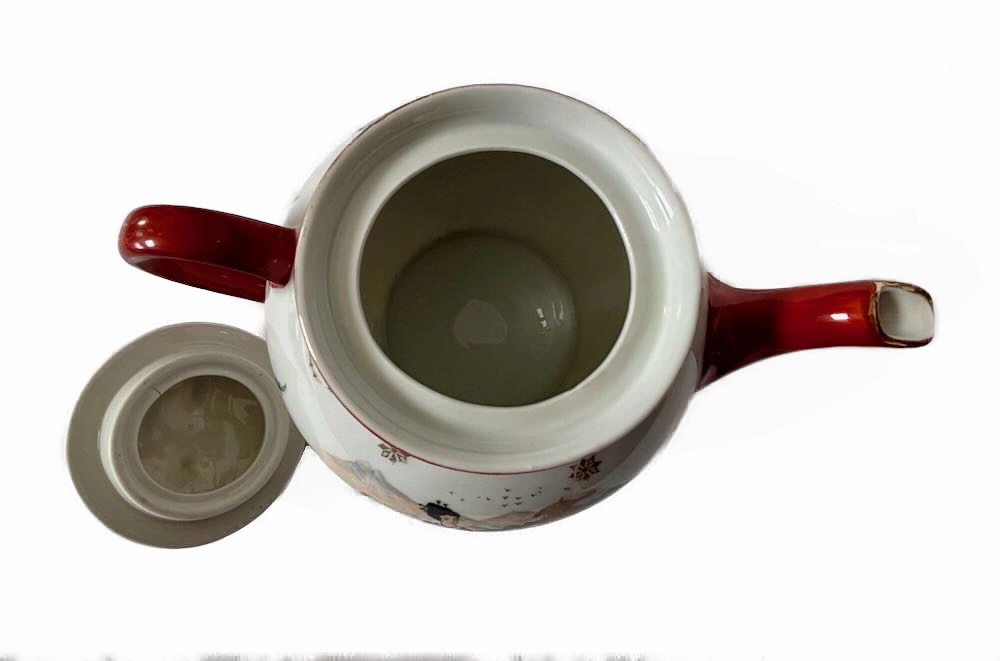
The piece is decorated with rich red accents to the handle, spout, lid, and rim, enhanced by repeating gold character motifs along the border. The combination of color, gilding, and composition gives the teapot a stronger decorative presence than more common examples, with a level of detail that stands out in display.
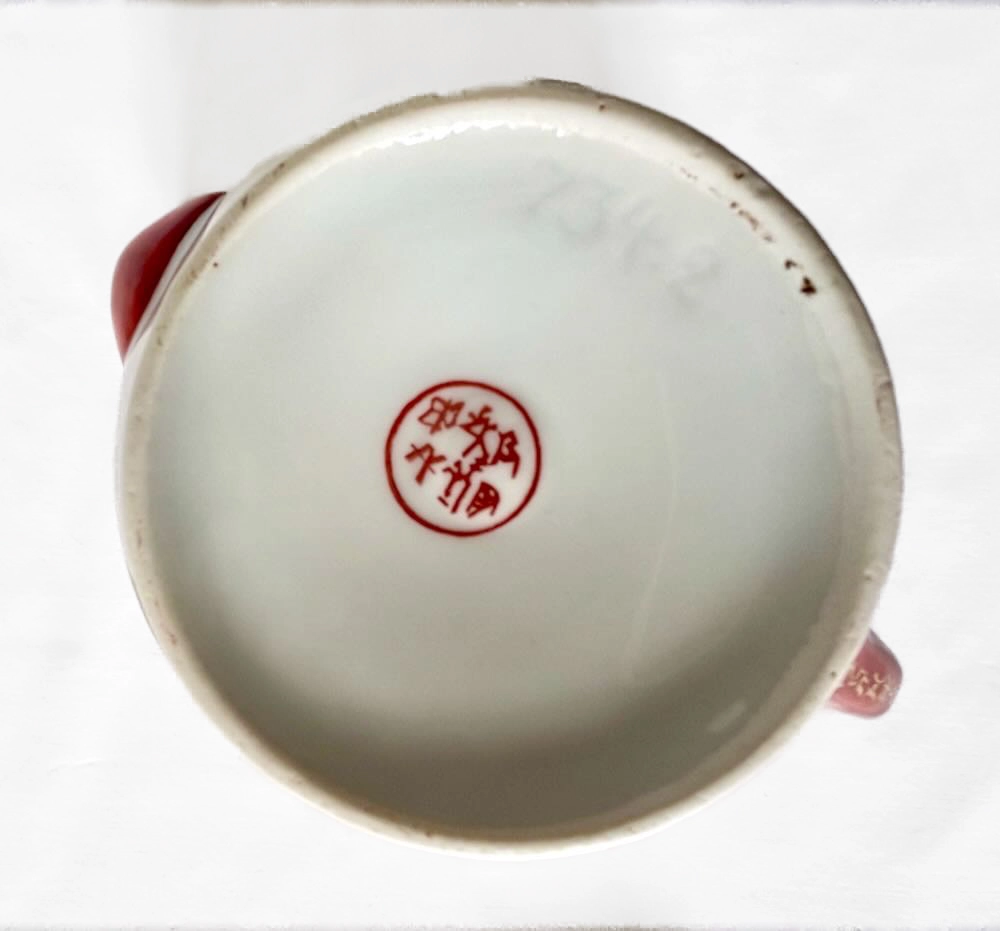
The base carries a red circular seal mark, consistent with Japanese studio production. Based on the palette, decoration, and mark type, the piece can reasonably be associated with Kutani work, likely produced for local or regional distribution rather than mass Western export.
The decoration appears to combine printed outlines with hand-applied color and gilt detailing. This technique was widely used in Japanese porcelain production to balance precision and artistry, resulting in pieces that retain both consistency and hand-finished character.
Artistic and Cultural Context
During the early to mid-20th century, Japanese porcelain workshops produced a wide range of scenic wares that reflected both domestic tastes and broader interest in traditional imagery. Garden scenes with elegantly dressed figures, architectural elements, and natural landscapes were especially popular, offering a stylized view of classical Japanese life.
Pieces such as this reflect that tradition, where composition, color, and narrative were carefully balanced to create visually appealing and highly decorative objects. The use of red and gilt borders, along with seal marks rather than Western export stamps, often suggests production aimed beyond purely mass-market export, with closer ties to local workshop practices.
Form and Decoration
The teapot has a balanced, rounded form with a well-proportioned spout and handle. The lid continues the figural decoration, visually linking it to the main body and reinforcing the continuity of the scene.
The composition is layered, with foreground figures set against a softer landscape background, creating depth. Gold detailing across the rim and decorative elements adds warmth and contrast, enhancing the overall presence of the piece.
Collecting and Display
Japanese scenic teapots of this type are appreciated both for their decorative qualities and their connection to early 20th-century porcelain traditions. They work particularly well as display pieces, whether as part of a broader Asian ceramics collection or as a standalone decorative object.
The combination of figural subject matter, architectural elements, and landscape detail gives this example strong visual appeal from multiple angles, making it suitable for shelf, cabinet, or tabletop presentation.
Condition
The teapot is in good vintage condition with no chips observed. The decoration remains vibrant with expected, light age-related wear.
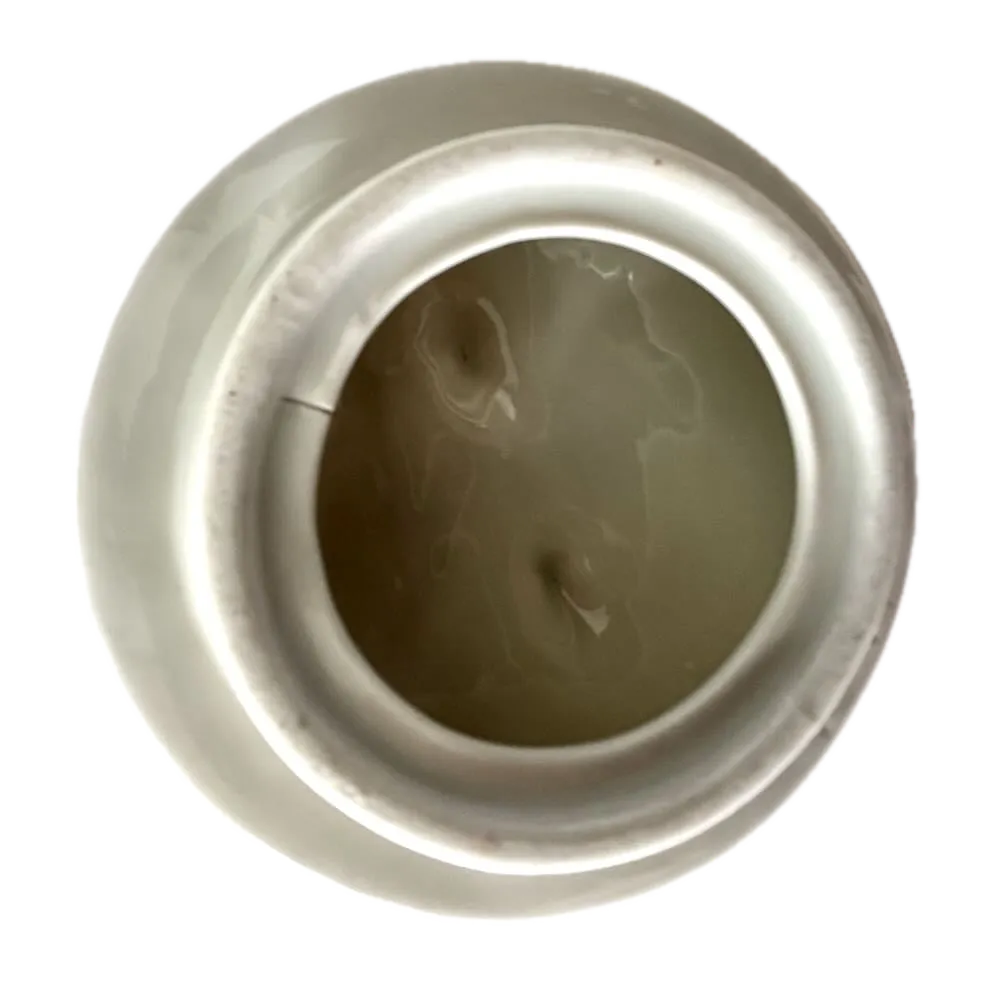
The lid shows a narrow, straight slit which appears smooth and regular rather than irregular like a typical crack. It is likely original to manufacture or an early production characteristic. Please review photos carefully as part of the condition description.