

Description
A Fine Early Persian Miniature Celebrating the Royal Game of Chogan
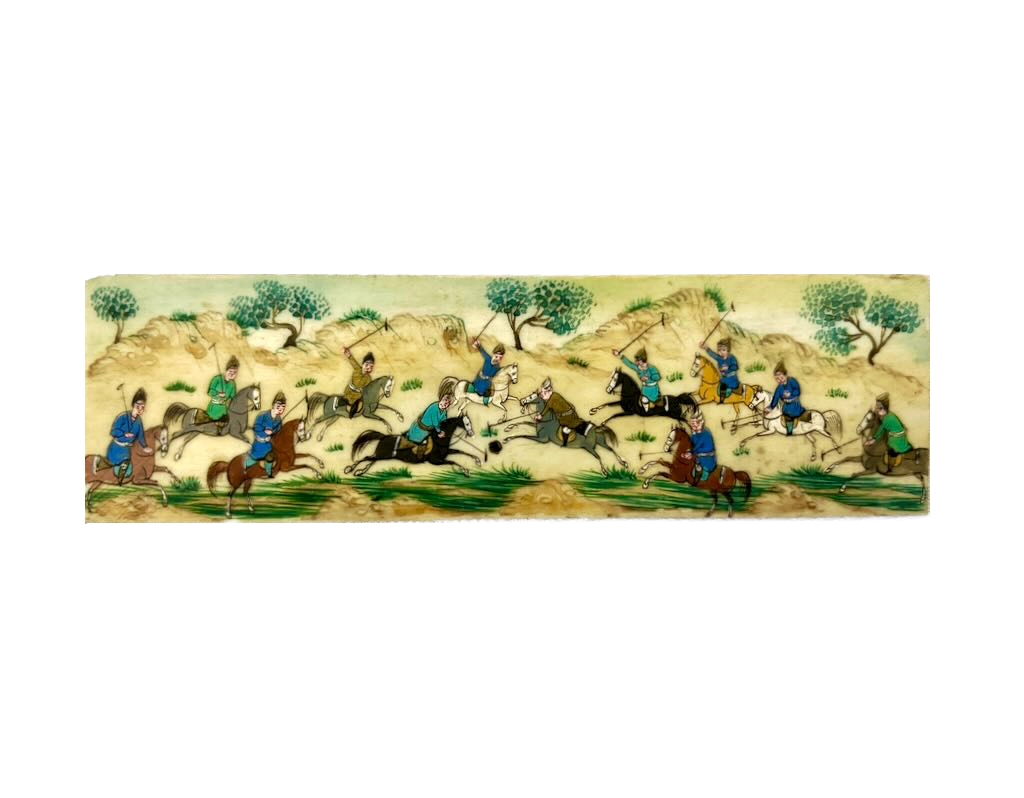
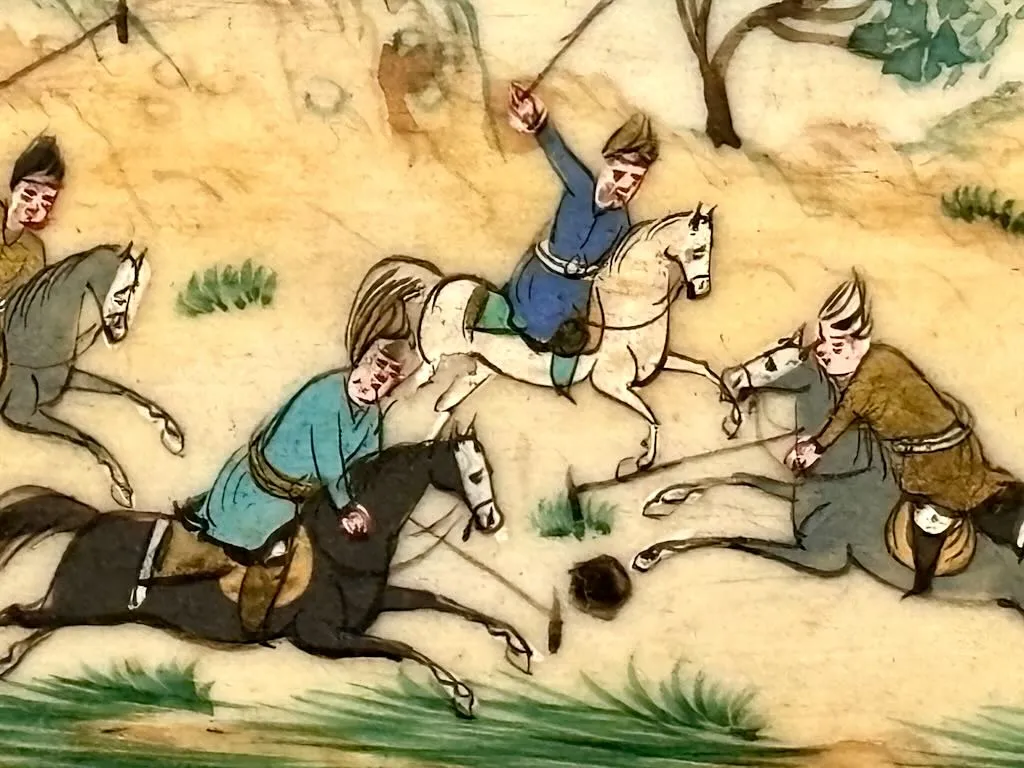
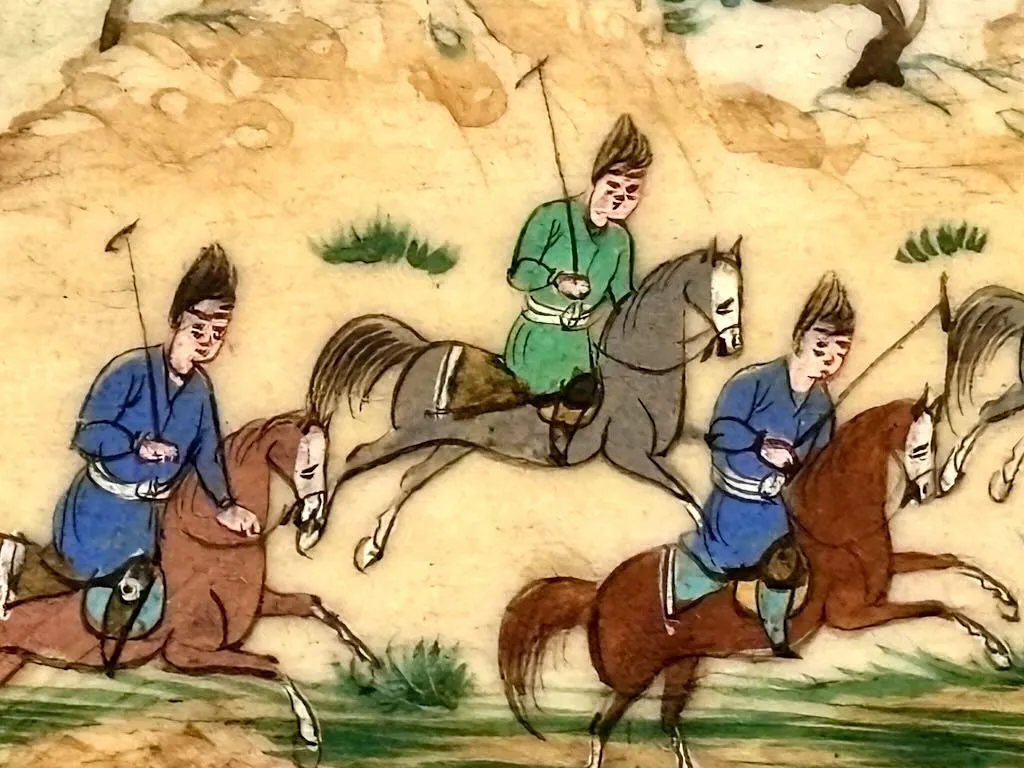
Persian miniature painting reached remarkable artistic heights through its ability to transform history, literature, and courtly life into beautifully detailed works of art. This early twentieth-century miniature depicts an energetic Chogan (Polo) match, one of Persia’s oldest and most celebrated royal sports. Painted by hand on a thin bone panel using delicate brushwork and traditional pigments, the composition captures mounted horsemen pursuing the ball across an open landscape with remarkable rhythm and movement.
Unlike many later decorative miniatures produced on synthetic ivorine, this example belongs to an earlier tradition. The thin natural bone support, refined drawing, restrained colour palette, and confident composition are all consistent with Persian workshop production dating to the early decades of the twentieth century. Acquired by the Bernardi family in Iran during the 1920s–1930s, it has remained in the family collection for nearly a century.
The artist conveys remarkable motion despite the miniature format. Each rider is shown from a different viewpoint, with galloping horses, raised mallets, and carefully balanced spacing that leads the eye naturally across the composition. Rolling hills, scattered shrubs, and a simple landscape provide an elegant backdrop while allowing the action of the game to remain the focal point.
Chogan: The Persian Origin of Polo
Known in Persian as Chogan, the game originated in ancient Iran and was closely associated with kings, princes, and members of the royal court. Long before polo became popular in Europe and elsewhere, Chogan served as both a competitive sport and a demonstration of horsemanship, military skill, and courtly refinement. Persian poets, historians, and miniature painters frequently celebrated the game, making it one of the most enduring themes in Persian art.
This miniature beautifully reflects that tradition. Rather than presenting a single dramatic moment, the artist depicts the continuous flow of play, allowing viewers to appreciate the coordination between horse and rider while enjoying the graceful rhythm that characterizes Persian miniature painting.
Painted on Natural Bone
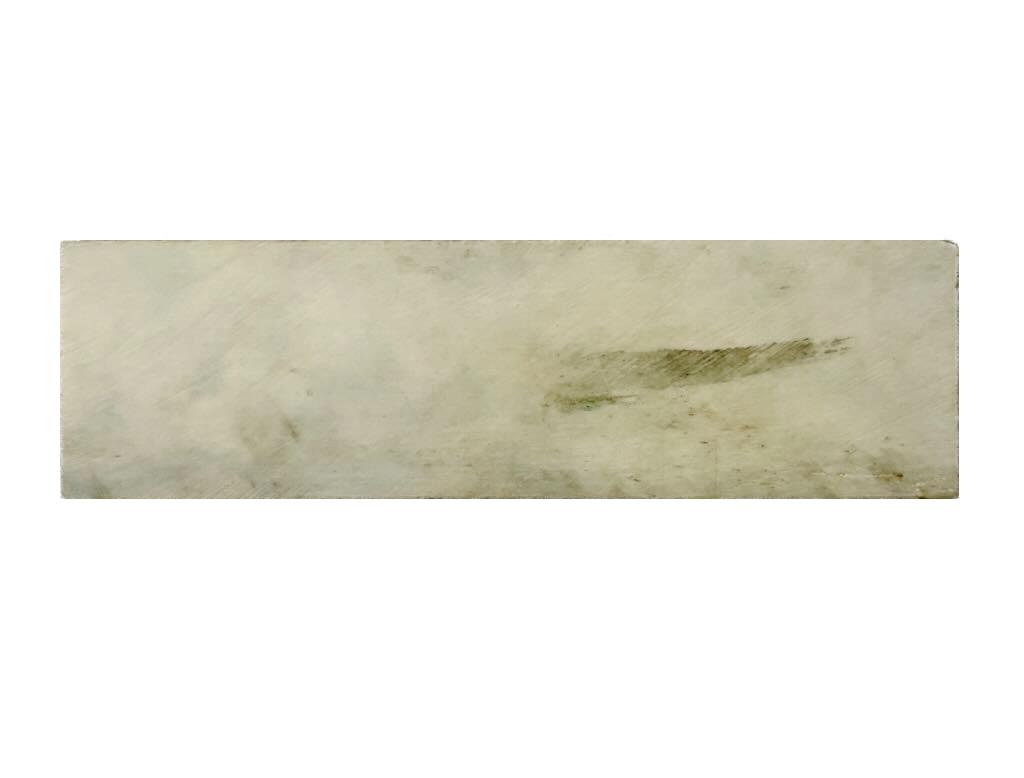
The miniature is painted on a carefully prepared natural bone panel measuring approximately 1.5 inches by 5.5 inches (3.8 × 14 cm). Bone provided artists with a smooth, durable surface capable of supporting exceptionally fine brushwork and subtle detail. The panel retains its original painted gold border, while the reverse displays the natural characteristics and age expected from an early twentieth-century example.
Collectors interested in the materials and techniques used by Persian miniature artists may also enjoy our companion article, Why Master Persian Miniature Artists Selected Bone, Ivory and Mother of Pearl, which explores the traditional painting surfaces used before synthetic substitutes became common.
Condition
The miniature remains in very good antique condition with beautifully preserved hand-painted detail and vibrant colours. Minor age-related wear, small surface marks, and natural variations in the bone are consistent with its age and authenticity. The reverse shows expected handling and storage marks accumulated over many decades. Please examine all photographs carefully as they form an important part of the description.