


Description
Vintage Wedgwood Lilac Jasperware Woman Leaning on Column Diamond Dish
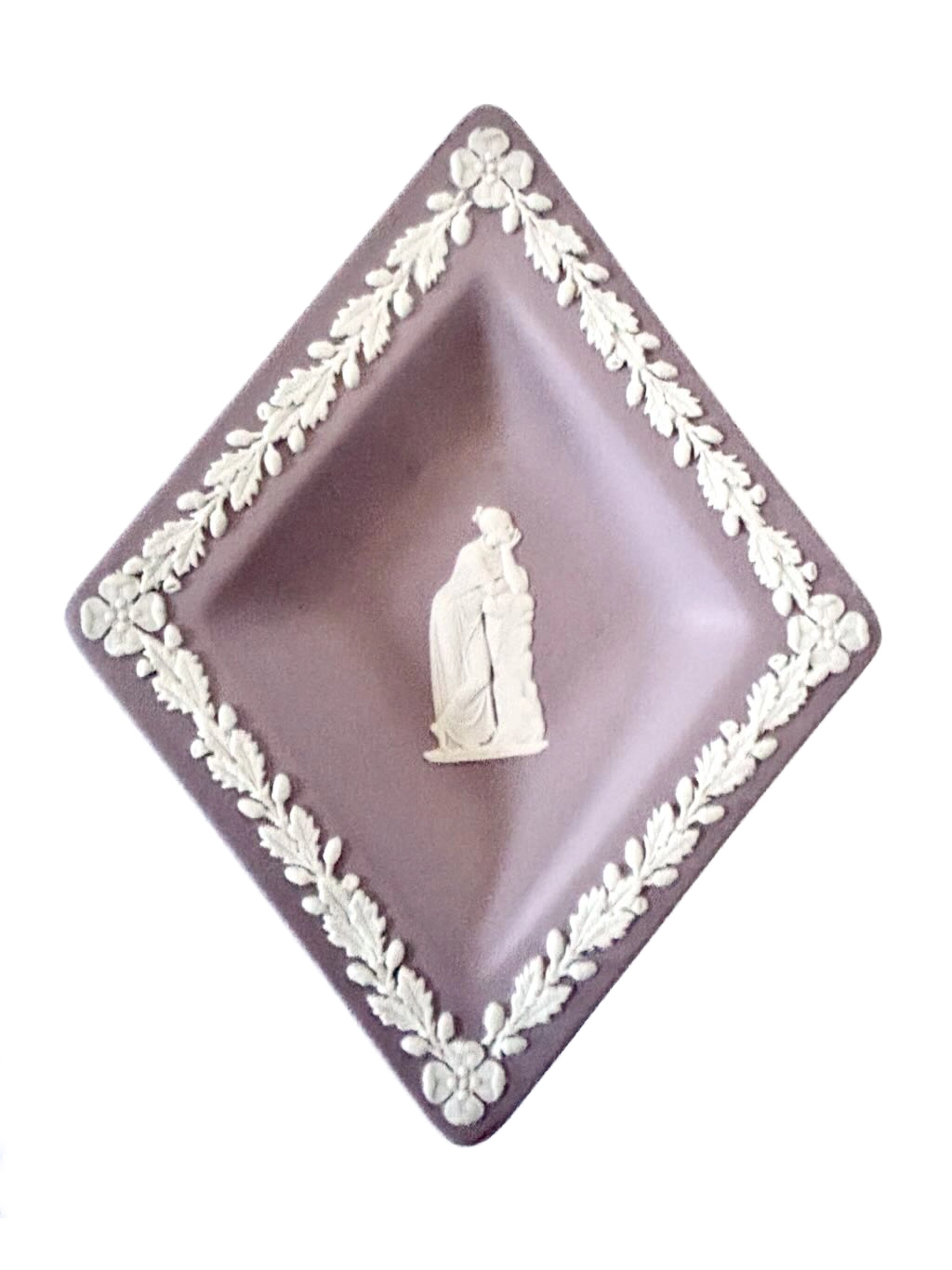
This Vintage Wedgwood Lilac Jasperware Diamond Dish combines an uncommon Jasperware color with a distinctive geometric shape and an elegant classical relief. The central white cameo depicts a draped female figure leaning thoughtfully against a column, a historic Wedgwood composition known as Woman Leaning on a Column.
An elaborate white garland of oak leaves and acorns follows the four sides of the dish, with small floral ornaments accenting each corner. The muted lilac ground provides a beautiful contrast to the delicate white relief, highlighting the sculptural details of the classical figure and surrounding botanical decoration.
Measuring approximately 5 7/8 by 4 1/2 inches, this vintage English dish offers an attractive alternative to Wedgwood’s more familiar round blue Jasperware pieces. Its unusual combination of color, shape and neoclassical ornament makes it a distinctive addition to a collection of English decorative ceramics.
Woman Leaning on a Column: A Classical Wedgwood Design
The central relief depicts a graceful female figure wearing flowing classical drapery. She stands beside a column or pedestal, resting her arm against it while assuming a contemplative pose.
The composition reflects the artistic ideals of Neoclassicism, which emphasized harmony, balance, simplicity and the graceful proportions associated with ancient Greek and Roman sculpture.
The design is historically documented as Woman Leaning on a Column, a descriptive title used for a Wedgwood cameo in the collection of the Metropolitan Museum of Art in New York.
Although similar figures are sometimes identified as Urania, the Greek Muse of Astronomy, or Melpomene, the Muse of Tragedy, this particular composition lacks the distinctive attributes needed to establish either identity conclusively.
Urania traditionally appears with a celestial globe or instruments associated with astronomy, while Melpomene frequently carries a tragic mask or other theatrical attributes. The absence of these identifying objects makes the more neutral historical title particularly appropriate.
Rather than assigning an uncertain mythological identity, the title Woman Leaning on a Column preserves the classical character of the design while reflecting its documented description.
Classical Female Figures in Neoclassical Art
Classical female figures became among the most recognizable subjects of eighteenth-century neoclassical decorative art. Artists frequently depicted women in flowing drapery, standing beside columns, resting against architectural elements or assuming thoughtful poses inspired by ancient sculpture.
These compositions often represented mythological figures, allegorical virtues or personifications of intellectual and artistic ideals. However, not every classical female figure was intended to portray a specifically identifiable goddess or Muse.
During the eighteenth century, archaeological discoveries and the growing study of Greek and Roman antiquities encouraged artists to reinterpret ancient sculptural forms. Classical drapery, architectural supports and restrained gestures became important elements of the neoclassical visual language.
The figure on this Wedgwood dish reflects these artistic conventions. Her gently inclined posture, flowing garments and architectural support create a balanced composition that conveys elegance and quiet reflection.
The simplicity of the design also makes it particularly effective as a small ceramic relief, where carefully modeled contours and subtle changes in depth must communicate the figure’s form.
Josiah Wedgwood and the Neoclassical Revival
Josiah Wedgwood (1730–1795) established his pottery business in Staffordshire, England, in 1759. Through technical innovation, artistic experimentation and a remarkable understanding of contemporary taste, he transformed English ceramic production.
During the second half of the eighteenth century, European interest in ancient Greece and Rome inspired a major revival of classical architecture, sculpture and decorative ornament. Wedgwood recognized the artistic and commercial possibilities of this movement and incorporated classical imagery into his ceramic designs.
He collaborated with talented artists and modelers, including John Flaxman, whose elegant interpretations of classical subjects became closely associated with Wedgwood’s artistic achievements.
Classical female figures, mythological scenes, ornamental garlands and designs inspired by ancient engraved gemstones became recurring features of Wedgwood ceramics.
These decorative subjects helped establish the company’s reputation for refined neoclassical design, a tradition that continued through successive generations of production.
The Development of Wedgwood Jasperware
Among Josiah Wedgwood’s most important achievements was the development of Jasperware, introduced during the 1770s after extensive experimentation with ceramic materials.
This distinctive unglazed stoneware provided an exceptionally effective background for finely modeled relief decoration. Its matte surface and contrasting colors allowed Wedgwood to reproduce the appearance of ancient carved cameos and classical sculptural ornament.
The technique proved particularly suitable for small classical figures, medallions, plaques and decorative dishes.
Wedgwood produced Jasperware in several colors, including blue, green, black, yellow and lilac. Although the company’s characteristic pale blue became its most recognizable color, other shades offered collectors a wider range of decorative possibilities.
The present dish continues this historic tradition, combining a classical relief with a colored Jasperware ground and carefully modeled white ornament.
The Appeal of Lilac Wedgwood Jasperware
One of the most distinctive characteristics of this dish is its lilac Jasperware ground. Less commonly encountered than traditional Wedgwood blue, lilac offers a softer and more unusual expression of the company’s neoclassical aesthetic.
The muted purple tone provides a beautiful background for the white applied relief. Its subtle warmth complements the classical female figure while allowing the detailed oak-leaf garland to remain clearly visible.
Unlike glazed ceramics, Jasperware has a characteristic matte surface that emphasizes the sculptural quality of its decoration. The contrast between the smooth lilac ground and the raised white ornament creates depth without relying on painted detail.
For collectors interested in the different colors of Wedgwood Jasperware, this lilac example offers an attractive variation on the company’s familiar decorative tradition.
Distinctive Diamond-Shaped Design
The diamond shape gives this Wedgwood dish an unusual appearance that distinguishes it from conventional circular pin trays.
Its four gently rounded corners and shallow recessed center create a balanced geometric form. The classical figure occupies the open interior, while the ornamental border follows the angled sides.
This arrangement provides an effective setting for the upright female figure. The diamond-shaped outline creates a sense of movement around the otherwise restrained composition, while the symmetrical border emphasizes the dish’s geometric character.
The form also makes the dish particularly attractive for display, whether arranged individually or alongside other Wedgwood Jasperware pieces in different shapes and colors.
Oak-Leaf and Acorn Garland Border
An elaborate white oak-leaf and acorn garland decorates the four sides of the dish. The continuous relief features deeply modeled oak leaves, small acorns and intertwining stems, while delicate floral ornaments accent the four corners.
The oak has held symbolic importance since antiquity. In Greek mythology, it was particularly associated with Zeus, while Roman tradition connected the oak with Jupiter. Its strength and longevity made it an enduring symbol of endurance, stability and honor.
Oak-leaf wreaths also appeared frequently in classical decorative art. The Romans used the corona civica, or civic crown, made from oak leaves, to recognize acts of exceptional service.
The oak garland on this Wedgwood dish reflects the broader neoclassical tradition of incorporating botanical ornament inspired by antiquity.
The crisp white relief contrasts beautifully with the lilac ground, emphasizing the individual leaves and acorns. The floral ornaments at the corners complete the decorative frame and give the diamond-shaped dish a harmonious appearance.
Wedgwood Made in England Backstamp
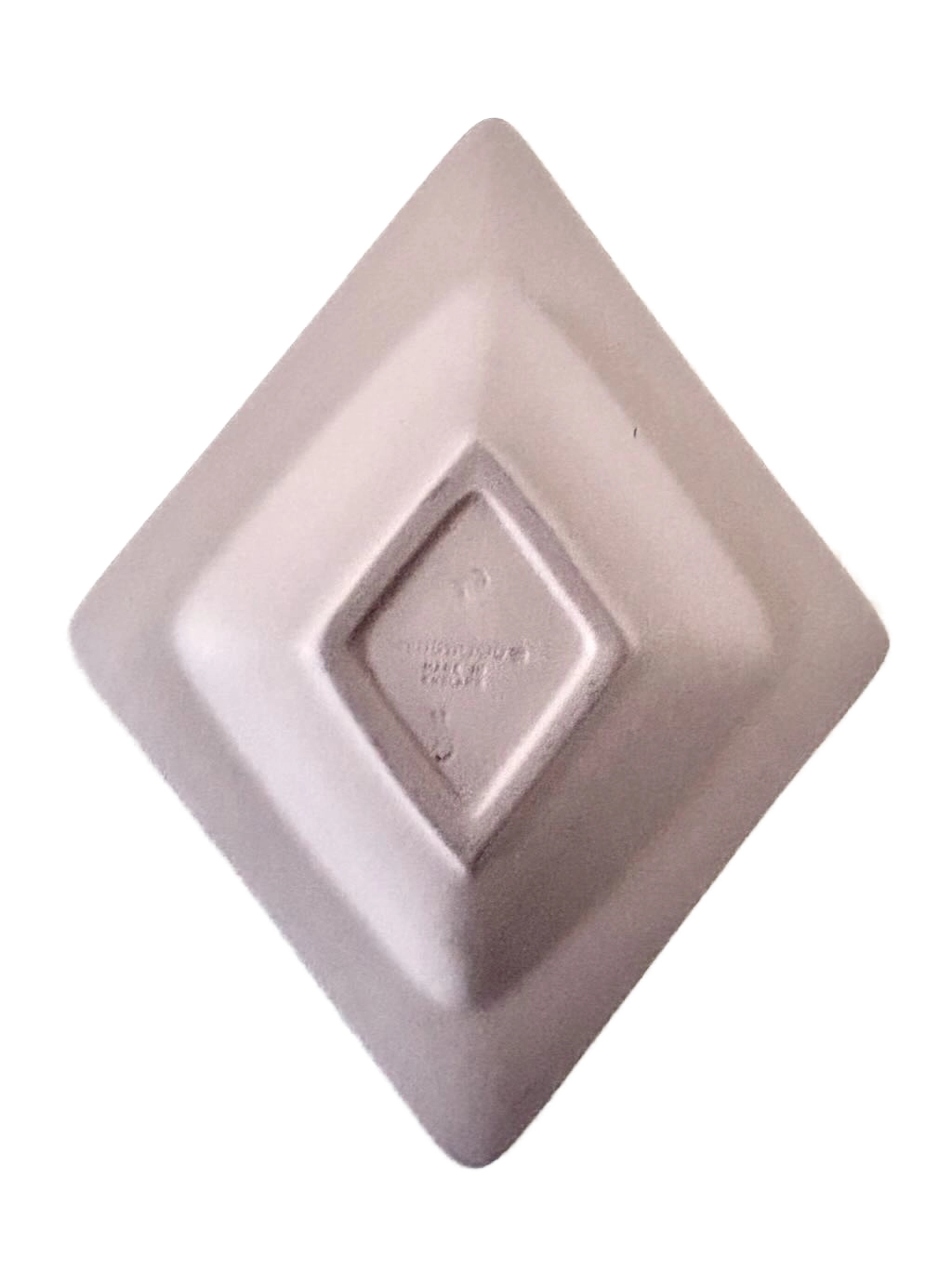
The underside bears the impressed WEDGWOOD® / MADE IN ENGLAND mark, confirming its manufacture by the English pottery company.
The dish appears consistent with later twentieth-century Wedgwood production, possibly dating from the 1960s or 1970s. However, an exact manufacturing year has not been established.
The classical inspiration behind the central relief reaches back to Wedgwood’s eighteenth-century neoclassical tradition. A historic Wedgwood cameo depicting Woman Leaning on a Column is preserved in the Metropolitan Museum of Art’s collection.
The present dish represents a later interpretation of this longstanding decorative subject, demonstrating the continued appeal of classical imagery in Wedgwood ceramics.
Condition and Collectible Appeal
This vintage Wedgwood lilac Jasperware dish remains in good condition, free of chips, cracks or damage. The white classical relief and surrounding oak-leaf garland present attractively against the muted lilac ground.
Its carefully modeled decoration, distinctive diamond shape and less commonly encountered color contribute to its decorative appeal. Please examine the photographs for details of the condition and the impressed manufacturer’s mark.
The combination of an unusual Jasperware color, geometric form and historically documented classical subject makes this dish an appealing addition to a collection of English decorative ceramics.
It would display beautifully alongside other Wedgwood Jasperware pieces, particularly examples in the company’s more familiar blue and green colors.


