
Description
Vintage Persian Chlorite Sgraffito Bowl with Persepolis-Inspired Carvings
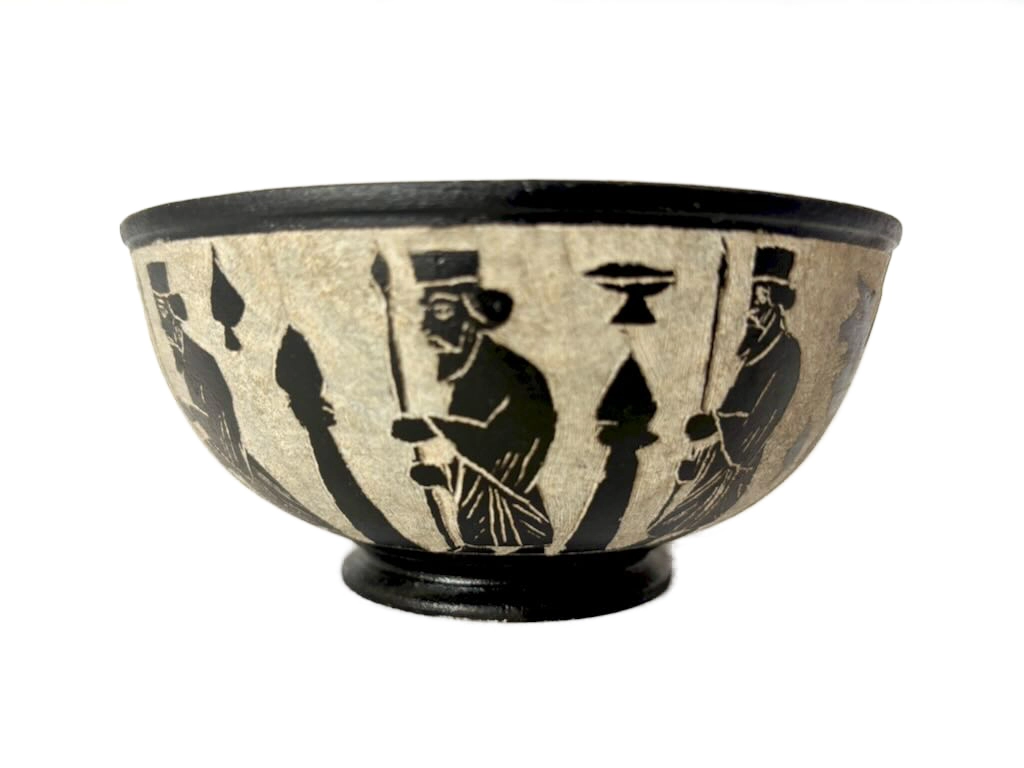
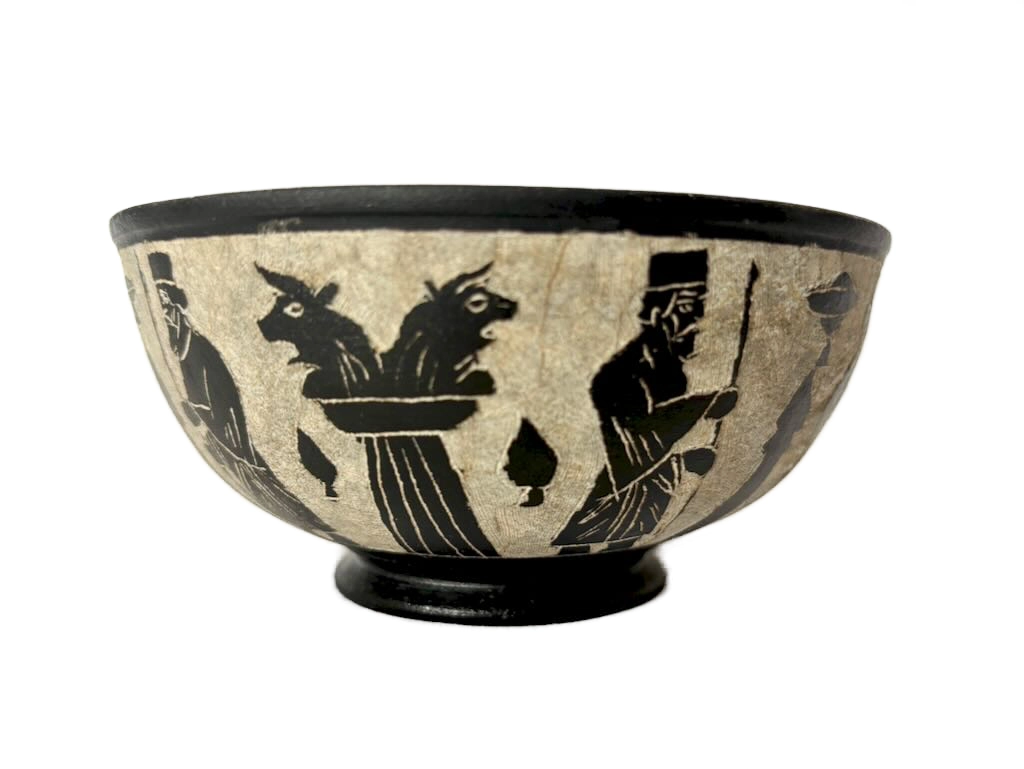
This distinctive vintage Persian chlorite sgraffito bowl combines traditional stone-carving craftsmanship with imagery inspired by the ancient Achaemenid Empire. Its hand-carved exterior features a continuous procession of Persian figures, architectural ornaments, and symbolic motifs reminiscent of the celebrated reliefs of Persepolis.
The decoration depicts bearded figures wearing traditional headdresses and flowing garments. Several carry staffs or spears, recalling the ceremonial guards and dignitaries represented in Achaemenid palace reliefs. Between the figures, stylized animal forms and architectural elements add visual interest and reinforce the connection to ancient Persian design.
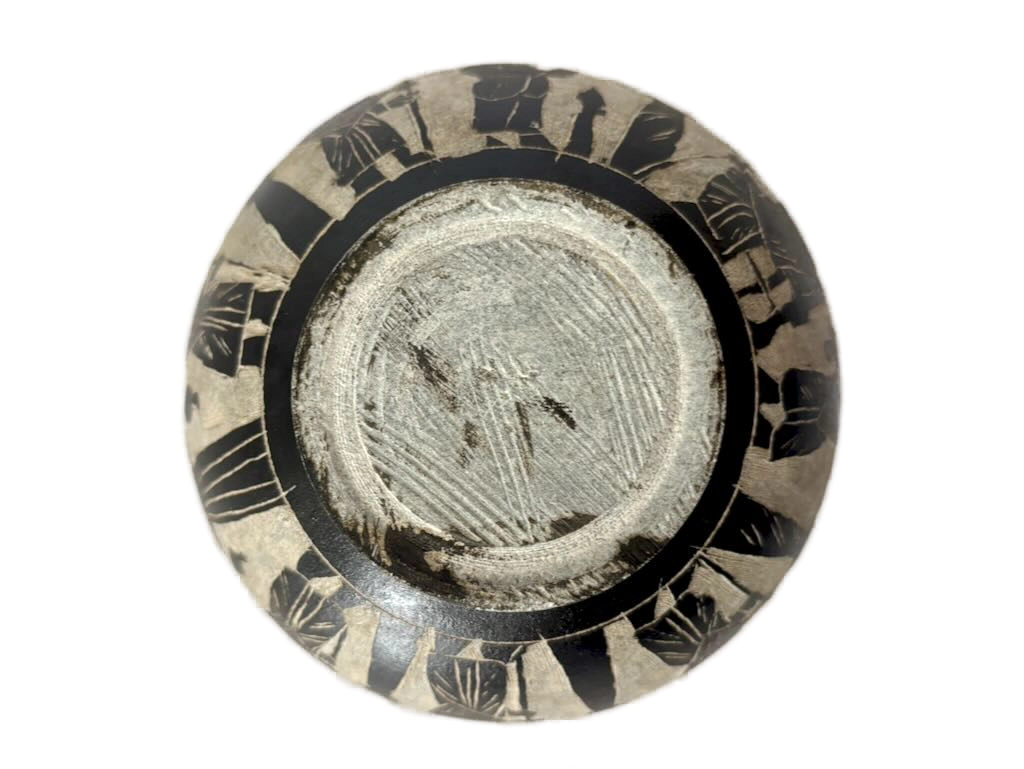
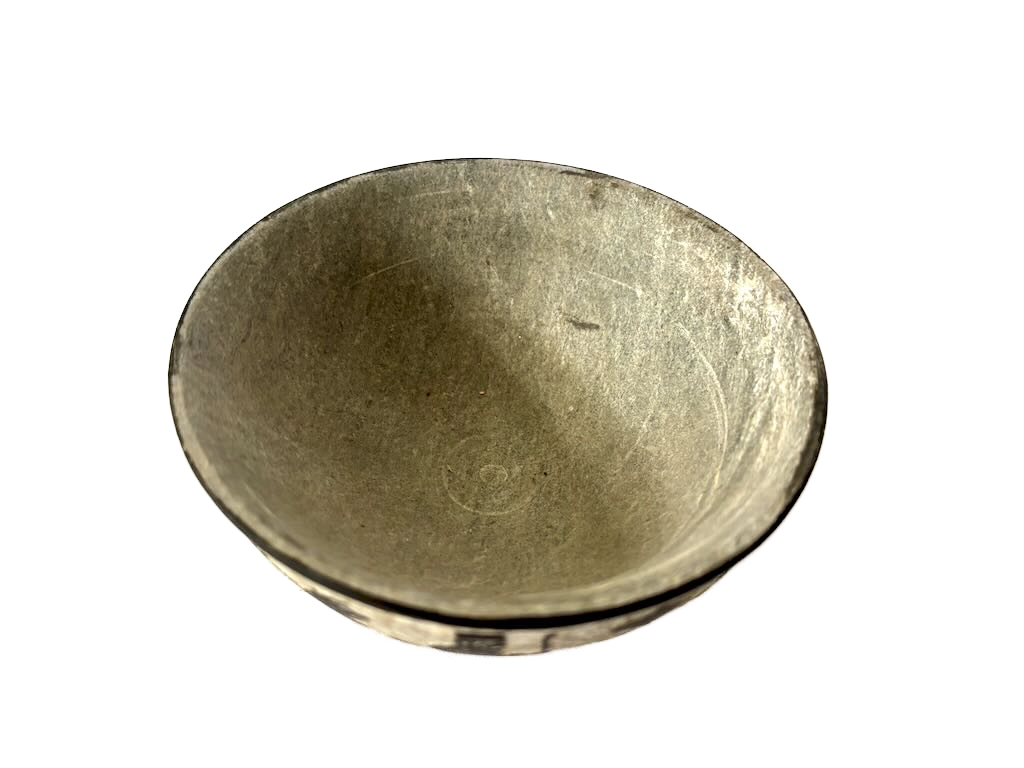
The artisan arranged the decoration around the bowl’s gently flared exterior, creating a balanced composition that can be appreciated from different angles. A dark rim and circular foot frame the intricate black-and-grey design, while the interior retains the natural appearance of the stone.
Although relatively small, the bowl has a substantial presence. Its approximately 480-gram weight, distinctive profile, and detailed craftsmanship make it an appealing example of vintage Persian decorative art.
Traditional Persian Chlorite Carving
Persian stone sgraffito is a traditional decorative technique particularly associated with the stone-carving workshops of Mashhad, Iran. For generations, artisans in this region have worked with chlorite, a relatively soft natural stone that lends itself to shaping, engraving, and ornamental carving.
The process begins with shaping a block of stone into a vessel. Craftsmen traditionally use hand tools and turning equipment to establish the form before refining the surface.
To create the characteristic contrasting decoration, the artisan darkens the stone with oil. The craftsman then carves away selected areas of the darkened surface, exposing the natural grey stone beneath. The untouched darker areas form the figures and ornamental designs, while the carved background provides contrast.
Unlike painted decoration, this technique creates its imagery through the physical removal of stone. The resulting interplay between dark and light surfaces gives Persian stone sgraffito its distinctive appearance.
Persepolis and the Achaemenid Artistic Tradition
The imagery decorating this bowl draws inspiration from Persepolis, the ceremonial center of the Achaemenid Empire, whose construction began under Darius I around 518 BCE.
The monumental stairways and palace walls of Persepolis feature remarkable stone reliefs depicting royal guards, court officials, representatives of subject nations, and ceremonial processions. These compositions celebrate the artistic sophistication and cultural diversity of ancient Persia.
The figures on this bowl reflect that tradition through their distinctive profiles, garments, headdresses, and ceremonial staffs. The stylized animal forms also recall the sculptural decoration of Achaemenid architecture, particularly the animal-headed capitals that supported the great palace halls.
By adapting these historical motifs to a decorative stone vessel, Persian craftsmen preserved an important visual connection with their country’s artistic heritage.
A Distinctive Example of Vintage Persian Decorative Arts
This bowl illustrates how traditional Persian artisans transformed a practical vessel into a decorative object. Its restrained palette emphasizes the carved figures, while the circular composition creates a continuous visual narrative.
The natural grey interior contrasts with the darker exterior decoration. Subtle variations in the stone surface and engraved details contribute to the character of the piece.
Whether displayed independently, incorporated into a collection of Persian decorative arts, or paired with other carved stone objects, the bowl offers an attractive expression of Iranian craftsmanship and Achaemenid-inspired design.
Condition and Provenance
The bowl is in good vintage condition, with surface characteristics consistent with its age and traditional construction. Please examine the photographs carefully, as they form an important part of the description.
Acquired in the 1970s and preserved in the Bernardi Family Collection, this bowl represents a distinctive example of Persian stone-carving craftsmanship. Its exact date of manufacture remains unknown.