
ACF Décor de Paris pieces often catch your eye right away. They feel elegant, detailed, and unmistakably European. You see rich porcelain, bold gilding, and ornate metal mounts that look like they belong in a grand interior. At first glance, many people assume they are French. In reality, the story is more interesting.
These pieces come from an Italian maker with a strong connection to Florence. Understanding that background helps you appreciate what you are looking at and why these objects continue to attract collectors today.
The Maker Behind ACF Décor de Paris
The initials A.C.F. most closely connect to Artistiche Ceramiche Fiorentine, a ceramics producer based in Sesto Fiorentino, near Florence. This region has a long tradition of fine ceramics and porcelain production, making it a natural home for a company focused on decorative luxury.
The company operated in the mid-20th century and produced a range of ornamental objects rather than everyday tableware. You will mostly find vases, urns, clocks, and decorative pieces designed to stand out rather than blend in.
That focus matters. ACF did not aim to compete with traditional English or French dinner services. Instead, it created statement pieces meant for display.
What “Décor de Paris” Really Means
The phrase “Décor de Paris” often causes confusion. It sounds like a location, but in this context, it describes a style rather than a place of manufacture.
ACF used French wording to signal elegance and historical influence. The designs draw heavily from 18th-century French decorative arts, especially the refined and highly ornamental style associated with Paris and royal interiors.
You will often see similar phrases like “Décor de Sèvres” on related pieces. Again, this points to inspiration, not origin. The goal was to capture the look and feel of classic French porcelain, not to claim it was made there.
Once you understand that, the pieces make more sense. They are Italian creations with a deliberate French identity.
Materials and Craftsmanship
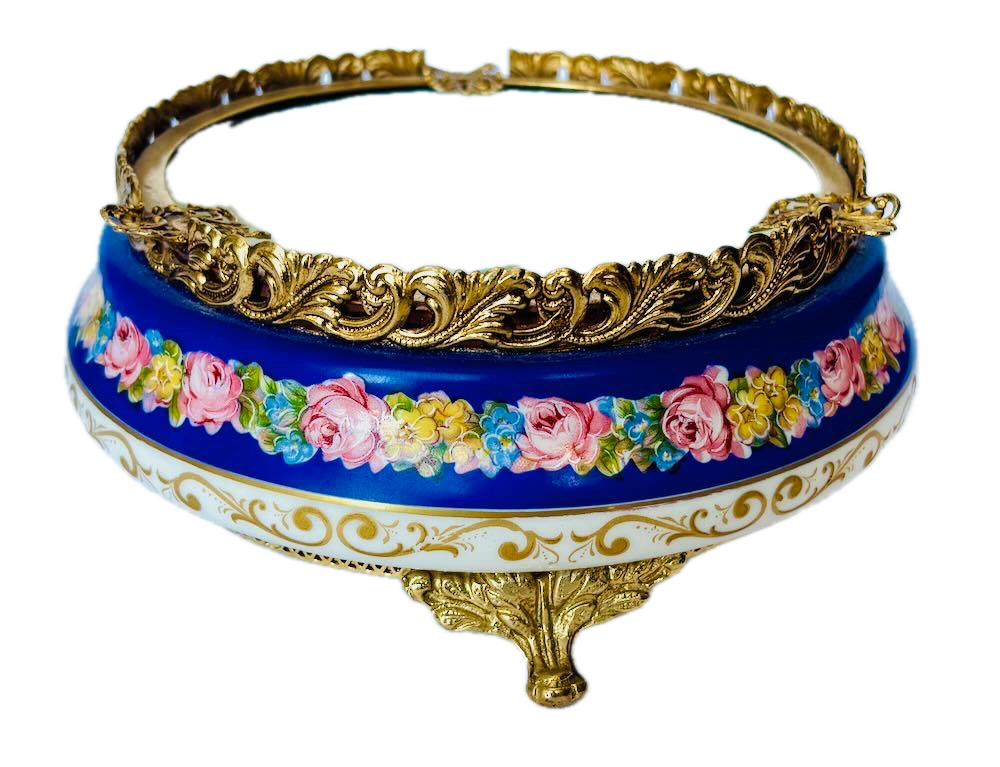
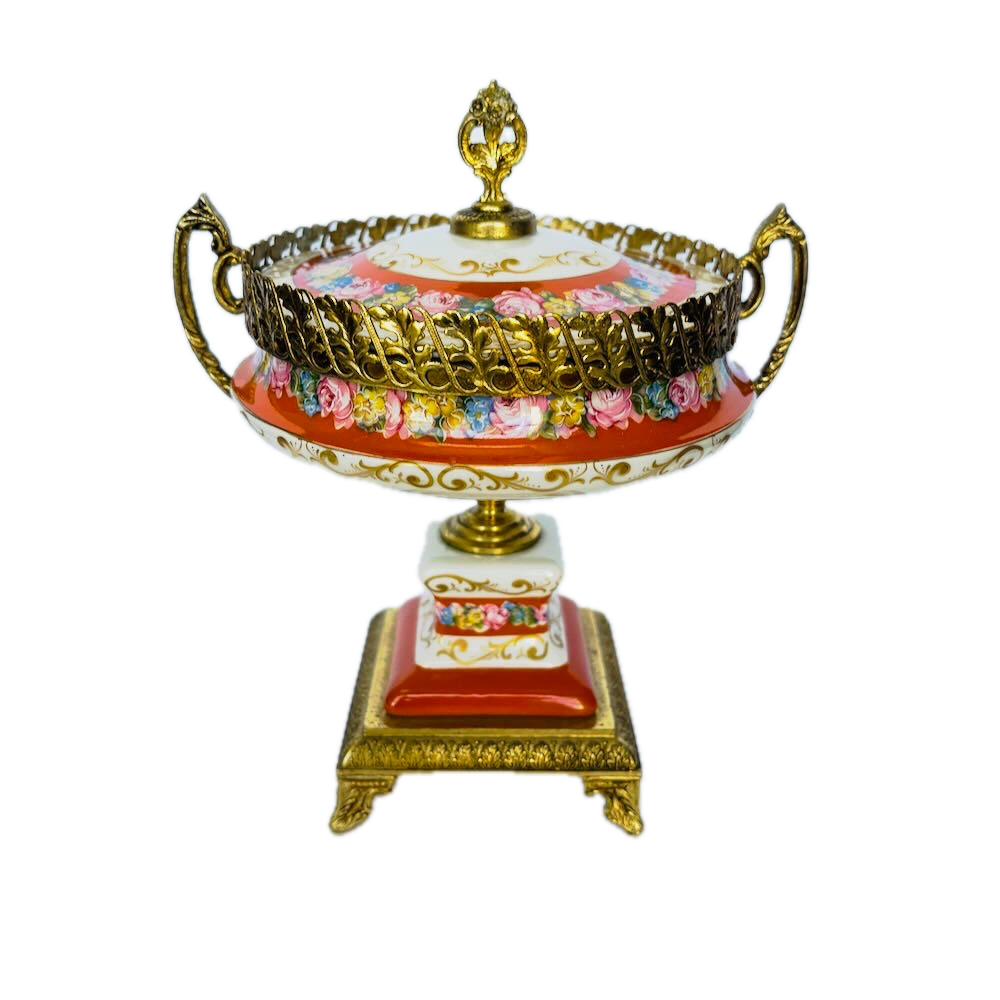
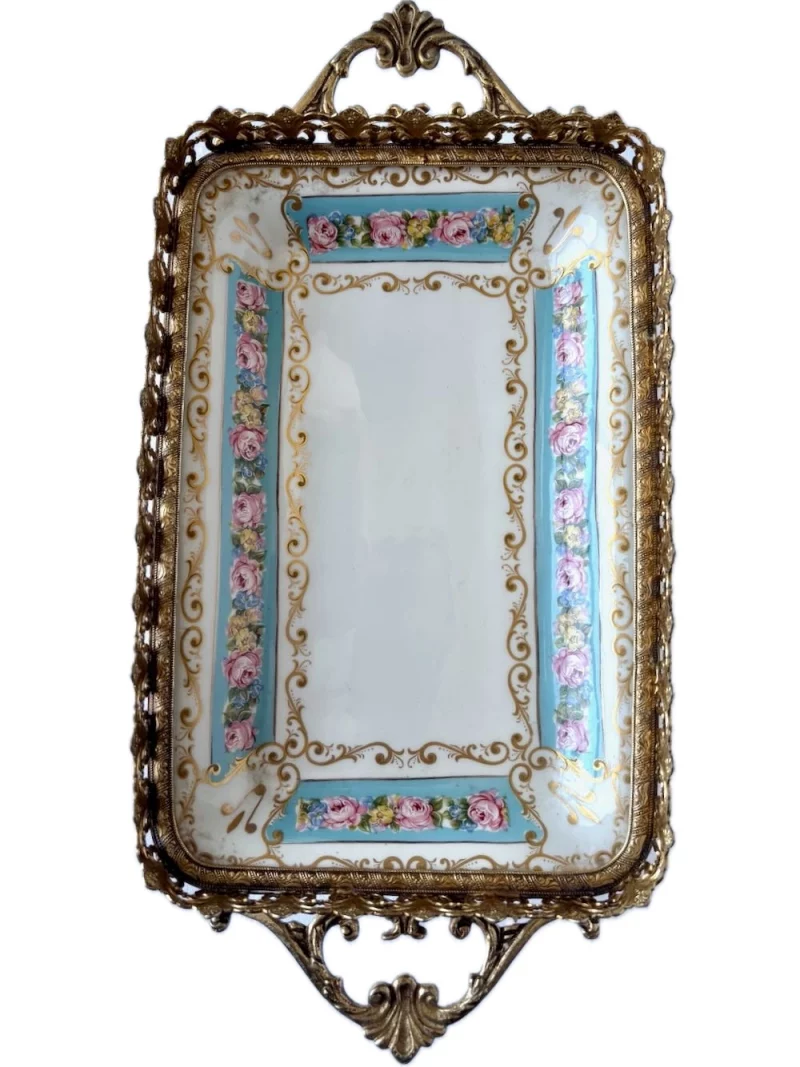
ACF Décor de Paris pieces rely on contrast and richness. The base usually consists of porcelain, often hand-painted with florals, landscapes, or portrait scenes.
The porcelain rarely stands alone. Metal mounts frame the piece and add structure. These mounts include handles, bases, collars, and decorative galleries. They often appear in a gold tone that mimics traditional ormolu.
This combination creates depth. The smooth porcelain surface meets textured metal, and the result feels layered and luxurious.
Some pieces feature silver-toned mounts instead of gold. Others use heavier gilding to create a more dramatic effect. In every case, the design aims to feel substantial and decorative.
A Style Rooted in European Tradition
ACF did not invent a new style. Instead, it refined and reinterpreted an existing one.
The designs pull from Rococo and Neoclassical influences. You will see scrollwork, cartouches, laurel motifs, and romantic painted scenes. These elements connect directly to 18th-century European decorative arts.
This approach places ACF firmly within a tradition of revival and reinterpretation. Many European makers revisited earlier styles, but ACF leaned into it fully. The result feels theatrical and intentional.
Today, this aesthetic aligns closely with what many people call Hollywood Regency. It favors bold decoration, shine, and visual impact. That connection helps explain why these pieces still work in modern interiors.
Understanding the “Mod. Dep.” Mark
You will often find “MOD DEP” or “Mod. Dep.” stamped on ACF pieces. This mark can be confusing if you do not know what it means.
It stands for “modèle déposé,” which translates to “registered design.” It indicates that the design was formally registered and protected.
This mark does not tell you where the piece was made. It also does not confirm a specific date. Instead, it signals that the maker claimed ownership of the design.
For collectors, it adds context but should not be used alone for identification or dating.
Dating ACF Décor de Paris Pieces
Most ACF Décor de Paris items fall into the mid-20th century, with many examples dating to the late 1960s and 1970s.
Several details support this timeframe. The company itself operated during this period, and the style fits the decorative trends of the time. Many pieces also include components sourced from other countries, such as clock movements made in Germany, which further supports a later production date.
Paper labels sometimes appear alongside the marks. These labels often reference Sesto Fiorentino or Florence, reinforcing the Italian origin.
While exact dating can vary, placing these pieces in the mid-20th century gives you a reliable starting point.
Why Collectors Are Drawn to ACF Décor de Paris
Collectors rarely approach ACF pieces as antiques in the strict sense. Instead, they value them as high-quality vintage decorative objects.
Several factors drive that appeal.
The first is visual impact. These pieces stand out. They work well as focal points in a room and add a sense of richness without needing a full collection around them.
The second is craftsmanship. The combination of porcelain and metal creates a layered effect that feels more complex than standard ceramics.
The third is versatility. You can place an ACF vase, urn, or clock in both traditional and modern interiors. It adapts easily because it references historical design while still feeling decorative rather than formal.
How ACF Pieces Fit Into Today’s Interiors
ACF Décor de Paris pieces work best when you treat them as statement objects. Place one on a console, in a cabinet, or as part of a curated display.
You do not need many. One well-placed piece can define a space.
Pairing them with simpler elements often works best. The contrast allows the detail and gilding to stand out without overwhelming the room.
Because of their strong visual presence, these pieces also photograph well. That makes them especially appealing for collectors who enjoy styling and presentation.
Final Thoughts
ACF Décor de Paris represents a unique blend of Italian craftsmanship and French-inspired design. It does not try to hide its influences. Instead, it embraces them and turns them into something decorative and bold.
When you understand what these pieces are, they become easier to appreciate. They are not trying to be antique French porcelain. They are carefully made vintage objects designed to capture that look and bring it into a modern setting.
For collectors, that combination of history, style, and visual impact continues to make ACF Décor de Paris a compelling choice.
ACF Décor de Paris: French Elegance, Italian Craftsmanship
ACF Décor de Paris represents a fascinating chapter in mid-20th-century decorative arts. At first glance, the name suggests a Parisian origin. However, a closer look reveals something more interesting—a blend of French design influence and Italian craftsmanship that reflects how luxury decorative objects were produced and marketed in the postwar period.
Rather than being a single factory, ACF Décor de Paris functioned as a design and branding house. It brought together styles, materials, and manufacturing expertise from different regions to create pieces that looked distinctly French while often being made in Italy.
A Brand Built on Style, Not Location
The phrase “Décor de Paris” does not indicate where the object was made. Instead, it signals a design language rooted in French decorative tradition. This includes:
- Rococo and neoclassical forms
- Sèvres-style porcelain decoration
- Ornate gilt metal mounts
- Floral motifs, scrollwork, and classical symmetry
Because of this, many ACF pieces appear at first to be French. However, marks such as “Made in Italy” confirm that production often took place in Italian workshops.
This combination was intentional. French design carried prestige, while Italian makers provided the technical skill and production capacity to bring these designs to life.
How ACF Pieces Were Made
ACF Décor de Paris pieces were typically created through a multi-step process that combined design, manufacturing, and assembly across regions.
First, the design would be developed and often registered in France, as indicated by marks such as “Modèle Déposé”(registered design). This protected the form and decorative concept.
Next, the porcelain body was produced in Italy. Italian workshops—especially those influenced by Capodimonte traditions—were well known for decorative porcelain and hand-applied finishes.
Finally, the pieces were assembled with gilt metal mounts, which could include bases, rims, finials, or handles. These mounts added weight, structure, and visual richness, transforming the porcelain into a more elaborate decorative object.
As a result, each piece reflects a hybrid identity:
- French in style
- Italian in manufacture
- European in overall character
Signature Features of ACF Décor de Paris
Across documented examples, ACF pieces share several recognizable traits.
The porcelain bodies often feature hand-painted or transfer-based floral designs, sometimes enhanced with additional detailing. Birds, blossoms, and scrolling foliage appear frequently, arranged in balanced yet lively compositions.
Color plays an important role. Deep tones such as burgundy, cobalt, and iron red are common, often paired with white or ivory grounds. Gilt accents highlight edges and decorative elements, adding contrast and depth.
Equally important are the metal mounts. These are typically cast in brass or bronze and finished with gold-toned surfaces. They frame the porcelain and elevate the overall presentation, giving the pieces a more sculptural and luxurious presence.
Because of these elements, ACF items often align with what collectors now describe as Hollywood Regency or mid-century European luxury décor.
Dating ACF Décor de Paris Pieces
Most ACF Décor de Paris items date from the mid-20th century, with a strong concentration between the 1950s and 1970s.
Several details help confirm this timeframe:
- Paper or transfer labels reading “Made in Italy”
- French registration marks such as “Modèle Déposé”
- The combination of porcelain and heavy gilt metal mounts
- Styling that reflects postwar interpretations of 18th-century design
Earlier pieces from the 19th century typically show different marking conventions and more restrained mounting techniques. Later pieces, on the other hand, often lack the same level of detail or use simplified production methods.
Production Era and Collectibility
ACF Décor de Paris pieces come from a defined period of mid-20th century production. Most of the richly decorated porcelain with gilt mounts dates from the 1950s through the 1970s, when the company produced its most elaborate and recognizable designs.
By the 1980s, production shifted toward simpler porcelain forms, and the ornate mounted pieces became less common. The original ACF porcelain business appears to have ceased operations before the mid-1990s.
That timeline matters for collectors. These pieces are no longer in production, which places them firmly in the vintage category. You are not looking at reproductions or ongoing lines—you are looking at objects from a closed period of design and craftsmanship.
This limited production window adds to their appeal. Each piece reflects a specific moment in decorative style, combining Italian workmanship with French-inspired design in a way that is no longer being made today.
A Distinct Place in the Collectible Market
ACF Décor de Paris pieces occupy an interesting position in the world of antiques and collectibles.
They are not tied to a single historic porcelain factory like Sèvres or Meissen. However, they offer something different—highly decorative, well-crafted objects that reinterpret classical European styles.
Collectors appreciate them for several reasons:
- The combination of porcelain and gilt metal
- Their strong visual presence
- Connection to mid-century design trends
- Their versatility in both traditional and modern interiors
As a result, these pieces often appeal to collectors of:
- European decorative arts
- Hollywood Regency interiors
- Gilt bronze-mounted porcelain
- Vintage luxury décor
Why These Pieces Still Matter Today
Today, ACF Décor de Paris objects continue to attract attention because they bridge multiple traditions. They combine the elegance of French design with the craftsmanship of Italian production, while also reflecting the global nature of decorative arts in the 20th century.
In addition, they represent a period when design was not confined by geography. Instead, companies brought together ideas and materials from different regions to create objects that felt both familiar and distinctive.
For collectors and enthusiasts, this makes each piece more than just decorative. It becomes part of a broader story—one that connects style, craftsmanship, and international production.
A Vintage Interpretation of Classic European Style
Pieces from the late 1960s and early 1970s, such as those featured here, offer a particularly appealing balance. While they are not yet antique, they already carry the character and quality associated with earlier decorative traditions.
They serve as vintage interpretations of 18th-century European design, adapted for a modern audience of their time. Because of this, they fit easily into today’s interiors while still maintaining a sense of history and craftsmanship.