
Description
Antique Persian Enamel Cigarette Case with Miniature Painting & Gol-o-Bolbol Floral Panel, Isfahan Work, Early 20th Century
This is a finely executed Persian enamel cigarette case, most likely produced in Isfahan in the early 20th century, where the tradition of minakari reached a high level of refinement. Pieces like this were not casual objects. They were personal accessories made for a cultured owner—something carried, handled, and seen.
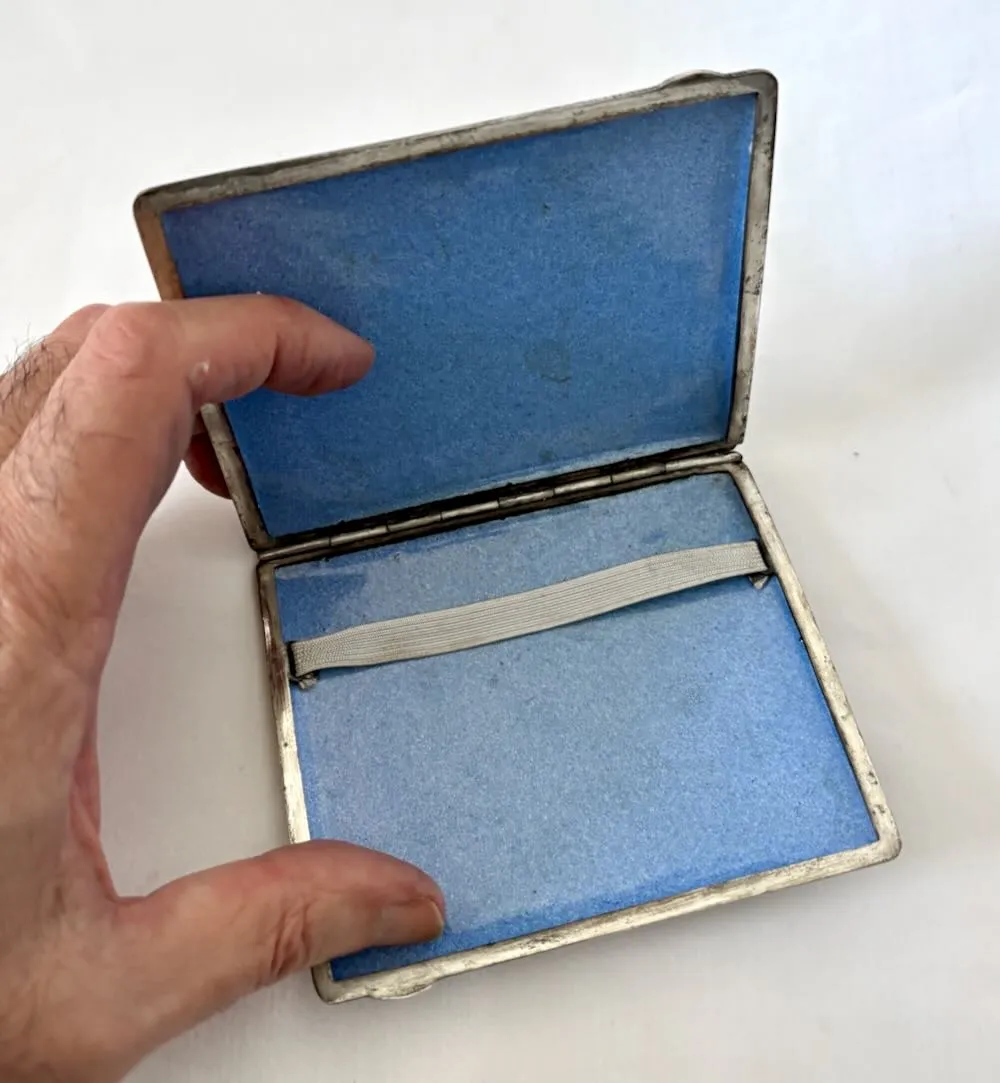
The construction immediately tells the story. A copper body forms the base, covered in layers of kiln-fired enamel, with silver or silver-plated mounts framing the edges. The interior is finished in a mottled cobalt blue enamel, complete with its original retaining band—an element designed to hold cigarettes, calling cards, or folded papers securely in place.
What sets this example apart is the duality of its decoration.
A Courtly Scene in the Persian Miniature Tradition
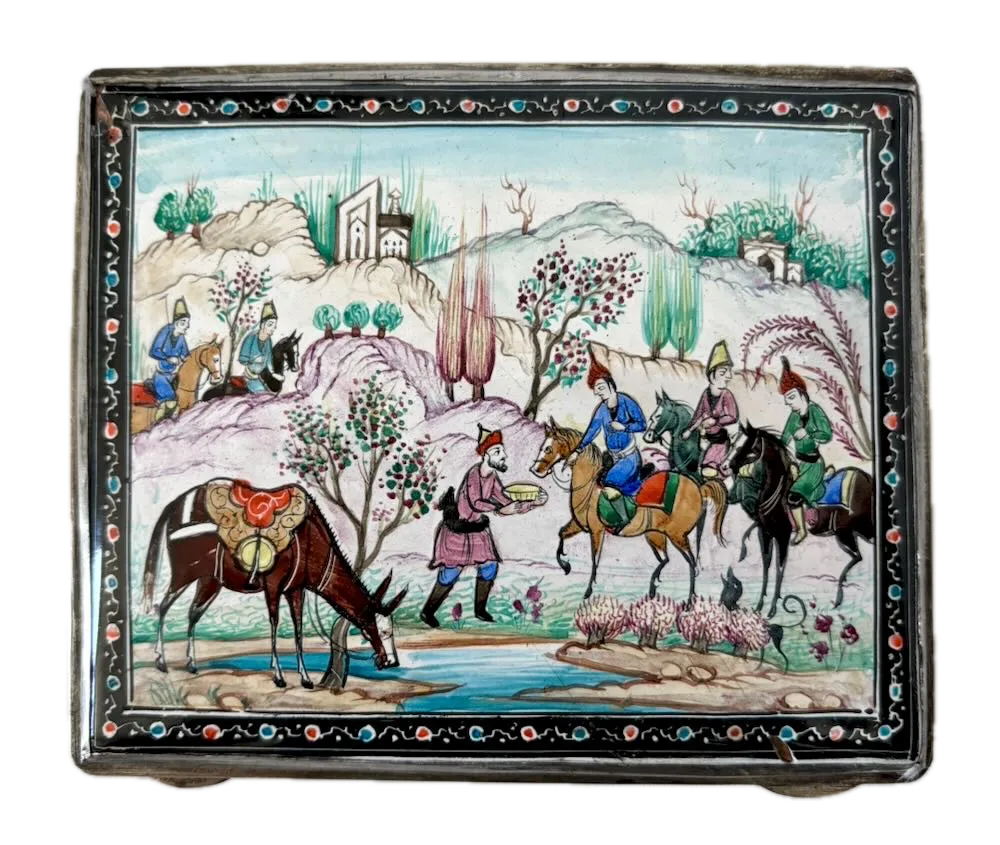
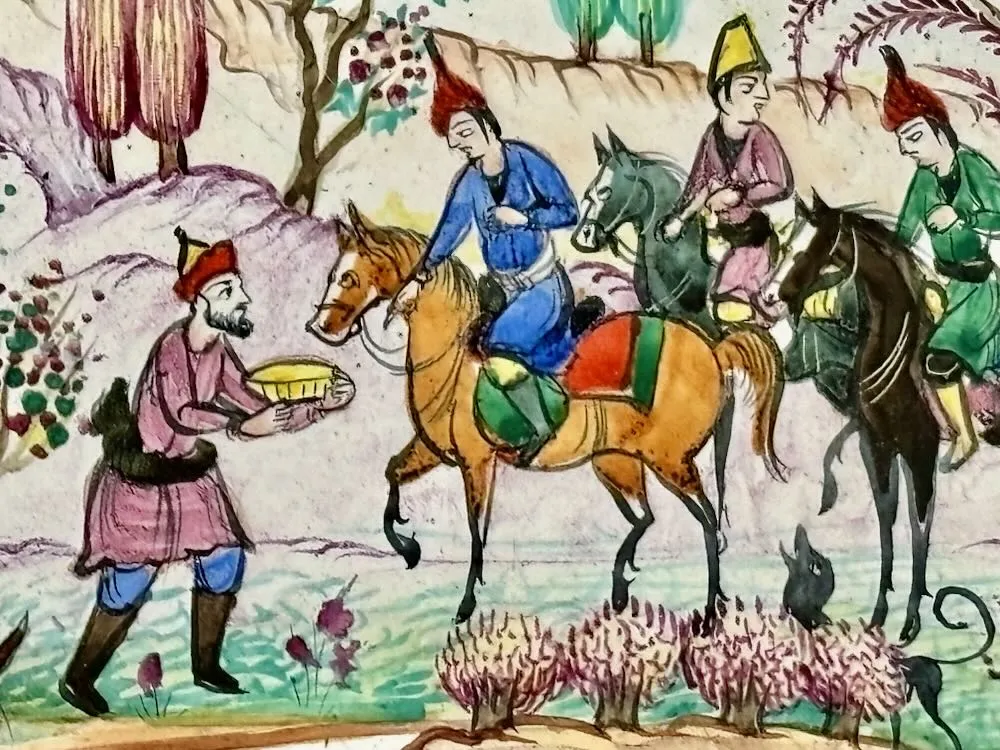
The lid presents a hand-painted figural composition rooted in the long tradition of Persian miniature painting. A group of mounted riders moves through a stylized landscape of hills, trees, and water. One figure stands before them offering what appears to be a dish—an act that reads as hospitality, ceremony, or tribute.
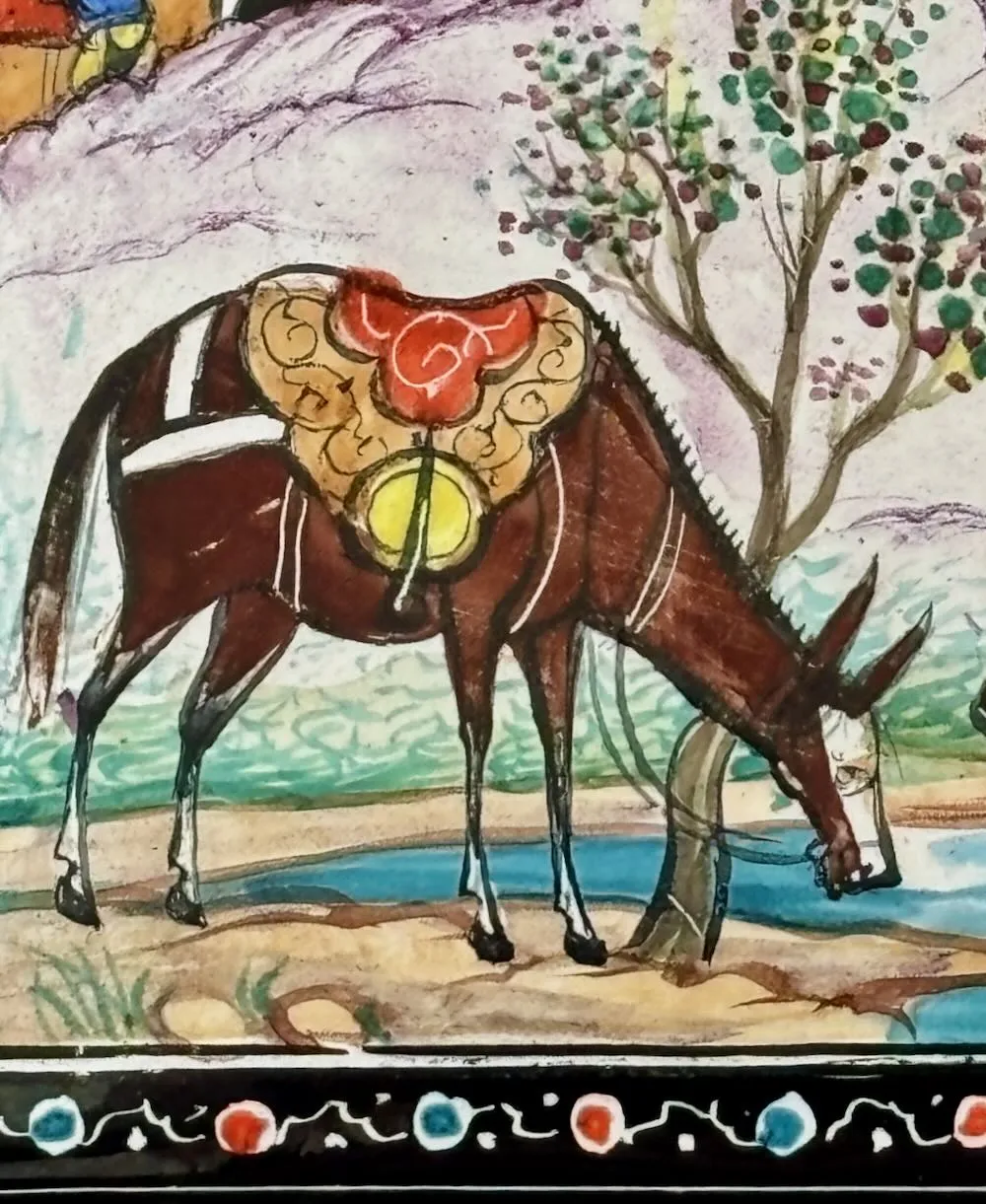
The composition does not aim for realism. It follows a narrative logic. Figures remain flattened, colors remain vibrant, and the landscape unfolds as a series of symbolic layers rather than physical space. This visual language traces back to Safavid manuscript painting and continued into Qajar and early Pahlavi decorative arts.
Look closer and the quality becomes evident. The horses carry detailed saddles. The garments shift in color and posture. The trees and ground form a rhythmic pattern rather than background filler. This is not a transfer or printed surface. It is painted by hand with control and intention.
Gol-o-Bolbol: Symbolism in the Floral Panel
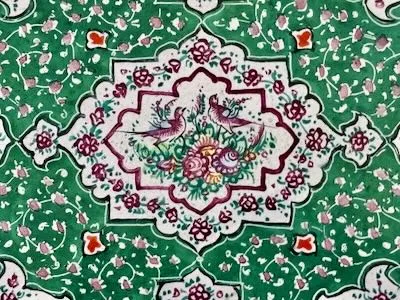
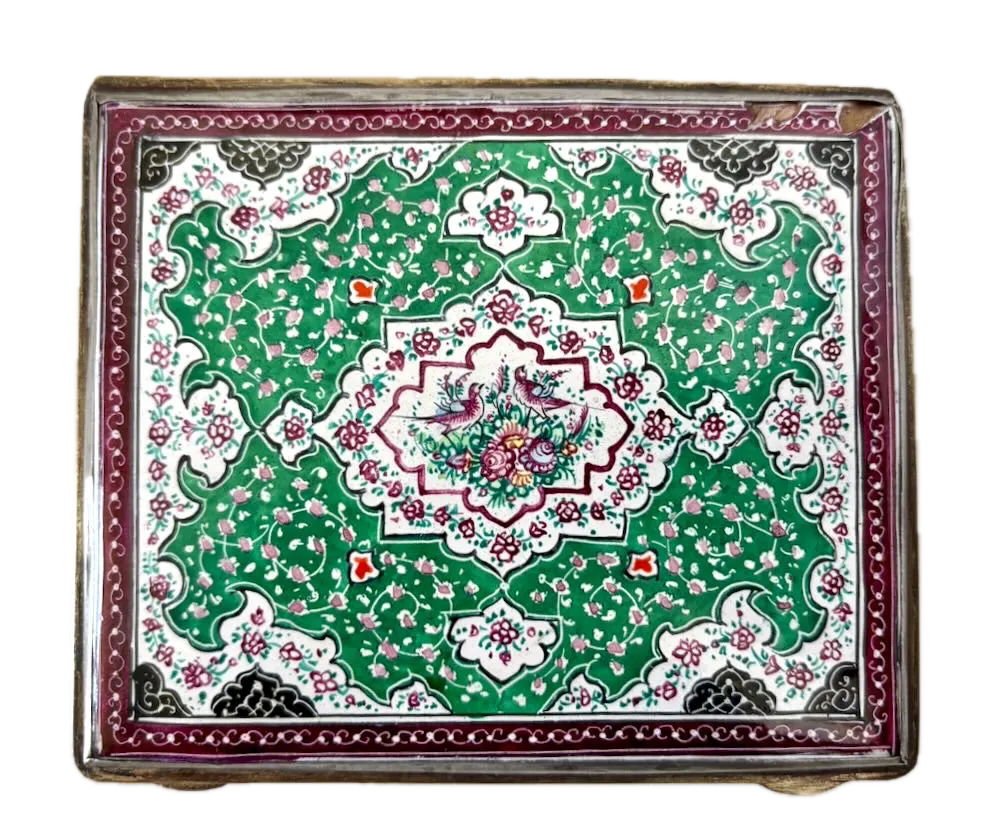
The reverse side shifts completely in tone and meaning. A dense floral composition unfolds across a green enamel ground, centered on paired birds among blossoms. This is the classic Gol-o-Bolbol motif—flower and nightingale.
In Persian art and poetry, the nightingale represents longing, devotion, and the restless soul, while the flower—often a rose—embodies beauty, perfection, and the object of desire. Together, they form one of the most enduring symbolic pairings in Persian culture.
The symmetry of the design, combined with the richness of the enamel colors—emerald green, deep red, white, and black—places it firmly within the Isfahan decorative tradition. It echoes textile and carpet design, translating those patterns into enamel on metal.
Material, Technique, and Craft
Minakari is not simply painting. It is a layered process. The metal body is coated with powdered glass enamel, fired repeatedly at high temperatures, and then painted between firings. Each color must survive the kiln. Each layer builds depth.
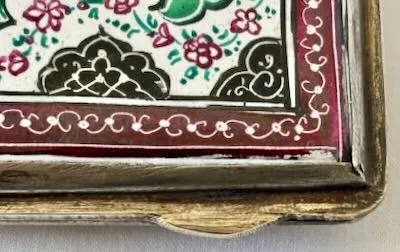
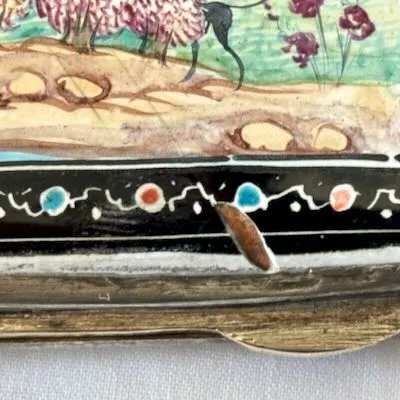
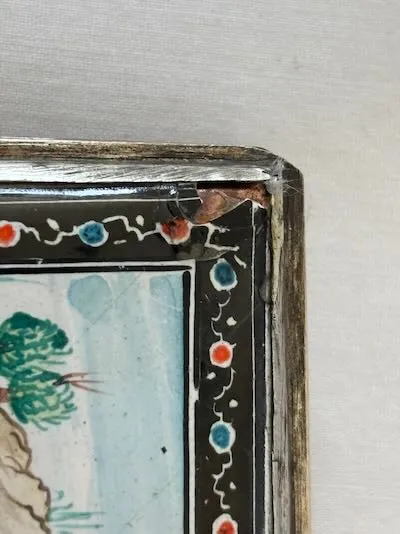
The edges, likely silver-plated, serve both structure and protection. They frame the enamel panels and absorb impact—something this piece has clearly experienced over time.
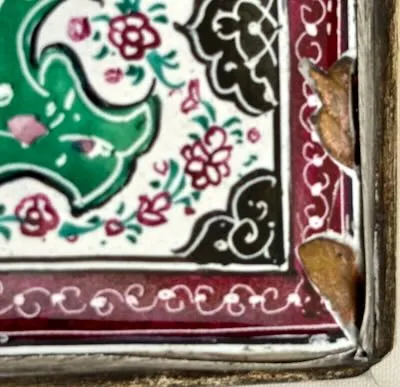
There are small areas of enamel loss at the corners and edges, revealing the copper beneath. This kind of wear is consistent with age and use. It does not detract from the central panels, which remain intact and visually strong. In fact, it reinforces that this is an original piece, not a later reproduction or decorative souvenir.
Function and Presence
Originally, this case would have held cigarettes or calling cards. Today, it works just as easily as a small object case, a document holder, or a display piece.
What gives it presence is not its function but its surface. It holds two distinct visual worlds—narrative and symbolic—within a single object. That contrast is what keeps it interesting.