
Description
Vintage Persian Kalaghehi Silk Textile – 1970s Osku Batik, Continuous Three-Panel Design
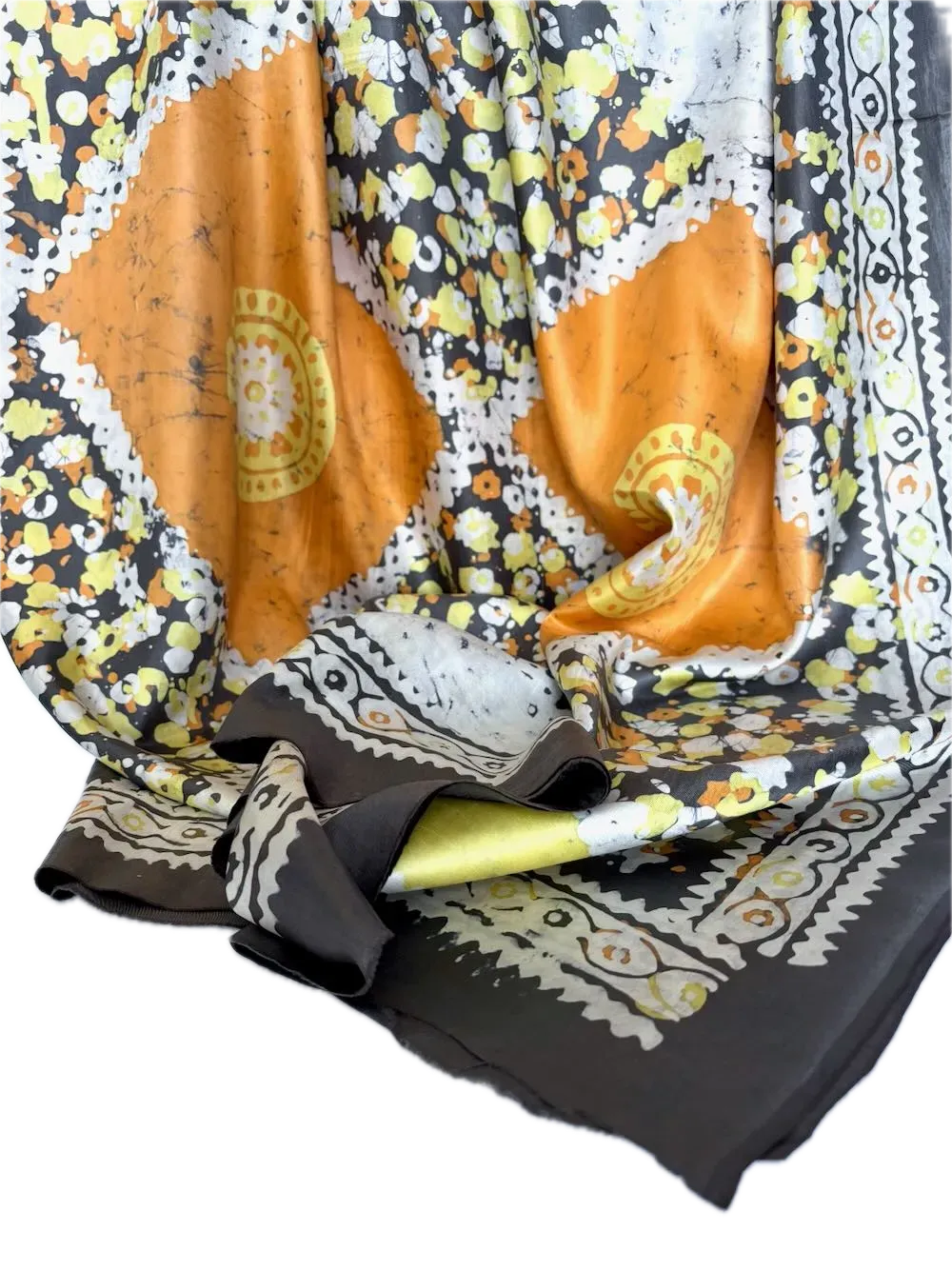
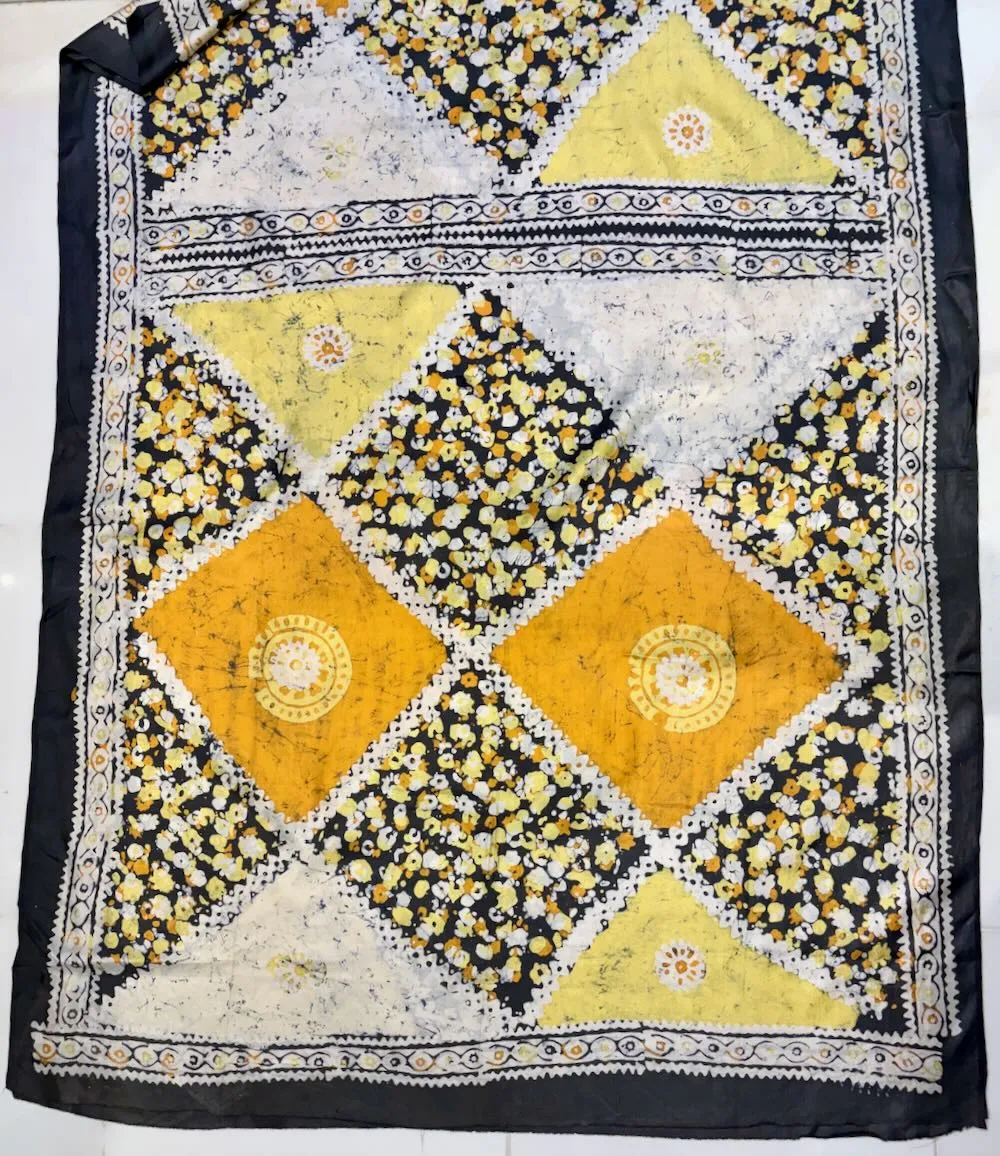
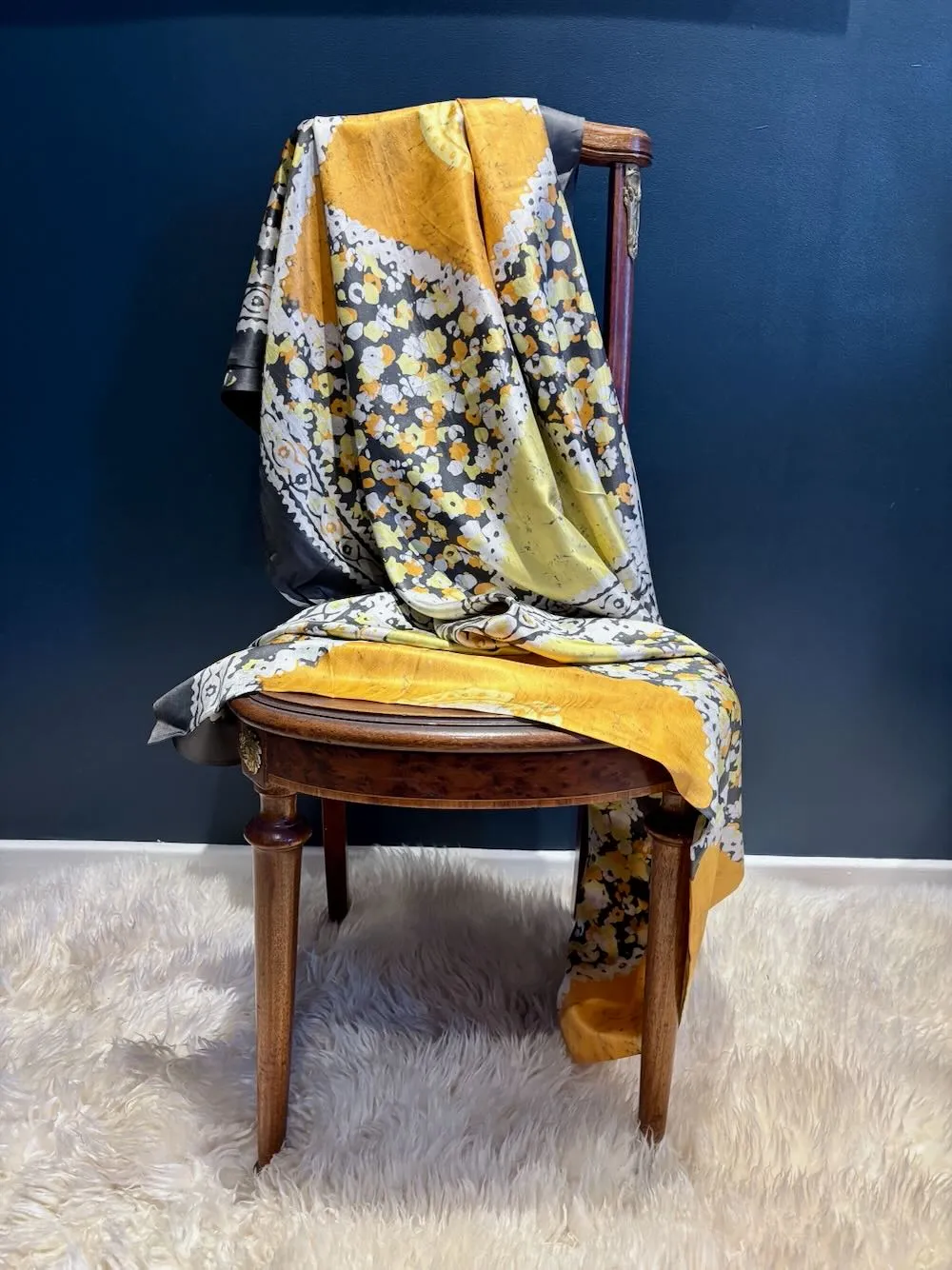
This vintage Persian Kalaghehi silk textile is a rare large-format example of Osku batik from the 1970s, a period widely regarded as a high point for Iranian handicrafts. The composition unfolds as a continuous three-panels, not as joined sections, allowing the pattern to flow seamlessly across its full length.
At nearly ten feet long, the scale places this piece beyond wearable textile into the realm of decorative and architectural fabric, intended for display, interior use, or ceremonial presentation.
The Art of Kalaghehi
Kalaghehi textiles originate from the town of Osku near Tabriz, the historic center of Iranian batik production. Artisans apply a traditional resist-dye technique to silk, using wax-based methods to build layered color and pattern through successive dyeing stages.
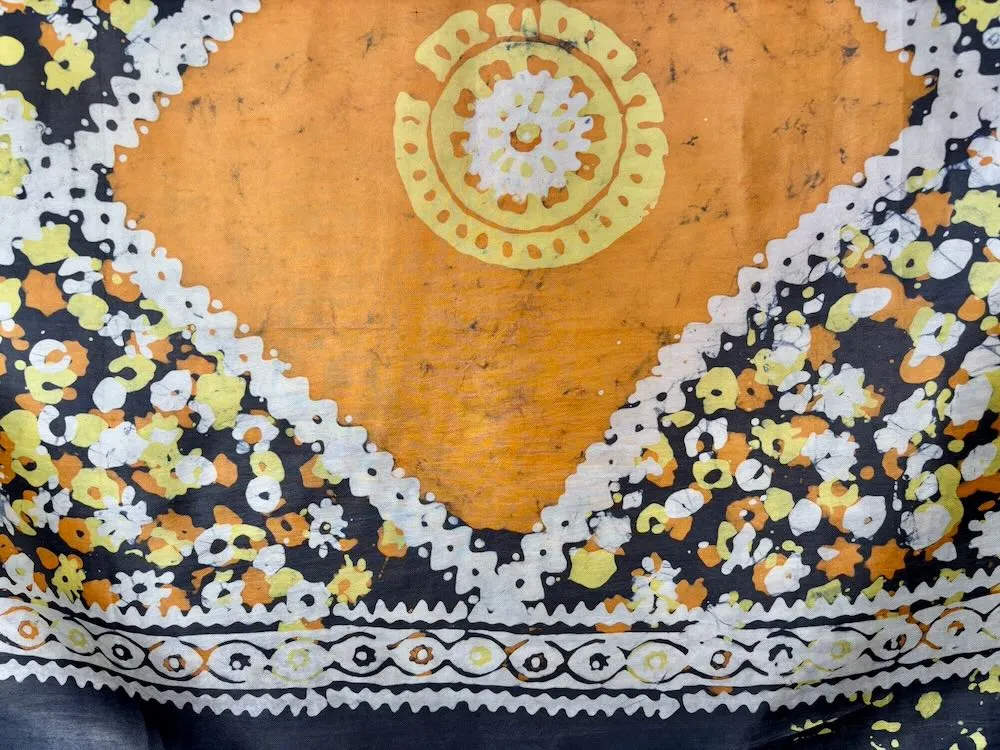
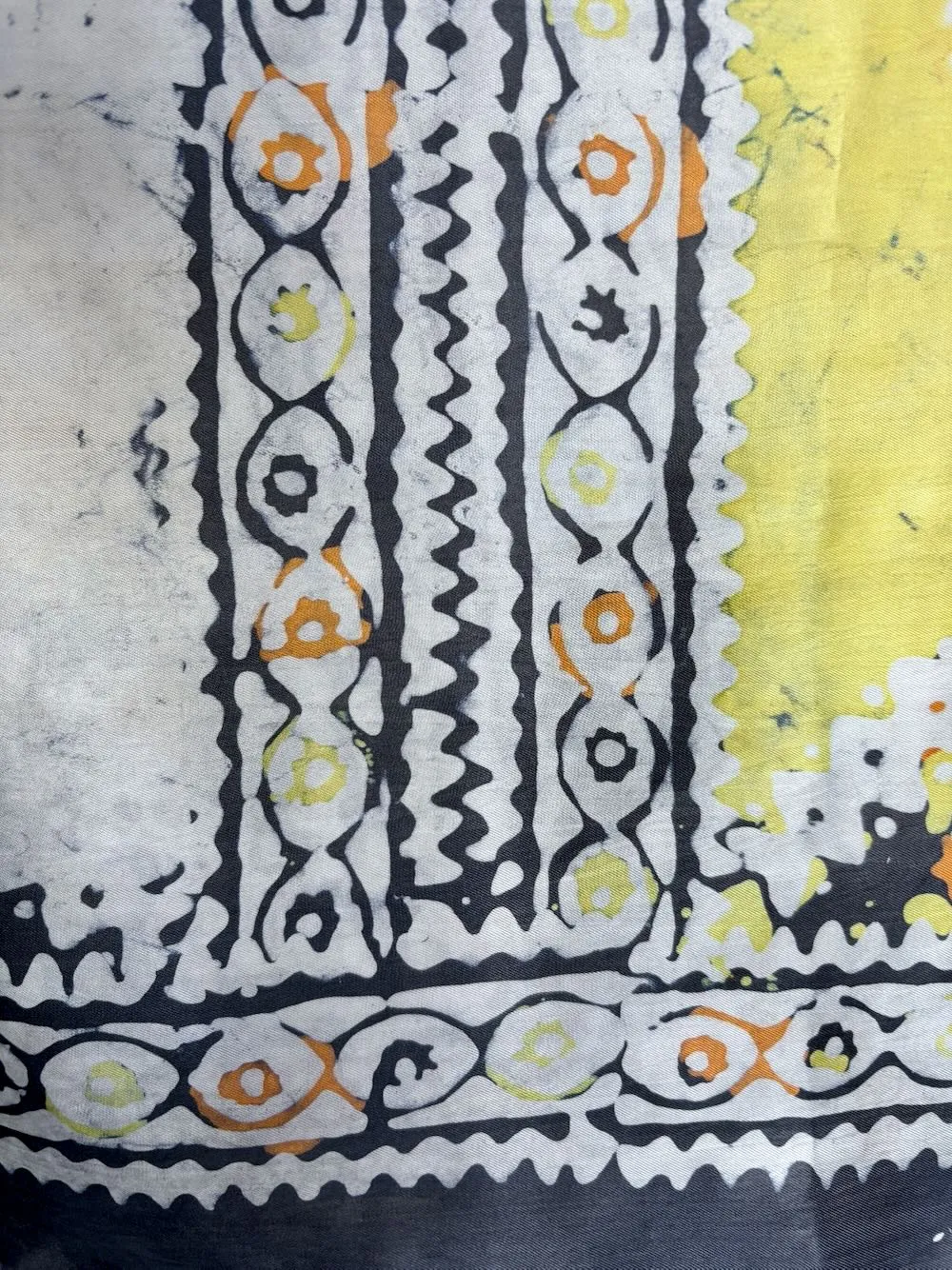
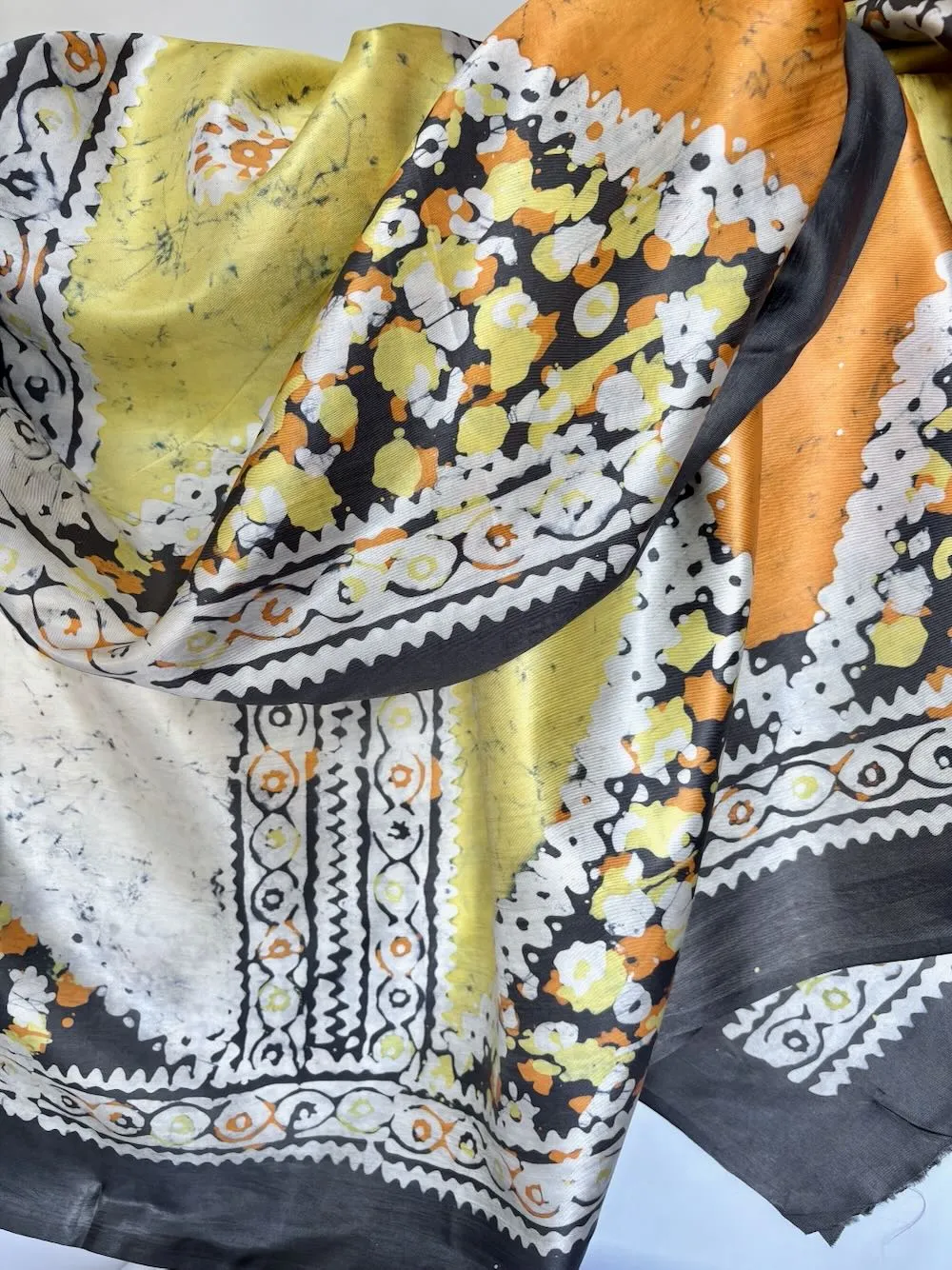
This process produces the characteristic surface variation visible throughout the textile—fine lines, tonal shifts, and organic transitions that form naturally as part of the design. These details are not imperfections but evidence of hand craftsmanship and traditional technique.
The structured diamond composition, enclosing medallion forms and dense floral patterning, reflects a distinctly Persian visual language rooted in centuries of textile design.
The 1970s Revival and Cultural Context
During the 1960s and 1970s, traditional Iranian crafts experienced a significant revival under the patronage of Empress Farah Pahlavi. Her efforts helped reposition regional handicrafts as both cultural heritage and modern design, supporting artisans and promoting their work internationally.
Textiles produced during this period often reflect higher material quality, more refined execution, and a stronger emphasis on presentation. Pieces sold through curated boutiques in Tehran—particularly in affluent districts—represent a more selective and elevated tier of production.
Provenance
This textile was acquired by my family in Tehran in the 1970s from a prominent Iranian handicraft boutique located on what was then Geneve Street (now Bamshad Street). At the time, this area was known for its concentration of high-quality artisan shops serving both local collectors and international clientele.
The shop was operated by an Italian proprietor, Luigi, who worked directly with artisans and commissioned select pieces. This places the textile within a curated retail environment rather than general market production.
Condition and Rarity
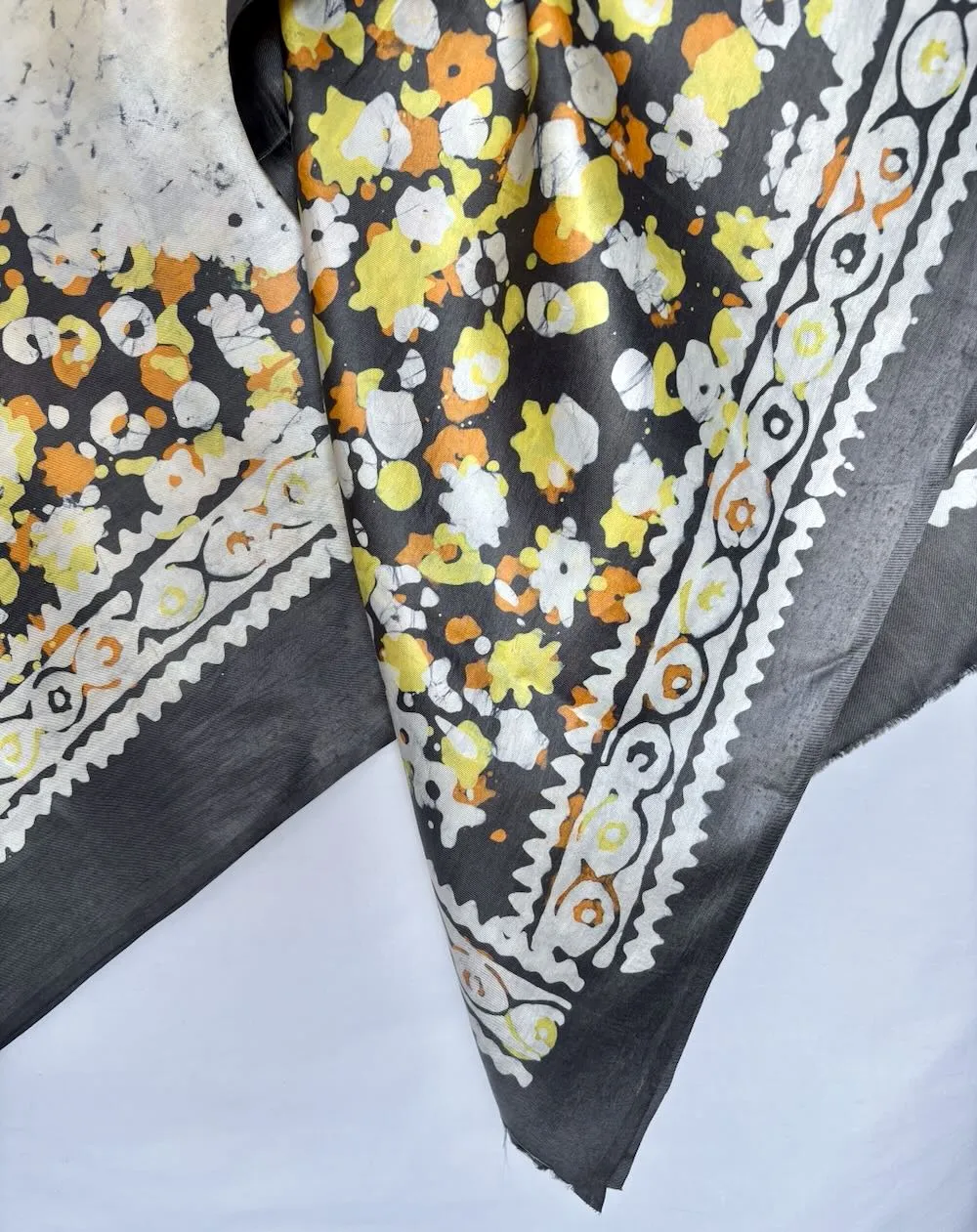
The textile remains in pristine original condition, with no holes, stains, fading, or structural issues. The surface pattern is entirely integral to the resist-dye process and should be understood as part of the design rather than wear.
Vintage large-scale Kalaghehi textiles of this size are rarely encountered. Most surviving examples are smaller scarf formats, making a continuous piece of this length, combined with documented period provenance and preserved condition, particularly uncommon.