

Kalaghehi: A Living Textile Tradition from Osku
Kalaghehi silk from Osku stands as one of the most distinctive and least understood textile traditions in the world. Produced in the historic town of Osku in northwestern Iran, these fabrics carry centuries of craftsmanship shaped by trade, culture, and artistic exchange along the Silk Road. While many associate batik with Southeast Asia, Osku developed its own interpretation of resist-dyeing—one that blends Persian design language with a highly tactile, painterly surface.
Osku sits near Tabriz, a historic crossroads of commerce and culture. For generations, artisans refined a resist-dye technique that produces richly layered surfaces, where color, texture, and pattern interact rather than sit flat. The result feels alive. No two pieces are ever identical, even when they follow a structured design.
Today, Osku remains the center of this tradition in Iran. Few regions continue to produce kalaghehi at a meaningful level, which makes surviving examples—especially earlier ones—both culturally significant and visually compelling.
What Defines Kalaghehi Silk
Kalaghehi refers both to the textile and to the method used to create it. At its core, the process relies on resist-dyeing, where parts of the fabric are protected so that dye does not penetrate evenly across the surface.
Artisans begin with silk, chosen for its ability to absorb dye deeply while maintaining a soft, luminous finish. They apply a resist medium—traditionally a wax-based mixture—using carved blocks or hand methods. Once the resist sets, the textile is dyed. Protected areas remain lighter, while exposed areas absorb color. This process often repeats several times, building depth and complexity.
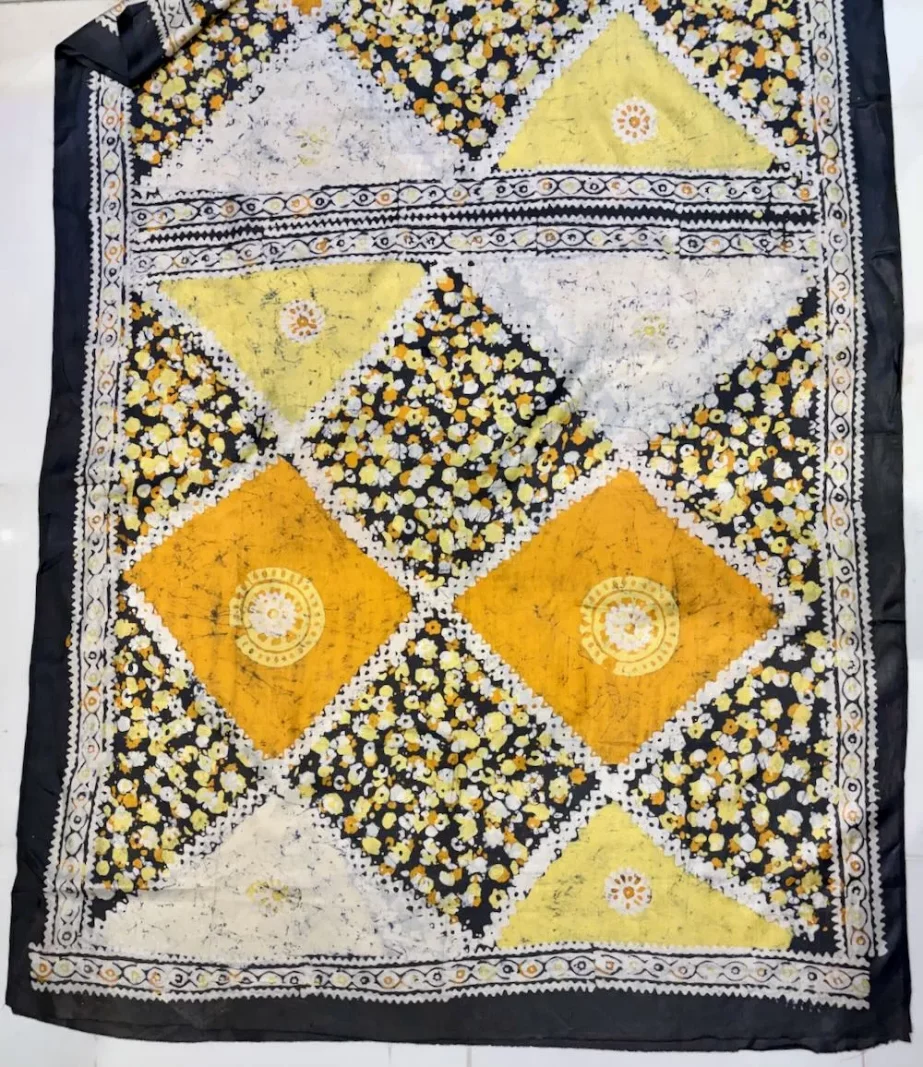
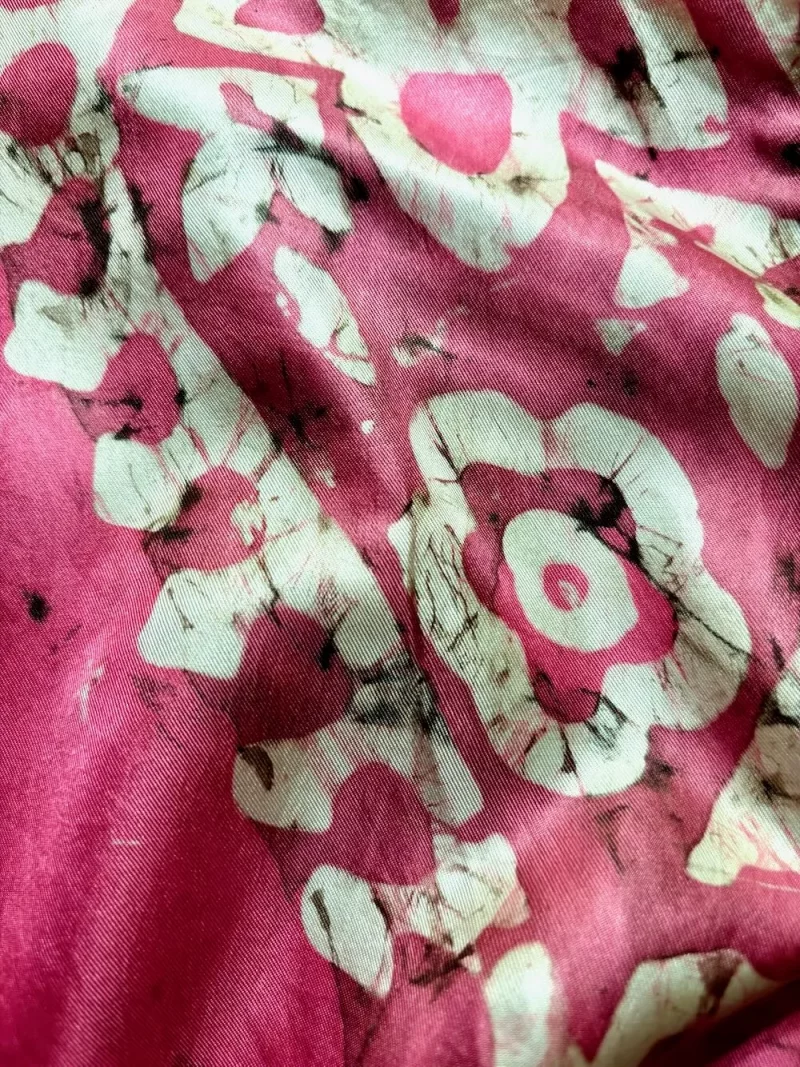
What distinguishes kalaghehi from other batik traditions is its balance between structure and spontaneity. Designs follow a clear geometric framework—diamonds, medallions, or repeating fields—yet the surface reveals organic variation. Fine lines, subtle cracking, and tonal shifts appear naturally as part of the process. These are not flaws. They are the visible record of hand production.
Look closely and the fabric begins to move. The pattern does not sit still. It shifts with the light.
Silk Road Influence and Persian Design Language
The origins of kalaghehi connect closely to the movement of goods and ideas along the Silk Road. Osku’s position along these routes exposed its artisans to influences from Central Asia, India, and China, where resist-dyeing techniques had already developed.
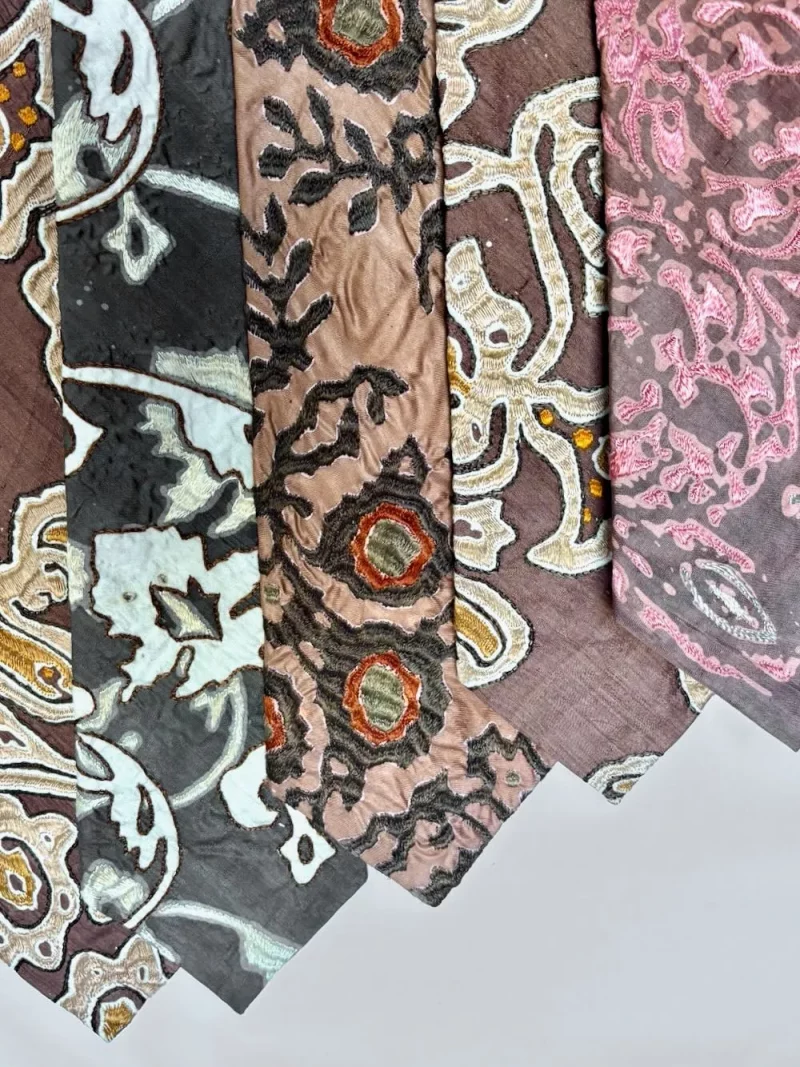
Over time, these influences merged with Persian design traditions. Motifs such as boteh (the precursor to paisley), floral sprays, and medallions became part of the visual vocabulary. Even when the layout appears geometric, the details reflect a broader Persian aesthetic—one that favors rhythm, repetition, and layered ornament.
During the Safavid period, when Persian silk production reached its height, textiles became a major economic and artistic force. Workshops produced fabrics not only for local use but for export across Europe and Asia. Kalaghehi developed within this broader tradition, adapting techniques while maintaining a distinct regional identity.
The 1970s Revival: A Golden Age of Craft
By the mid-20th century, many traditional crafts faced decline as industrial production replaced handmade goods. In Iran, the 1960s and 1970s marked a deliberate effort to preserve and elevate these traditions.
Under the patronage of Empress Farah Pahlavi, traditional arts received renewed attention and support. She promoted Iranian craftsmanship both within Iran and internationally, encouraging artisans to continue working in traditional techniques while presenting their work in a modern context. Textile arts, including kalaghehi, benefited directly from this cultural initiative.
During this period, workshops produced higher-quality pieces aimed at both domestic and export markets. Materials improved. Designs became more refined. Retail environments evolved as well. Instead of remaining limited to local markets, these textiles appeared in curated boutiques in Tehran, particularly in affluent districts that catered to diplomats, collectors, and international visitors.
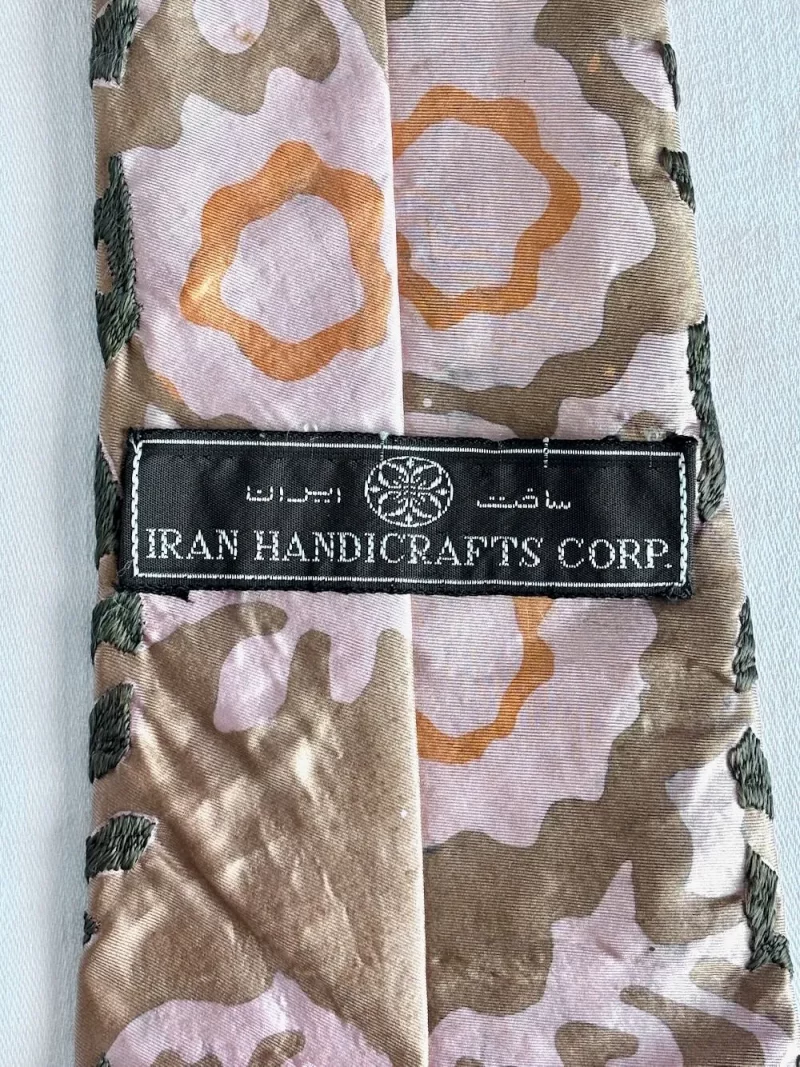
A textile acquired from a high-end handicraft boutique in Tehran during this time reflects that moment. It represents not only traditional craft, but also a specific cultural environment where Iranian design functioned as both heritage and modern identity.
Large-Format Kalaghehi: Beyond the Scarf
Most kalaghehi textiles encountered today take the form of square scarves, typically around 40 inches (about 100 cm). These were widely worn and remain the most common format in the market.
Larger textiles, especially multi-panel compositions, belong to a different category. A three-panel piece measuring approximately 117 inches by 40 inches (about 297 cm by 102 cm) moves beyond personal adornment into architectural or interior use. These textiles functioned as table runners, wall hangings, or decorative panels in formal interiors.
Scale transforms the design. Instead of a single repeating unit, the pattern unfolds across space. Elements align, extend, and interact from one panel to the next. When executed well, the composition reads as continuous rather than segmented. That level of planning requires both technical skill and artistic control.
Pieces of this size rarely appear in the market, particularly in strong condition. They were produced in smaller numbers and often used more intensively, which makes well-preserved examples especially desirable today.
Understanding Pattern and Surface
Kalaghehi textiles combine structure with visual energy. Many use a repeating geometric framework—such as diamonds or lozenges—filled with dense floral or abstract motifs. Borders anchor the composition and provide contrast.
Color defines the overall impact. Traditional palettes include saffron, yellow, black, and ivory, often layered through multiple dye stages. The interaction between these tones creates depth rather than flat contrast. Some areas appear saturated, while others soften slightly depending on how the dye penetrated during each stage.
Surface variation tells the story of the process. Fine lines, subtle irregularities, and tonal shifts result from the resist technique and the movement of dye across silk. These characteristics confirm hand production and should not be mistaken for wear.
In natural light, silk enhances these effects. The fabric reflects light across folds, revealing both the design and the quality of the material.
Collecting and Evaluating Kalaghehi
For collectors, several factors determine quality and value. Material comes first. Silk should feel soft, fluid, and responsive, with a natural sheen. Lower-grade fabrics lack this depth and appear comparatively flat.
Scale plays a significant role. Larger, multi-panel textiles are far rarer than standard scarves and attract stronger interest from collectors and designers.
Design execution matters as well. Look for continuity across panels, clarity in structure, and balance within the composition. Strong examples show control without losing the organic character of the process.
Condition remains critical. Silk is delicate, and many surviving pieces show wear. A textile that retains softness, color integrity, and structural stability stands apart immediately.
Provenance adds another dimension. A documented origin—particularly one tied to a specific time and place, such as Tehran in the 1970s—provides context that cannot be recreated. It connects the object to a broader cultural moment.
Why Kalaghehi Matters Today
Kalaghehi sits at the intersection of art, craft, and history. It reflects a regional tradition shaped by centuries of exchange while capturing a specific moment in the 20th century when traditional arts were consciously preserved and elevated.
For collectors and designers, these textiles offer something increasingly rare: authenticity. They are not mass-produced. They carry the marks of their making and reward close attention.
As interest in global textile traditions continues to grow, kalaghehi remains relatively undiscovered in Western markets. That creates both opportunity and responsibility. Understanding the material, the technique, and the context allows you to appreciate it fully—and to present it with clarity and respect.