

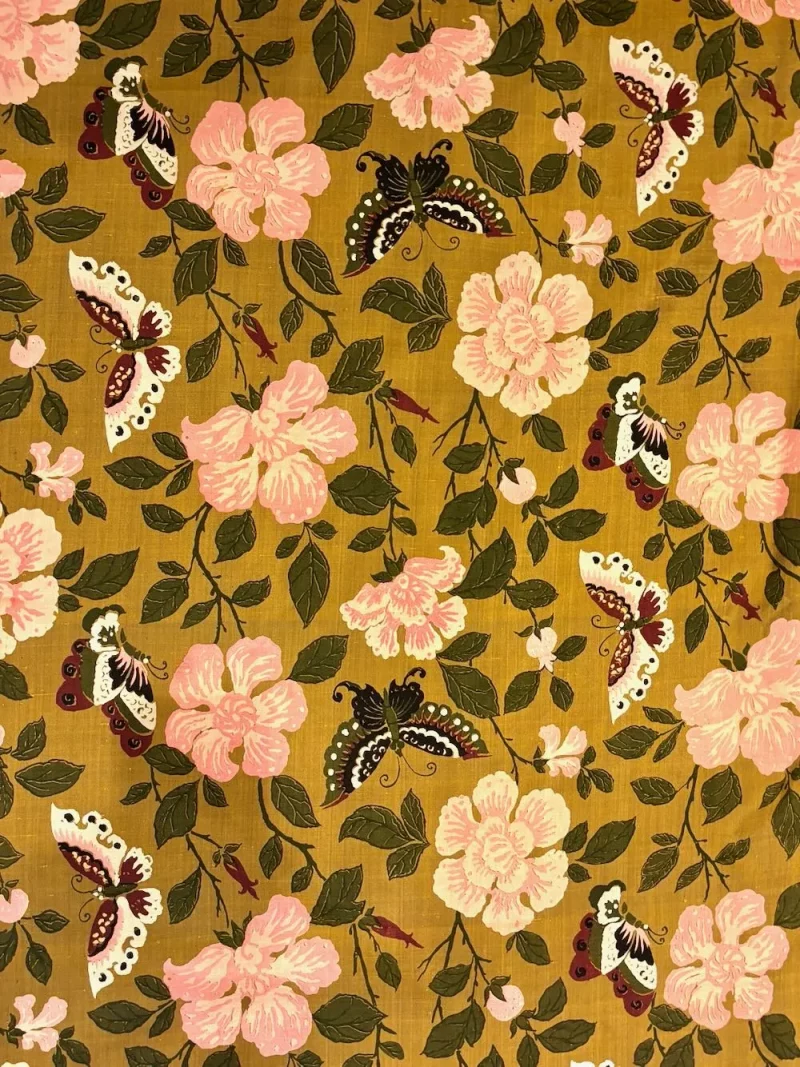
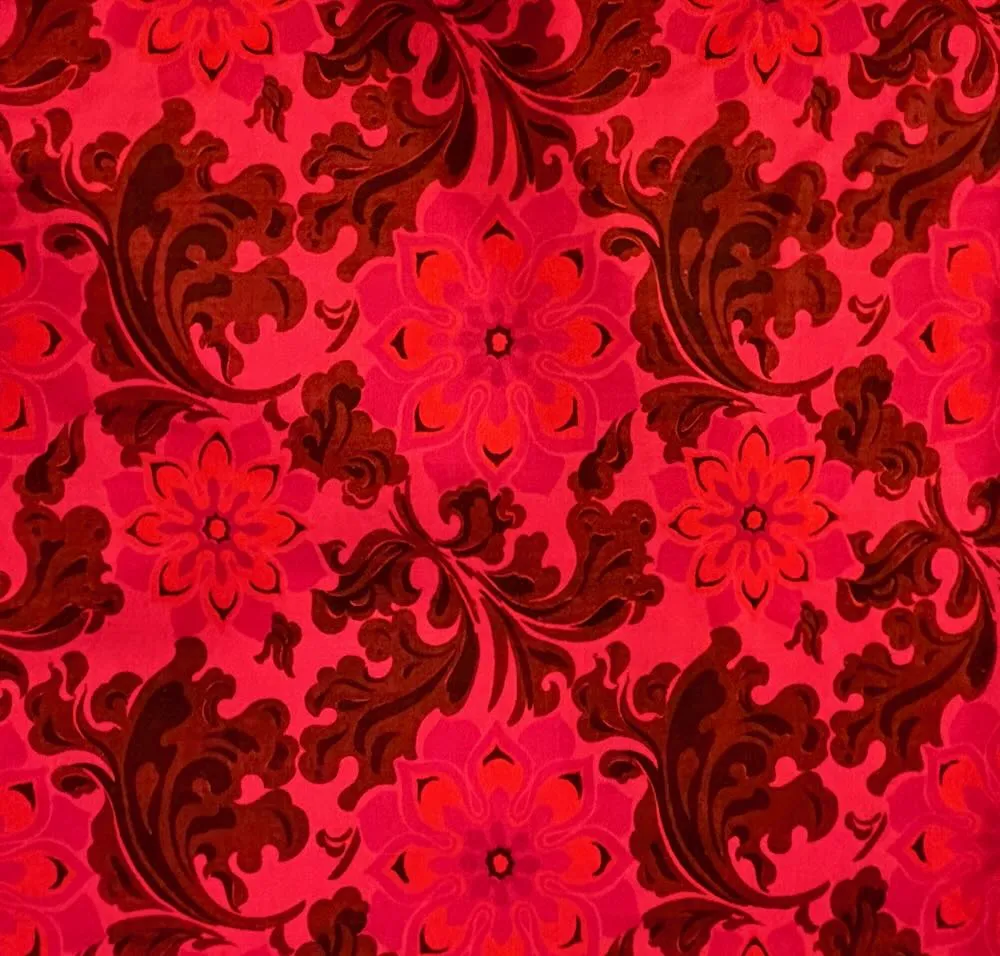
Jim Thompson Thai silk occupies a rare place in the world of textiles. It is at once traditional and modern, rooted in centuries-old handweaving yet shaped by a distinctly mid-20th-century vision. Today, vintage examples—especially those from the 1960s and 1970s—are increasingly appreciated not just as fabric, but as cultural artifacts that reflect a unique moment in design, craft, and global taste.
Understanding these textiles requires more than a quick glance. It means looking at the man behind the revival, the nature of Thai silk itself, and the subtle details that distinguish authentic vintage pieces from later production.
The Man Behind the Silk: Jim Thompson
Jim Thompson was not a textile artisan by training. He was an American architect and former OSS officer who arrived in Thailand during World War II and chose to remain after the war ended. What he found there was a largely local, declining silk tradition—beautiful, but not positioned for international relevance.
In the late 1940s, Thompson began working with weavers, particularly in the Ban Krua community in Bangkok. He saw potential where others did not. By organizing production, refining color palettes, and introducing Thai silk to Western designers, he effectively transformed a regional craft into a global luxury material.
A defining moment came in 1951, when Thai silk was used in the Broadway production of The King and I. From that point forward, demand expanded rapidly. Designers, decorators, and fashion houses began to take notice. Thai silk, once local and utilitarian, became expressive, vibrant, and unmistakably modern.
Thompson’s disappearance in 1967 only deepened the mystique surrounding his name. Yet the company continued, carrying forward his aesthetic and standards into the decades that followed.
The Surawong Road Store and the Experience of Buying Silk
The historic Jim Thompson flagship store on Surawong Road in Bangkok quickly became the center of this growing international presence. Jim Thompson opened it in 1967, making it the only store established during his lifetime.
In the late 1960s and 1970s, shopping there felt very different from today’s open, display-driven retail spaces. Staff kept fabrics in large wooden cabinets or wardrobes and brought out bolts of silk one by one. They draped and handled each piece with care, creating a more personal, almost theatrical experience. The setting highlighted texture, color, and movement—qualities that define silk itself.
This context matters because it shows how people understood the material: not as commodity yardage, but as something to experience.
What Makes Thai Silk Unique
At the heart of these fabrics is the silk itself. Thai silk is traditionally handwoven, and unlike industrial silk, it retains a natural irregularity. These subtle variations—often referred to as slubs—are not flaws. They are evidence of the weaving process and a key indicator of authenticity.
Another defining feature is its interaction with light. Thai silk is known for its depth and luminosity. In some weaves, especially “shot silk,” the warp and weft threads are different colors, creating a surface that shifts depending on the angle of view. Even printed silks retain this underlying vibrancy.
The result is a fabric that feels alive. It does not sit flat visually; it changes, moves, and responds to its environment.
The 1970s: A Distinctive Period for Jim Thompson Silks
The 1970s represent a particularly interesting phase in the evolution of Jim Thompson textiles. Following Thompson’s disappearance, the company expanded to meet growing global demand while maintaining many of its core principles.
During this period, designs became bolder and more varied. There was a noticeable blending of influences—traditional Thai motifs alongside Western decorative styles, large-scale florals, geometric patterns, and cross-cultural references. These fabrics aligned well with the era’s broader design movements, from bohemian fashion to increasingly expressive interior decoration.
Production methods also evolved. Weavers continued to rely on handweaving, while designers introduced more complex printing techniques to create layered patterns and richer compositions. This approach produced textiles that feel both handcrafted and visually ambitious.
For collectors today, this balance is part of the appeal. These textiles capture a moment when craftsmanship and global design trends intersected in a very direct way.
How to Identify Vintage Jim Thompson Thai Silk
Identifying authentic vintage Thai silk requires attention to detail rather than reliance on a single marker.
The first thing to look for is the texture. Handwoven silk will not be perfectly uniform. Small variations in thickness and weave are expected. These irregularities are not defects; they are inherent to the material.
The second element is the quality of the print or color. Vintage pieces often show depth rather than flatness. Colors may appear layered or slightly varied, particularly in hand-screened designs. This gives the fabric a more painterly quality compared to modern, highly uniform printing.
Selvedge markings can provide additional confirmation. Some fabrics include woven or printed text along the edge indicating origin or composition, such as references to Thai silk or handweaving. While not all pieces retain this—edges are often trimmed when fabric is cut—when present, these markings can be very helpful.
Finally, consider the overall character of the design. Vintage Jim Thompson textiles tend to avoid minimalism. Whether floral, geometric, or abstract, they often have a richness and confidence in scale and color that reflects their era.
Understanding Variation: Design vs. Condition
One of the most common misunderstandings with vintage silk is the interpretation of variation.
Marks, tonal shifts, or irregular pattern edges are often assumed to be signs of wear or damage. In many cases, they are actually part of the original design or the result of the production process.
Hand-screen printing, resist techniques, and even the interaction between dye and silk fibers can create subtle inconsistencies. These should be read as characteristics of the textile, not flaws.
True condition issues—such as tears, staining, or fiber breakdown—are typically easy to distinguish once one understands what intentional variation looks like.
Why Vintage Jim Thompson Silk Still Matters
Vintage Jim Thompson silk remains relevant because it represents more than a decorative material. It embodies a convergence of craft, design, and cultural exchange.
These fabrics were never purely traditional, nor were they entirely modern. They sit between worlds—Thai in origin, international in influence, and deeply tied to a specific historical moment.
For collectors and designers, this is what gives them lasting appeal. They offer texture, color, and narrative in equal measure. Whether used in interiors, fashion, or simply appreciated as textiles, they continue to stand apart from mass-produced alternatives.
Closing Thoughts
To understand vintage Jim Thompson silk is to look beyond surface beauty. It is to recognize the hand of the weaver, the vision of the designer, and the context in which these textiles were created.
The pieces that survive today—especially those in strong condition—are not just remnants of the past. They are enduring examples of how traditional craftsmanship can be reimagined, elevated, and shared with the world.
And that is what makes them worth preserving.