
Description
Persian Lacquer Photo Album Hand-Painted Miniatures Shah Mosque Isfahan Signed c.1900
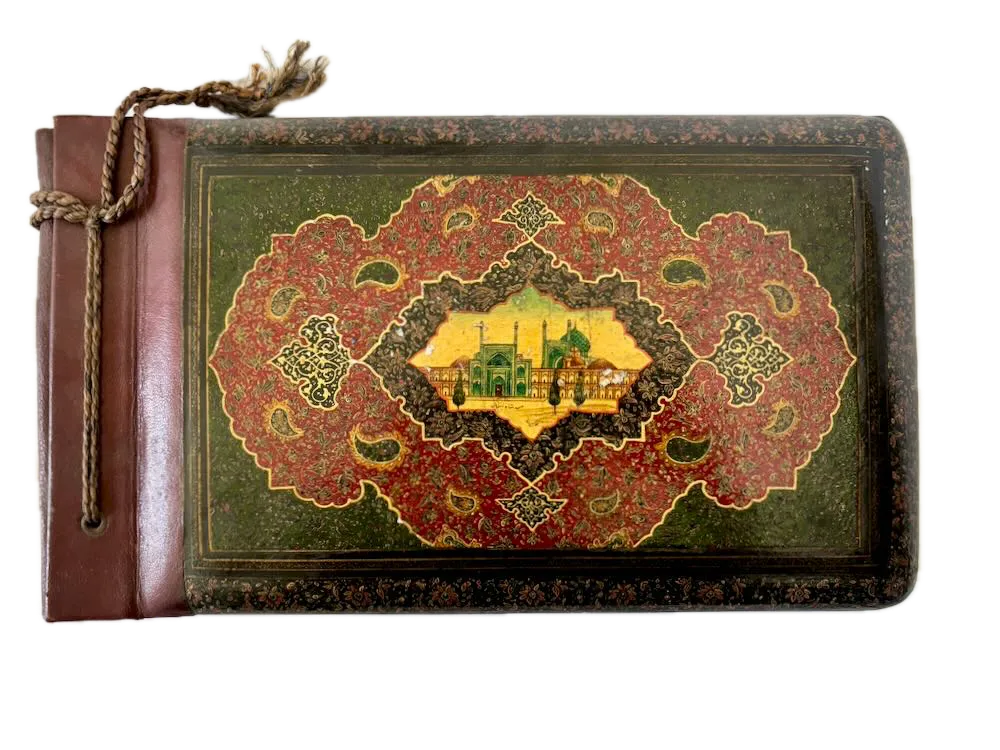
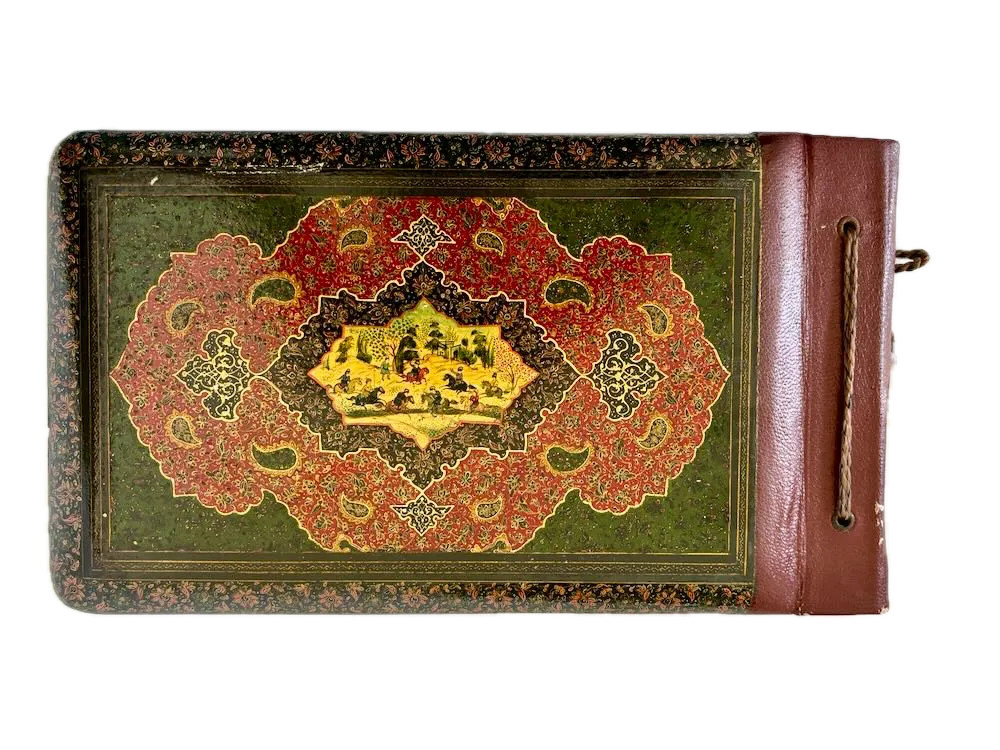
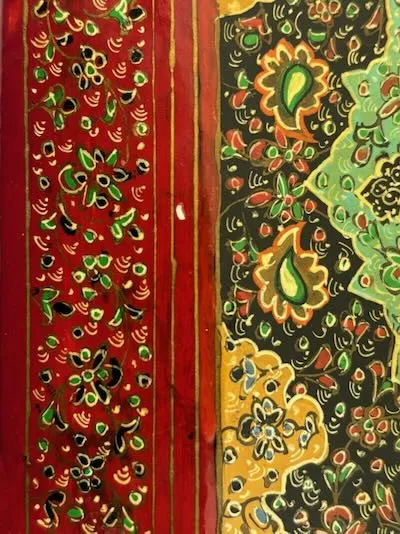
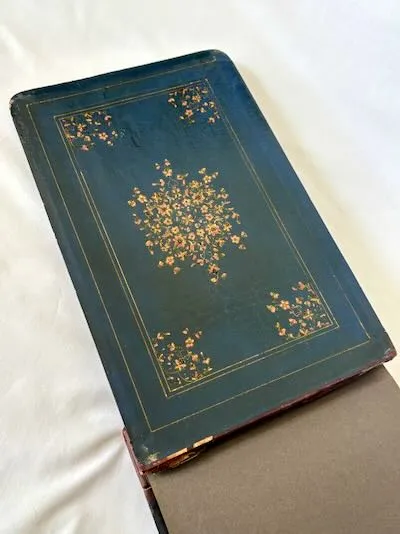
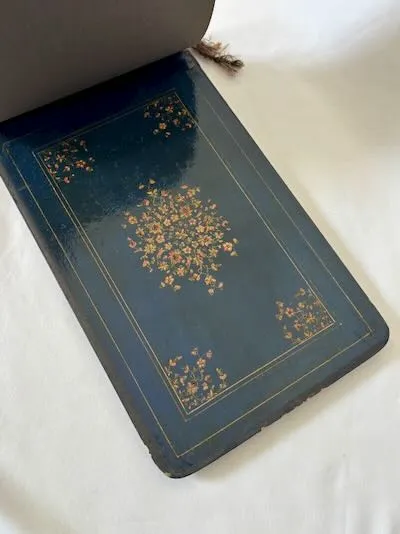
This Persian lacquer photo album presents a refined and carefully constructed example of late Qajar to early 20th century decorative arts, where object and painting function together as a unified surface. Executed in lacquered papier-mâché with hand-painted miniatures on both covers, the album centers on a toranj (medallion) composition, framing architectural and figural scenes within a dense field of floral and boteh ornament. The piece reflects the established traditions of Isfahan lacquer workshops, where albums, pen boxes, and mirror cases were produced as artistic objects as much as functional ones.
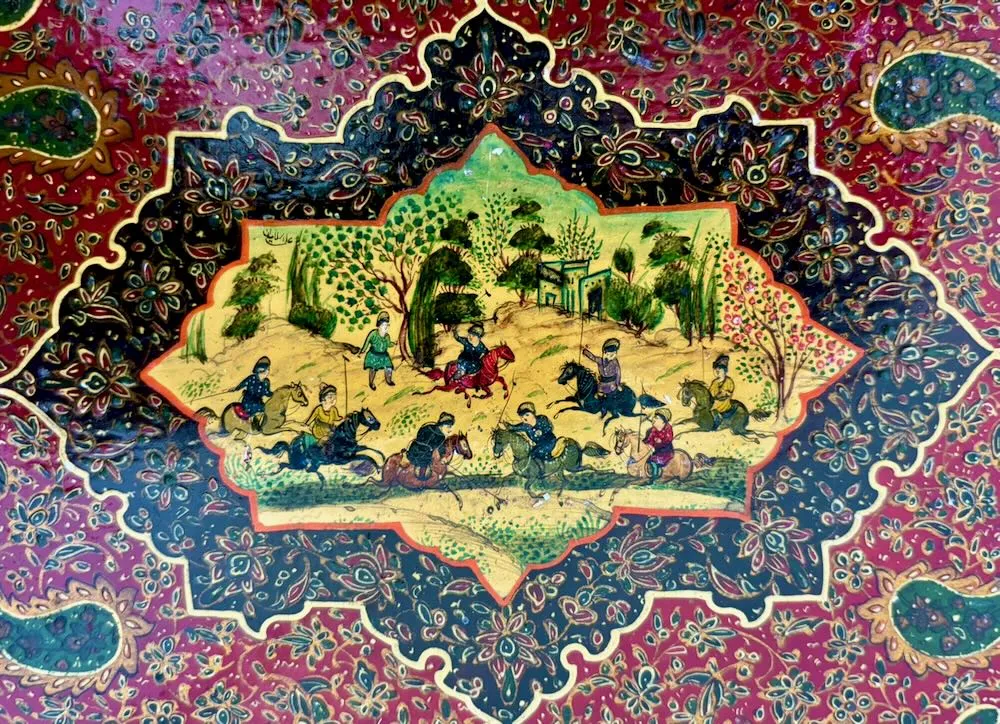
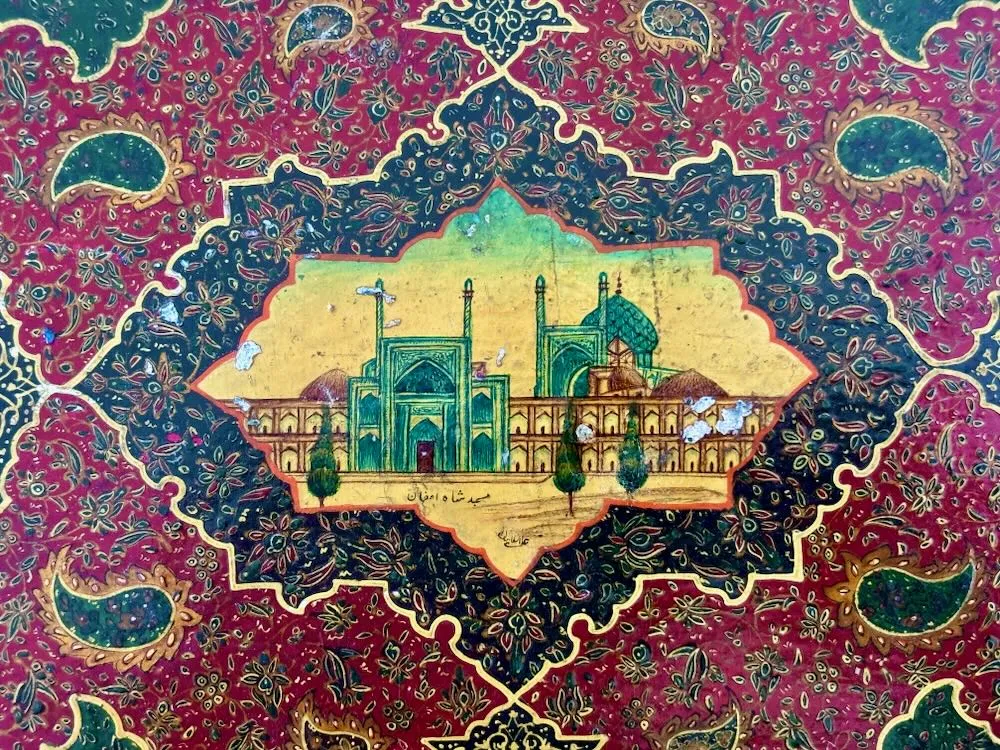
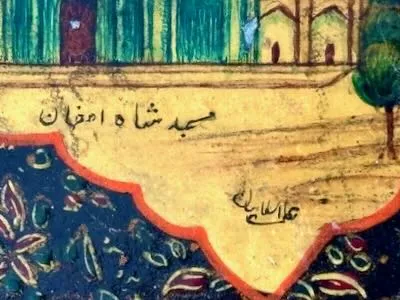
The front cover depicts the Shah Mosque of Isfahan (Masjed-e Shah), rendered in miniature within a central medallion, while the reverse presents a figural scene of riders in a landscape, likely referencing courtly leisure or hunting imagery common in late Qajar painting. Both compositions are surrounded by intricate floral borders with gold detailing, set against deep red and green grounds that create contrast and visual depth.
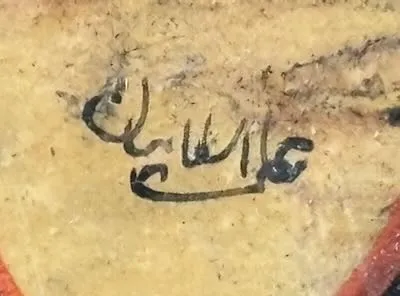
A Persian inscription identifying the Shah Mosque appears within the architectural scene, while a second line includes an artist’s signature beginning with “Amal-e” (“Work of”), with the name partially legible. This placement, embedded within the painted composition, follows known practices of lacquer artists of the period, who signed their work discreetly within the imagery rather than externally.
Form and Construction
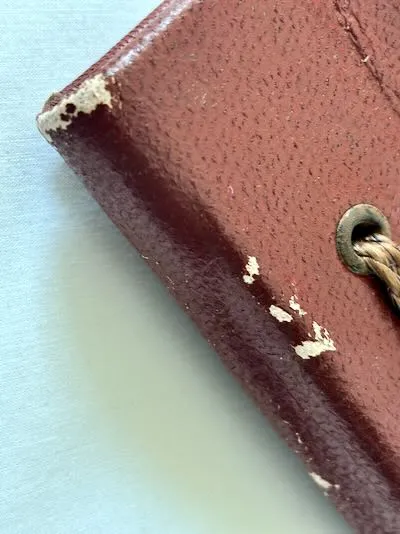
The album is constructed from lacquered papier-mâché panels, joined with a leather-grain paper spine and cord binding. This method allowed for a durable yet lightweight structure, suitable for handling while preserving the integrity of the painted surfaces. The lacquer finish provides both protection and depth, giving the surface a layered, luminous quality that enhances the miniature painting.
The format is elongated, measuring approximately 8 x 14 inches (approximately 20.3 x 35.5 cm), with a depth of approximately 1 inch (approximately 2.5 cm). The proportions align with larger-format albums produced during the late Qajar to early 20th century period, often intended for presentation or collection rather than everyday use.
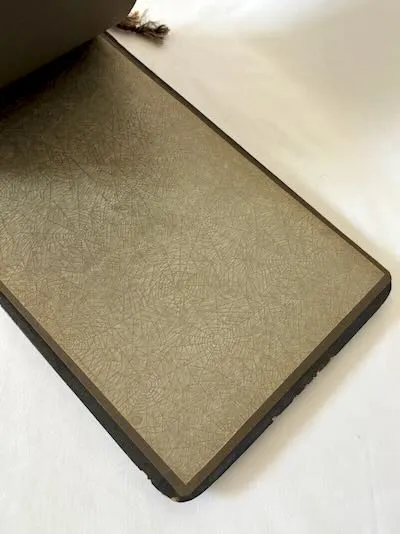
Interior surfaces continue the decorative program. The inside covers feature painted floral scrollwork on a dark blue ground with fine gold line work, while the pages are dark grey and fitted with protective transparent linings. The interior remains unused, preserving both structure and surface.
Lacquerwork Tradition
Persian lacquerwork developed as a specialized artistic medium during the Safavid period and continued into the Qajar era, where it reached a high level of refinement. By the late 19th and early 20th century, workshops in Isfahan and Tehran produced finely painted objects using layered varnish over papier-mâché, allowing for detailed miniature painting combined with durable surfaces.
Albums such as this occupy a particular place within that tradition. While functional in form, they were also vehicles for artistic expression, combining painting, ornament, and inscription within a single object. The use of architectural subjects, especially monuments like the Shah Mosque, reflects both cultural identity and an interest in documenting significant sites through miniature painting.
The inclusion of a figural scene on the reverse adds a complementary narrative element, balancing architectural representation with courtly imagery. This duality is characteristic of late Qajar lacquerwork, where multiple themes coexist within a unified decorative framework.
Condition
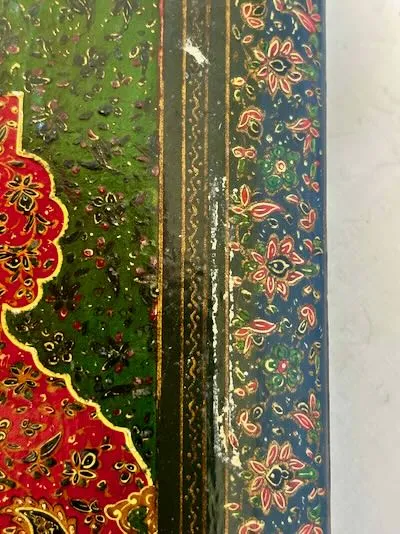
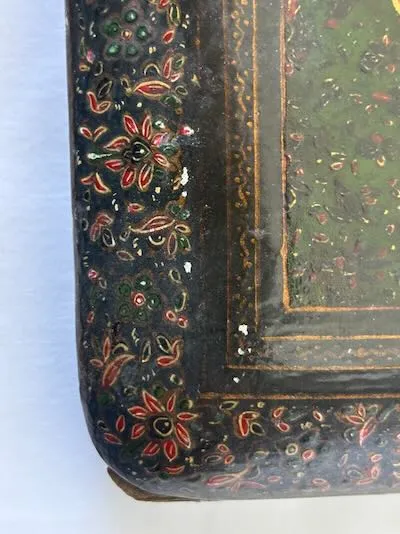
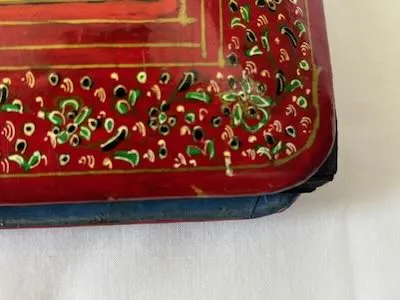
The album remains in very good antique condition. The lacquer surfaces show areas of wear and minor losses, particularly along edges and corners, consistent with age. The leather-grain paper spine exhibits expected wear and surface loss, while the cord binding remains present.
The interior is notably well preserved and unused, with pages intact and protective linings in place. The painted miniatures remain clear and legible, with only minor surface wear visible upon close inspection.