
Description
Antique Bohemian Cobalt Glass Qajar Portrait Bottle – Gilt & Enameled, Persian Market, circa 1900–1925
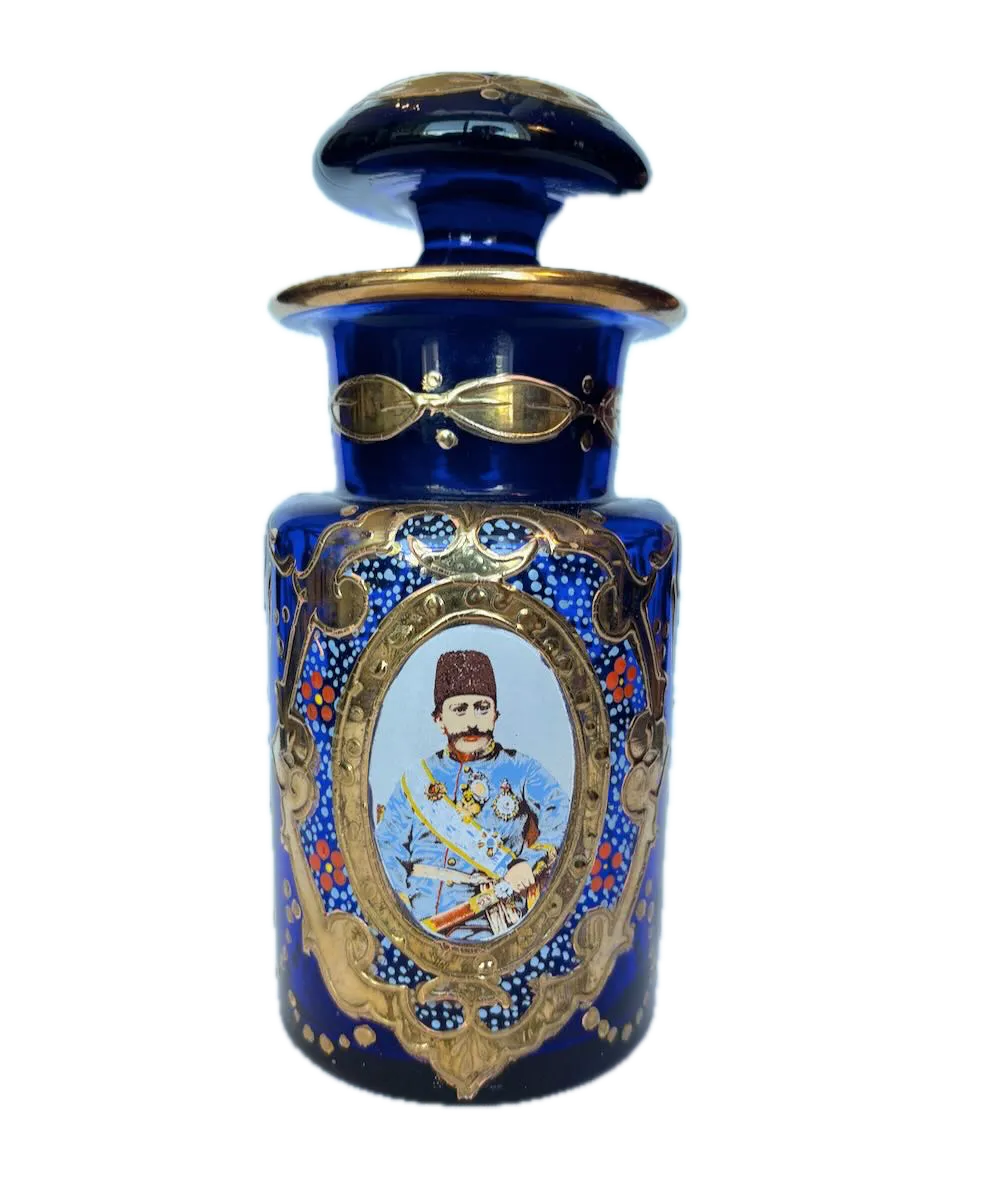
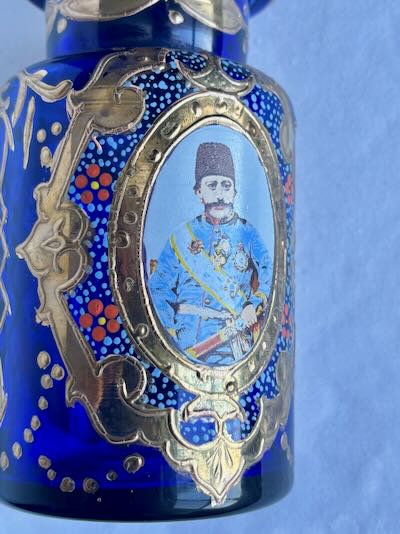
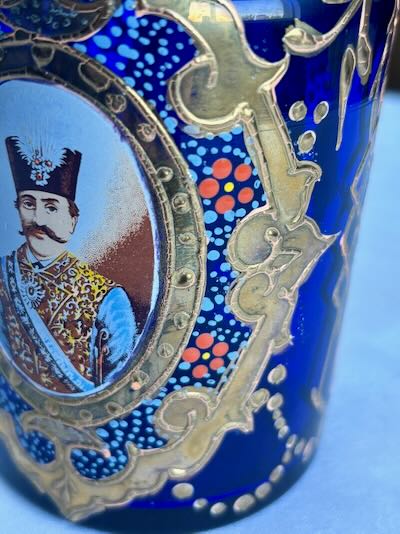
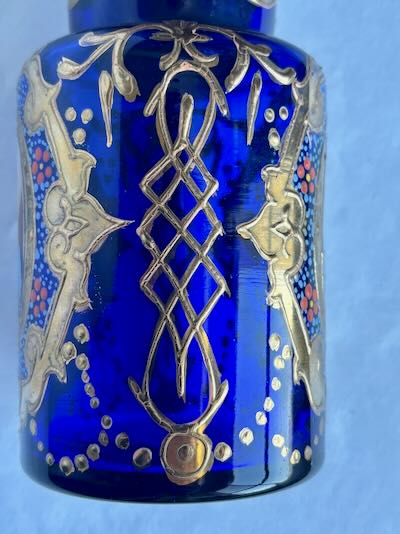
This richly decorated cobalt blue glass bottle reflects a distinctive category of decorative arts created for the Persian market in the early 20th century. The deep, saturated blue ground provides a dramatic backdrop for intricate gilding and enamel work, giving the piece strong visual presence and depth.
Gold scrollwork moves across the surface in layered patterns, complemented by raised polychrome enamel dots in red, blue, and white. These elements create texture and variation, allowing light to interact with the surface in a way that feels almost jewel-like. The combination of cobalt glass and gilt decoration remains one of the defining features of these export pieces.
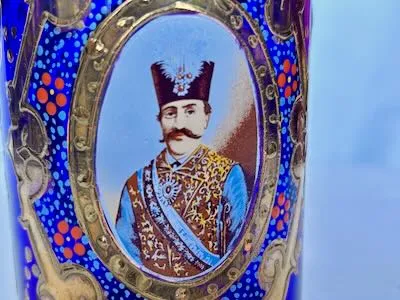
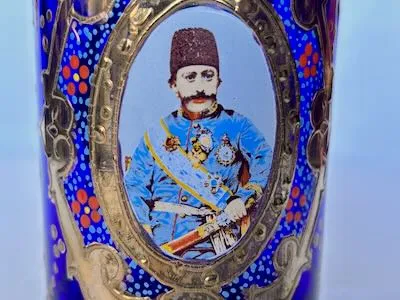
Two oval portrait medallions form the focal point of the design. Each portrait depicts a different Qajar ruler, adding both historical context and visual balance. Pieces featuring dual portraits appear less frequently and tend to attract greater interest among collectors.
A Cross-Cultural Decorative Object
This type of glassware is widely associated with Bohemian workshops (present-day Czech Republic), where skilled glassmakers produced objects specifically for export to Persia. These pieces combine European glassmaking techniques with Persian royal imagery and decorative preferences.
The result is a hybrid form that reflects both traditions. The craftsmanship aligns with Bohemian production, while the subject matter and aesthetic speak directly to the Persian market.
The Qajar Portraits
The portraits are consistent with depictions of Naser al-Din Shah Qajar (reigned 1848–1896) and his successor Mozaffar al-Din Shah (reigned 1896–1907). These rulers frequently appear on decorative export objects from this period.
The presence of both figures suggests production after the transition between their reigns, placing the piece within the early 20th century. This dual-portrait format adds a layer of historical interest beyond purely decorative examples.
Craftsmanship and Detail
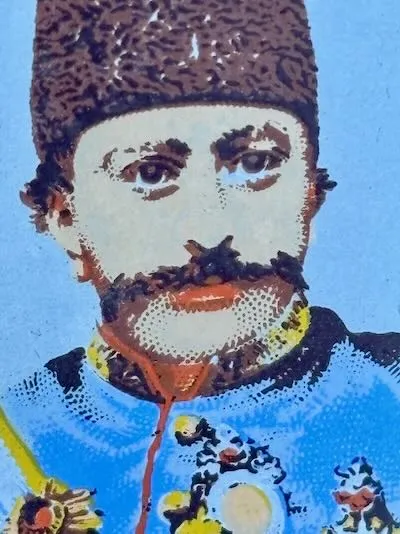
The bottle shows characteristics consistent with hand-blown glass, including subtle variations in form and surface. The portrait medallions appear to have been applied using an early transfer technique, visible as a fine stipple pattern under close inspection.
Artisans then added gilding and enamel decoration by hand. The enamel dots show slight variation in size and placement, while the gilding displays natural wear, softening on raised areas and developing warmer tones over time. These features align with period production methods.
Dating and Attribution
This piece shows characteristics consistent with Bohemian cobalt glass made for the Persian market, likely dating to the early 20th century, circa 1900–1925. While similar examples are sometimes attributed to well-known workshops, this piece is best described within the broader category of Bohemian export glass without specific maker attribution.
Condition
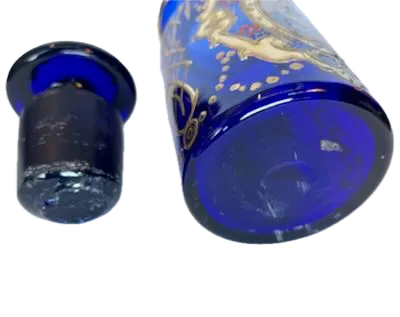
The bottle presents well overall. The glass retains a strong cobalt tone with good clarity. Gilding and enamel decoration remain visible with age-appropriate wear. The stopper shows minor chipping and wear at the base, consistent with use and age. No major structural issues observed.
Display
This piece works well as a focal point in a cabinet or on a console. Its color and detail allow it to stand alone, while the portrait medallions add depth and narrative. It also pairs effectively with other decorative glass or metal-mounted objects.