
Persian glass does not begin in a workshop. It begins in light.
Long before furnaces and blowpipes, before Islamic calligraphy or Sasanian refinement, there was a fascination with how light moved through matter—how something as fragile as glass could hold both color and clarity at once. In Persia, that fascination became a tradition, and over more than two millennia, it evolved into one of the most quietly enduring artistic legacies in the decorative arts.
Unlike many traditions that rise, peak, and disappear, Persian glass never truly vanished. It changed, adapted, absorbed influence, and re-emerged—again and again—each time carrying fragments of its past forward.
Early Origins: Glass as Rarity and Ritual
The earliest glass objects found in the Iranian plateau are small—beads, tubes, fragments of ornament. Dating back to the second millennium BC, they were not everyday items but rare materials, closer in status to gemstones than to pottery. These early objects were shaped using core-forming techniques, where molten glass was wound around a removable core. The process was slow, deliberate, and limited in scale.
Glass at this stage was not about transparency. It was about color, density, and symbolic presence. Deep blues, greens, and opaque tones dominated, often echoing precious stones like lapis lazuli. The material itself carried meaning—used in burial, ritual, and adornment.
By the Achaemenid period, glass had begun to take on more refined forms. Small vessels appeared—cosmetic containers, narrow-necked bottles—but production remained limited. Metal and stone still defined luxury. Glass was an accent, not yet a central medium.
The Turning Point: Breath Enters the Material
Everything changed when air entered the process. With the introduction of glassblowing during the Parthian period, glass was no longer shaped solely by hand and mold—it could be expanded, thinned, and formed through breath. This was not just a technical shift. It was philosophical. Glass became lighter, more fluid, more responsive. It began to move.
The blowpipe allowed artisans to create forms that were previously impossible—elongated necks, curved bodies, delicate rims. Production increased, but so did variation. Each object retained subtle differences. Even at scale, glass remained tied to the hand.
Persia absorbed this innovation quickly. What began as an imported technique soon became localized, shaped by Persian aesthetics—less concerned with excess ornament and more focused on proportion and balance.
The Sasanian Refinement: Control, Clarity, and Form
If the Parthian period introduced possibility, the Sasanian period mastered it. From the third to the seventh century, Persian glass reached a level of refinement that would influence both East and West. The objects became more controlled, more deliberate. Decoration did not disappear, but it became secondary to form.
The most characteristic Sasanian vessels are deceptively simple. Bowls with gently curving walls. Goblets with restrained profiles. Surfaces interrupted by cut facets or subtle relief. Light becomes the decoration, moving across polished planes and recessed cuts.
Transparency became a goal, though rarely absolute. Most Sasanian glass carries a faint green or blue tone, the result of natural impurities in the silica. Rather than correcting this, artisans embraced it. The color softened the light, giving the glass a quiet depth.
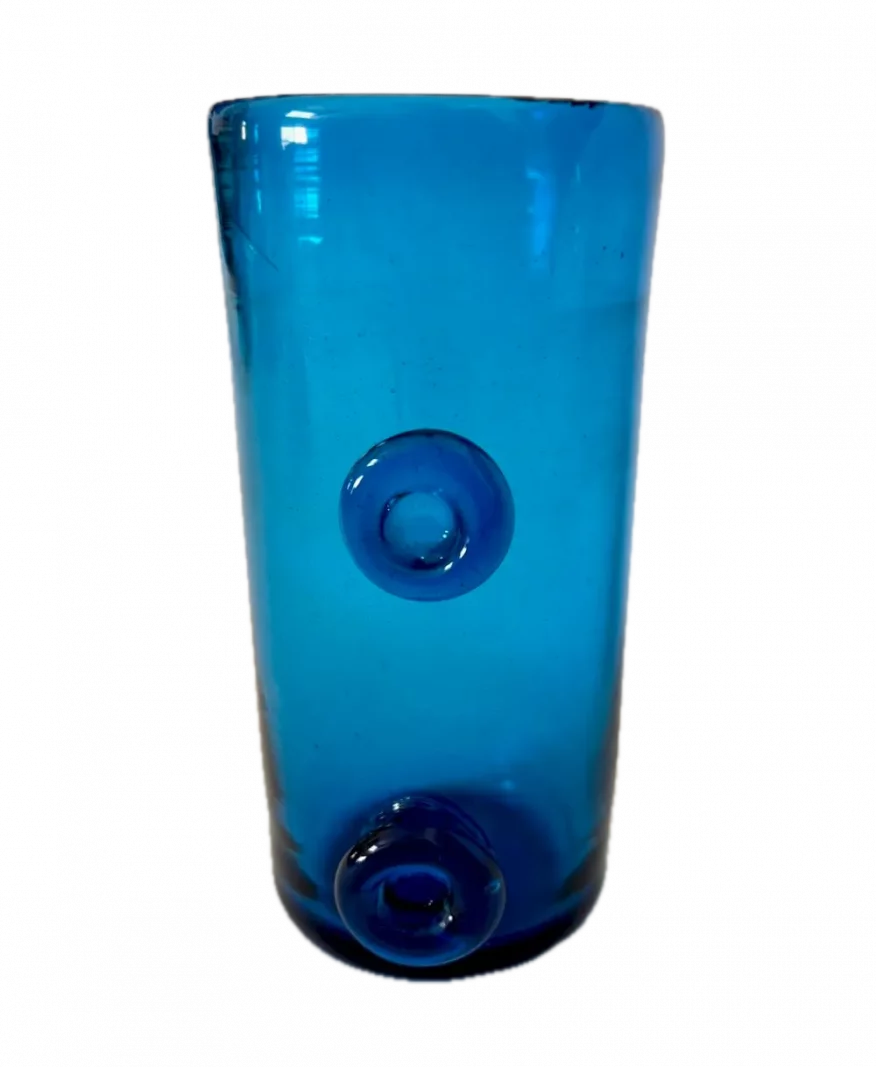
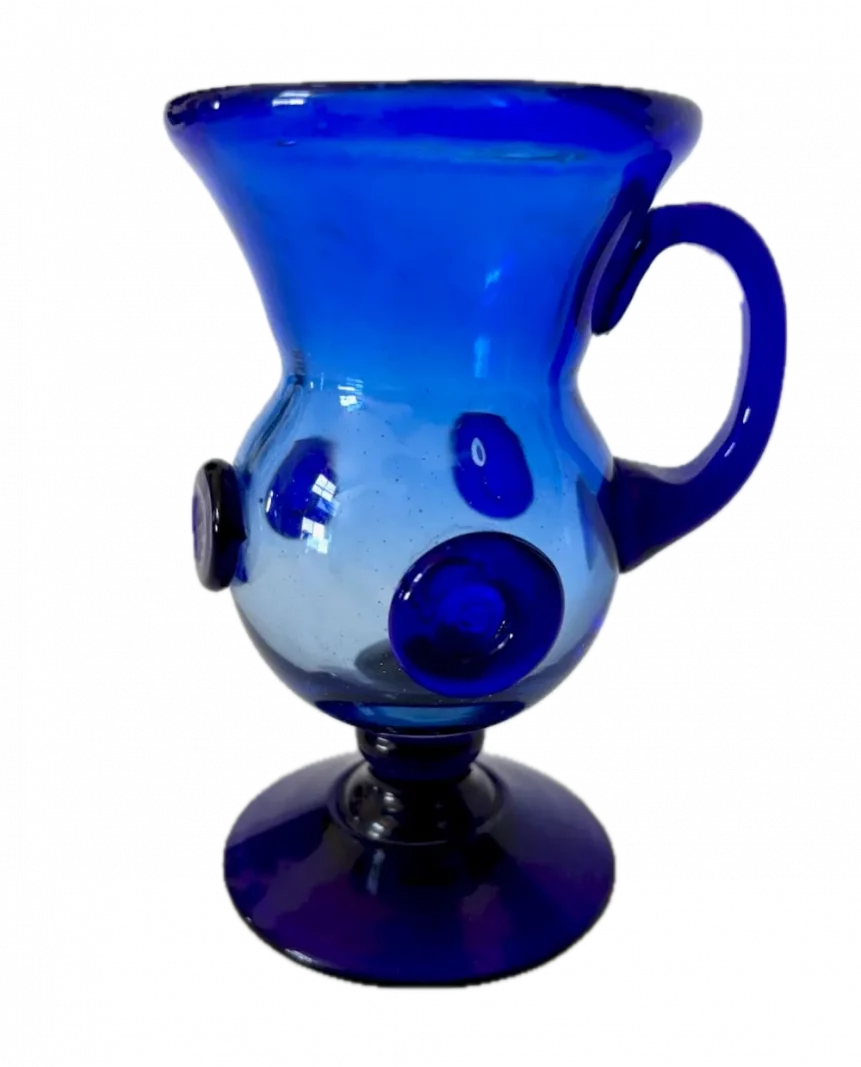
Applied decoration remained important, particularly the use of prunts—small, rounded pads of glass added to the surface. These were not merely decorative. They provided grip, texture, and rhythm. In many ways, they are among the most enduring visual signatures of Persian glass, reappearing centuries later in modern work. What defines this period is restraint. Where Roman glass could be elaborate, Sasanian glass is confident enough to do less.
Transformation Under Islam: Expansion Without Loss
The transition into the Islamic period did not erase what came before. Instead, it expanded it. Glassmaking continued across Persia, now within a broader cultural and artistic framework. Techniques improved. Forms diversified. Decoration became more expressive. Engraving, cutting, and mold-blowing introduced new possibilities, while surface treatments added layers of visual complexity.
For the first time, glass carried writing. Kufic inscriptions appeared on vessels, sometimes as the sole decoration, sometimes integrated into geometric or vegetal patterns. The material became a surface for language as well as light.
Yet even with these additions, the underlying principles remained. Balance. Proportion. A sensitivity to form that resisted excess. Glass from this period traveled widely. It moved along trade routes into Central Asia, China, and beyond. Persian glass was no longer regional—it was part of a global exchange of ideas and objects.
Decline, Adaptation, and Influence
By the later medieval and early modern periods, Persian glass faced new pressures. European glassmaking, particularly from Venice and later Bohemia, introduced new standards of clarity, color, and precision. Imported glass began to compete with local production.
Persian workshops did not disappear, but they shifted. Production became more utilitarian in some cases, more commercially driven in others. Forms changed. Influences blended.
Long-necked bottles, rosewater sprinklers, and decorative vessels continued to be made, especially during the Safavid and Qajar periods. These objects often reflect a dialogue between Persian tradition and external influence rather than a purely internal evolution. It is easy to see this period as a decline. It is more accurate to see it as a transition.
The Modern Revival: Memory Reformed in Glass
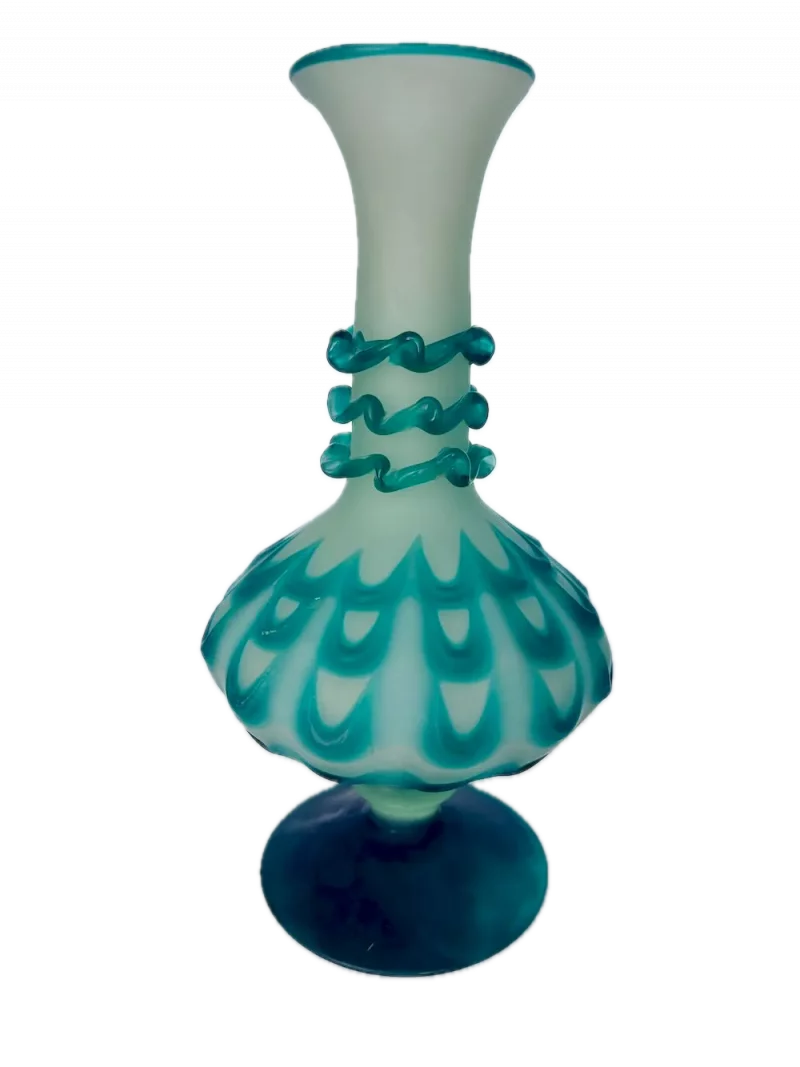
The twentieth century marks a quiet but important return. In Tehran and other centers, glassmakers began to revisit earlier forms and techniques—not as reproductions, but as reinterpretations. Ancient Sasanian motifs reappeared, not copied exactly but translated into modern objects. Prunts returned. Bold colors emerged. Surfaces were sometimes left smooth, sometimes textured, sometimes treated with satin finishes.
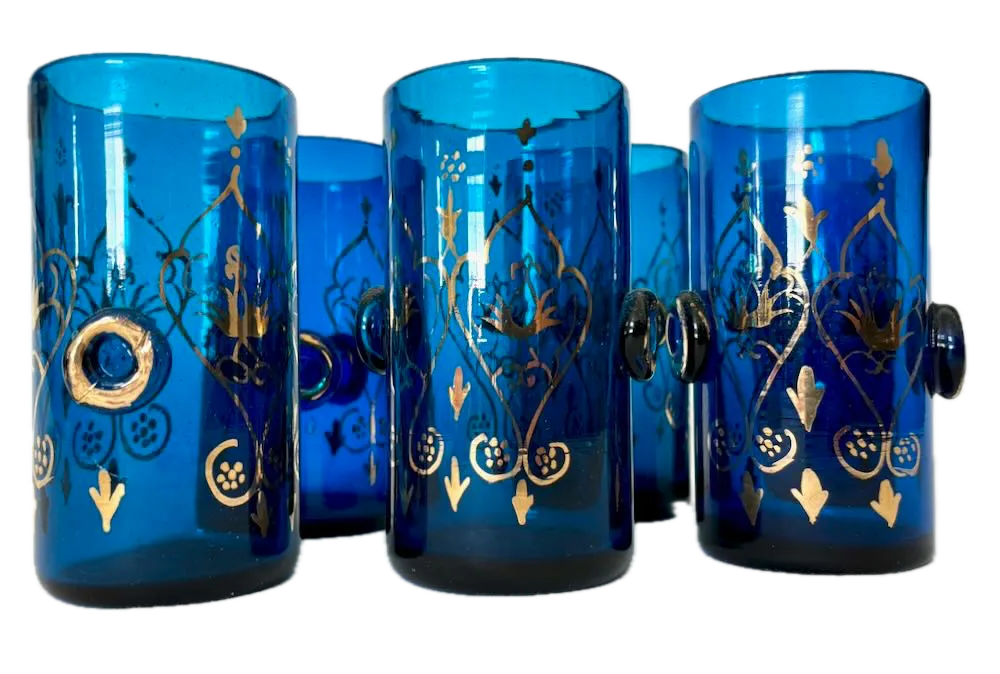
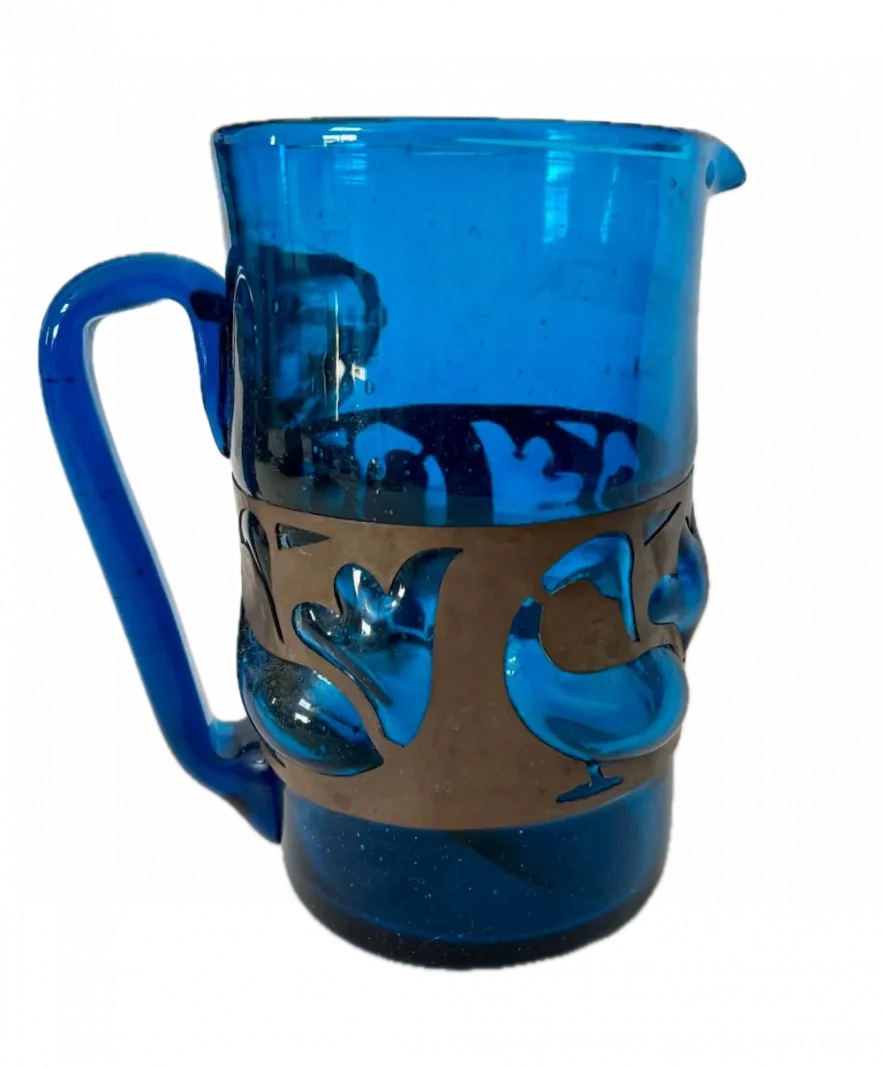
These pieces occupy a unique space. They are neither ancient nor purely modern. They are part of a continuum. The use of strong cobalt blues, teals, and greens reflects both historical precedent and contemporary taste. Applied decoration recalls Sasanian methods, while enamel and gilded motifs echo Islamic ornament. The forms remain fluid, slightly asymmetrical, unmistakably handmade.
Even the material tells a story. Much of this glass is made using recycled material, a continuation of a long-standing practice. In Persian terminology, the distinction between glass made from raw material and glass made from recycled sources reflects not just technique, but philosophy—nothing is wasted, everything is reformed.
The Nature of Persian Glass
To understand Persian glass, it helps to set aside the idea of perfection. These objects are not meant to be identical. They carry small variations—slight asymmetries, tiny bubbles, shifts in thickness. The pontil mark at the base is not hidden. It is evidence of process. What matters is not flawlessness, but presence.
Persian glass is about how an object sits in space, how it catches light, how it feels in the hand. It is both functional and expressive. A cup is a cup, but it is also an exploration of proportion and movement.
Continuity Rather Than Revival
It is tempting to describe modern Persian glass as a revival. That suggests something was lost and then rediscovered.
A more accurate view is continuity. The techniques changed. The scale shifted. External influences came and went. But the essential relationship between material, maker, and form remained intact.
From ancient beads to Sasanian bowls, from Islamic engraved vessels to twentieth-century studio pieces, Persian glass has never been static. It evolves without breaking. And that is what gives it its character. It is not just an object. It is a process that has been unfolding for thousands of years—one vessel at a time.