

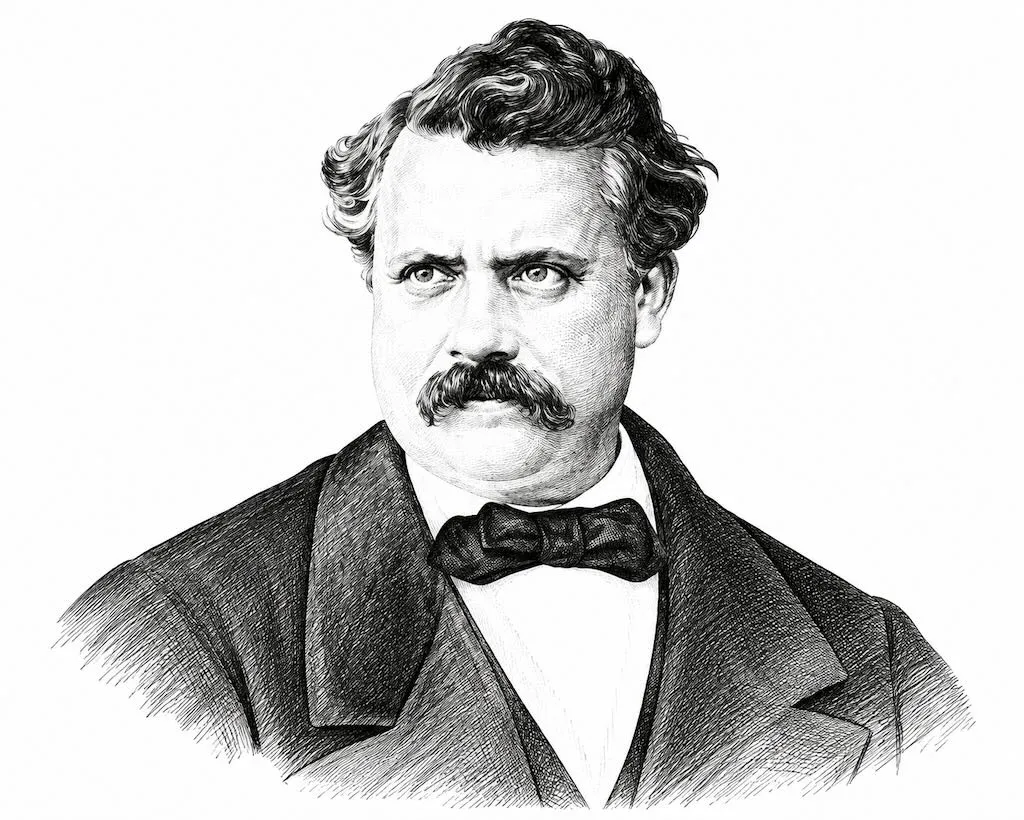
Louis Vuitton (1821–1892) founded one of the world’s most influential luxury houses, transforming the practical craft of trunk making into an enduring tradition of design, innovation and craftsmanship. What began as a modest Parisian workshop in 1854 eventually developed into an international fashion house celebrated for its luggage, handbags, leather goods, clothing and accessories.
The company’s history closely follows the changing nature of travel. From horse-drawn carriages and ocean liners to automobiles and commercial aviation, successive generations of the Vuitton family adapted their creations to the needs of an increasingly mobile society. Their innovations combined durability, practical construction and decorative elegance, establishing a distinctive identity that extended far beyond traditional luggage.
Although the interlocking LV initials have become one of the most recognizable symbols in fashion, the company’s heritage encompasses much more than its famous Monogram canvas. Its history includes revolutionary trunk construction, sophisticated locking systems, ornamental patterns, innovative materials, architectural workshops and collaborations with some of the world’s leading artists and designers.
Louis Vuitton: From Apprentice to Master Trunk Maker
Early Life in the French Jura
Louis Vuitton was born on August 4, 1821, in Anchay, a small village in the Jura region of eastern France. He grew up in a rural environment surrounded by forests and traditional craftsmanship, where wood was an essential material for everyday life.
At fourteen, Vuitton left his hometown and began a journey toward Paris, traveling much of the distance on foot. His arrival in the French capital marked the beginning of a career that would eventually transform the luxury luggage industry. Paris in the nineteenth century was a rapidly changing city. Expanding commerce, industrial development and growing prosperity created new opportunities for skilled craftsmen, particularly those serving affluent households.
Apprenticeship with Monsieur Maréchal
In 1837, sixteen-year-old Louis Vuitton entered the workshop of Monsieur Maréchal, a respected Parisian box maker and packer. At the time, professional packing was a specialized trade. Wealthy travelers required craftsmen who could arrange clothing, hats, delicate objects and valuable possessions inside custom-made containers designed to withstand difficult journeys. Traveling by carriage, ship or railway often subjected luggage to rough handling, moisture and unpredictable conditions. Skilled packers needed to understand both the objects they protected and the construction of the cases that carried them.
Vuitton learned to build wooden boxes, prepare trunks and pack fragile belongings with precision. Over seventeen years, he developed an exceptional understanding of materials, construction and the practical requirements of travel. His reputation eventually brought him into contact with the French imperial court.
Empress Eugénie and the French Imperial Court
Vuitton became associated with Empress Eugénie, wife of Napoleon III, during the Second French Empire. His work as a specialist packer placed him within the world of aristocratic travel, elaborate wardrobes and carefully organized personal possessions.
The Empress was known for her fashionable clothing and extensive wardrobe, which required skilled handling during travel. This experience exposed Vuitton to the demanding expectations of wealthy clients and reinforced the importance of combining technical reliability with refined presentation. The relationship also helped establish his reputation among fashionable Parisian society.
The Foundation of Louis Vuitton in 1854
The First Louis Vuitton Workshop
In 1854, Louis Vuitton established his own business at 4 Rue Neuve-des-Capucines in Paris, near the fashionable Place Vendôme district. He specialized in packing and the manufacture of trunks and travel cases, applying the knowledge he had acquired during his apprenticeship.
His business emerged at an important moment in transportation history. Railways were expanding across Europe, steamships were improving international travel, and an increasingly prosperous clientele required practical luggage for longer journeys. Vuitton recognized that traditional trunk construction did not always meet these changing needs. He began developing lighter, more efficient forms that offered greater convenience without sacrificing strength.
The Revolutionary Flat-Top Trunk
In 1858, Vuitton introduced a flat-topped trunk covered in gray Trianon canvas, one of the most important developments in the company’s early history. Traditional trunks often featured rounded or domed lids, a form intended partly to encourage rainwater to run off their surfaces. However, curved tops made luggage difficult to stack efficiently. Vuitton’s flat-topped construction addressed this problem. The new form allowed trunks to be arranged more securely in railway carriages, ship compartments and other confined spaces.
The lightweight canvas covering also provided an alternative to heavier leather-covered luggage. This combination of practicality and refined appearance helped distinguish Vuitton’s products from conventional travel trunks. The design represented an important shift in luggage construction, responding directly to the requirements of modern transportation.
The Asnières Workshops
The success of the business soon required larger manufacturing facilities. In 1859, Vuitton established a workshop at Asnières-sur-Seine, outside Paris. The site provided space for skilled craftsmen, specialized equipment and the production of increasingly sophisticated travel goods.
The Vuitton family also established a residence at Asnières, strengthening the connection between the business and its founders. The workshops became an important center of craftsmanship, where artisans developed trunks, cases and special commissions requiring considerable technical expertise. Asnières remains closely associated with Louis Vuitton’s heritage and continues to represent the company’s tradition of specialized manufacturing.
The Evolution of Louis Vuitton Canvas
Trianon and Striped Canvas
The earliest Vuitton trunks used gray Trianon canvas, valued for its relatively lightweight construction and understated appearance. As the company’s success attracted imitators, distinctive surface designs became increasingly important. During the 1870s, Vuitton introduced striped canvas, known as Rayée, creating a more recognizable visual identity for its luggage. The stripes provided decorative character while making the company’s products easier to distinguish from competing trunks. These developments anticipated the increasingly important relationship between surface pattern, brand identity and luxury goods.
The Damier Canvas of 1888
In 1888, Louis Vuitton and his son Georges introduced the Damier canvas, a geometric checkerboard pattern that became one of the company’s enduring designs. The alternating squares created a distinctive surface that was both visually sophisticated and immediately recognizable.
Early Damier designs incorporated a registered trademark inscription, reinforcing the company’s efforts to protect its products against imitation. The checkerboard pattern also reflected broader nineteenth-century interests in geometry, repetition and ornamental design. Unlike the later Monogram, Damier relied on a relatively restrained arrangement of geometric shapes rather than initials or floral emblems. Its continued use demonstrates the longevity of a design that combines simplicity with a strong visual identity.
Georges Vuitton and the Creation of the LV Monogram
Louis Vuitton died in 1892, leaving the business to his son Georges Vuitton, who had already become closely involved in its development. In 1896, Georges introduced the famous Monogram canvas as a tribute to his father and as a means of distinguishing the company’s products from imitations. The pattern combined the interlocking initials LV with stylized floral and geometric ornaments. Its decorative language reflected the artistic climate of the late nineteenth century, including influences associated with Neo-Gothic ornament and Japonism.
Japonism had become an important force in European decorative arts following the growing availability of Japanese art and objects. Designers admired Japanese approaches to pattern, composition and stylized natural forms. The Monogram’s combination of initials, flowers and geometric elements created a repeating design that was both ornamental and unmistakably associated with the company. Over time, it became one of the most recognizable patterns in the history of luxury fashion.
Georges Vuitton and the Expansion of the House
Innovation in Trunk Security
Georges Vuitton continued his father’s commitment to practical innovation. In 1886, Louis and Georges developed a sophisticated trunk-locking system intended to protect travelers’ possessions more effectively. The system evolved into a patented tumbler lock that allowed customers to secure multiple pieces of luggage with a coordinated key arrangement.
Security was an important consideration during an era when trunks frequently passed through the hands of railway employees, porters and shipping personnel. The company’s locking systems became another distinguishing feature of its luggage.
International Expansion
Under Georges Vuitton, the business developed an increasingly international clientele. The company participated in exhibitions, promoted its products abroad and established commercial relationships beyond France. By the end of the nineteenth century, Vuitton trunks were reaching customers in major international markets. The expansion reflected the growing importance of global travel and the increasing prestige of French luxury craftsmanship.
The Steamer Bag
The Steamer Bag, introduced in the early twentieth century, reflected the changing requirements of ocean travel. Designed as a supplementary piece of luggage, it offered a practical way to organize belongings during long journeys. Unlike rigid trunks, softer travel bags provided flexibility and easier access to frequently used items. The Steamer Bag anticipated the broader development of portable leather goods that would eventually become central to the company’s identity.
Gaston-Louis Vuitton and the Modern Travel Bag
A New Generation of Design
Gaston-Louis Vuitton, grandson of the founder, played an important role in adapting the company’s products to twentieth-century travel. The rise of automobiles, commercial aviation and modern tourism changed the expectations of travelers. Large rigid trunks remained important for extensive journeys, but customers increasingly needed lighter, more flexible bags suitable for shorter trips. The company responded by developing practical designs that retained its traditional emphasis on durability and craftsmanship.
The Keepall
Introduced in the 1930s, the Keepall became one of Louis Vuitton’s most enduring travel designs. Originally known as the Tientout, it featured a flexible, elongated shape, rounded handles and a generous interior.
Its construction made it suitable for carrying clothing and personal belongings without the weight and rigidity of a traditional trunk. The Keepall reflected a new approach to luxury travel, emphasizing mobility and convenience. Its basic design has remained recognizable through numerous variations in size, materials and decorative finishes.
The Speedy
The Speedy also emerged during the 1930s, originally under the name Express. Designed as a compact travel bag, it reflected the growing fascination with speed, mobility and modern transportation. Its rounded silhouette, short handles and practical zippered opening made it suitable for a changing lifestyle.
During the late 1950s, improvements in flexible Monogram canvas helped transform the Speedy into a fashionable handbag. Its association with Audrey Hepburn contributed to its international popularity. The Speedy became a particularly successful example of how a design originating in luggage could evolve into an everyday fashion accessory.
The Noé Bag
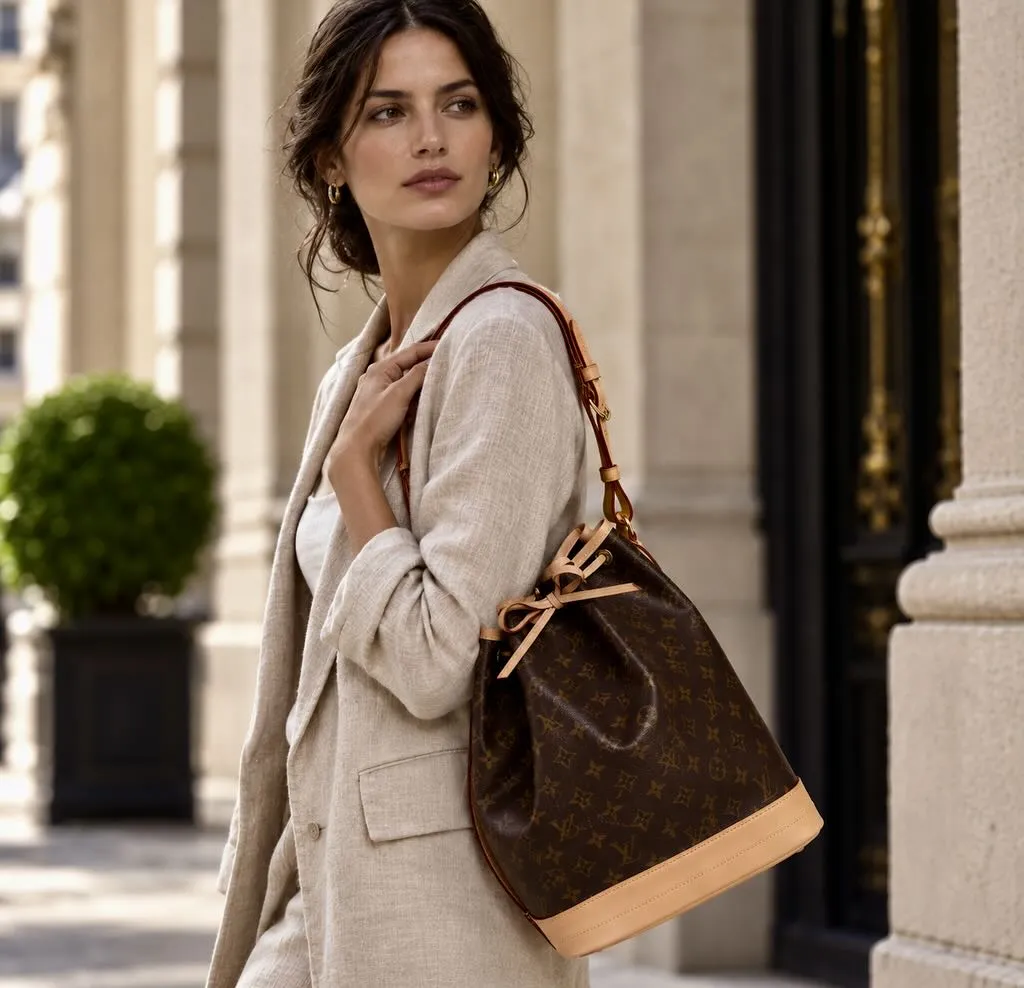
Gaston-Louis Vuitton introduced the Noé in 1932 in response to a request for a bag capable of transporting champagne bottles. Its drawstring closure, rounded base and flexible body created a practical solution to an unusual carrying requirement. The design could accommodate several bottles while maintaining a distinctive and elegant silhouette. Over time, the Noé evolved from a specialized carrying bag into a fashionable accessory. Its bucket shape became one of the company’s most recognizable handbag forms.
The Origins of the Alma
The design ancestry of the Alma reaches back to 1934, when Louis Vuitton introduced a model known as the Squire Bag. The design underwent several transformations and name changes during the twentieth century. Its structured shape, curved upper outline and balanced proportions reflected the influence of Art Deco and modern decorative design.
The name Alma was adopted in 1992, establishing the identity under which the bag became internationally recognized. This history illustrates why collectors must distinguish the introduction of an original design from the later development of a particular model name.
Materials, Craftsmanship and Construction
The Development of Flexible Monogram Canvas
One of the most important technical developments in Louis Vuitton’s twentieth-century history involved improvements to its coated canvas. The original Monogram canvas was particularly suitable for rigid luggage, but softer handbags required a material capable of greater flexibility. During the late 1950s, Claude-Louis Vuitton developed improvements to the coating process that made Monogram canvas more adaptable to flexible leather goods. This innovation contributed significantly to the company’s expansion into handbags and smaller accessories. It allowed the familiar Monogram pattern to move beyond rigid trunks and become part of everyday fashion.
Natural Cowhide Leather and Patina
Natural cowhide leather became an important element of Louis Vuitton’s luggage and handbag construction. Often used for handles, straps, piping and reinforcing details, the leather develops a characteristic patina through exposure to light, handling and age. Its gradual darkening is one of the recognizable features of many vintage Monogram pieces. However, patina varies considerably according to storage conditions, use and environmental exposure. The appearance of aged leather can provide useful information about an item’s history, but it should not be treated as definitive proof of authenticity or manufacturing date.
Hardware and Construction Details
Louis Vuitton’s products frequently incorporate carefully finished metal hardware, reinforced corners, durable stitching and thoughtfully designed closures. The construction of trunks required particular attention to strength and resistance to repeated handling. As the company expanded into handbags, wallets and smaller accessories, these principles were adapted to more compact forms. Quality construction became an important part of the company’s identity, even as styles and materials changed.
Louis Vuitton and the Rise of Luxury Handbags
From Travel Goods to Everyday Accessories
The expansion of Louis Vuitton into handbags reflected major changes in twentieth-century society. Women increasingly required practical accessories suitable for travel, work, shopping and daily activities. The company’s experience with luggage provided a foundation for developing bags that combined functional interiors, durable materials and recognizable styling. The transition was gradual rather than the result of a single collection. Designs originally intended for travel evolved into handbags, while new forms responded to changing fashions and lifestyles.
Epi Leather
Introduced in 1985, Epi leather became one of Louis Vuitton’s most recognizable materials. Its distinctive textured surface features a regular embossed grain inspired by earlier leather treatments found in the company’s archives.
The material offered a different aesthetic from Monogram canvas, emphasizing color, texture and understated branding. Epi leather appeared in handbags, wallets, key cases and other accessories. Its relatively structured appearance made it particularly suitable for designs with architectural silhouettes.
The Development of Small Leather Goods
Wallets, cardholders, key cases and other small leather accessories became important components of Louis Vuitton’s collections. These objects translated the company’s design vocabulary into compact products intended for frequent use. Monogram canvas, Damier patterns, Epi leather and other materials appeared across a variety of functional designs.
Small leather goods also reflected changing habits, including the growing importance of credit cards, organized compartments and compact personal accessories. For collectors, these pieces offer an opportunity to examine the evolution of materials, hardware and interior construction across different periods.
The Formation of LVMH
Louis Vuitton and Moët Hennessy
In 1987, Louis Vuitton merged with Moët Hennessy to form LVMH, a luxury group bringing together prominent businesses in fashion, leather goods, wines and spirits. The merger marked an important turning point in the company’s corporate history.
Louis Vuitton retained its established identity while becoming part of a much larger international luxury organization. The development of LVMH reflected the growing globalization of luxury markets and the increasing importance of coordinated international distribution. The company continued expanding its retail presence and developing new product categories.
Marc Jacobs and the Transformation into a Fashion House
The Introduction of Ready-to-Wear
In 1997, Louis Vuitton appointed American designer Marc Jacobs as artistic director. His appointment marked a significant development in the company’s history because he introduced ready-to-wear fashion alongside its established luggage and leather-goods collections.
Jacobs brought a contemporary fashion perspective to a house whose reputation had been built primarily on travel accessories. His collections explored the relationship between historical luxury craftsmanship and modern fashion culture. The expansion helped establish Louis Vuitton as a major participant in international runway fashion.
Stephen Sprouse and the Graffiti Collection
One of Marc Jacobs’s most influential collaborations involved American artist and designer Stephen Sprouse. The collaboration introduced graffiti-inspired lettering across Louis Vuitton’s traditional Monogram canvas.
The result deliberately contrasted the formality of an established luxury pattern with the visual language of contemporary street culture. The collection demonstrated how the company’s historic materials could serve as a canvas for artistic reinterpretation. It also helped establish a new approach to collaborations between luxury fashion houses and contemporary artists.
Takashi Murakami and the Multicolore Monogram
Japanese artist Takashi Murakami collaborated with Louis Vuitton on a series of highly recognizable designs. The Multicolore Monogram, introduced in 2003, transformed the traditional brown-and-gold pattern into a vibrant arrangement of colored initials and ornaments. The collection brought a playful contemporary aesthetic to the company’s established visual identity.
Murakami’s designs became particularly associated with early twenty-first-century fashion and remain an important chapter in the history of Louis Vuitton accessories. The collaboration also illustrated the growing relationship between luxury fashion, contemporary art and popular culture.
Louis Vuitton in the Twenty-First Century
Nicolas Ghesquière and Women’s Fashion
Nicolas Ghesquière became artistic director of Louis Vuitton’s women’s collections in 2013. His work brought a distinctive interest in architecture, structure, modern materials and experimental silhouettes. Ghesquière frequently explored the relationship between historical references and contemporary design. His collections contributed to the continuing evolution of the company beyond its traditional luggage heritage.
Virgil Abloh and Men’s Fashion
In 2018, Virgil Abloh became artistic director of Louis Vuitton’s menswear collections. His appointment represented an important moment in contemporary fashion, bringing together luxury craftsmanship, street-wear influences, graphic design and cultural collaboration.
Abloh approached fashion through a multidisciplinary perspective, drawing connections between clothing, architecture, music and visual art. His work helped introduce Louis Vuitton to new audiences while challenging conventional distinctions between luxury fashion and street culture. Abloh died in 2021, leaving a significant influence on contemporary menswear.
Pharrell Williams and Contemporary Menswear
In 2023, Louis Vuitton appointed musician and creative director Pharrell Williams as its men’s creative director. His collections continued the company’s engagement with music, contemporary culture and collaborations across creative disciplines.
The appointment reflected the increasingly broad cultural role of luxury fashion houses in the twenty-first century. Louis Vuitton’s contemporary identity now encompasses fashion, art, design, performance and global cultural events, while continuing to draw on its historical relationship with travel.
Louis Vuitton and the Art of Collaboration
Artists and the Monogram
Louis Vuitton has repeatedly invited artists and designers to reinterpret its established patterns and materials. These collaborations have included Stephen Sprouse, Takashi Murakami, Richard Prince, Yayoi Kusama and other internationally recognized creative figures.
Each collaboration has introduced a different artistic language to the company’s products. Some emphasize color and graphic experimentation, while others explore conceptual art, illustration or sculptural form. The Monogram’s adaptability has helped maintain its relevance across changing artistic movements.
The Monogram as Decorative Art
The Louis Vuitton Monogram occupies an unusual position between commercial branding and ornamental design. Its repeating arrangement of initials, floral forms and geometric elements functions both as a recognizable trademark and as a decorative surface pattern.
The design reflects the late nineteenth-century interest in combining stylized natural motifs with geometric repetition. Its continued reinterpretation demonstrates how a historic pattern can evolve through changes in material, color, scale and artistic context. From a decorative-arts perspective, the Monogram is significant because it transformed a company’s identity into an enduring ornamental vocabulary.
Collecting Vintage Louis Vuitton
The Appeal of Vintage Louis Vuitton
Vintage Louis Vuitton attracts collectors interested in craftsmanship, fashion history and the evolution of luxury design. Early trunks represent the company’s original specialization and offer insight into nineteenth-century travel. Twentieth-century handbags reflect changing lifestyles, manufacturing techniques and decorative preferences.
Small leather goods, including wallets and key cases, provide another collecting category, often featuring the same recognizable materials and hardware used in larger accessories. Collectors may seek particular models, discontinued colors, unusual materials or examples associated with specific design periods. The historical significance of a piece depends on more than its age. Design, condition, originality, documentation and rarity all contribute to its interest.
Identifying Vintage Louis Vuitton
Identifying and dating vintage Louis Vuitton requires careful examination of the entire object. Materials, stitching, hardware, interior construction, labels, manufacturing marks and design details can provide useful evidence.
However, no single feature should be treated as conclusive proof of authenticity. The company has produced many successful designs over extended periods, and certain models have undergone changes in construction, dimensions and materials. A vintage-looking design may therefore have been manufactured considerably later than its original introduction.
Date Codes and Manufacturing Information
Louis Vuitton used various production and date-code systems on many products beginning in the late twentieth century. The formats changed over time, and their interpretation depends on the particular period and type of product. Date codes were primarily production identifiers rather than unique serial numbers.
Their presence alone does not establish authenticity, since counterfeit products may reproduce plausible codes. Likewise, the absence of a conventional date code does not automatically indicate that an item is counterfeit. Some older products predate these systems, and the company has subsequently introduced different identification technologies. Collectors should evaluate manufacturing information alongside construction details and reliable documentation.
Condition and Preservation
Vintage Louis Vuitton products may show evidence of use, including leather patina, surface scratches, corner wear, hardware discoloration or changes in interior materials. Coated canvas can develop cracks or other deterioration, particularly where repeated folding places stress on the material.
Certain vintage interior coatings may become sticky or deteriorate with age, even when the exterior remains attractive. Condition descriptions should distinguish cosmetic wear from structural damage. Careful storage away from excessive heat, moisture and direct sunlight can help preserve vintage leather goods and accessories.
The Louis Vuitton Legacy
Louis Vuitton’s achievement began with a practical problem: how to protect and transport personal possessions more efficiently. His solution required an understanding of craftsmanship, materials, construction and the changing requirements of travel. The flat-top trunk became the foundation of a business that successive generations expanded through technical innovation and increasingly distinctive decorative designs.
Georges Vuitton introduced the Monogram and developed the company’s international presence. Gaston-Louis Vuitton helped adapt its products to modern travel, while later designers transformed the house into an influential force in contemporary fashion. Throughout these changes, the company’s identity remained closely connected to its origins in luggage and the art of travel.
For collectors, vintage Louis Vuitton pieces represent different stages in this evolution. A nineteenth-century trunk, a mid-century travel bag and a later leather accessory may differ greatly in appearance, yet each belongs to the same continuing history of design and craftsmanship.
The enduring significance of Louis Vuitton lies in its ability to adapt practical objects to changing lifestyles while preserving a recognizable artistic and commercial identity. From the workshops of nineteenth-century Paris to the international fashion industry, the house has remained an important example of the relationship between craftsmanship, innovation and decorative design.