
Description
Antique Persian Brass Ghalamzani Ashtray Gol-o-Bolbol Motif 4⅞” Early 20th Century
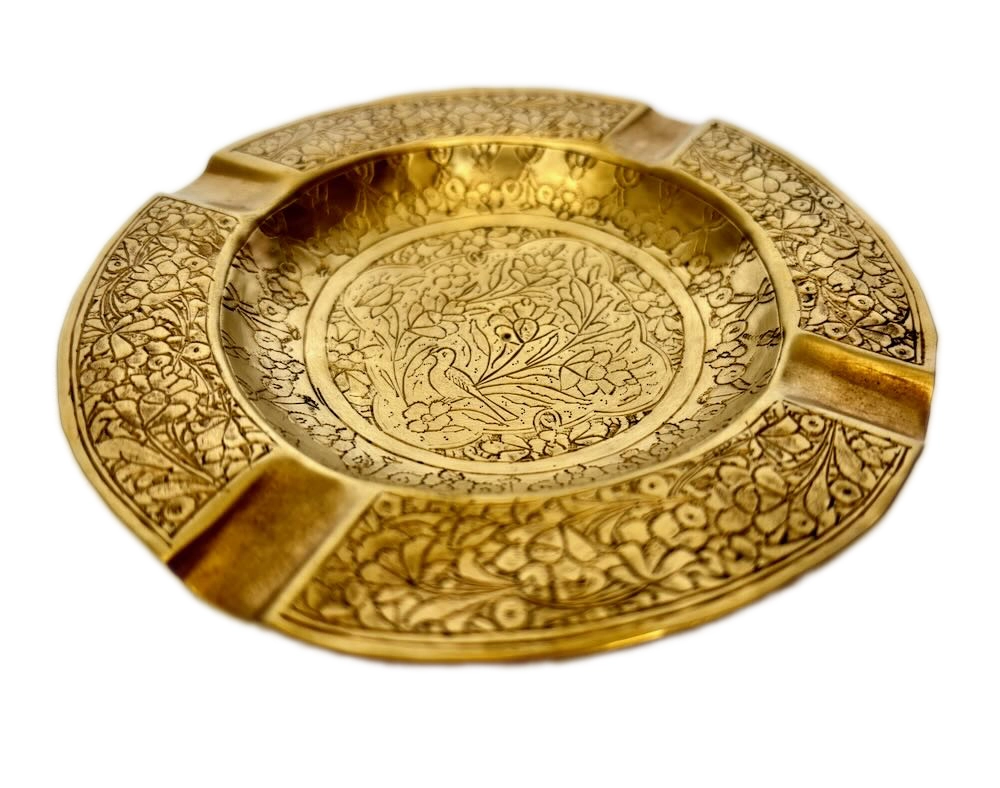
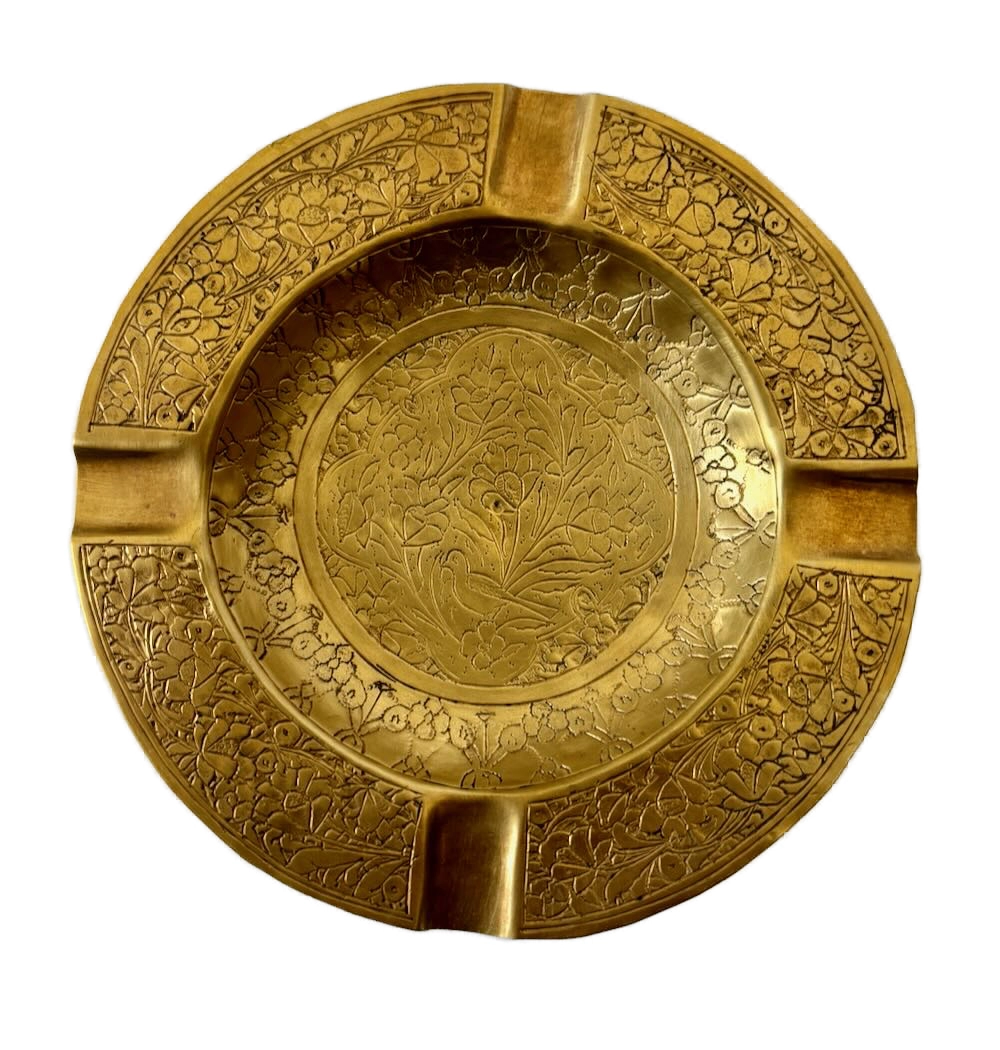
This antique Persian brass ashtray is a finely hand-engraved example of traditional Ghalamzani (Ghalam Zani, or Qalamzani) metalwork, likely produced in Isfahan during the early 20th century. The piece has remained within the same family collection for nearly 100 years and reflects the dense floral engraving and refined craftsmanship associated with classical Persian decorative arts.
The ashtray features the celebrated Gol-o-Bolbol motif — the Nightingale and Rose theme that became one of the defining visual languages of Persian art during the Safavid and Qajar periods. At the center, a bird rests among flowering branches and scrolling foliage, surrounded by an intricate field of engraved floral ornament extending across nearly the entire surface.
The decoration is not repoussé but hand-carved and engraved using the traditional Ghalamzani technique. Fine chisels and small hammers were used to cut directly into the brass surface, creating delicate lines and textured details that were later darkened to increase visual depth and contrast. The engraved grooves still retain much of this darkened contrast, helping emphasize the complexity of the decoration.
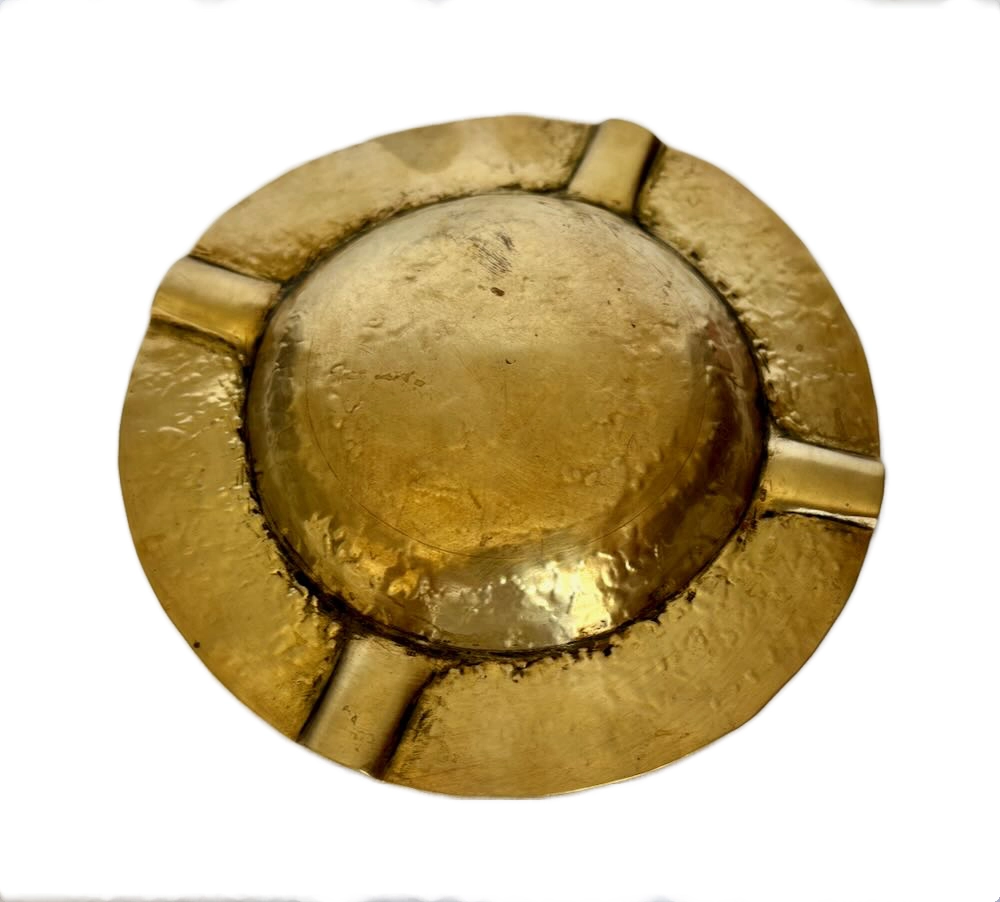
The form itself is elegant and balanced, with four integrated cigarette rests dividing the outer border into engraved panels. Although originally created as a smoking accessory, pieces like this are increasingly appreciated today as decorative objects, jewelry trays, desk accessories, or examples of traditional Persian craftsmanship.
Persian Ghalamzani and the Gol-o-Bolbol Tradition
Ghalamzani is one of the oldest surviving Persian metalworking traditions, with roots extending through the Achaemenid, Sassanian, Seljuk, Safavid, and Qajar periods. The art flourished especially in Isfahan, where master engravers developed highly sophisticated methods for decorating brass, copper, silver, and gold vessels with floral arabesques, calligraphy, courtly scenes, and poetic imagery.
The process traditionally involved stabilizing the reverse of the metal with bitumen and gypsum before engraving intricate designs into the surface using specialized chisels. Once completed, the engraved lines were often darkened using charcoal or blackening compounds to enhance contrast and visibility.
The Gol-o-Bolbol motif seen here carries deep symbolic meaning within Persian culture and poetry. The nightingale represents longing and devotion, while the rose symbolizes beauty and spiritual perfection. Together they became enduring themes throughout Persian literature, miniature painting, lacquerwork, textiles, ceramics, and metal arts.
The dense all-over floral decoration of this ashtray reflects the Safavid-inspired ornamental vocabulary that continued well into early 20th century Persian decorative production.
Design and Decorative Appeal
The warm aged brass surface combined with the darkened engraved lines creates exceptional visual richness, particularly under directional light where the hand-carved details become more pronounced.
Unlike many later tourist-market reproductions, this example retains a refined hand-worked quality with balanced engraving density, crisp detailing, and natural irregularities consistent with traditional artisan production.
Its compact scale also makes it highly versatile for modern interiors, functioning equally well in traditional, eclectic, Middle Eastern, or maximalist decorative settings.
Condition
Good antique condition with age-related wear and patina consistent with an early 20th century brass object. Surface wear, oxidation, darkening within engraved areas, and small handling marks are present and appropriate to age. The engraved decoration remains crisp and visually strong. Please review photographs carefully as they form part of the description.