
Description
Saji Fine China Japanese Imari Porcelain Plate with Chrysanthemum Decoration – 12 Inch Mid-Century Export Ware
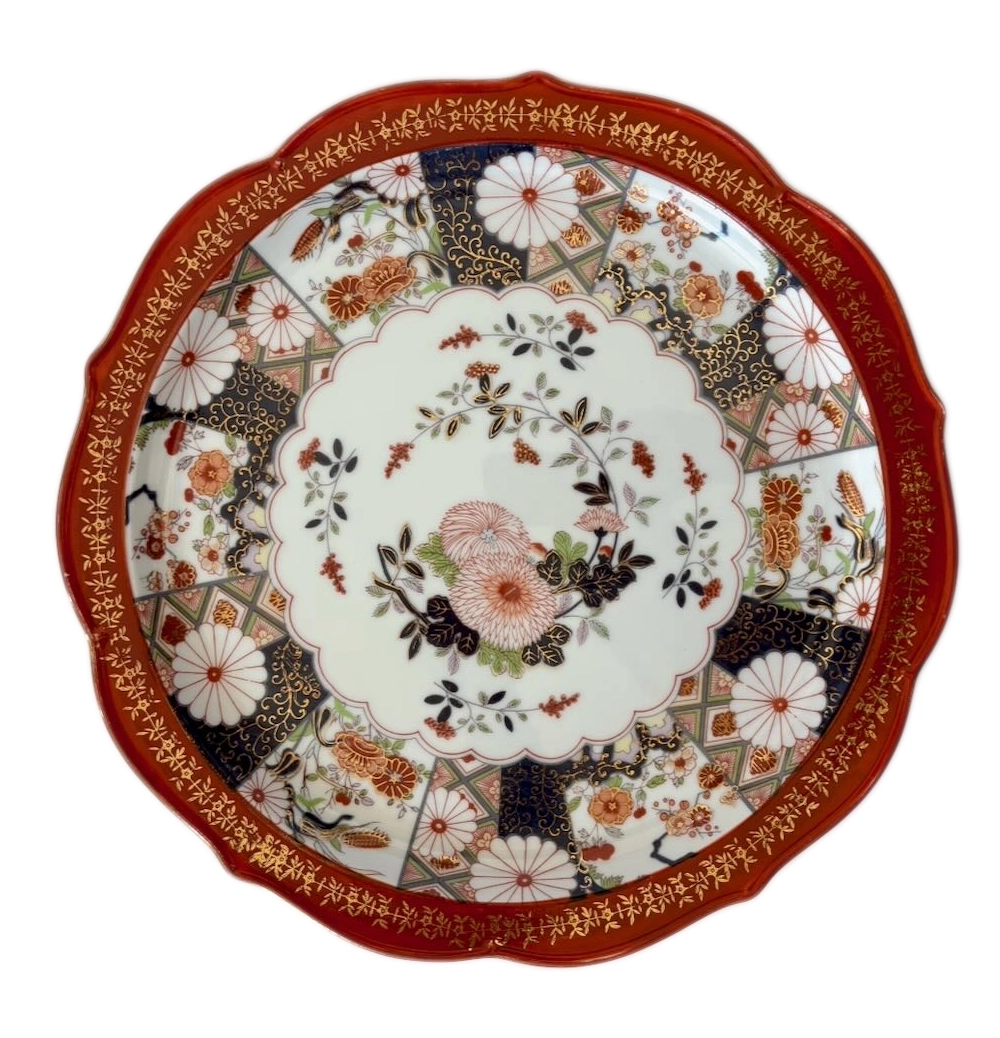
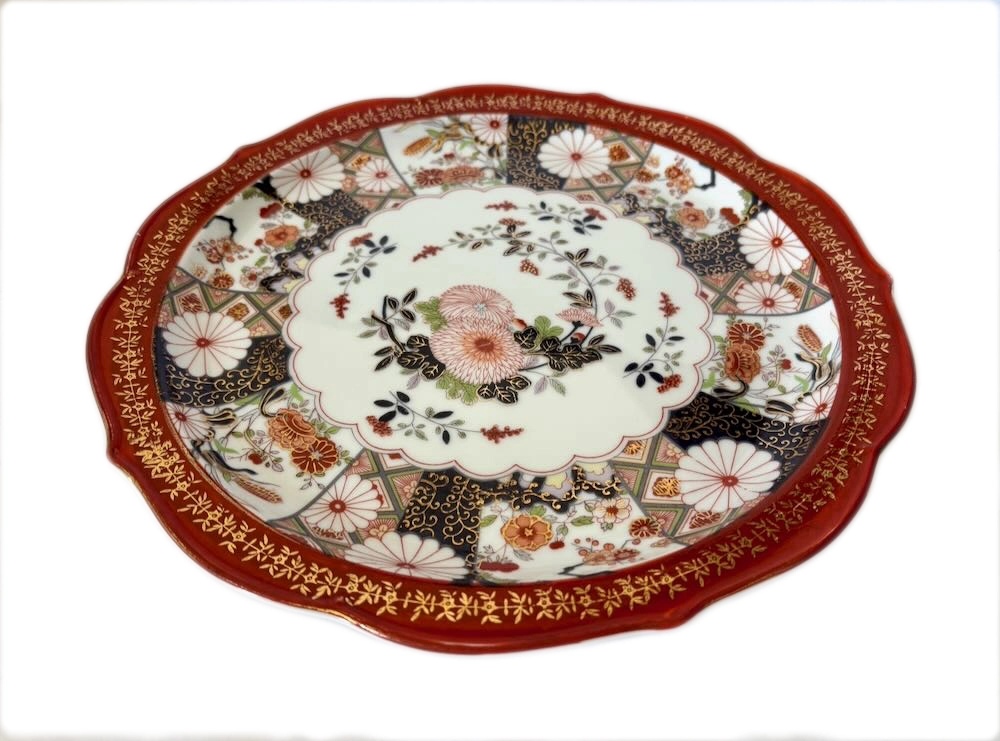
This Saji Fine China Japanese porcelain plate presents a richly detailed Imari pattern composition executed in the traditional palette of iron red, cobalt blue, white, green, and gold. Measuring an impressive 12 inches across, the plate combines strong decorative impact with the refined ornamental vocabulary that made Japanese export porcelain so desirable throughout the mid-20th century.
The design centers around a chrysanthemum arrangement framed within a scalloped reserve, surrounded by alternating geometric and floral panels that create movement across the surface. Deep cobalt sections filled with scrolling gilt ornament contrast against lighter patterned reserves, while the broad iron-red border anchors the composition with warmth and visual depth. The result feels layered and intricate without losing balance.
The chrysanthemum motif holds particular importance within Japanese decorative arts, where it has long symbolized longevity, renewal, and elegance. Here it appears both in the central medallion and throughout the surrounding reserves, tying the entire composition together while reinforcing the plate’s connection to the broader Imari decorative tradition.
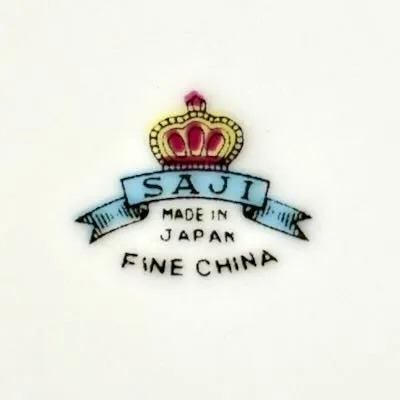
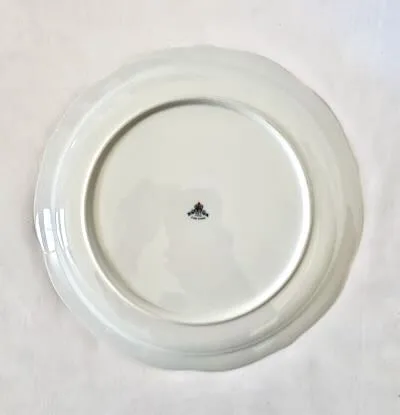
The underside carries the crown-and-ribbon SAJI Fine China mark with “Made in Japan,” identifying the piece as part of Japan’s postwar export porcelain production. While little fully documented historical information survives regarding Saji itself, the company clearly participated in the flourishing mid-century export market that brought Japanese porcelain into homes throughout North America and Europe.
A Decorative Interpretation of the Imari Tradition
Imari porcelain originally referred to wares exported through the Japanese port of Imari beginning in the 17th century, though much of the porcelain itself was produced in nearby Arita. Over time, “Imari” evolved beyond geography and came to describe a broad decorative language recognized for its vibrant use of cobalt blue, iron red, gold, floral ornament, and segmented compositions.
This plate reflects many of those established characteristics. The layered reserves, chrysanthemum decoration, scrolling cobalt sections, and gilded detailing all connect it visually to the long history of Japanese export porcelain while also reflecting the tastes of the mid-20th century Western market, where richly decorated cabinet plates and serving wares remained highly popular.
Unlike earlier antique Imari porcelain produced during the Edo period, mid-century export examples such as this often emphasized decorative presentation and strong visual richness intended to complement dining rooms, display cabinets, and formal entertaining spaces. The result is a piece that remains highly displayable today while still carrying clear historical connections to centuries of ceramic tradition.
The plate was also produced alongside coordinating serving and table pieces within the same decorative line, including a matching bowl, reflecting the broader presentation-oriented nature of these export porcelain collections.
Color, Form, and Craftsmanship
One of the strongest qualities of this piece is the balance between structure and ornament. The segmented layout gives the eye clear movement around the surface, while the scalloped edge softens the form and adds elegance to the silhouette.
The cobalt decoration remains vibrant, and the iron-red border retains strong saturation. Gilt detailing throughout the floral and geometric ornament continues to catch light effectively, particularly around the rim and dark blue reserves where the contrast becomes most dramatic.
The porcelain body itself is relatively fine and smooth, consistent with Japanese export porcelain of the period. The decoration combines precision with enough variation to retain visual warmth rather than appearing mechanically rigid.
Condition
The plate is in good vintage condition with no chips, cracks, or repairs observed. The porcelain body remains structurally sound, and the decorative surface presents well overall.
Color and gilt decoration remain strong and visually vibrant. Minor age-related wear may be present consistent with careful vintage use, but nothing that detracts from the overall presentation of the piece.