

Description
Wedgwood Egyptian Collection Black Basalt Gilt Crocodile Plate, Small Dish, England, Circa 1978
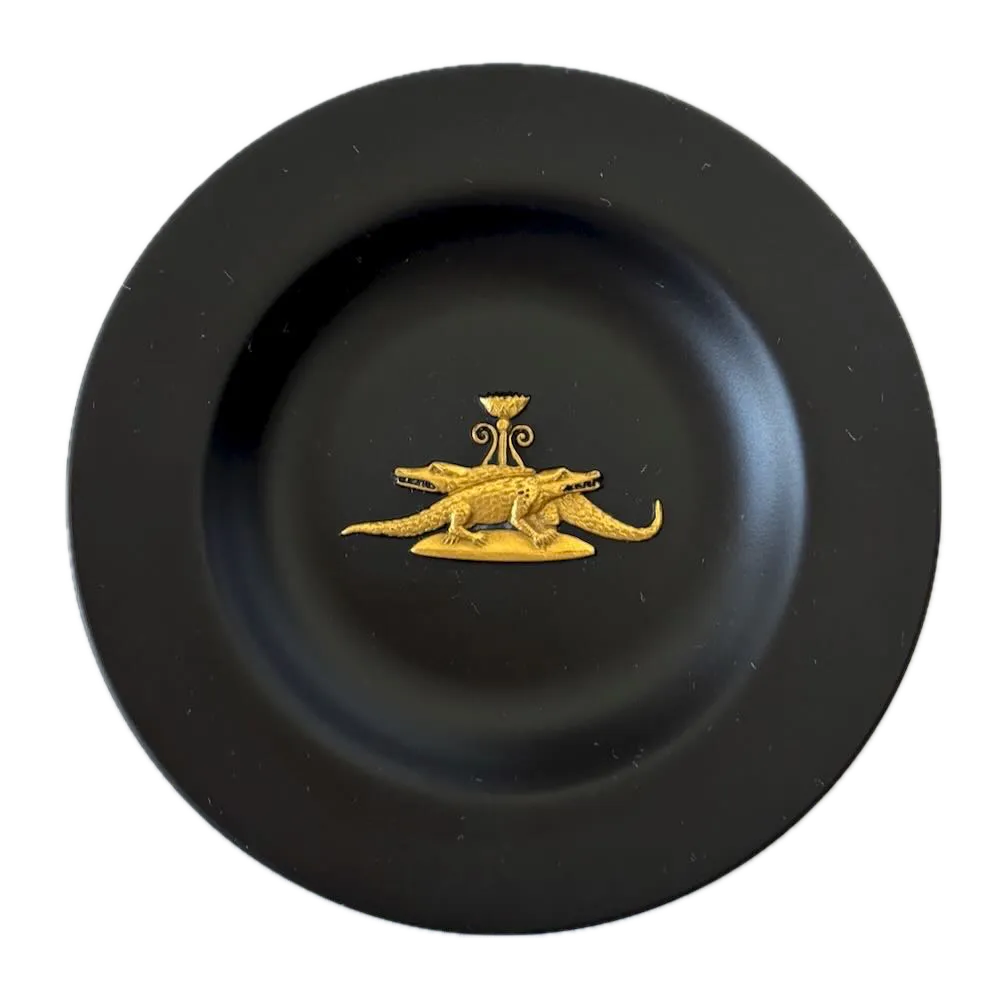
This is a Wedgwood Egyptian Collection small crocodile plate in black basalt with applied gilt decoration, produced in England in the late 1970s. At this scale, the piece reads more as an object of design than tableware—a compact, focused composition where material, color, and symbolism work together with clarity.
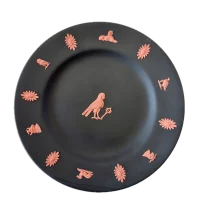
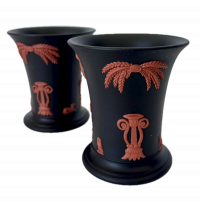
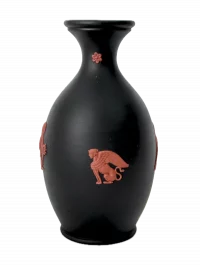
The matte black surface is characteristic of Wedgwood’s basalt body, a dense stoneware developed in the 18th century and later revisited in collections such as the Egyptian series for its ability to carry detail with restraint. The contrast between the deep black ground and the warm gilt relief creates a strong visual tension, allowing the central motif to stand out without distraction. As with other pieces from the Egyptian Collection, the material is integral to the design—gilt decoration is applied to black basalt, while terracotta relief is reserved for jasperware examples in the same series. This relationship between material and design is explored further in our article on the Wedgwood Egyptian Collection.
A Motif Rooted in Egyptian Symbolism
At the center of the plate is a finely rendered crocodile, shown in profile with a stylized lotus-form element rising above. This is not simply a decorative animal but a direct reference to Sobek, the crocodile-headed deity associated with the Nile, fertility, and protection.
In ancient Egyptian belief, Sobek embodied both strength and unpredictability. As a creature of the Nile, the crocodile represented the life-giving power of the river, but also its latent danger. This duality made it a potent symbol—both protective and formidable. In temple imagery, Sobek is often linked to kingship and divine authority, reinforcing control over natural forces.
Here, the crocodile is presented in a controlled, almost heraldic form, reduced to its essential outline and placed centrally within the composition. The result is less narrative and more emblematic—a symbol held in balance against the stillness of the basalt ground.
The Wedgwood Egyptian Collection
This plate forms part of Wedgwood’s Egyptian Collection, introduced in the late 1970s during a renewed cultural interest in ancient Egypt. The collection coincided with the international exhibition of Tutankhamun’s treasures, which brought Egyptian design into wider public attention and influenced decorative arts across multiple disciplines.
Wedgwood responded by translating Egyptian motifs into its established ceramic vocabulary. In basalt pieces such as this, the emphasis is on contrast and clarity—simple forms, reduced palettes, and symbolic imagery rendered with precision.
Condition and Presence
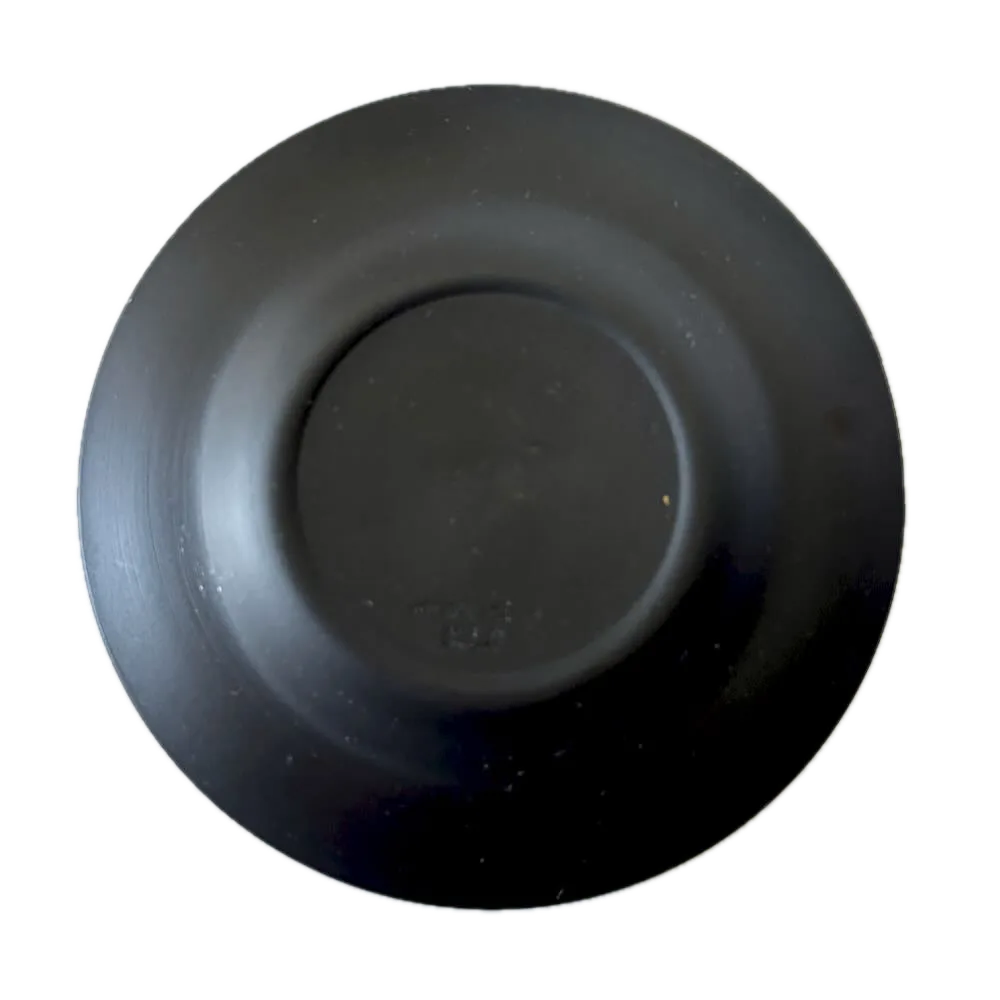
The plate is in very good condition. The basalt surface remains even and consistent, with the matte finish intact. The gilt decoration is well preserved, maintaining its contrast against the black ground. No visible chips or damage are observed.
At just over four inches in diameter, the piece has a quiet presence. It works equally well as a small display object or as part of a grouped arrangement within the broader Egyptian Collection.