
Description
Wedgwood Egyptian Plaque “Beloved of the Great Enchantress” Limited 250
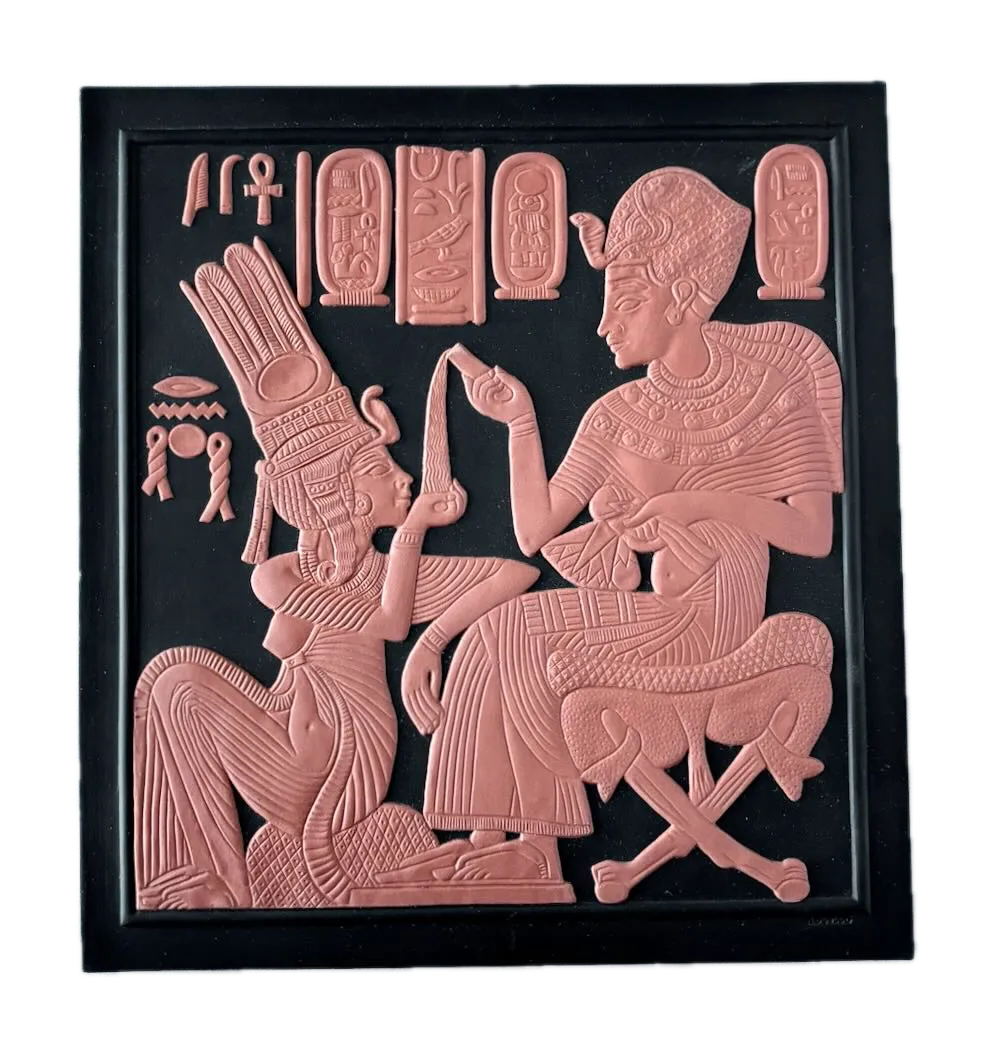
This Wedgwood Egyptian Collection plaque captures one of the most intimate and recognizable scenes from ancient Egyptian art. Titled “Beloved of the Great Enchantress,” it draws directly from the golden shrine discovered in the tomb of Tutankhamun and presents a moment between the king and queen with striking clarity and detail.
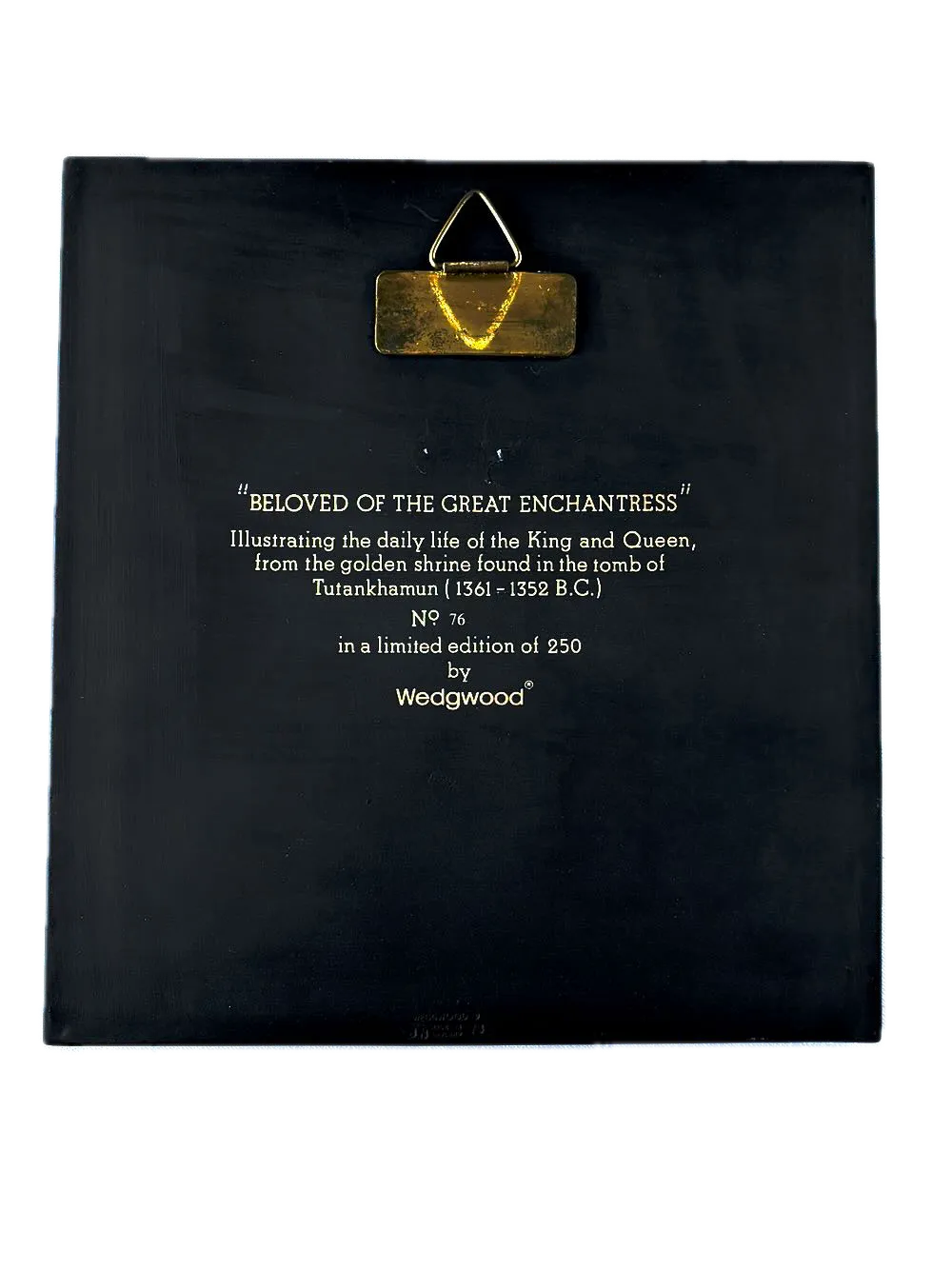
Wedgwood produced this plaque in England as part of a limited edition of only 250 pieces. This example is numbered 76, placing it within the earlier portion of the production run. Pieces from this edition do not appear often, especially complete examples with the original mounting hardware intact.
The design stands out immediately. Wedgwood used black jasperware as the ground and modeled the figures in a warm terracotta tone. That contrast gives the scene depth and presence. Unlike the more common black-and-gilt Egyptian pieces, this terracotta-on-black treatment feels more sculptural and closer to carved relief than surface decoration.
This piece is documented within the original Wedgwood Egyptian Collection brochure (1978), which outlines the materials, design themes, and structure of the series.
Egyptian Scene and Meaning
The plaque depicts Tutankhamun seated while Queen Ankhesenamun kneels before him. She offers a necklace or collar, a gesture that reflects both affection and royal ritual. The title references “the Great Enchantress,” often associated with the goddess Isis, adding another layer of symbolic meaning.
This composition comes from panels found within the young king’s tomb, one of the most important archaeological discoveries of the 20th century. Wedgwood translated that imagery into jasperware with precision. The fine lines, stylized figures, and hieroglyphic elements remain crisp and well-defined.
Rarity and Edition Importance
This plaque belongs to the limited edition of 250, which is the version collectors actively seek.
A later edition of 3,000 exists in a different format and finish. That version appears more frequently on the market and does not carry the same level of demand. The 250-edition stands apart for its lower production number, larger format, and stronger visual impact.
The terracotta-on-black color combination also adds to its appeal. Most Egyptian revival pieces from Wedgwood rely on gilt decoration. This example uses layered jasper instead, which requires more control during production and results in a richer, more tactile surface.
Condition
This plaque remains in excellent condition. The surface shows no visible chips, cracks, or repairs. The relief decoration remains sharp, and the black jasper ground retains its consistent matte finish.
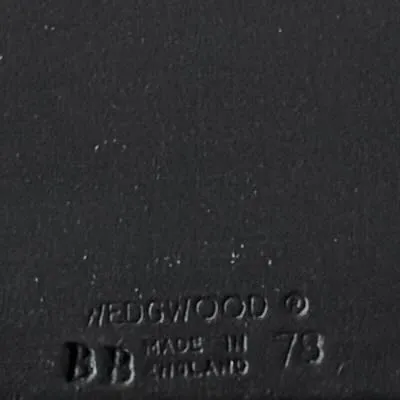
The original brass hanging mount remains attached to the back, which allows for immediate display. The reverse inscription remains clear and legible, including the edition number and descriptive text.
Any light wear aligns with careful storage over time and does not detract from presentation.
Why Collectors Look for This Plaque
Collectors pursue this piece for several reasons. First, the limited production of only 250 examples creates true scarcity. Second, the subject connects directly to Tutankhamun, one of the most recognized figures in Egyptian history. Third, the color treatment differs from standard Wedgwood Egyptian pieces, giving it a stronger visual identity.
It also fits well across collecting categories. It appeals to Wedgwood collectors, Egyptian revival enthusiasts, and buyers focused on decorative art with historical context.