
Description
Wedgwood Egyptian Collection Black Basalt Plaque “Lord of the Diadems” Gilt Relief 1979 Limited Edition
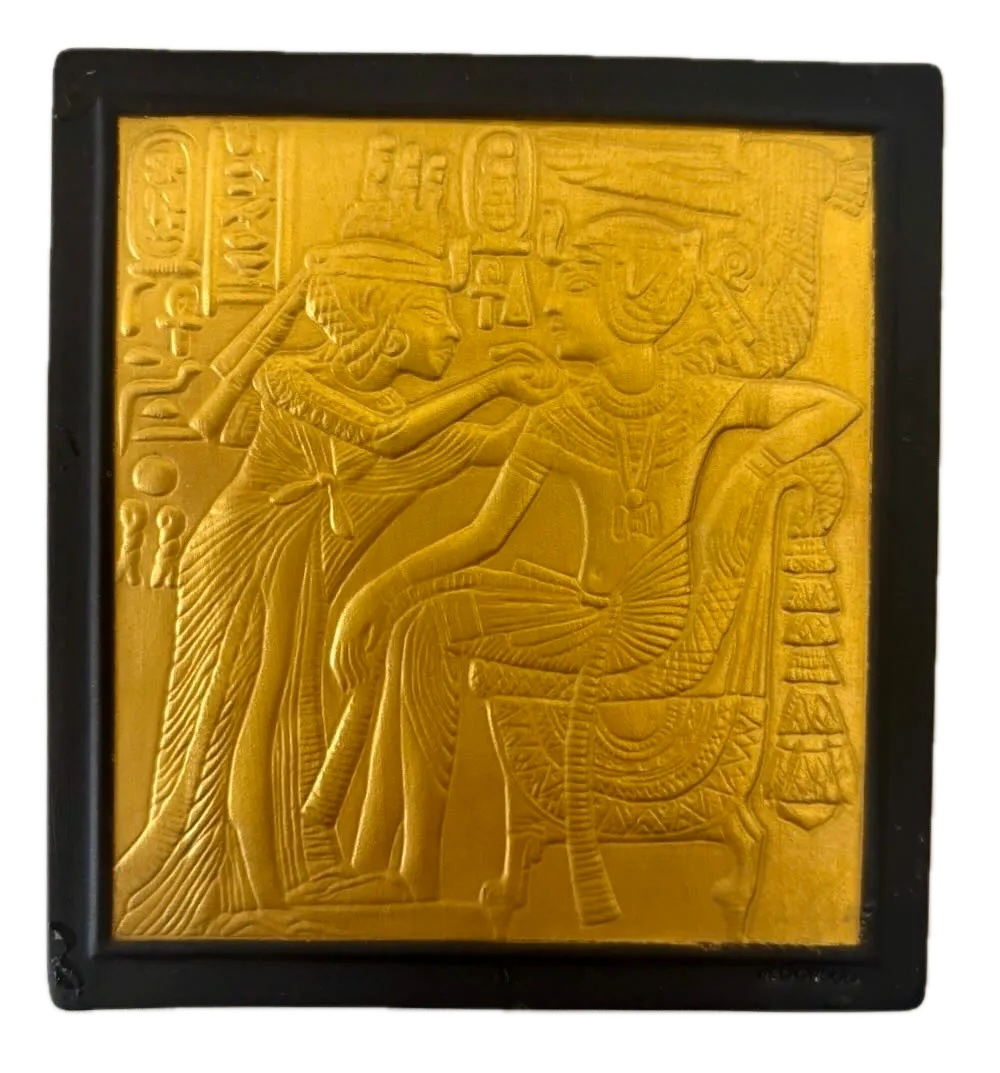
This Wedgwood Egyptian Collection black basalt plaque presents one of the most recognizable narrative scenes from the series, rendered in gilt relief against a matte black ground. Titled “Lord of the Diadems,” the composition is drawn from the golden shrine of Tutankhamun and reflects Wedgwood’s approach to translating ancient Egyptian imagery into a controlled and material-driven decorative form. The collection is documented within the original Wedgwood Egyptian Collection brochure (1978–1979), which outlines the materials, iconography, and historical references behind each piece in the series.
Unlike the jasperware versions within the collection, where terracotta relief defines the surface, this basalt example relies on the contrast between deep black stoneware and applied gilt decoration. The result is sharper and more graphic, with the gold emphasizing line, gesture, and hieroglyphic detail rather than relying on depth alone.
For collectors interested in related works from the same series, see the companion plaque “Beloved of the Enchantress,” also presented within the Wedgwood Egyptian Collection.
Form and Material
The plaque is formed as a shallow rectangular panel with a recessed central field framed by a raised border. The proportions are compact and deliberate, allowing the scene to remain the primary visual focus without additional ornament.
Black basalt is a dense, unglazed stoneware developed by Wedgwood in the 18th century. Its matte surface absorbs light, creating a strong ground against which applied decoration can stand in high contrast. The gilt is applied to the surface following firing, highlighting the relief and reinforcing the linear clarity of the composition.
At approximately 4 inches by 4.375 inches (approximately 10.2 cm by 11.1 cm) and 0.25 inches thick (approximately 0.6 cm), the scale supports its function as a decorative object, suitable for display as a wall plaque or within a cabinet.
Egyptian Symbolism
The scene represents Tutankhamun and Ankhesenamun, based on imagery from the king’s golden shrine. The gesture between the figures conveys continuity, protection, and royal identity—central themes within Egyptian funerary art.
Hieroglyphic elements frame the composition, reinforcing the narrative while maintaining the structured clarity characteristic of Egyptian relief carving. The throne, posture, and profile orientation follow a visual language that emphasizes order and permanence.
Wedgwood’s interpretation preserves this structure while translating it into a material form defined by contrast and precision. The use of gilt reinforces the importance of line, allowing the composition to read clearly even at a small scale.
Edition and Context
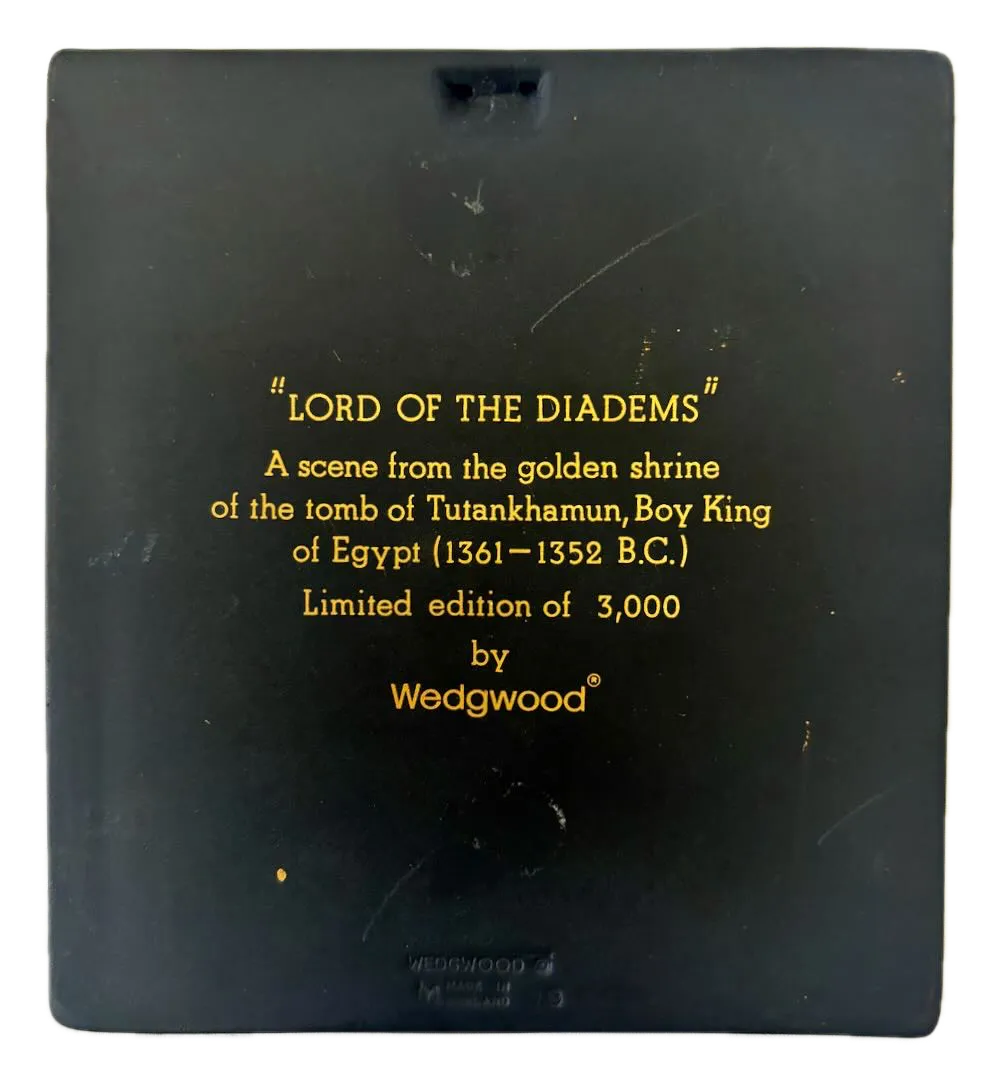
The reverse inscription identifies the plaque as:
“Lord of the Diadems”
A scene from the golden shrine of the tomb of Tutankhamun, Boy King of Egypt (1361–1352 B.C.)
Limited edition of 3,000 by Wedgwood
This confirms its place within a defined production series, where each object was conceived as part of a coordinated and documented Egyptian revival collection.
Condition
The plaque remains in very good vintage condition with no chips or cracks. The basalt surface retains its matte consistency, and the gilt decoration remains clear and legible. There are minor surface marks consistent with age and handling.
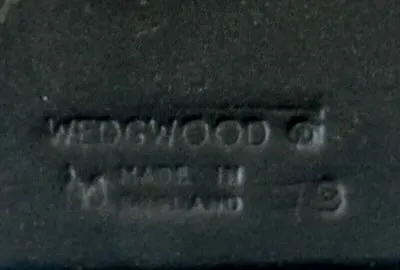
The impressed Wedgwood mark and date code “79” are present on the reverse, confirming production in 1979.