

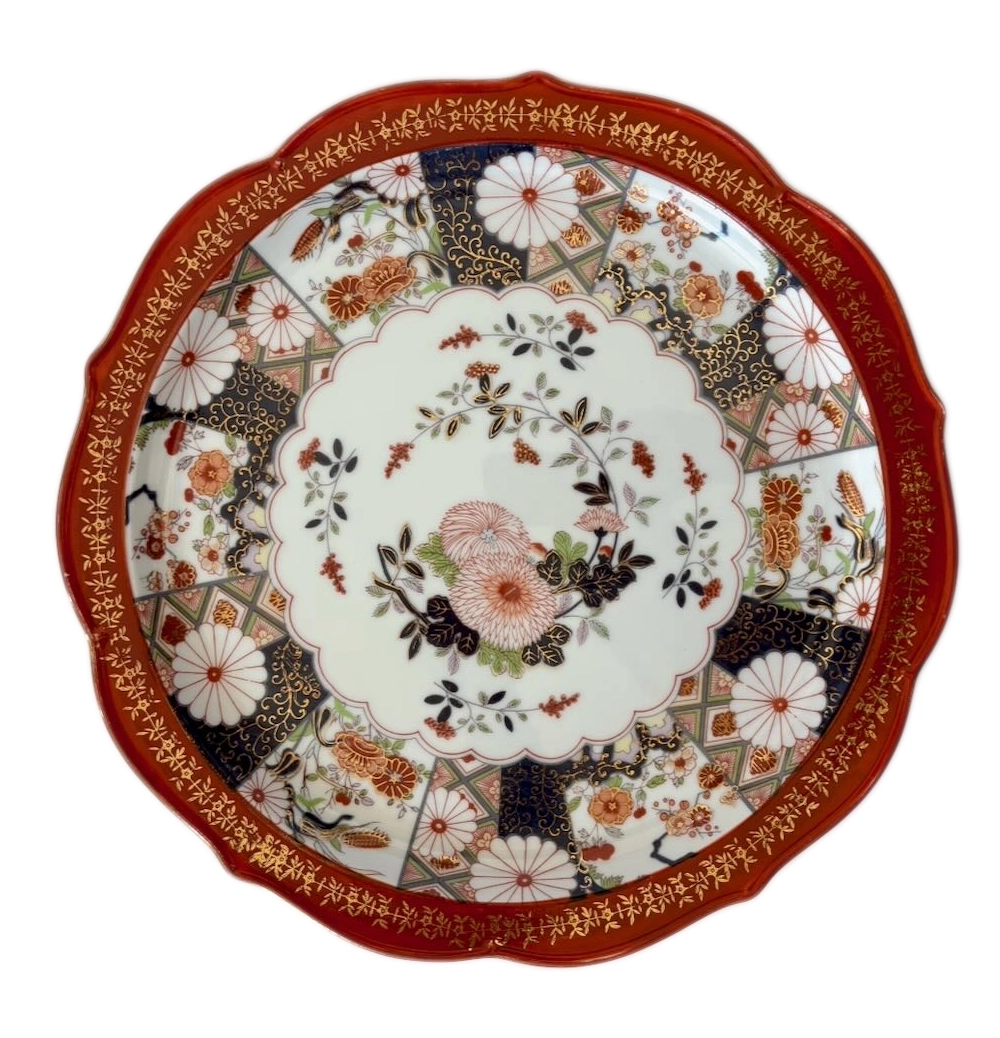
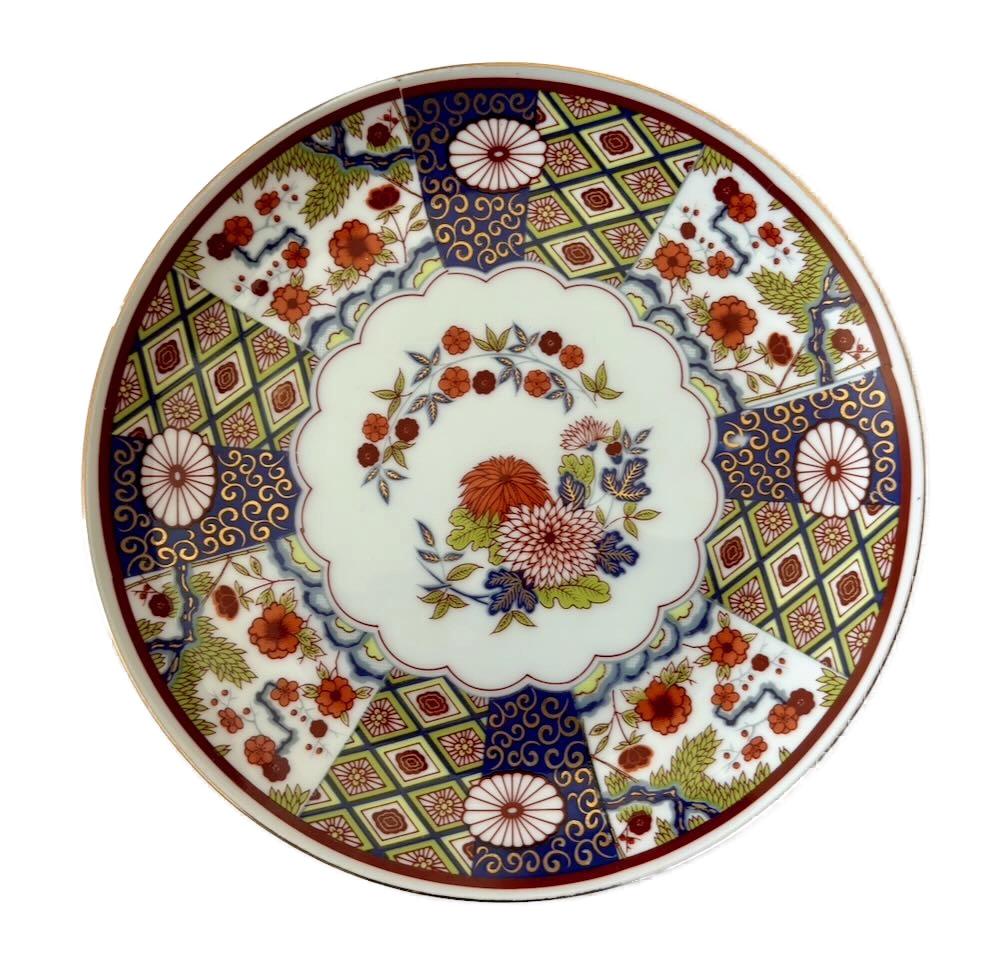
Imari porcelain is one of the most recognizable ceramic styles ever created, yet few decorative traditions have been so widely misunderstood, copied, reinvented, and admired across the world. What began as Japanese export porcelain in the 17th century eventually inspired Chinese kilns, transformed European collecting habits, and influenced some of the most celebrated porcelain factories in England.
Today, the word “Imari” is often used loosely to describe almost any porcelain decorated in blue, red, and gold. Yet true Imari is far more than a color palette. It represents centuries of artistic exchange between East and West, shaped by trade routes, royal patronage, technological innovation, and changing tastes in luxury interiors. The story of Imari porcelain is not simply the story of a decorative style. It is the story of how ceramics became part of global culture.
What “Imari” Actually Means
One of the most surprising facts about Imari porcelain is that potters did not produce much of it in Imari itself. The name comes from the Japanese port of Imari on the island of Kyushu, where merchants shipped porcelain produced mainly in nearby Arita before exporting it abroad. Over time, European traders began referring to these wares collectively as “Imari porcelain,” and the name survived long after people forgot its original geographic meaning.
This distinction matters because many collectors assume Imari refers to a single factory or even a specific pattern. In reality, the term originally described exported porcelain shipped through a port rather than the actual production center.
The true birthplace of Japanese porcelain production was Arita, where Korean potters working in Japan discovered kaolin-rich porcelain stone during the early 17th century. That discovery changed Japanese ceramics permanently and allowed Japan to produce hard-paste porcelain of remarkable quality and refinement.
At first, Japanese porcelain closely reflected Chinese influence, particularly blue-and-white decoration. Over time, however, Japanese potters developed their own visual language through the use of iron-red enamels, gilding, and increasingly elaborate decorative compositions. The result was a style unlike anything Europe had seen before.
The Rise of Japanese Export Porcelain
The timing of Japanese porcelain exports helped drive Imari’s extraordinary success. During the 17th century, political instability in China interrupted porcelain exports to Europe just as European aristocrats developed a growing appetite for luxury ceramics. Wealthy households prized porcelain for its brilliant whiteness, delicate translucency, and jewel-like surface. In many royal courts, collectors valued fine porcelain alongside silver and gold as symbols of refinement, status, and international taste.
The Dutch East India Company, searching for alternative sources of luxury ceramics, turned increasingly toward Japan. Japanese kilns suddenly found themselves supplying an enormous Western appetite for decorative porcelain.
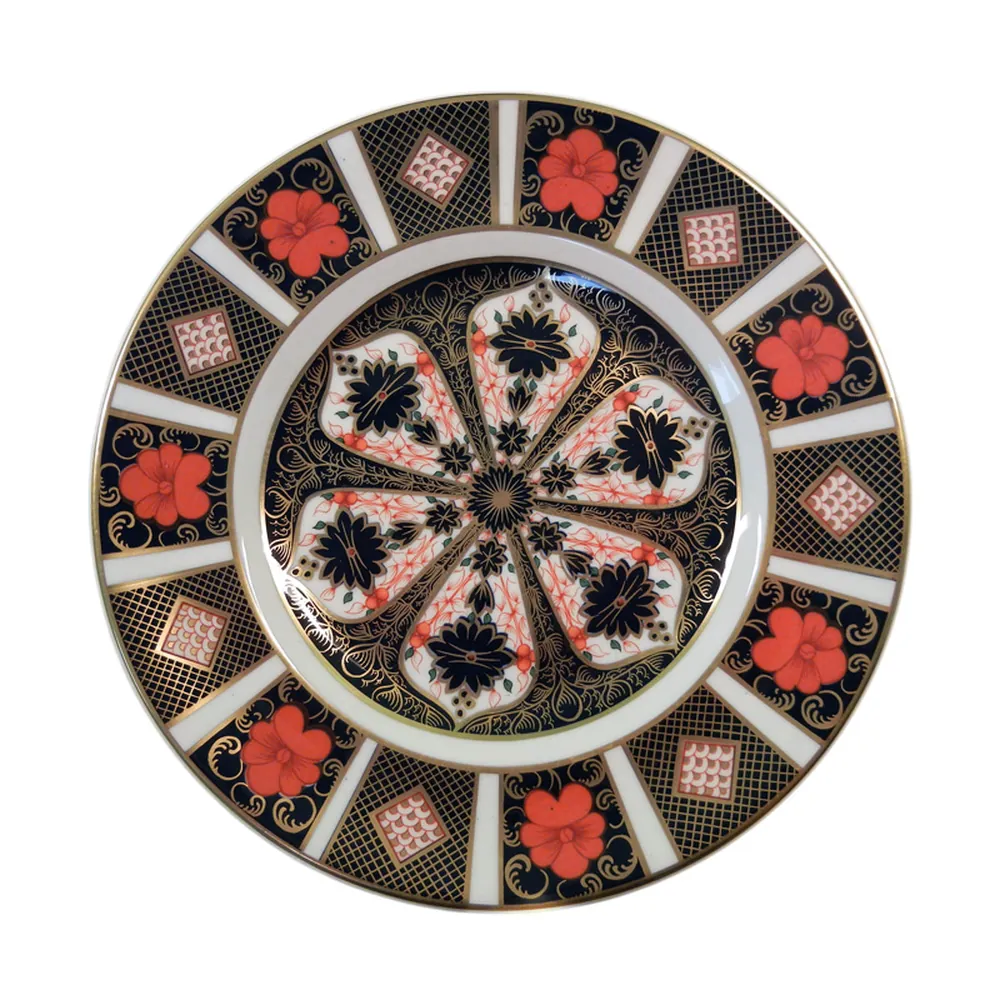
This period marked the birth of what collectors now recognize as classic Imari decoration. Japanese artisans combined rich cobalt blue underglaze painting with iron-red enamels and brilliant gold overlays to create dramatic surfaces filled with flowers, foliage, geometric reserves, and layered ornament. Many compositions covered nearly every visible area of the porcelain, giving the pieces a luxurious and exotic intensity that immediately distinguished them from European ceramics. European buyers quickly embraced the bold visual richness of Imari ware.
Large covered jars, chargers, vases, and elaborate table wares began appearing in palaces and aristocratic homes throughout Europe. Under candlelight, the gilding shimmered against deep blues and reds, giving Imari porcelain an almost theatrical presence within interiors.
Why Imari Became So Influential
Part of Imari’s success came from its ability to balance structure with exuberance. Japanese Imari often uses highly organized decorative layouts divided into panels or reserves, yet within those structures the decoration remains energetic and fluid. Floral motifs burst across the surface, gold highlights animate the compositions, and negative space is used strategically to create rhythm and contrast.
The colors themselves became iconic. Deep cobalt blue provided visual weight, iron red added warmth and intensity, while gold introduced brilliance and movement. Together, they formed one of the most enduring decorative palettes in ceramic history.
Imari porcelain also appealed to European collectors because it represented something distinctly foreign yet adaptable to European taste. It felt luxurious without being restrained, ornamental without becoming chaotic. As a result, its influence quickly spread beyond ceramics into textiles, wallpapers, furniture, silverwork, and interior decoration. By the 18th century, Imari had become part of a broader European fascination with Asian decorative arts.
Chinese Imari and the Evolution of the Style
As Chinese porcelain production recovered under the Qing dynasty, Chinese kilns re-entered the export market and began producing wares specifically designed for Western buyers. Many of these pieces adopted elements of Japanese Imari decoration while introducing distinct Chinese aesthetics and techniques. Collectors now commonly refer to these wares as “Chinese Imari.”
Although Japanese and Chinese Imari share similar palettes, each tradition developed its own visual character. Chinese artisans often favored finer brushwork and more delicate surface decoration. They produced lighter, thinner porcelain bodies and allowed decorative elements to flow more naturally across the surface instead of organizing them into the strongly segmented panels frequently seen in Japanese Imari.
Japanese Imari, by contrast, frequently feels bolder and more architectural in composition. The cobalt blue can appear darker and heavier, the iron-red enamels thicker and more saturated, and the visual structure more pronounced.
Neither approach is inherently superior. They simply reflect different artistic traditions and different interpretations of luxury decoration. Over time, the distinction between Japanese and Chinese Imari became increasingly blurred in European markets, especially as Western buyers focused more on the visual richness of the wares than on their exact origins.
Ko-Imari, Kakiemon, and Nabeshima
The world of Japanese porcelain contains several important styles closely connected to Imari, though each possesses its own distinct identity. Ko-Imari, meaning “Old Imari,” generally refers to early Edo-period export porcelain. These wares are among the most historically important and visually influential examples of Japanese ceramic production. Many feature dense decoration in blue, red, and gold, with richly layered surfaces designed specifically for export markets.
Authentic early Ko-Imari often retains subtle irregularities that reveal its handmade origins. Slight asymmetry, firing distortions, and uneven brushwork are not considered flaws but part of the charm and authenticity of early porcelain production.
Kakiemon porcelain developed a very different visual approach. Rather than densely filling every surface, Kakiemon wares often use open white space combined with delicate asymmetrical decoration in soft overglaze enamels. The milky white porcelain body became one of the style’s defining characteristics and heavily influenced European porcelain factories during the 18th century.
Nabeshima porcelain occupies an entirely different category within Japanese ceramics. The Nabeshima clan commissioned these wares primarily for elite presentation and political gifting rather than commercial export. Master artisans created Nabeshima pieces with extraordinary technical precision, disciplined compositions, and remarkable visual balance. Together, Ko-Imari, Kakiemon, and Nabeshima reveal the impressive artistic diversity that flourished within Japanese porcelain production during the Edo period.
How Europe Reinvented Imari
By the early 19th century, European factories no longer wanted merely to import Asian porcelain. They wanted to produce their own versions.
British porcelain manufacturers in particular became fascinated with Japanese decorative styles. At the time, there was little concern about copying motifs or adapting foreign aesthetics. Decorative ideas moved freely between factories, and successful patterns were constantly reinterpreted. Imari decoration proved especially attractive because it translated beautifully into European interiors.
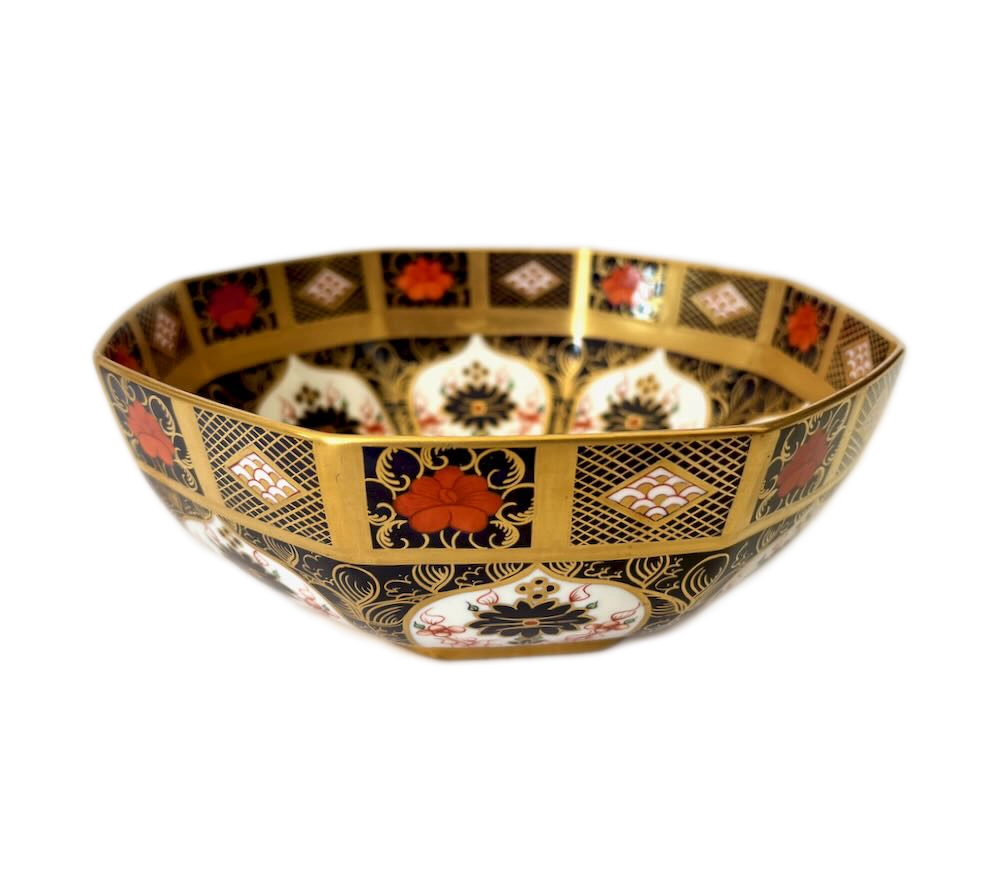
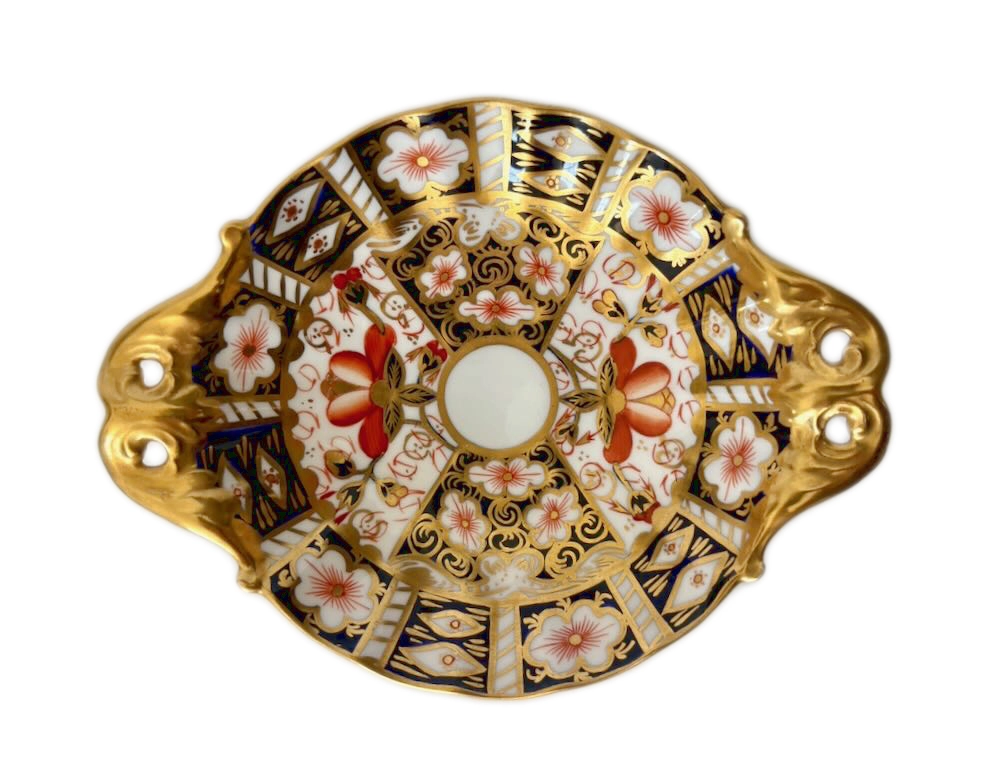
Factories such as Royal Crown Derby embraced the palette and ornamental richness of Japanese Imari while adapting it to British porcelain forms and tastes. The result was not an imitation in the strict sense, but a reinterpretation that gradually developed its own identity.
Royal Crown Derby’s famous Pattern 1128 eventually became one of the most recognizable Imari-inspired patterns ever produced. Its intricate combination of cobalt blue, iron red, and heavy gilding captured the essence of Imari while becoming unmistakably British in refinement and symmetry.
Victorian and Edwardian interiors were particularly well suited to richly gilded porcelain. Under candlelight and gaslight, the gold decoration reflected warmth and movement throughout formal dining rooms and drawing rooms. These objects were designed not merely as tableware but as part of a complete decorative environment.
Over time, British Imari became deeply embedded within collecting culture and ceremonial gift traditions. It evolved from an imported influence into a decorative language entirely its own.
How Collectors Distinguish Different Types of Imari
Identifying Imari porcelain involves far more than recognizing blue, red, and gold decoration. Experienced collectors examine the quality of the porcelain body, the texture of the glaze, the character of the brushwork, and even the way gilding has worn over time.
Japanese Imari often displays stronger visual contrasts and more structured compositions. Chinese Imari may appear finer, lighter, and more fluid in decoration. British interpretations frequently reveal greater symmetry and heavier gilding designed for European tastes.
Age can also reveal itself in subtle ways. Early Edo-period porcelain may show firing imperfections, soft glaze wear, and slight distortion resulting from handmade production methods. Later industrial production tends to appear more controlled and uniform.
Marks can provide useful clues, but they are not always definitive. Many export wares were unmarked, while later reproductions sometimes imitate earlier marks. Because of this, experienced collectors rely as much on visual language and craftsmanship as on signatures or factory stamps.
Understanding Imari therefore requires both historical knowledge and careful observation.
Why Imari Porcelain Still Fascinates Collectors Today
One reason Imari continues to resonate with collectors is its extraordinary ability to evolve without losing its identity. Over the centuries, Japanese kilns, Chinese workshops, and European factories all transformed the style according to their own artistic traditions and markets. Yet the essential visual impact of Imari remained remarkably consistent.
The palette still feels luxurious. The layered decoration still creates drama. The combination of cobalt blue, iron red, and gold continues to command attention centuries after it first appeared on export porcelain.
Imari also carries emotional and historical weight. These objects embody global trade, cultural exchange, artistic ambition, and changing ideas of luxury. A single plate or vase can reflect influences from Korea, Japan, China, Holland, and England simultaneously.
Even mid-20th-century Japanese export wares continued this long tradition, producing decorative porcelain for Western markets that preserved the visual vocabulary of earlier Imari styles while adapting them for modern interiors. Very few ceramic traditions have traveled so widely or remained so visually relevant across generations.
The Enduring Legacy of Imari
Imari porcelain began as Japanese export ware but eventually became something much larger: an international decorative language shared across cultures and centuries.
Its history reflects movement — of artists, merchants, techniques, aesthetics, and ideas. Korean ceramic knowledge helped establish porcelain production in Japan. Chinese kilns adapted export styles for changing markets. European factories transformed Asian inspiration into entirely new artistic traditions. Despite all these changes, Imari never disappeared.
Collectors continue to seek Imari porcelain because it offers something timeless: richness without heaviness, ornament without rigidity, and craftsmanship that still carries a sense of life and energy centuries later. Whether found in an early Japanese charger, a Chinese export vase, a Victorian Crown Derby service, or a mid-century decorative plate, Imari porcelain continues to carry the same sense of visual drama and cultural depth that first captivated the world generations ago.