

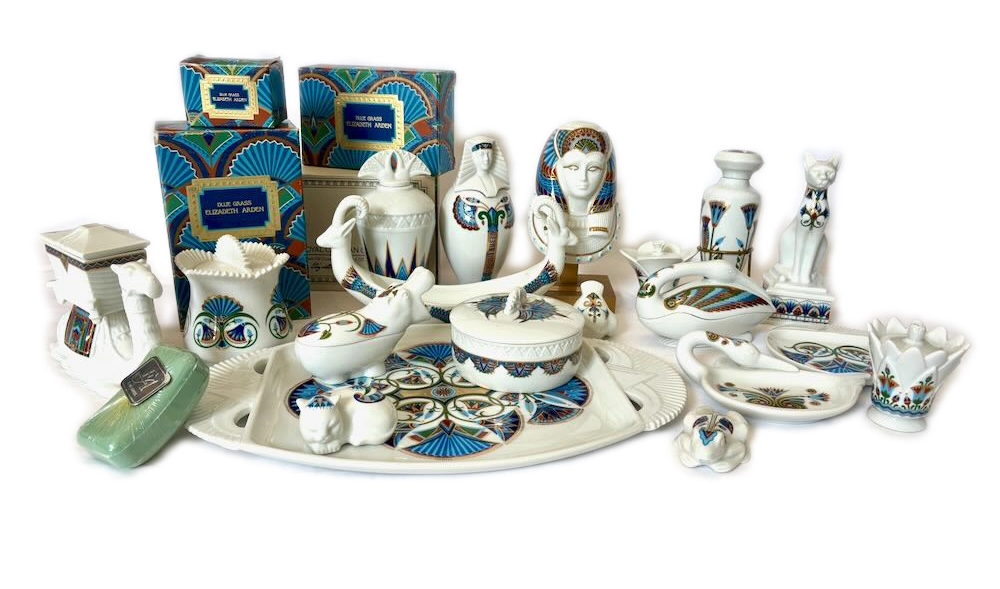
Treasures of the Pharaohs Collectibles
In 1982, Elizabeth Arden transformed the fascination with ancient Egypt into one of the most visually distinctive cosmetic gift collections of the decade. Released as part of the company’s annual holiday presentation, Treasures of the Pharaohs combined porcelain vanity objects, fragrance products, gilded ornament, and Egyptian-inspired imagery into a luxurious decorative world designed to capture the imagination of consumers during the height of the late twentieth century Egyptian Revival movement.
At first glance, the collection appears playful and theatrical. Cats, camels, pyramids, sacred animals, ceremonial boats, and lotus forms emerged in glossy porcelain trimmed with brilliant gold decoration. Yet beneath the glamorous presentation stood a carefully orchestrated marketing vision rooted in beauty rituals, historical fantasy, and the growing culture of collectible luxury giftware during the early 1980s.
Today, these porcelain objects occupy a fascinating space between cosmetic packaging, decorative arts, vanity collectibles, and pop-cultural Egyptomania. Although originally intended as fragrance and bath product containers, many survived long after their contents disappeared. Decades later, collectors continue to seek the pieces for their sculptural forms, nostalgic appeal, and unmistakable visual identity.
Egyptomania Returns in the Late 1970s and Early 1980s
The success of Treasures of the Pharaohs did not happen in isolation. During the late 1970s and early 1980s, the Western world experienced a renewed fascination with ancient Egypt. Major museum exhibitions featuring the treasures of Tutankhamun attracted enormous public attention across Europe and North America. Newspapers, television programs, films, fashion, jewelry, interiors, and decorative arts all absorbed elements of Egyptian design.
The timing proved perfect for luxury brands eager to connect glamour with historical grandeur.
Ancient Egypt carried a unique aura. It represented wealth, mystery, beauty, immortality, gold, perfume, ritual, and royal power. Those associations aligned naturally with the luxury cosmetics industry. For a company like Elizabeth Arden, whose identity centered on elegance and aspirational beauty, Egyptian imagery provided an ideal marketing language.
The company’s promotional material for the collection embraced this atmosphere fully. The marketing described the Nile, the Pharaohs, monumental temples, scented oils, gilded treasures, and the elaborate preparations made for eternal life. Rather than presenting simple bathroom accessories, Elizabeth Arden presented an imaginative vision of ancient luxury translated into modern vanity objects.
Elizabeth Arden and the Art of Luxury Presentation
By the time Treasures of the Pharaohs appeared in 1982, Elizabeth Arden already possessed decades of experience transforming cosmetics into lifestyle experiences.
Florence Nightingale Graham, better known as Elizabeth Arden, founded her company in the early twentieth century after arriving in New York from Canada. Although she began with creams and beauty treatments, she quickly understood that presentation mattered as much as the products themselves. Her famous Red Door salons promoted not merely cosmetics, but refinement, sophistication, and aspiration.
Throughout her career, Arden cultivated an image of controlled luxury. Packaging, interiors, advertising, fragrance bottles, and promotional displays all reinforced a carefully managed world of elegance. Even after her death in 1966, the company continued building upon that identity.
The annual porcelain collections that emerged during the 1970s and 1980s reflected this philosophy perfectly. They encouraged customers to see beauty products not as disposable necessities, but as part of a decorative environment connected to taste, culture, and fantasy.
The porcelain collections also arrived at the height of the adult collectible boom. Department stores increasingly marketed seasonal collectibles, decorative plates, figurines, porcelain dolls, and themed giftware to consumers who enjoyed building coordinated collections over time. Elizabeth Arden recognized that cosmetics could participate in this same culture.
A Christmas Collection Designed to Be Remembered
Although Treasures of the Pharaohs functioned partly as a promotional vehicle for fragrance sales, the collection clearly aimed higher than ordinary packaging.
The pieces were elaborate. Many incorporated sculptural forms rather than standard jars or bottles. Sacred animals appeared as trinket boxes and pomanders. Ceremonial vessels stood on metal bases. Candle jars featured lids inspired by lotus flowers and Egyptian ornament. Gold decoration contrasted dramatically against white porcelain accented with cobalt blue, terracotta, turquoise, and maroon details.
The result felt theatrical and luxurious without becoming excessively formal. Consumers could place the objects on dressing tables, bathroom counters, vanities, or shelves as decorative accessories long after the bath oils or soaps were gone.
This longevity helped transform the collection into a lasting collectible category rather than a forgotten seasonal promotion.
Made in Japan for Elizabeth Arden
The porcelain pieces were manufactured in Japan specifically for Elizabeth Arden, a detail that reflects broader trends within luxury decorative production during the era.
By the late twentieth century, Japanese ceramic factories had developed sophisticated expertise in high-quality export porcelain. Many luxury Western brands commissioned Japanese manufacturers to produce decorative giftware, vanity objects, and collectible ceramics because of the exceptional consistency, glazing quality, and ornamental detail these factories could achieve.
The Treasures of the Pharaohs pieces generally featured:
- glossy white porcelain bodies
- rich cobalt and terracotta accents
- extensive gold decoration
- sculptural molded forms
- fine enamel-style detailing
Many examples carried markings indicating they were made exclusively in Japan for Elizabeth Arden.
Unlike mass-market drugstore packaging, these objects conveyed genuine decorative ambition. Even today, the porcelain quality and reflective gold detailing give the collection a stronger visual presence than many comparable cosmetic promotions from the same period.
Cleopatra’s Cat and the Rise of Iconic Pieces
Among the most recognizable objects in the collection is undoubtedly Cleopatra’s Cat. The feline form captured several themes at once: Egyptian symbolism, elegance, mystery, and domestic display appeal.
The cat appeared as a lidded porcelain container often used for bath oil crystals or potpourri. Decorated with stylized Egyptian motifs and gold accents, the figure balanced novelty with sophistication in a way that appealed strongly to consumers.
Its continuing popularity on the secondary market demonstrates how successfully Elizabeth Arden translated Egyptian imagery into collectible design.
Other notable pieces included:
- the Royal Caravan Camel
- Sacred Hippopotamus candle container
- Gilded Ibis vessels
- ceremonial barges
- pyramid powder jars
- lotus-form candle jars
- Karnak urns on stands
- Queen Nefertari busts
Together, these objects created a coordinated decorative universe inspired by imagined royal Egyptian luxury.
Cosmetic Rituals and Ancient Perfume Culture
One reason the Egyptian theme worked so effectively for Elizabeth Arden lies in the historical connection between beauty rituals and ancient Egypt itself.
Ancient Egyptian culture placed enormous importance on perfume oils, cosmetic preparation, ceremonial grooming, and aromatic substances. Archaeological discoveries from tombs frequently included vessels for ointments, cosmetics, oils, perfumes, and ritual objects associated with beauty and purification.
Elizabeth Arden’s marketing drew heavily upon this association.
Bath oils, scented soaps, powders, candles, and fragrance products became modern parallels to the luxurious unguents and perfumed preparations associated with royal Egyptian imagery. Consumers purchasing the collection were not simply buying cosmetics. They were participating in a romanticized vision of beauty ritual rooted in historical fantasy.
The Role of Fragrance Within the Collection
The collection prominently featured Elizabeth Arden fragrances such as Blue Grass and Memoire Cherie.
Blue Grass, introduced in 1934, had already become one of the company’s signature fragrances by the time Treasures of the Pharaohs appeared. Its established popularity made it a natural centerpiece for a large-scale holiday collection.
The porcelain containers elevated these fragrance products into luxury gift objects. Bath crystals, soaps, powders, and candles gained added value through sculptural presentation.
This strategy encouraged customers not only to purchase fragrance products, but to display them proudly.
From Vanity Objects to Decorative Collectibles
Perhaps the most fascinating aspect of Treasures of the Pharaohs is the way the collection evolved beyond its original commercial purpose.
The pieces were not initially marketed as museum-quality ceramics or investment collectibles. They functioned primarily as luxury seasonal giftware intended to support fragrance sales and reinforce Elizabeth Arden’s prestige image.
Yet many survived precisely because owners recognized their decorative appeal.
Consumers reused the containers as trinket boxes, vanity jars, potpourri holders, decorative vessels, candle containers, and shelf displays. Over time, collectors began assembling groups of related pieces. Original boxes, unused contents, inserts, and intact gold decoration became increasingly desirable.
Today the collection occupies an unusual niche. Some collectors approach the pieces through cosmetics history. Others collect them as Egyptian Revival decorative arts. Some focus on vanity objects, while others simply appreciate the sculptural porcelain forms and nostalgic glamour of 1980s luxury design.
Why the Collection Still Resonates Today
The continuing appeal of Treasures of the Pharaohs stems partly from its confidence. Modern cosmetic packaging often feels temporary and disposable. In contrast, these porcelain objects were designed to remain visible long after the original products disappeared.
The collection also reflects a period when large beauty companies invested heavily in imaginative presentation. Rather than minimalist branding, the early 1980s embraced theatrical themes, ornament, gold accents, fantasy travel imagery, and historical romanticism.
At the same time, the Egyptian Revival styling now carries a nostalgic charm of its own. The collection captures a very specific cultural moment when ancient Egypt once again became fashionable across interiors, fashion, film, jewelry, and decorative arts.
Although individual pieces remain relatively accessible compared to many traditional antiques, the best-preserved examples with original boxes and contents continue attracting collectors. Complete groupings have become increasingly difficult to assemble, especially in unused condition.
A Remarkable Chapter in Cosmetic and Decorative Arts History
Viewed today, Elizabeth Arden’s Treasures of the Pharaohs collection represents far more than seasonal cosmetic packaging. It reflects the intersection of marketing, fantasy, fragrance culture, decorative porcelain, and the enduring fascination with ancient Egypt.
The collection transformed ordinary vanity products into imaginative decorative objects capable of surviving long beyond their original commercial moment. Through porcelain, gold ornament, sculptural forms, and historical storytelling, Elizabeth Arden created a miniature world of glamour inspired by one of history’s most enduring civilizations.
More than forty years later, these objects continue to enchant collectors not merely because of nostalgia, but because they remain visually distinctive, beautifully produced, and deeply representative of an era when luxury presentation itself became an art form.