

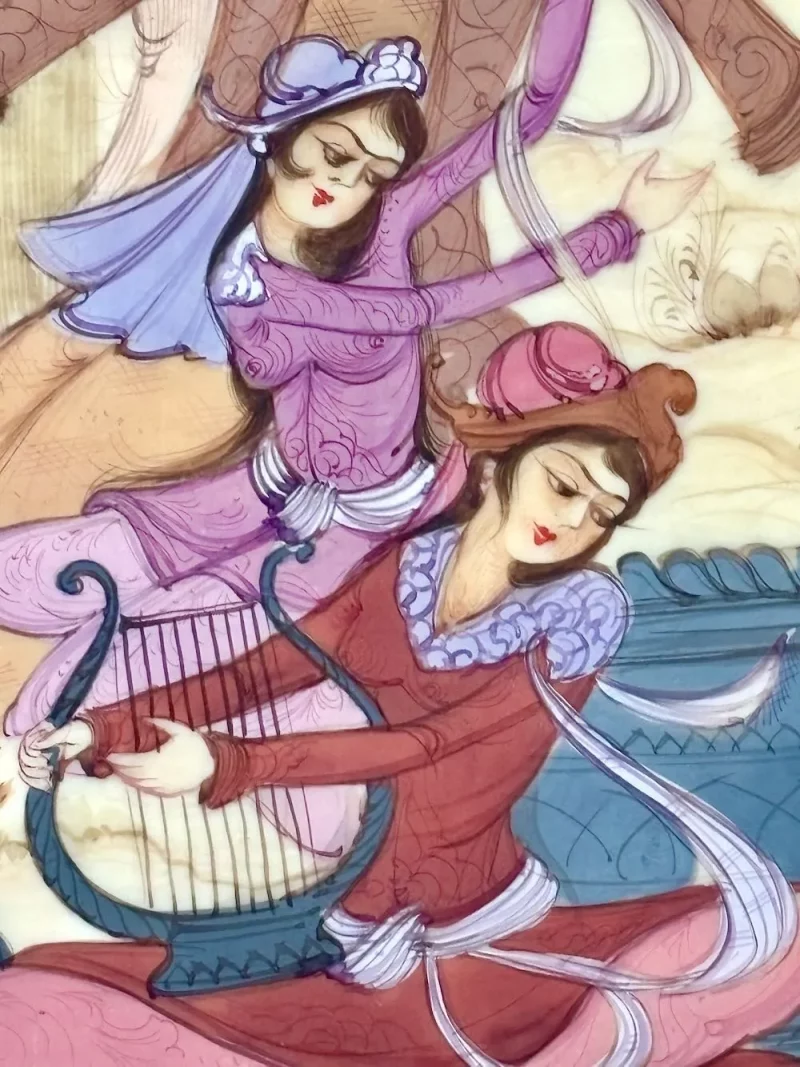
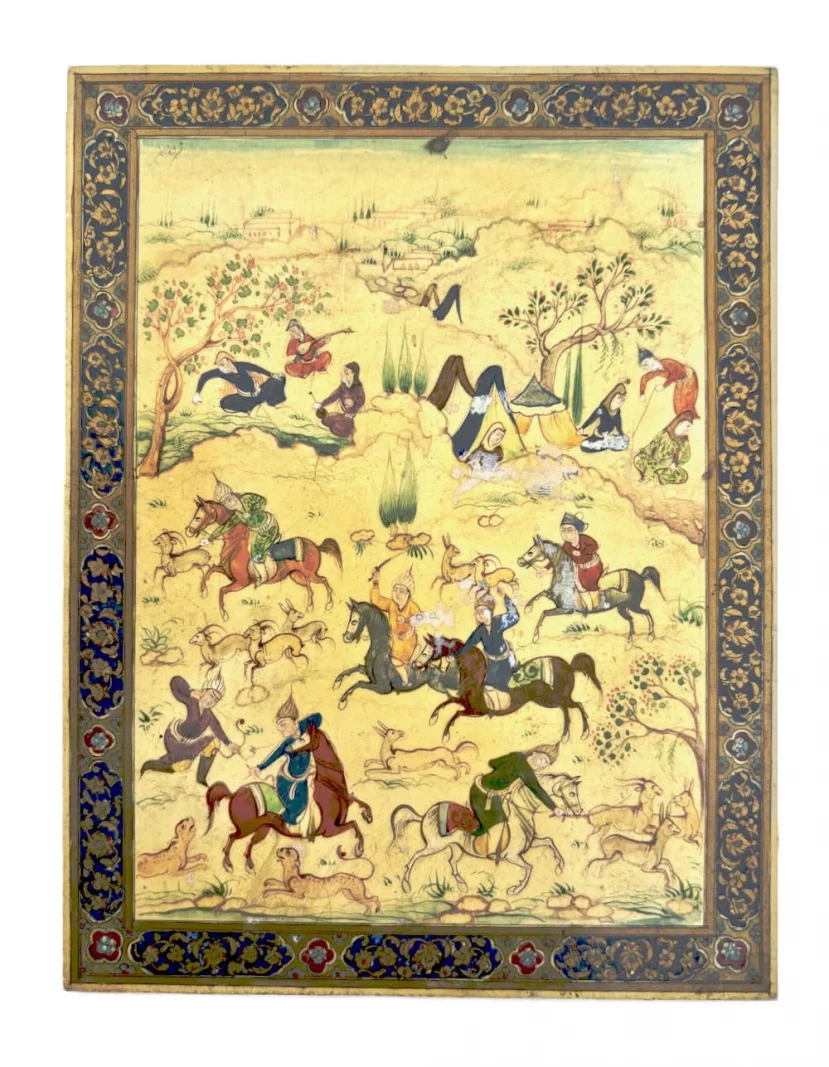
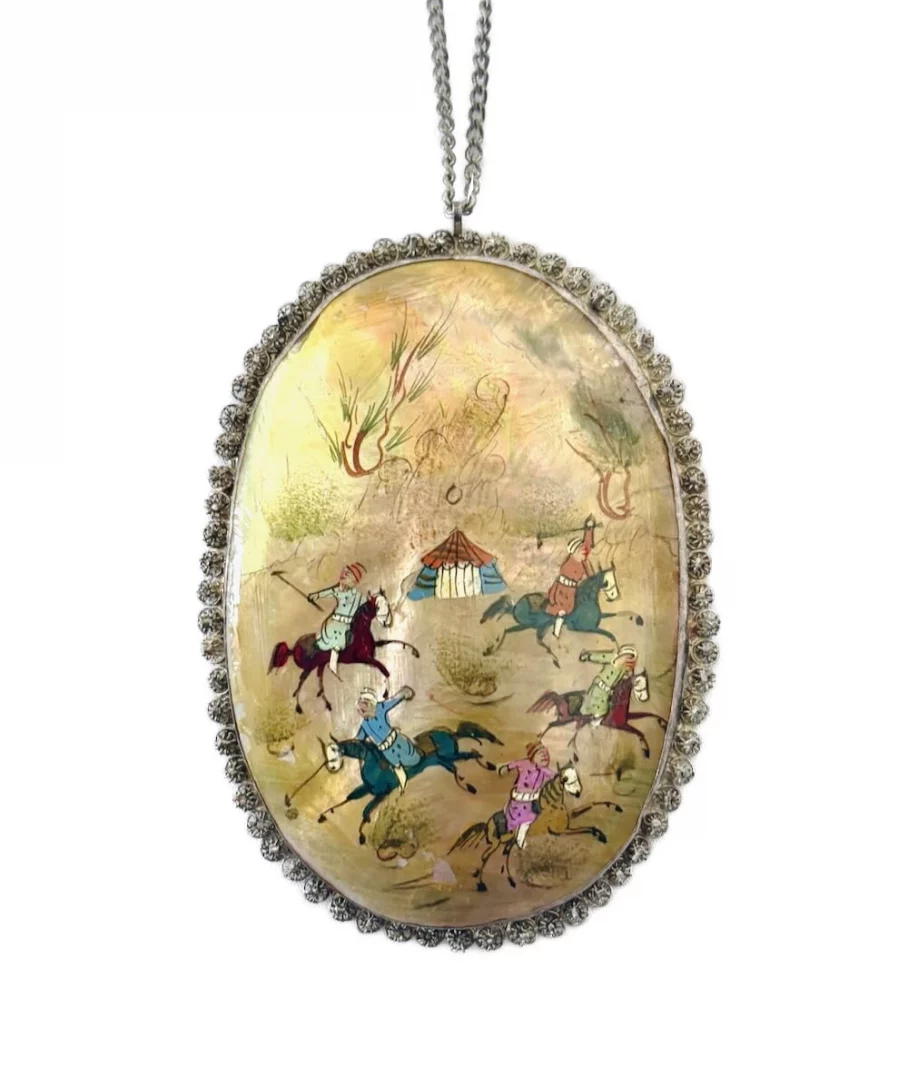
Persian miniature painting is one of the most refined artistic traditions in the world. Most people associate it with illuminated manuscripts, royal books, and richly illustrated poetry. Yet Persian miniature painting did not remain confined to the pages of manuscripts. Over time, artists adapted their skills to a wide range of decorative objects. They painted hunting scenes on pendants, courtly gatherings on plaques, and scenes from Persian literature on boxes, mirrors, and ornamental panels. In doing so, they transformed miniature painting from a literary art into a decorative art form that collectors still admire today.
Among the most fascinating examples are miniature paintings executed on bone, ivory, mother-of-pearl, and later materials such as ivorine. These surfaces offered artists new possibilities. They also allowed miniature paintings to become portable works of art that owners could display, wear, or collect. Today these pieces provide an important link between traditional Persian painting and the decorative arts that flourished during the late Qajar and Pahlavi periods.
From Manuscript Pages to Decorative Objects
For centuries, Persian miniature painters worked primarily within royal and aristocratic workshops. Their paintings illustrated famous literary works such as the Shahnameh, the Khamsa of Nizami, and the poetry of Hafez and Saadi. These manuscripts required years of labor and often involved teams of calligraphers, painters, gilders, and bookbinders.
As artistic tastes evolved, however, wealthy patrons began commissioning miniature paintings for objects beyond books. Artists responded by transferring their techniques to decorative surfaces that could stand alone as works of art.
By the nineteenth century, miniature painters increasingly created independent compositions intended for display. Some appeared in albums, while others decorated practical and ornamental objects. This transition allowed miniature painting to reach a wider audience and ensured that the tradition remained relevant in a changing world.
The subjects often remained familiar. Hunting scenes, polo matches, courtly gatherings, musicians, lovers in gardens, and episodes from Persian literature continued to dominate. What changed was the medium on which artists expressed these themes.
Why Bone Became a Popular Surface
Bone offered artists an attractive alternative to paper. It provided a smooth, durable surface capable of supporting exceptionally fine detail. Its subtle warmth also complemented the delicate colors commonly used in Persian miniature painting.
Artists often prepared bone carefully before painting. They polished the surface until it became smooth enough to accept intricate brushwork. Once prepared, bone allowed painters to execute the tiny facial features, flowing garments, and detailed landscapes that characterize the finest Persian miniatures.
Bone also offered practical advantages. It was more readily available than ivory and generally less expensive. As a result, many decorative miniatures intended for local markets or travelers employed bone rather than more costly materials.
Collectors frequently encounter bone miniatures from the late nineteenth and early twentieth centuries. These pieces often depict hunting scenes, mounted horsemen, falconry subjects, or romantic garden settings. Because bone possesses a natural organic structure, subtle variations in color and texture often remain visible beneath the painted surface, adding character and individuality to each piece.
Ivory and the World of Luxury Objects
Ivory occupied a special position within Persian decorative arts. For centuries it symbolized wealth, refinement, and prestige. Its smooth texture and luminous appearance made it an ideal surface for highly detailed miniature painting.
Artists valued ivory because it accepted extremely fine brushwork. The surface allowed painters to create delicate facial expressions, intricate costume details, and subtle shading effects. Gold highlights often appeared particularly striking against ivory’s warm background.
During the Qajar period and into the early twentieth century, artists frequently incorporated painted ivory miniatures into luxury objects. Jewelry, mirror cases, boxes, pendants, and presentation pieces sometimes featured miniature paintings protected beneath glass or crystal covers.
Ivory miniatures also appealed to foreign travelers and collectors. During the late nineteenth and early twentieth centuries, increasing numbers of visitors sought Persian works of art as souvenirs and collectibles. Miniatures painted on ivory provided a compact and highly portable expression of Persian artistic culture.
Today genuine antique ivory miniatures remain desirable among collectors because they combine skilled painting with a historically important material. However, modern regulations governing ivory require careful consideration when buying, selling, or transporting such objects.
The Iridescent Beauty of Mother-of-Pearl
Among all materials used for Persian miniature painting, few possess the visual magic of mother-of-pearl. Unlike bone or ivory, mother-of-pearl introduces an ever-changing play of light beneath the painted image.
Mother-of-pearl forms from the inner lining of certain mollusk shells. Its iridescent surface reflects light in shifting tones of silver, gold, pink, green, and blue. Persian artists quickly recognized its decorative potential.
When painters applied miniature scenes to mother-of-pearl, the shell itself became part of the artwork. The changing reflections created a luminous effect that seemed almost alive. Figures appeared to emerge from a glowing surface, while skies and landscapes acquired unusual depth and atmosphere.
This quality made mother-of-pearl especially suitable for romantic scenes, courtly subjects, and hunting compositions. As viewers moved around the object, the background shimmered and changed, enhancing the visual experience.
Mother-of-pearl miniatures became particularly popular in decorative plaques, pendants, jewelry, and ornamental display pieces during the twentieth century. Many examples sold through art galleries and luxury shops in Tehran, Isfahan, and other cultural centers. These works often combined traditional Persian themes with materials that appealed to modern collectors.
The Rise of Ivorine and Other Ivory Substitutes
By the late nineteenth century, artists and manufacturers increasingly searched for alternatives to natural ivory. Concerns about cost, availability, and changing consumer demands encouraged experimentation with new materials.
One of the most successful alternatives became known as ivorine. The term generally refers to synthetic materials designed to imitate the appearance of ivory. Depending on the period, ivorine could consist of celluloid, casein-based compounds, or other early plastics.
For artists producing decorative miniatures, ivorine offered several advantages. It provided a smooth, consistent painting surface and closely resembled ivory in color and texture. At the same time, it remained more affordable and widely available.
Many Persian decorative pieces produced during the twentieth century employed ivorine rather than true ivory. Tourists often purchased these works in Tehran, Isfahan, Shiraz, and other cities during the Pahlavi era. The subjects remained traditional, but the materials reflected modern manufacturing techniques and evolving markets.
Today collectors frequently encounter vintage Persian miniatures painted on ivorine. Although these pieces lack the rarity of antique ivory examples, they remain highly collectible and represent an important chapter in the evolution of Persian decorative arts.
Identifying Bone, Ivory, Mother-of-Pearl and Ivorine
Determining the material beneath a Persian miniature often requires careful examination. Age, wear, and protective coverings can complicate identification. Nevertheless, several characteristics can provide useful clues.
Bone typically displays tiny pores or dark specks when viewed closely. These natural features reflect the internal structure of the material and often remain visible even beneath painted surfaces.
Ivory generally appears smoother and more uniform. Under magnification, antique ivory may reveal subtle growth patterns known as Schreger lines, particularly when viewed from the reverse or edge.
Mother-of-pearl usually proves the easiest material to identify. Its iridescent surface shifts in color as light strikes it from different angles. Even when heavily painted, portions of the shell often remain visible around the edges or beneath translucent pigments.
Ivorine tends to appear more consistent and uniform than natural materials. It lacks the organic structures found in bone and ivory while imitating their overall appearance remarkably well.
In many cases, however, definitive identification requires examination by an experienced specialist. Collectors should approach material identification with caution and avoid assumptions based solely on appearance.
Popular Subjects in Decorative Miniatures
Although artists experimented with different materials, the themes remained deeply rooted in Persian artistic traditions.
Hunting scenes became particularly popular. Mounted horsemen pursuing deer, gazelles, or wild animals conveyed themes of nobility, courage, and aristocratic leisure. These compositions often featured energetic movement balanced by elegant design.
Courtly gatherings represented another favorite subject. Musicians, poets, noblemen, and attendants appeared within gardens or palace settings rich with symbolism and decorative detail.
Literary scenes drawn from Persian poetry and epic literature also remained common. Artists illustrated famous episodes from the Shahnameh and romantic tales associated with classical Persian literature.
Some compositions depicted Chogan, the ancient Persian game that later evolved into modern polo. Others portrayed falconry, equestrian displays, or idealized garden landscapes filled with flowers and flowing water.
Regardless of subject, artists emphasized harmony, balance, and storytelling. Every figure, tree, and architectural element contributed to the overall narrative.
Collecting Persian Miniatures Today
Persian miniature paintings on bone, ivory, mother-of-pearl, and ivorine continue to attract collectors around the world. Their appeal lies not only in their beauty but also in their ability to preserve centuries of artistic tradition within intimate and highly decorative objects.
Condition plays an important role in value. Collectors should examine painted surfaces carefully for losses, flaking, restoration, or discoloration. Frames, settings, and protective coverings can also affect desirability.
Provenance adds further interest. Pieces acquired directly in Iran, especially before the major political changes of the late twentieth century, often carry personal histories that enrich their appeal.
Most importantly, these objects demonstrate how Persian artists adapted ancient traditions to new materials and changing markets. Whether painted on bone, ivory, mother-of-pearl, or ivorine, each miniature reflects the extraordinary skill, imagination, and cultural heritage that define Persian art.
Far more than decorative curiosities, these miniature paintings serve as small windows into a larger artistic world. They connect literature, craftsmanship, history, and storytelling in a format that collectors can hold in their hands and appreciate for generations.