

Description
Vintage Persian Khatam-Kari Picture Frame Mosaic Marquetry Isfahan Iran Mid-Century
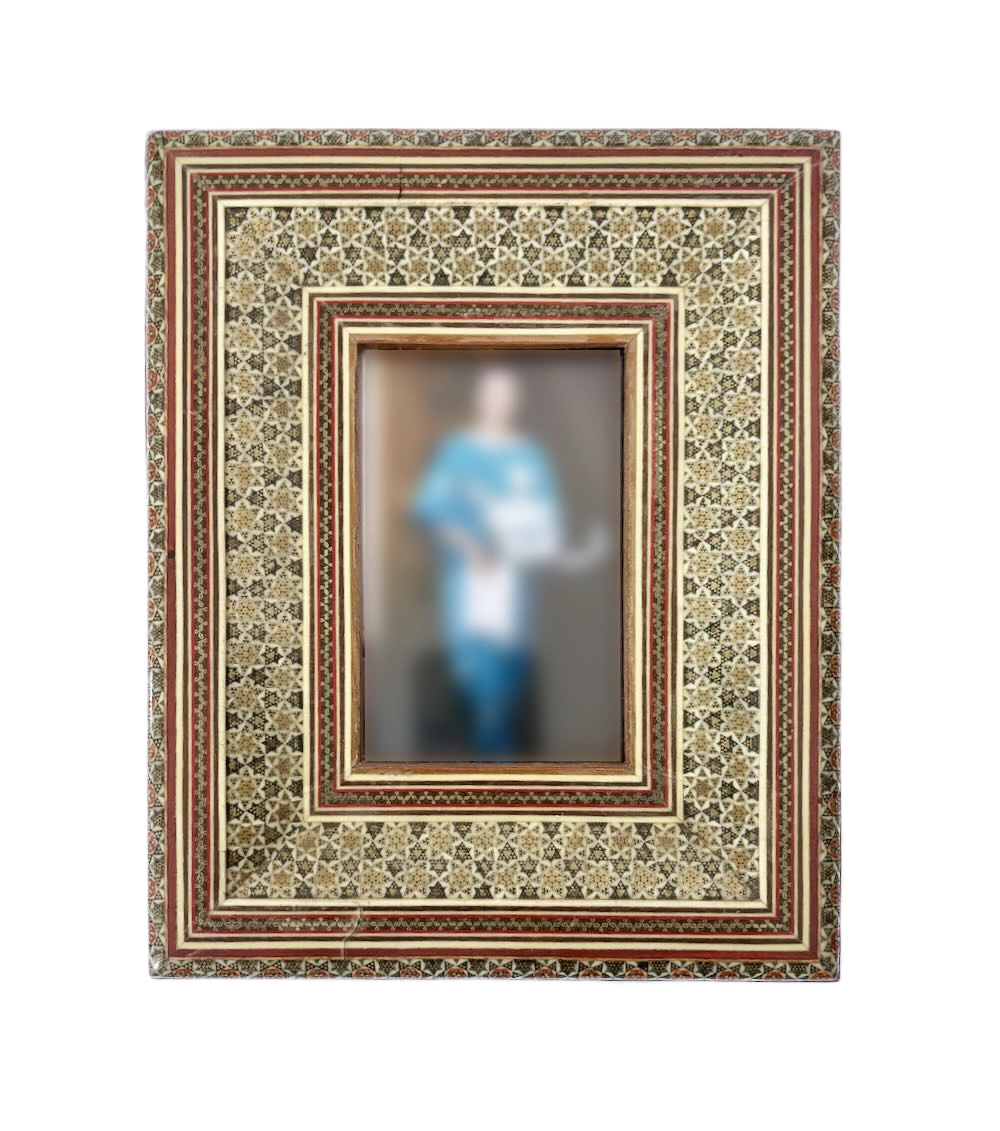
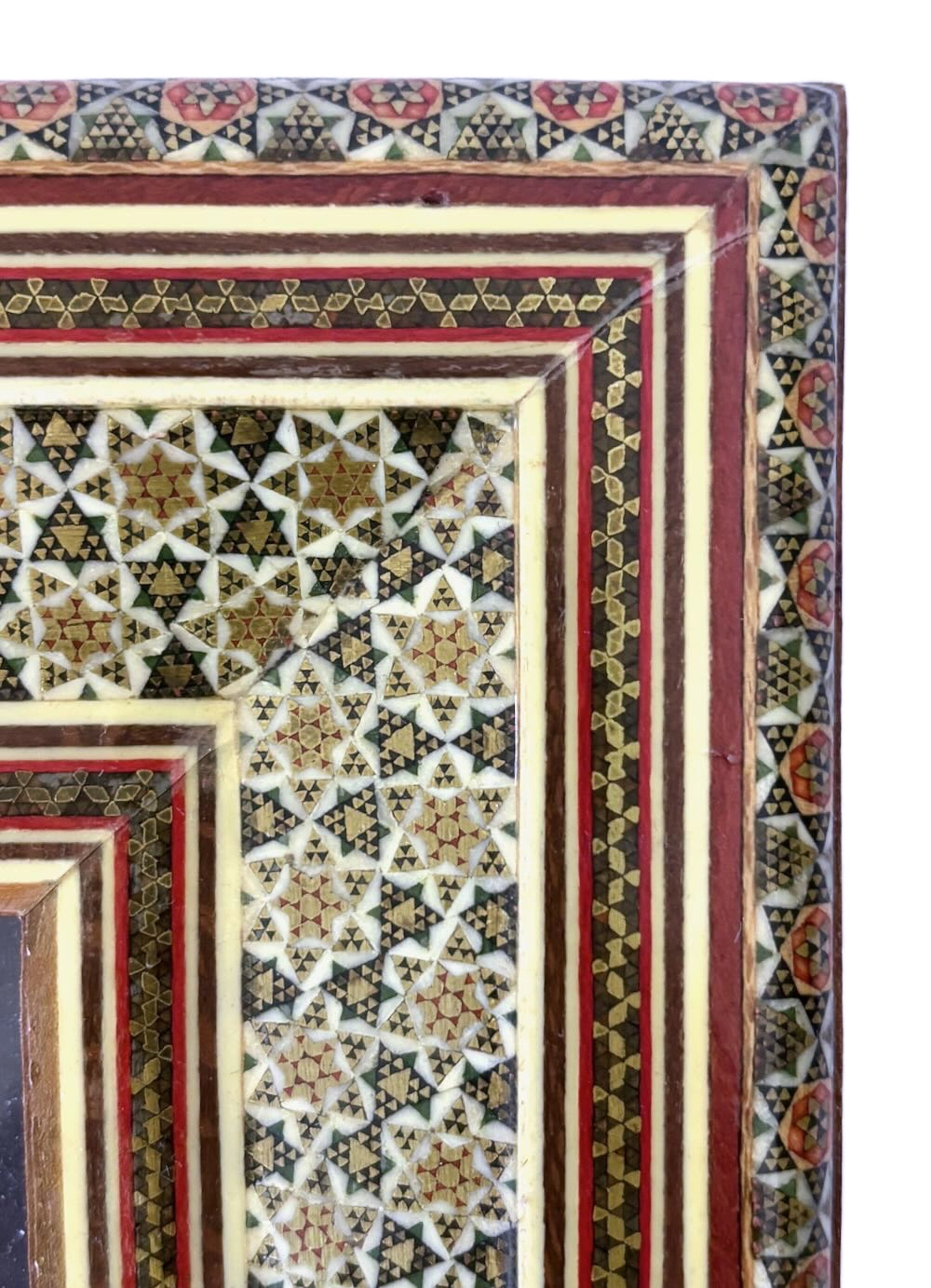
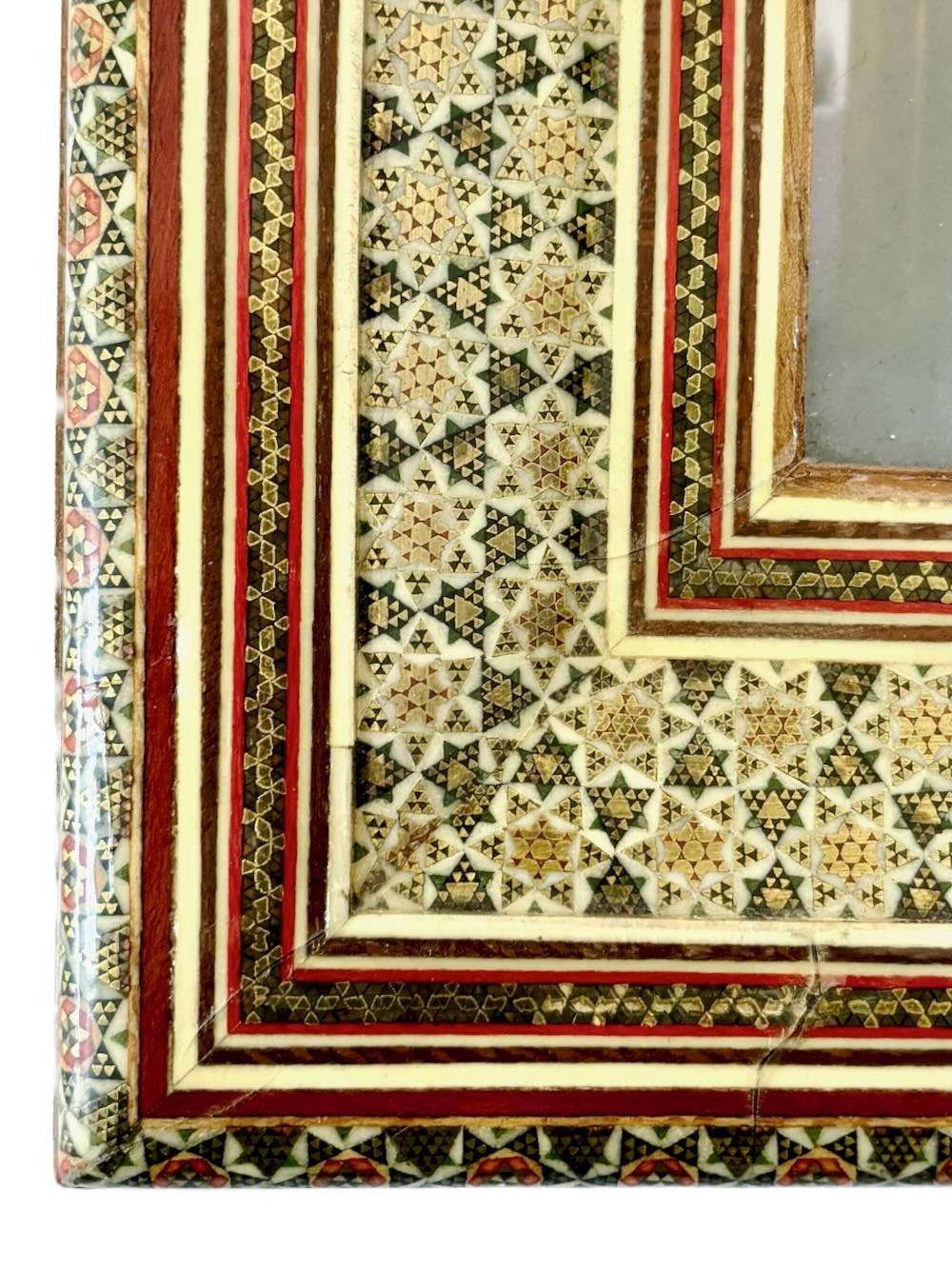
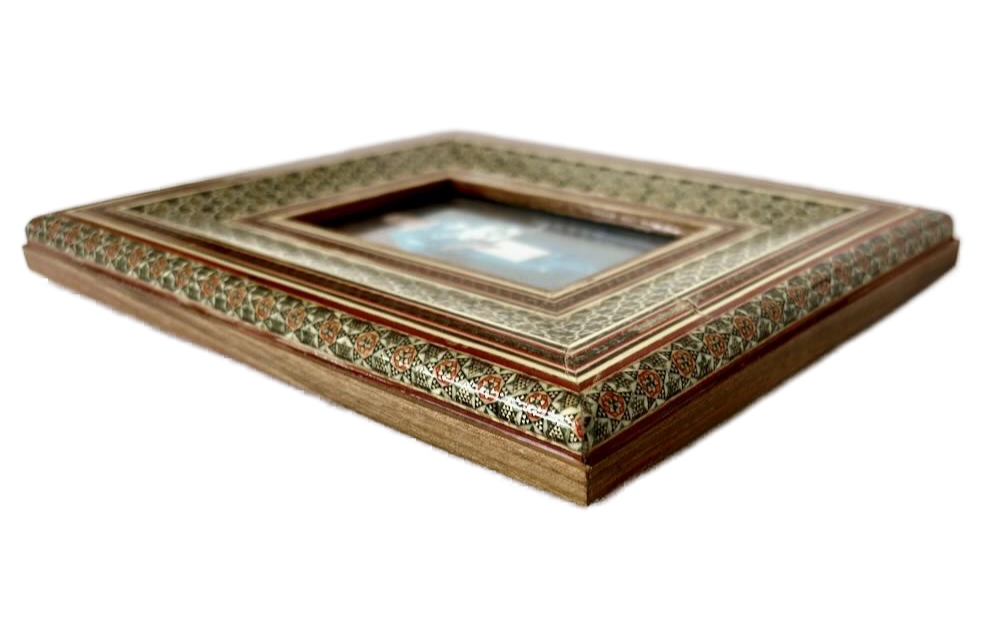
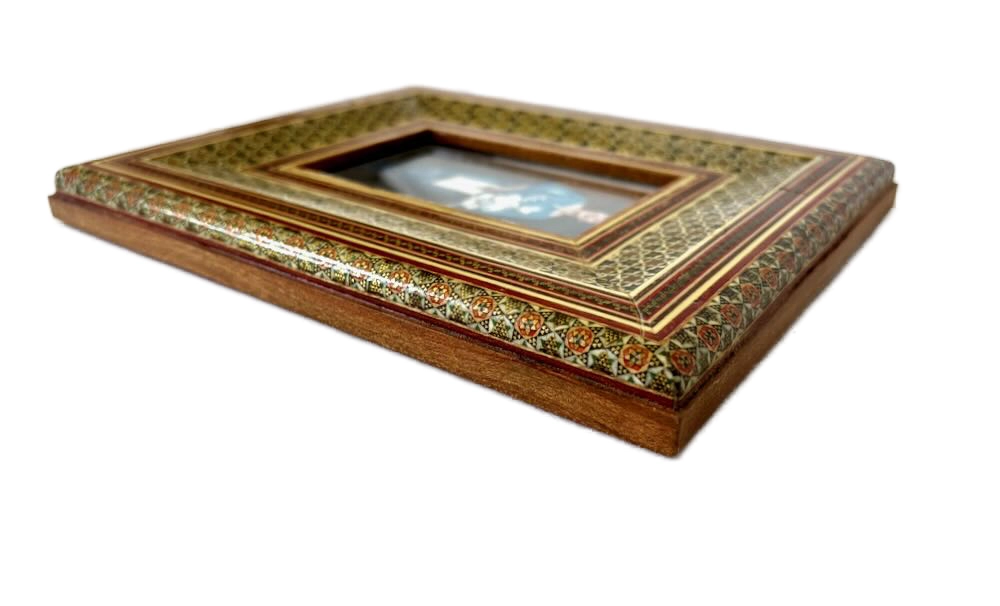
This finely crafted Persian Khatam-kari picture frame is a beautiful example of the extraordinary geometric marquetry associated with the historic workshops of Isfahan. Acquired in Iran during the 1960s, the frame reflects the remarkable patience and precision that made Khatam-kari one of Persia’s most admired decorative arts.
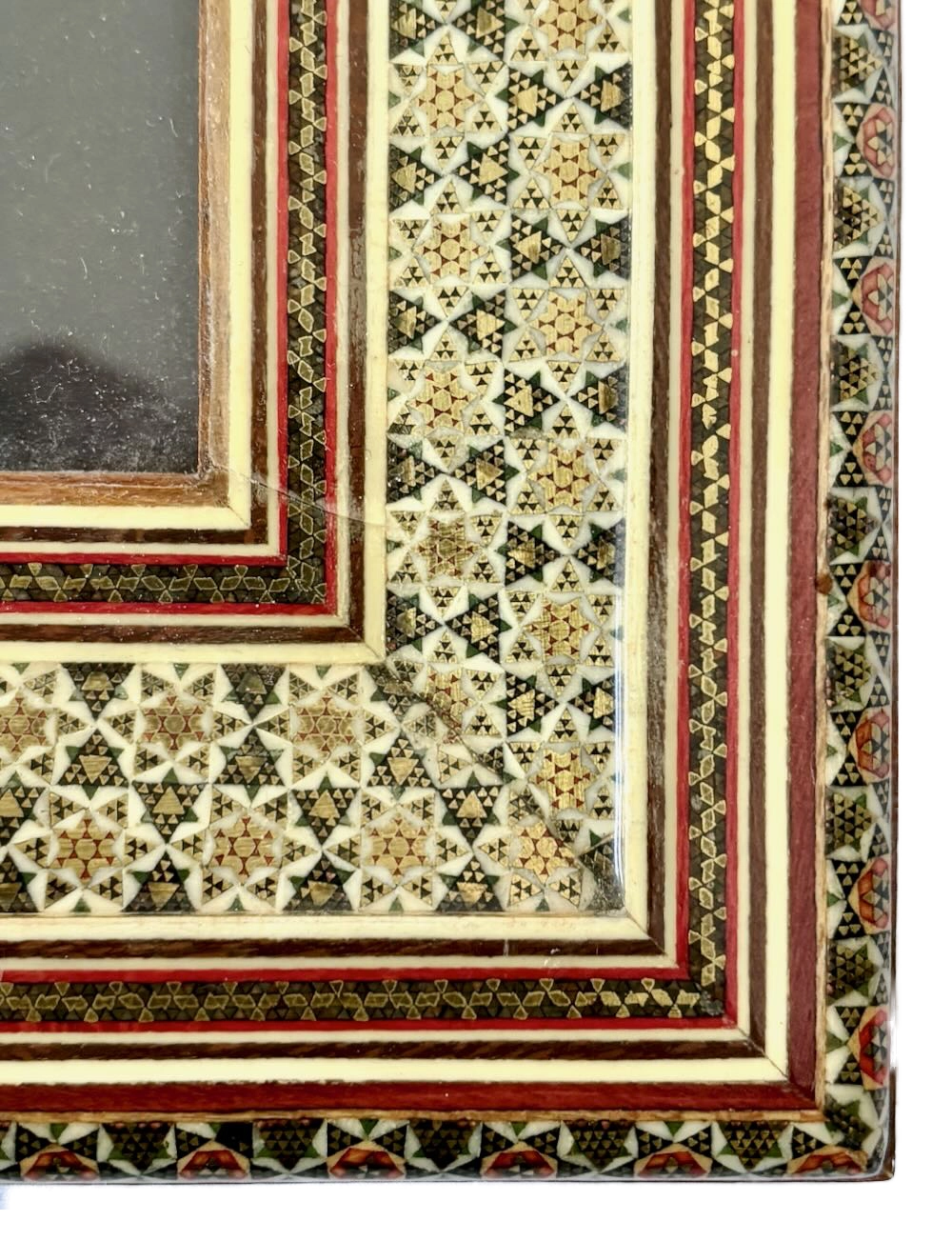
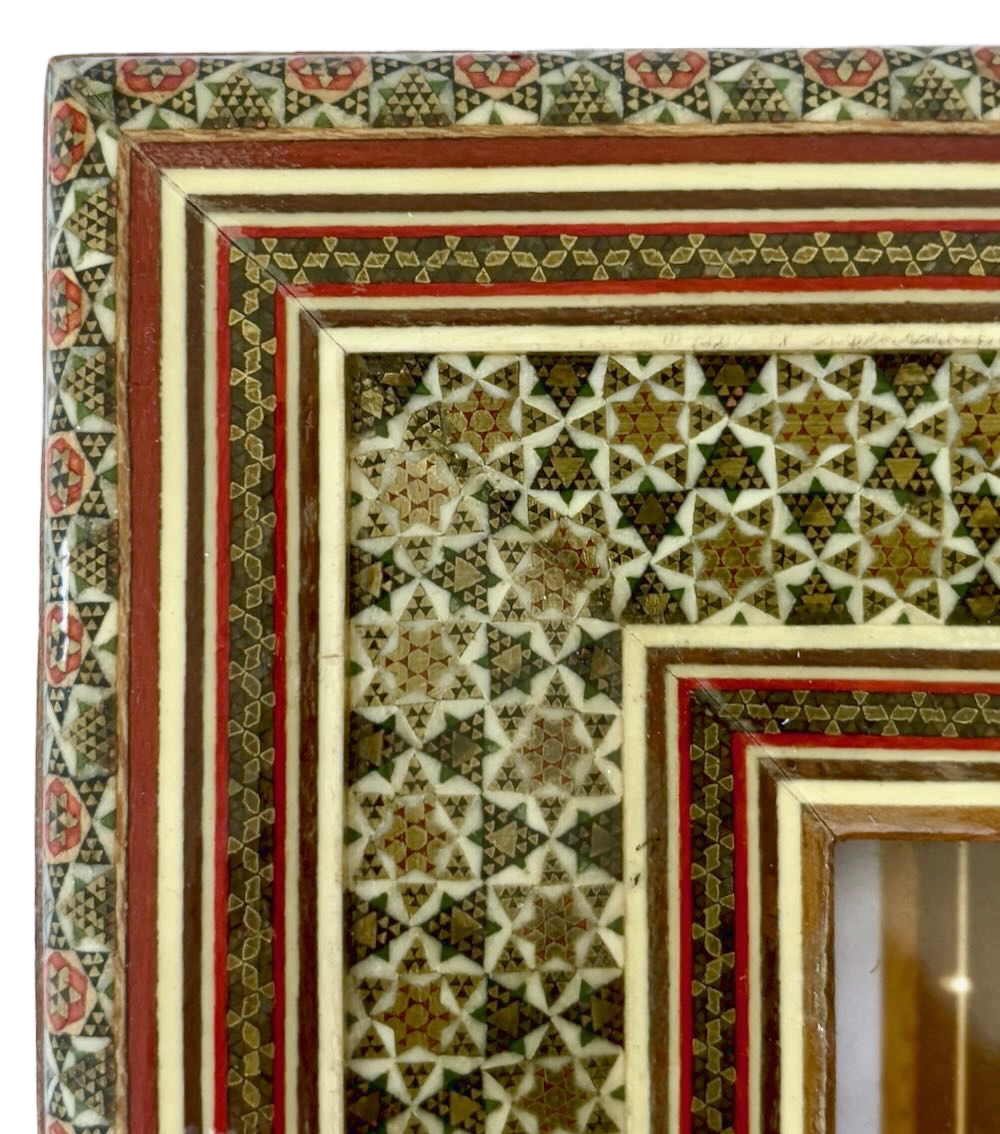
At first glance, the surface almost appears printed because the geometric patterns are so exact. However, every star, polygon, and border is assembled by hand from countless tiny pieces of wood, brass, and ivory-toned material, likely including bone elements, carefully arranged into complex mosaic formations. The closer the viewer looks, the more astonishing the craftsmanship becomes.
Unlike simpler souvenir examples, this frame displays unusually fine and dense inlay work. The repeating star motifs are extremely small and tightly composed, creating a refined visual texture that changes beautifully under light. Rich red, black, green, gold, and ivory tones give warmth and depth to the geometric structure, while the outer floral-inspired border softens the symmetry and adds decorative elegance.
The Art of Khatam-Kari
Khatam-kari, sometimes called Persian mosaic marquetry, is one of Iran’s most technically demanding decorative traditions. Artisans cut tiny rods of wood, metal, and bone into triangular segments, bind them into bundles, and slice them into thin veneers that reveal repeating geometric patterns. These veneers are then carefully applied to wooden surfaces by hand.
The technique flourished particularly in Isfahan and Shiraz, where master craftsmen decorated boxes, palace interiors, musical instruments, mirror frames, jewelry chests, and luxury objects for both aristocratic patrons and discerning collectors.
Because the process requires extraordinary precision, fine Khatam-kari has long been associated with patience, discipline, and mathematical sophistication. Even small objects could require thousands of individual inlaid elements.
Mid-Century Iranian Decorative Arts
During the mid-20th century, Iran experienced renewed international appreciation for its traditional arts. Workshops in Isfahan continued producing exceptional handcrafted objects that blended centuries-old craftsmanship with elegant mid-century presentation.
This frame belongs to that important period. Its proportions, coloration, and built-in easel support are characteristic of quality Iranian decorative arts produced during the 1950s–1970s. Although suitable for photographs, the narrow opening size also makes it especially ideal for Persian miniatures, calligraphy, portrait miniatures, or other intimate artworks.
Condition
The frame remains in very good vintage condition overall.
The intricate inlay itself appears intact with no visible losses observed. The surface shows age-related lines and craquelure within the protective coating or varnish layer rather than damage to the underlying mosaic work. These slightly raised lines are consistent with aging finishes seen on vintage Persian lacquered decorative arts and do not detract from the overall presentation.
The original glass is present. The back retains its original varnished wood construction with integrated folding easel stand. A blurred placeholder photograph is currently shown and will be removed prior to sale.
A Decorative Object in Its Own Right
Even without artwork inserted, the frame functions as an elegant decorative object. The interplay between geometry, color, and microscopic craftsmanship gives it strong visual presence whether displayed on a desk, bookshelf, cabinet, or gallery wall.
Fine Khatam-kari continues to be admired not only for its beauty but also for the astonishing human skill required to create it by hand.