
Description
Kéramos Sèvres Free-Form Ceramic Dish – Black & Pink Glaze, René Hénon, France 1950s
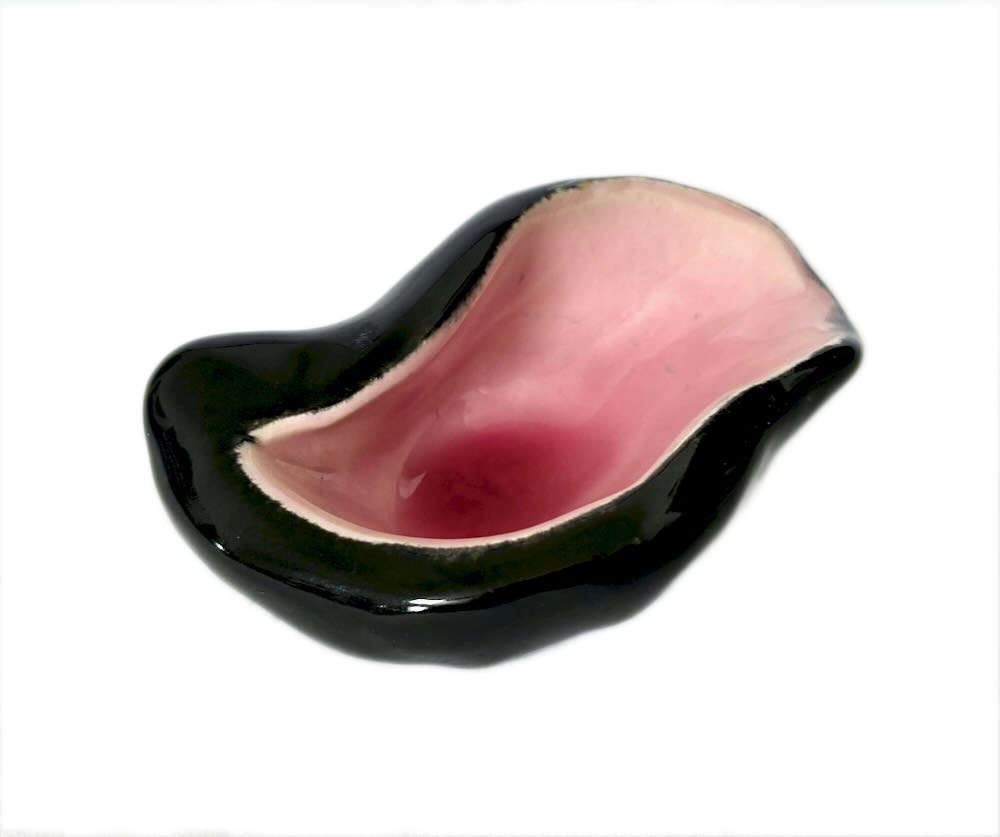
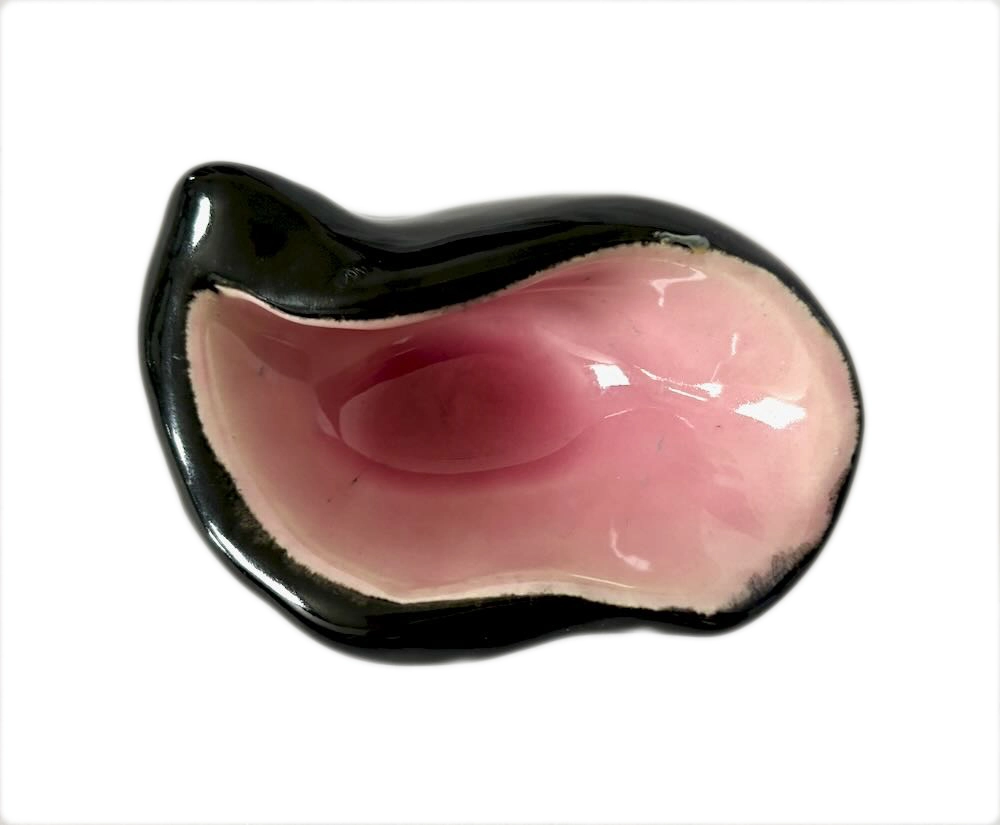
This free-form ceramic dish by Kéramos Sèvres is a refined example of mid-century French studio pottery, combining sculptural form with bold, contrasting glaze. Produced in the workshop of René Hénon during the 1950s, the piece reflects a moment when functional ceramics began to shift toward expressive, design-led objects.
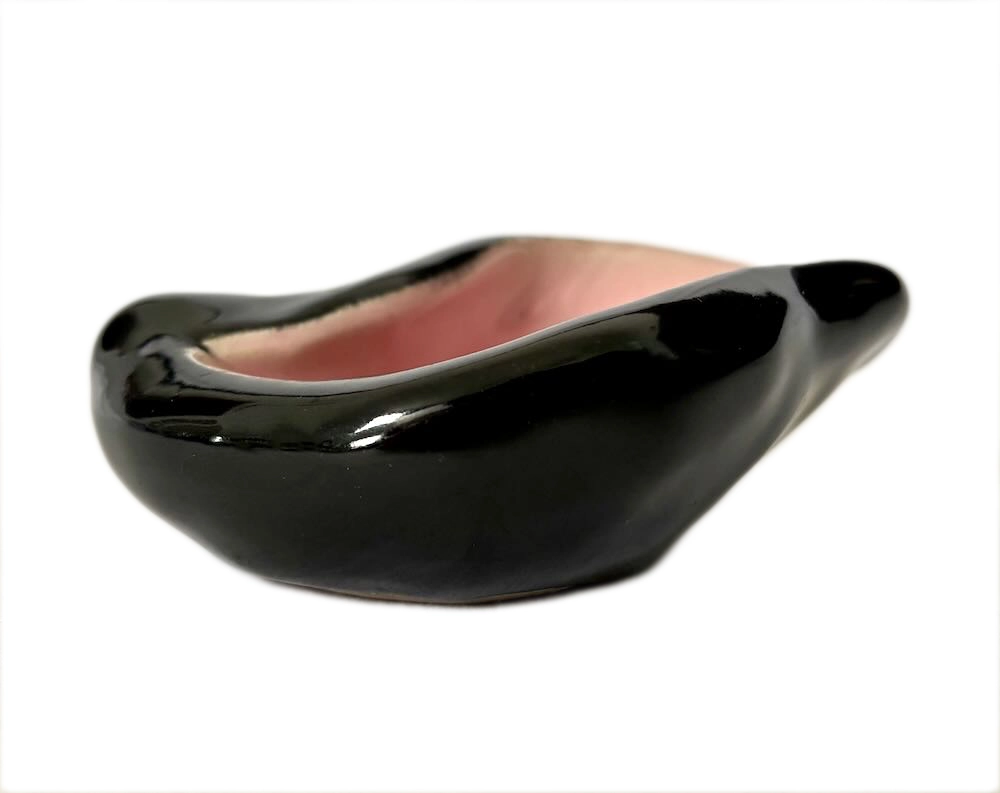
The asymmetrical, biomorphic shape moves away from traditional geometry, instead suggesting a folded or organic surface—almost shell-like in its formation. This sense of movement is reinforced by the glaze: a deep, glossy black exterior set against a vivid pink interior, a combination frequently associated with Kéramos production. The contrast is both visual and tactile, drawing attention to the interior space while emphasizing the contour of the form.
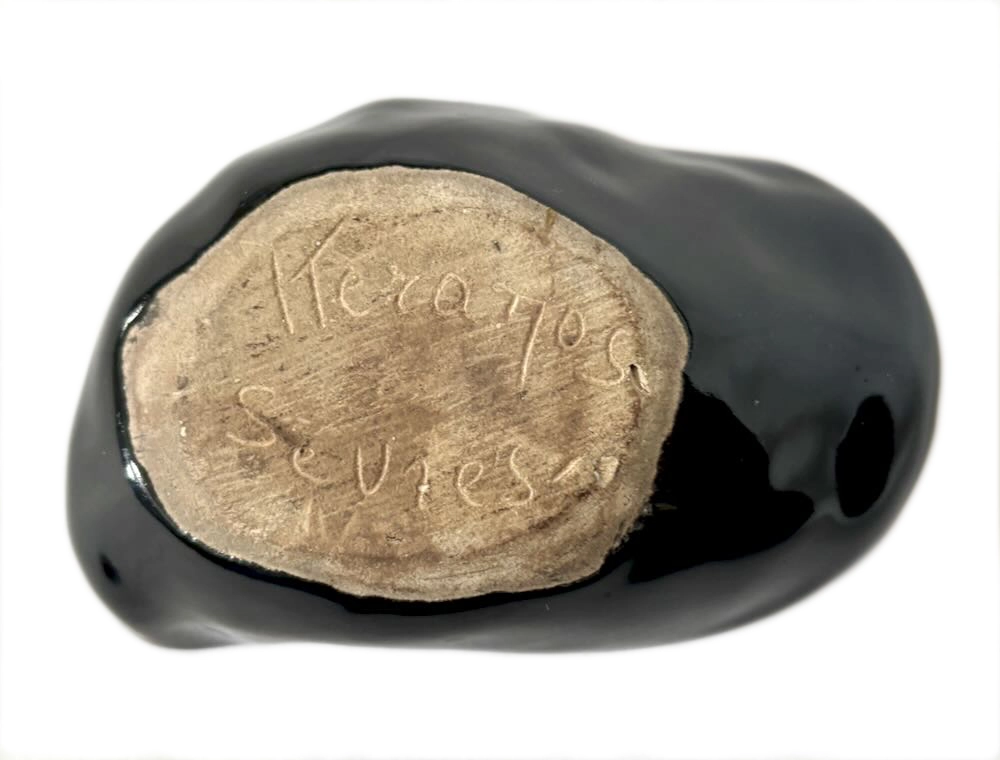
The underside bears the incised “Kéramos Sèvres” signature, confirming its origin within the small atelier founded by René Hénon. Unlike larger industrial manufacturers, Kéramos operated on a limited scale, typically employing only a handful of artisans. As a result, pieces from the workshop often display subtle variations in form and glaze, with no strict standardization.
Kéramos: A Studio Rooted in Sèvres Tradition
The Kéramos workshop was located in Sèvres, one of the most historically significant centers of ceramic production in France. While distinct from the state-run Manufacture nationale de Sèvres, independent ateliers such as Kéramos benefited from this environment of technical expertise and artistic exchange. During the postwar period, Sèvres remained a hub where traditional craftsmanship intersected with modern design.
René Hénon himself was trained as an architect before turning to ceramics, and this background is evident in the balance between structure and spontaneity seen in his work. His pieces often bridge function and sculpture, with everyday objects reimagined as design statements.
Kéramos production extended beyond decorative objects to include serving pieces and tableware, some of which were retailed through influential Parisian design channels and exported internationally, particularly to the United States. The atelier’s work aligns with the broader movement of postwar French ceramics, where artists explored organic forms, rich glazes, and a more expressive approach to everyday objects.
Form, Function, and Collectibility
Pieces of this size were often conceived as vide-poches or small catch-all dishes, but their sculptural quality allows them to function equally well as display objects. The compact scale does not diminish their presence; instead, it invites closer interaction with the surface and form.
No directly comparable example of this exact form has been identified, which reflects the nature of small studio production rather than strict repetition. Each piece carries a degree of individuality, shaped both by hand and by the behavior of the glaze during firing.
Condition and Presentation
The dish is in very good vintage condition. The glaze remains vibrant and intact, with no significant chips or structural issues observed. The surface shows only minimal signs of age consistent with careful use. The underside retains its original incised signature and expected wear from contact with surfaces over time.