
Description
Vienna Art Plate Queen Louise – 1905 Antique Tin Lithograph
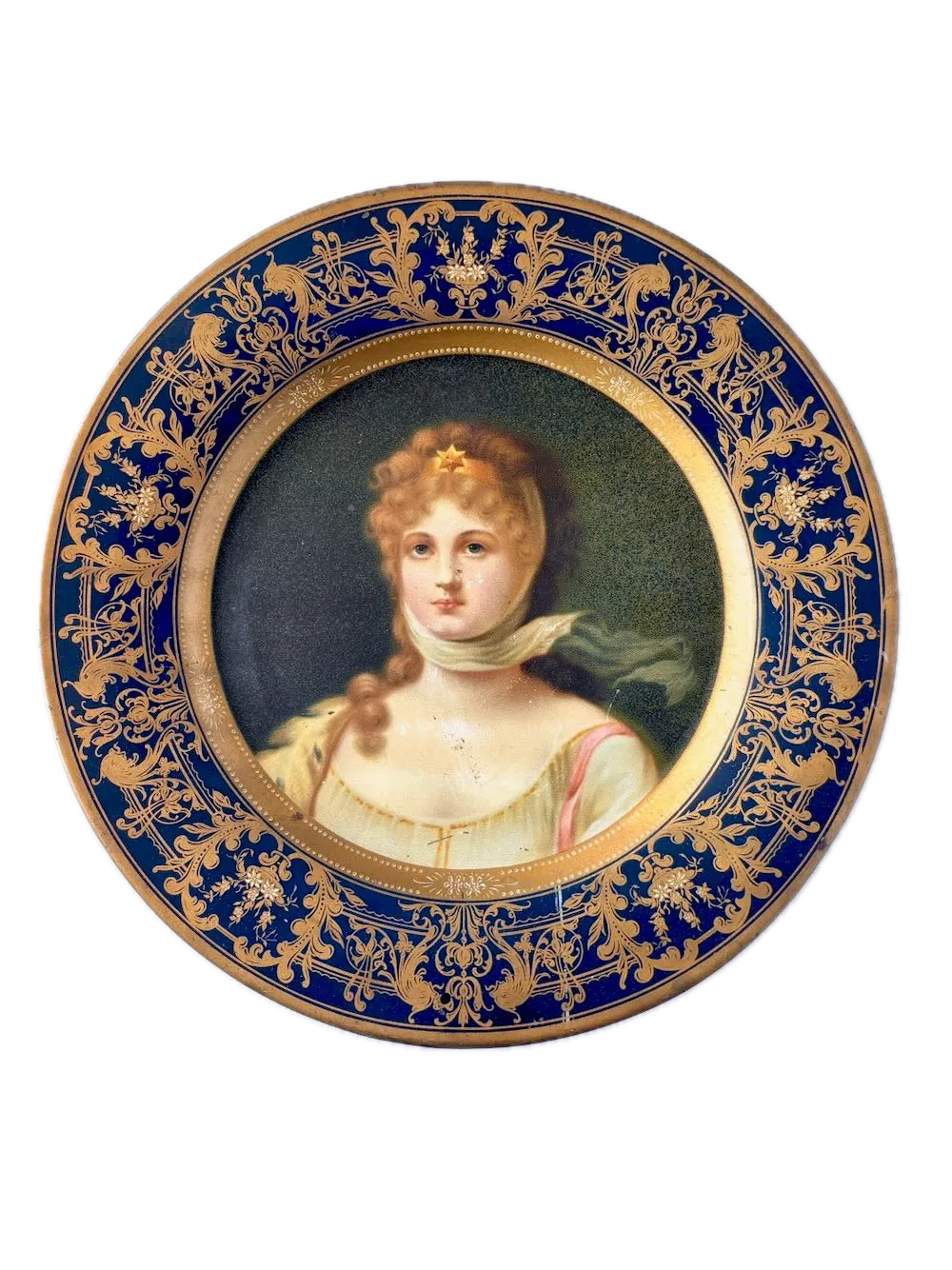
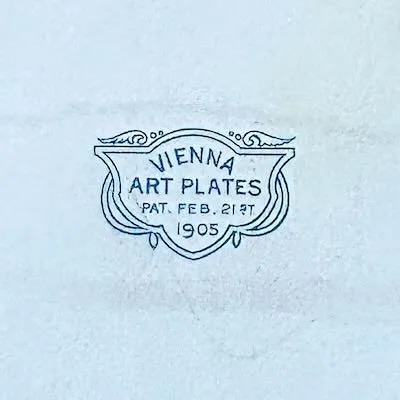
This antique Vienna Art Plate features the iconic portrait of Queen Louise of Prussia, one of the most admired and recognizable figures of the early 19th century. Produced shortly after the February 21, 1905 patent for these lithographed tin plates, it reflects a moment when industrial craftsmanship brought history, beauty, and storytelling into everyday homes.
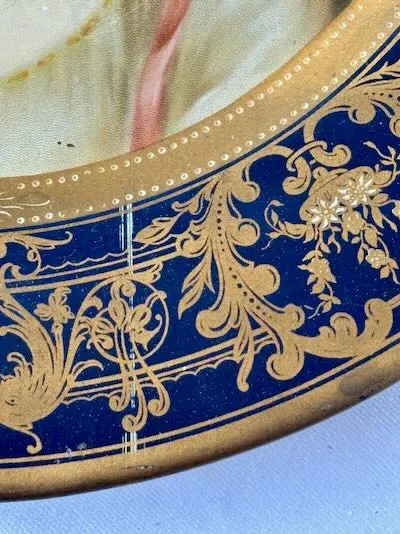
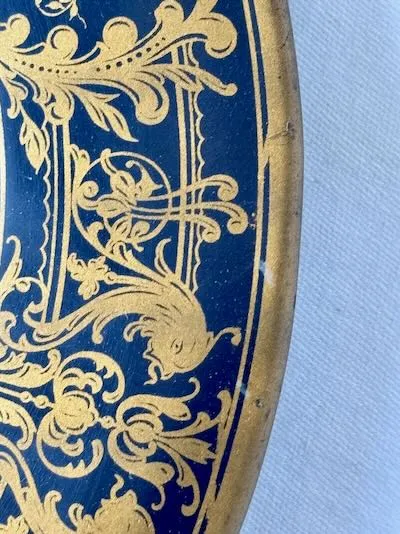
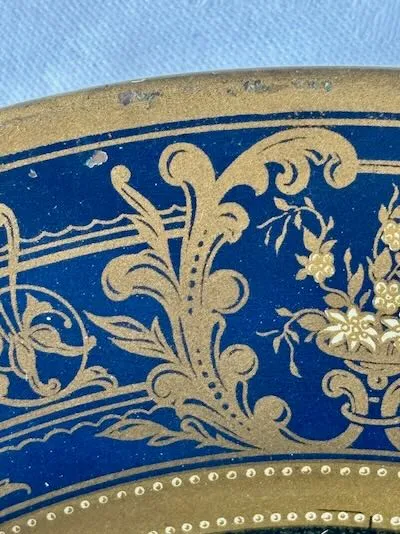
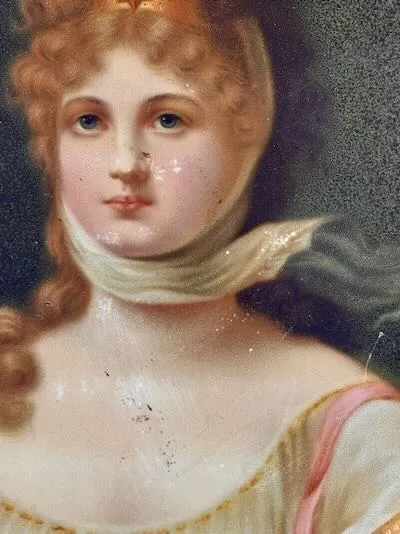
The plate immediately stands out with its rich cobalt blue border and ornate gold-toned decoration, designed to imitate the elegance of fine European porcelain. At the center, the portrait captures Queen Louise in the soft, idealized style that made her image so widely loved across Europe and later in America.
Queen Louise and Napoleon – The Story Behind the Image
This is not just a decorative portrait. It carries a powerful historical narrative tied directly to Napoleon Bonaparte. In 1807, after Prussia’s crushing defeat by Napoleon’s forces, Queen Louise traveled to Tilsit to personally plead for more lenient peace terms. She hoped to preserve parts of her country, including key territories like Magdeburg. Contemporary accounts describe her as poised, intelligent, and remarkably composed under pressure.
Napoleon received her with admiration but remained unmoved politically. In a private letter, he admitted he had to resist her charm, noting that acting the gentleman would cost him too much. Despite her efforts, Prussia lost nearly half its territory. He later referred to her as his “beautiful enemy,” a phrase that captured both respect and rivalry.
Rather than diminishing her, the encounter elevated her status. Attempts to discredit her only strengthened public admiration. She became a symbol of dignity, patriotism, and resistance. When she died young in 1810, she was mourned as a national heroine. Even Napoleon later acknowledged her influence, remarking that the Prussian king had lost his “best minister.” For collectors, this connection adds depth. This plate links directly to the same historical moment that continues to drive strong interest in Napoleonic-era objects.
The Image and Its Lasting Appeal
The portrait style seen here became widely associated with Queen Louise. Artists emphasized her calm expression, soft features, and signature flowing scarf. That scarf likely concealed a swelling in her neck, possibly a thyroid condition. What began as a personal detail quickly became a fashion trend, copied by women across Europe.
By the early 1900s, her image represented more than beauty. It conveyed elegance, resilience, and quiet strength. That is exactly why manufacturers chose her portrait for Vienna Art Plates. It resonated emotionally with buyers and still does today.
Vienna Art Plate – History and Craft
Despite the European name, Vienna Art Plates were produced in the United States, primarily in Coshocton, Ohio, known at the time as the “Advertising Capital of the World.” Companies such as the H.D. Beach Company and the Meek Company created these plates as premium advertising pieces.
They used advanced lithographic techniques to reproduce detailed artwork on tin, often using multiple color layers to achieve depth and richness. The goal was to mimic expensive Royal Vienna porcelain at a fraction of the cost. These plates were typically given as promotional gifts for purchases and displayed proudly in homes. Over time, many were lost or damaged, making surviving examples increasingly collectible today.
Condition and Presentation
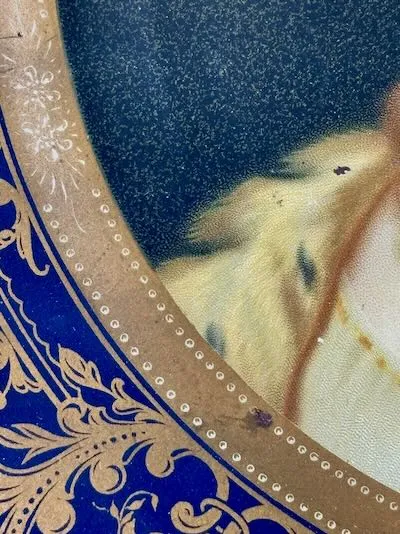
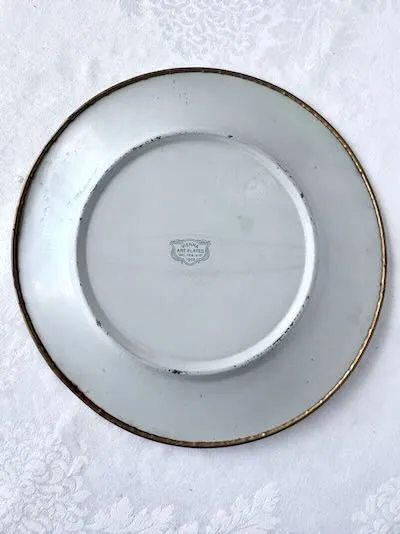
This example shows authentic age consistent with over 120 years of history. The cobalt blue and decorative border remain visually strong, and the portrait retains its presence.
There are visible signs of wear, including scratches and areas of lithographic loss, particularly within the portrait. This type of wear is common for tin lithographs of this age due to natural expansion and contraction of the metal over time. The plate remains structurally sound and displays well, especially as a decorative wall piece.
Why Collect This Vienna Art Plate
This plate brings together history, design, and storytelling in a way few decorative objects can. It appeals to collectors of early advertising, Art Nouveau design, and Napoleonic-era history alike. The Queen Louise portrait remains one of the most desirable subjects in the Vienna Art Plate series, especially when combined with strong decorative color and authentic early production.