
Description
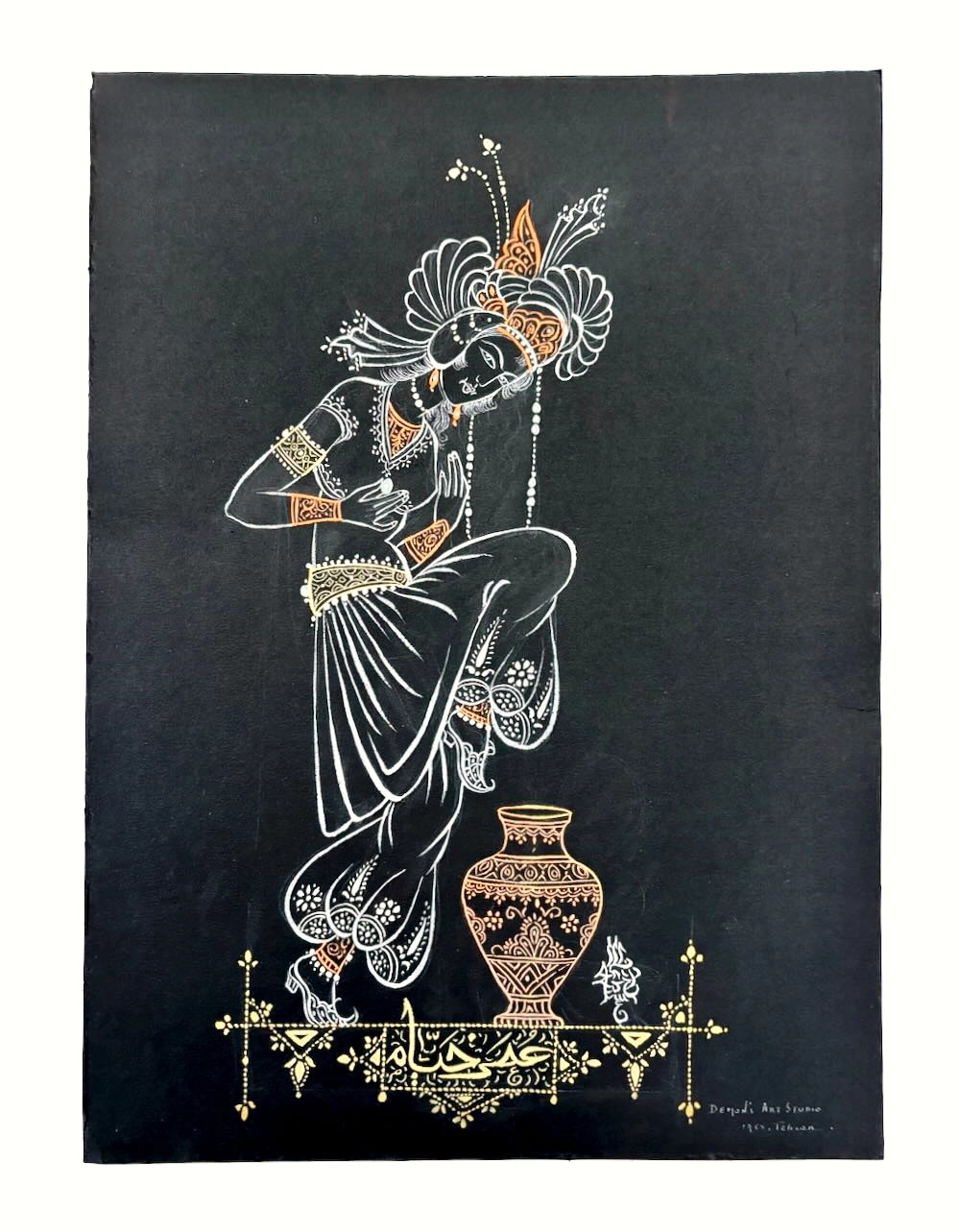
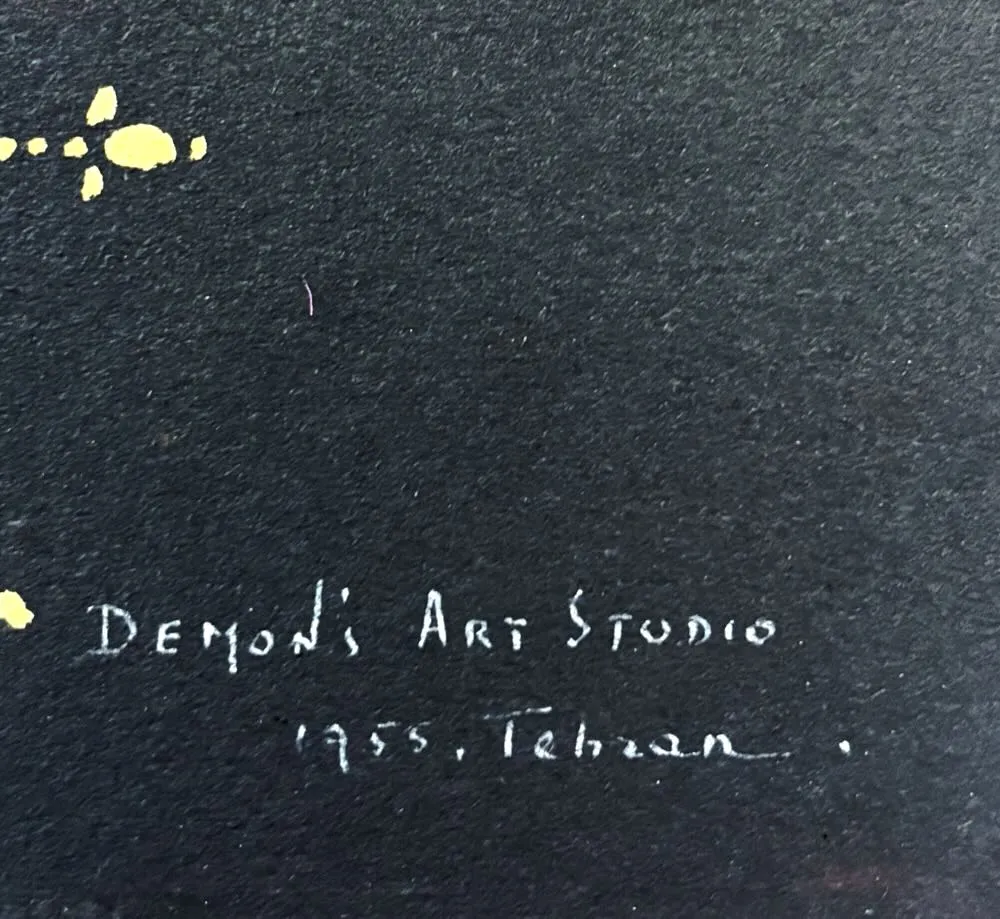
Persian Courtly Dancer Painting Demon’s Art Studio Tehran 1955 Gouache on Black Paper
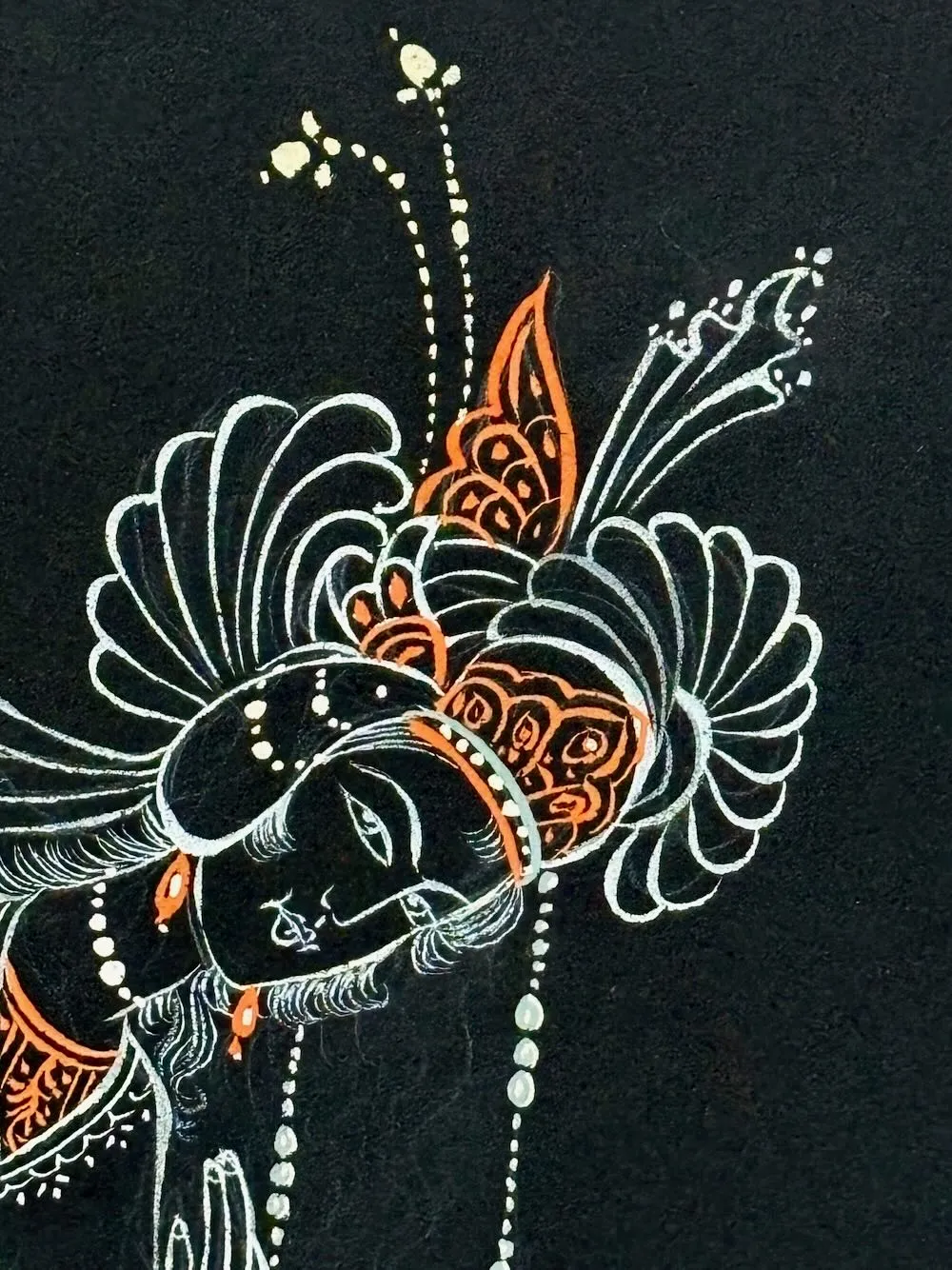
This elegant Persian painting from Studio Demon depicts a courtly dancer poised in mid-movement, rendered with remarkable precision against a dramatic black background. Executed in white, gold, and copper-toned pigments, the composition captures the grace and refinement long associated with Persian artistic traditions. The figure’s elaborate headdress, jewelry, flowing garments, and expressive pose create a sense of rhythm and movement while maintaining the decorative balance characteristic of Persian painting.
The work is signed “Demon’s Art Studio, 1955, Tehran”, linking it to one of the better-known artistic workshops active in mid-20th century Iran. Demon’s Art Studio produced hand-painted works inspired by Persian cultural themes and traditions, allowing individual artists to contribute their own interpretations while working within established artistic conventions. Today these paintings offer a fascinating glimpse into a period when traditional Persian imagery was being reinterpreted for a modern audience.
Persian Painting and the Tradition of Courtly Subjects
Persian art has long celebrated themes of beauty, poetry, music, dance, and courtly life. Dancers, musicians, wine bearers, and lovers appear throughout Persian manuscripts, lacquer paintings, and decorative arts, creating visual counterparts to the literary traditions that shaped Persian culture for centuries.
Although this painting is not a manuscript miniature, it draws inspiration from the same artistic heritage. The delicate linework, ornamental detailing, and stylized figure reflect elements commonly associated with Persian miniature painting while adapting them to a larger and more decorative format. The striking contrast between the black ground and luminous pigments gives the work an appearance reminiscent of illuminated manuscripts and lacquer painting.
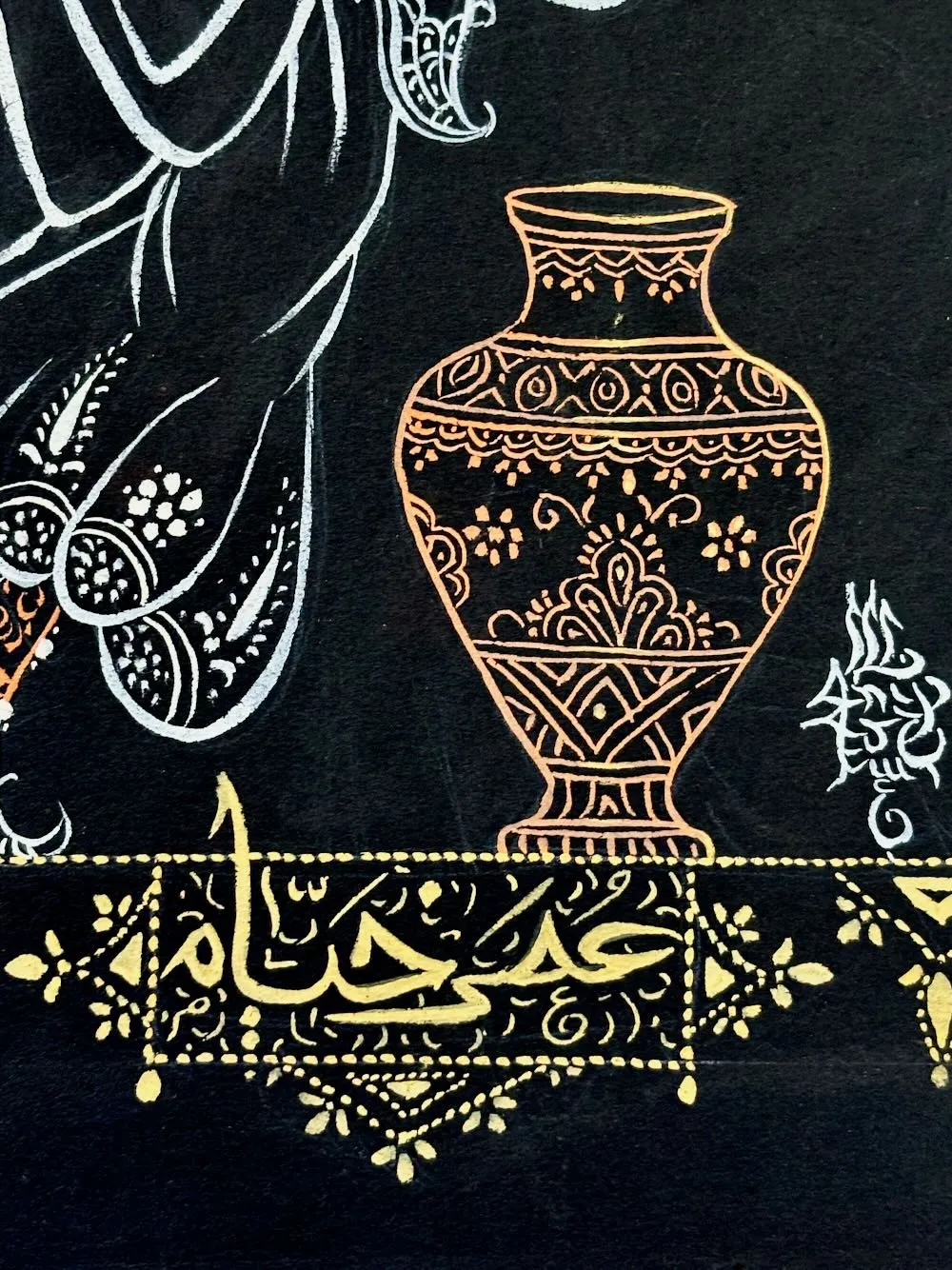
A finely decorated vase appears beside the dancer, adding further decorative interest and reinforcing the Persian character of the composition.
Omar Khayyam and the Persian Literary Tradition
The name Omar Khayyam (عمر خیام) appears within the composition, connecting the painting to one of the most celebrated figures in Persian culture. Born in Nishapur in the eleventh century, Khayyam achieved distinction as a mathematician, astronomer, philosopher, and poet. While respected during his lifetime for his scientific accomplishments, he later became internationally renowned through the Rubáiyát, a collection of verses reflecting on beauty, time, fate, mortality, and the importance of appreciating life’s fleeting moments.
For centuries, Persian artists found inspiration in the atmosphere and symbolism associated with Khayyam’s poetry. Dancers, musicians, wine bearers, gardens, flowers, and scenes of courtly elegance became recurring themes in Persian painting, manuscript illustration, lacquer work, and decorative arts. These images were not always intended to illustrate specific poems. Rather, they sought to capture the spirit of Persian poetry and the rich cultural world from which it emerged.
The graceful dancer depicted here reflects that tradition. Her elaborate costume, flowing movement, and decorative setting evoke the themes of beauty, celebration, music, and refinement that appear throughout Persian literature and art. The inclusion of Khayyam’s name within the design places the work within a long artistic lineage that continued to inspire Iranian painters well into the twentieth century.
Demon’s Art Studio, Tehran
Demon’s Art Studio operated in Tehran during the mid-20th century and became known for producing hand-painted works rooted in Persian artistic traditions. Many surviving examples depict literary, historical, and courtly themes rendered with careful attention to costume, ornament, and design.
This example demonstrates the workshop’s skilled use of opaque pigments on black paper. The artist created the image through fine linear drawing and decorative detailing rather than heavy paint application, allowing the figure and ornament to emerge vividly from the dark ground.
Condition and Presentation
The painting remains in very good vintage condition. The image area is well preserved, with strong color, crisp linework, and excellent visual presentation. Minor age-related wear may be present consistent with age and handling, but no significant condition issues affecting the composition are observed.
As with all works on black paper, careful handling and archival framing are recommended to ensure long-term preservation.
Why Collectors Seek Works Like This
Paintings from Tehran’s mid-century art studios occupy an interesting position between traditional Persian art and modern decorative painting. They appeal to collectors of Persian and Middle Eastern art, decorative arts enthusiasts, and those seeking distinctive hand-painted works with strong visual presence.
The combination of a graceful courtly dancer, striking black-ground technique, documented Tehran origin, and dated studio signature makes this an attractive example of mid-20th century Persian decorative painting.