

Description
Early Persian Hunting Scene Miniature Hand-Painted on Bone
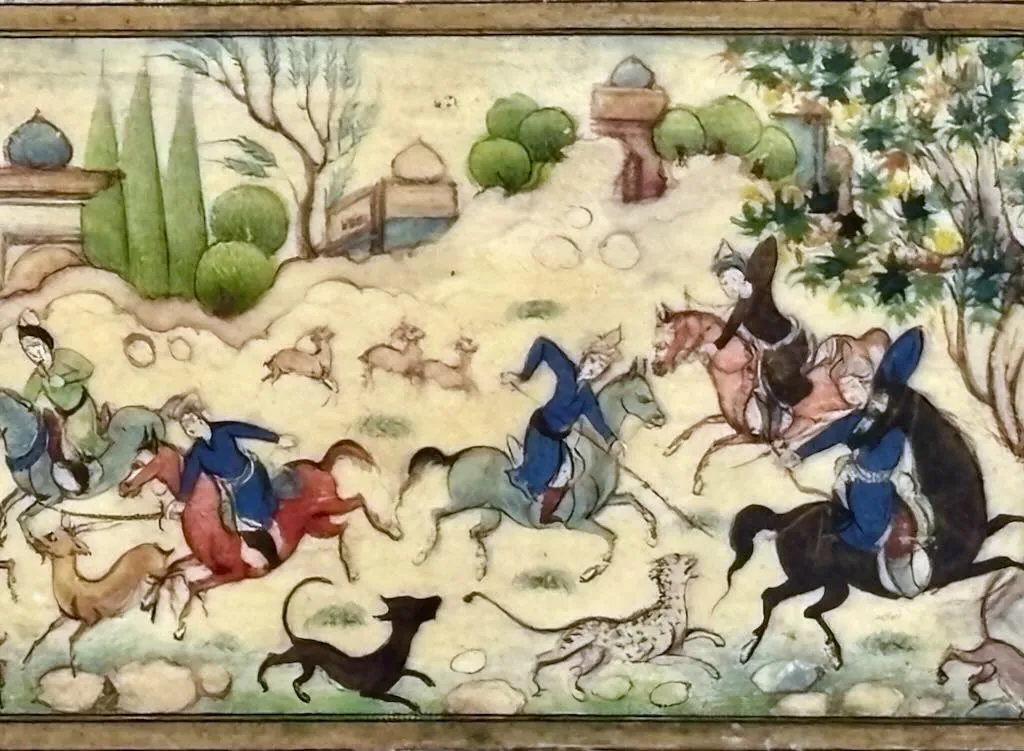
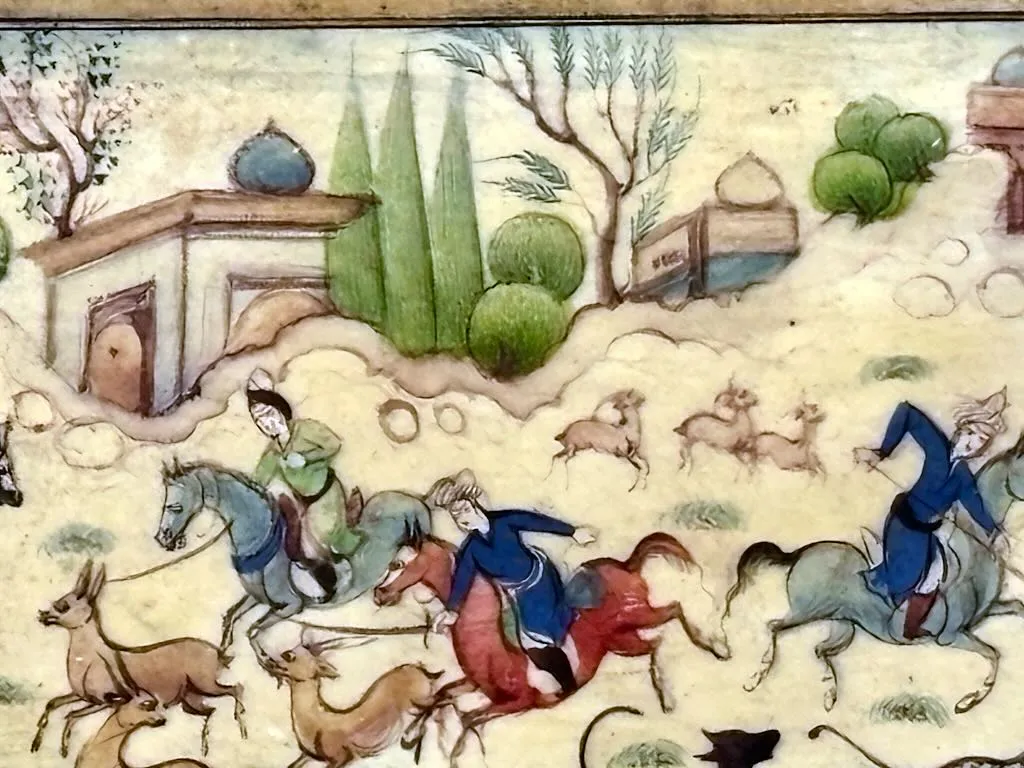
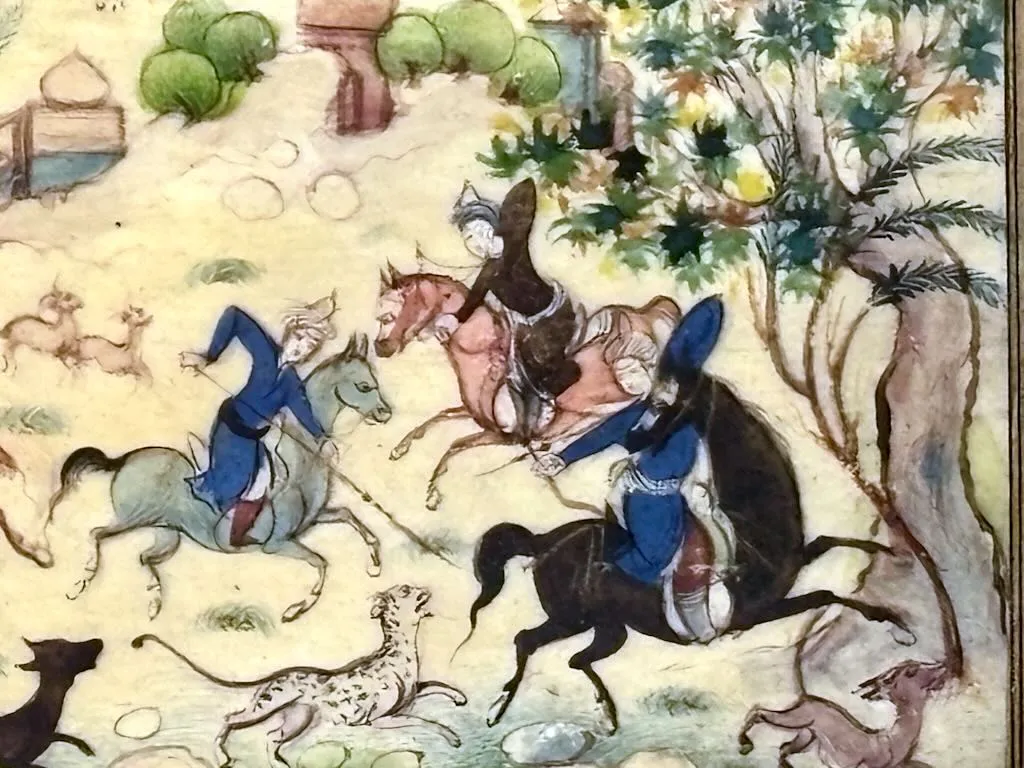
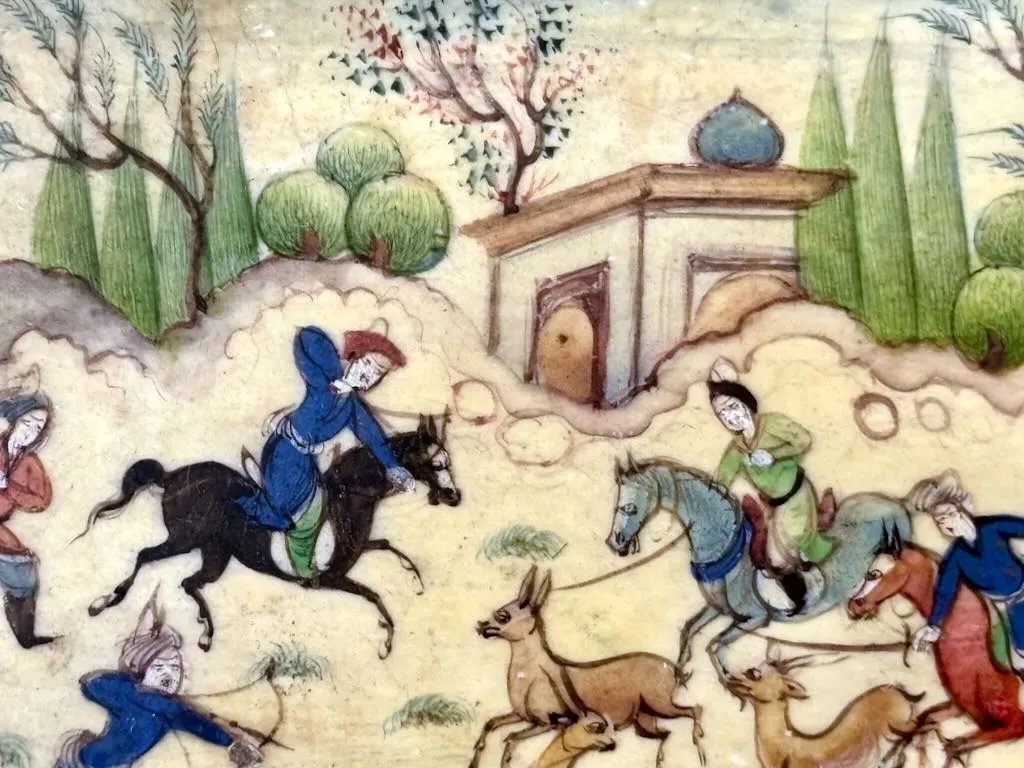
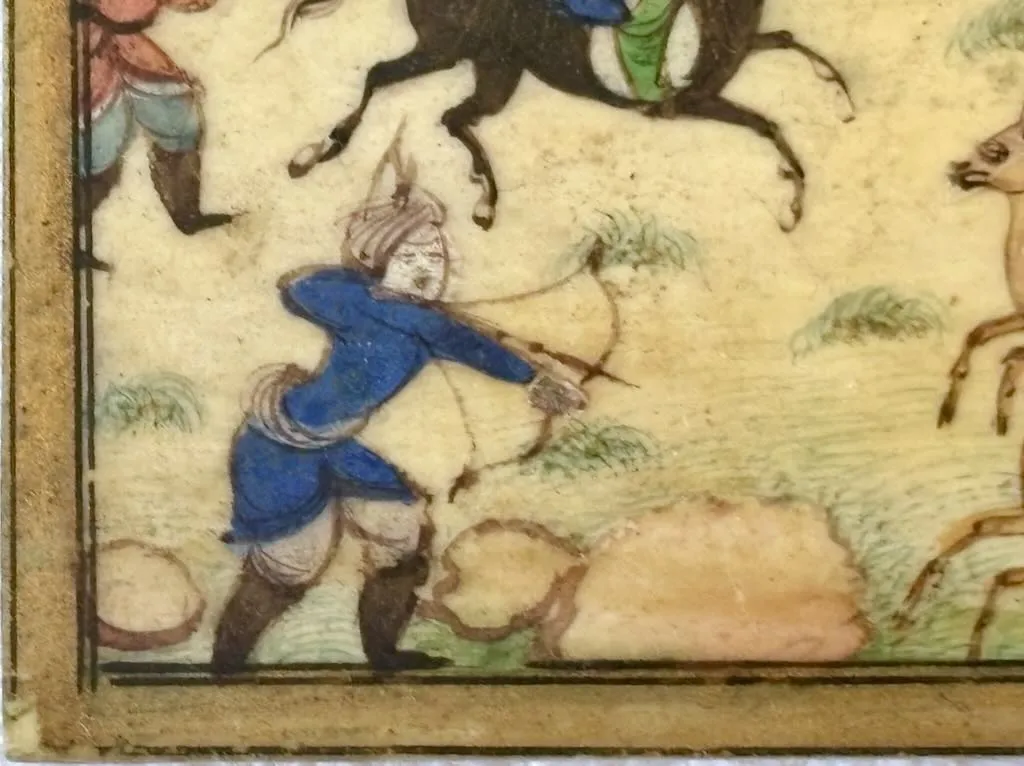
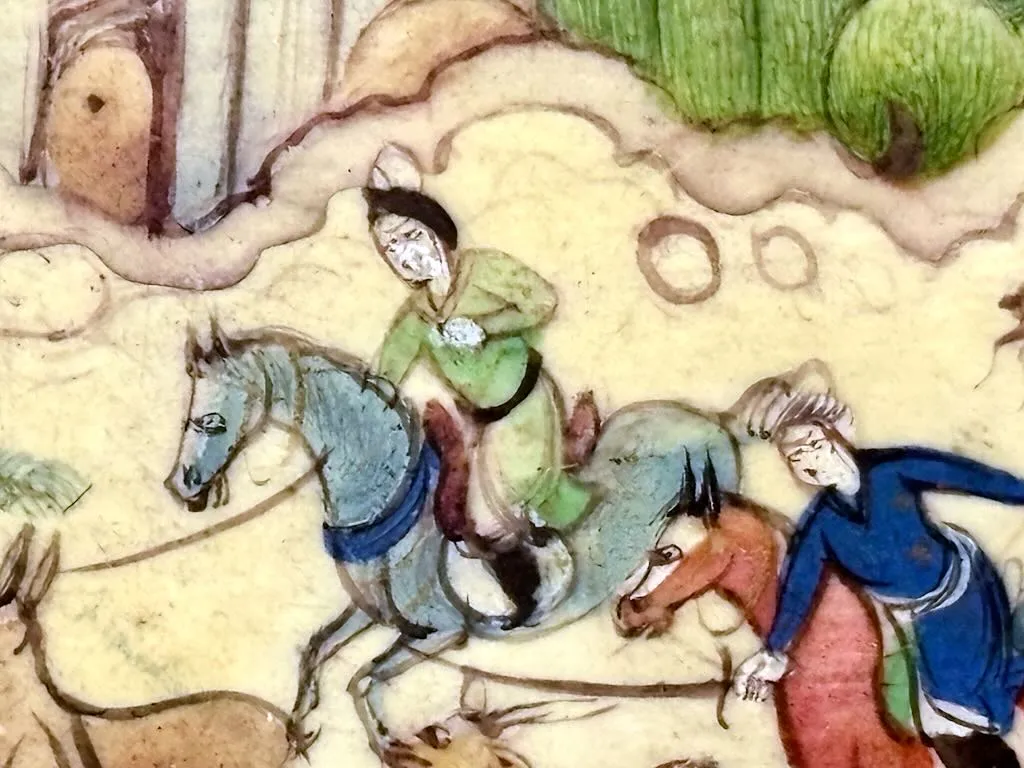
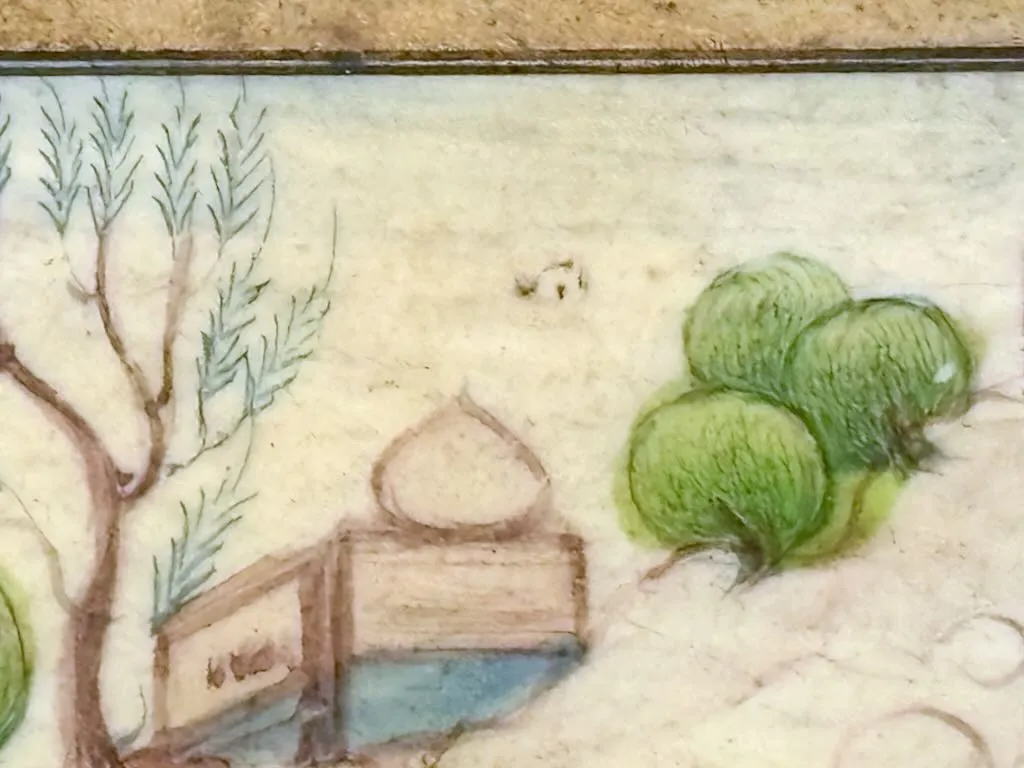
Persian miniature painting ranks among the most refined artistic traditions of the Islamic world. Within only a few inches, artists created richly detailed compositions filled with movement, symbolism, and narrative. This early twentieth-century hunting scene demonstrates that remarkable ability, bringing together mounted horsemen, swift hunting dogs, wild game, trees, rocky landscapes, and elegant architecture in a composition that feels far larger than its modest size.
Hand-painted on a polished bone panel, this miniature immediately distinguishes itself through confident drawing, balanced colour, and remarkable attention to detail. The artist used the elongated horizontal format to lead the eye naturally across the landscape, allowing the hunt to unfold almost like a visual story rather than a single frozen moment.
Unlike many later Persian miniatures produced on ivorine and other synthetic materials during the mid-twentieth century, this earlier example retains the character and craftsmanship associated with traditional workshop production. It has remained in the same family collection since its acquisition in Iran during the 1920s–1930s.
Royal Hunting in Persian Art
Royal hunting scenes occupied an important place in Persian painting for centuries. They celebrated courage, skill, nobility, and the close relationship between ruler and nature while allowing artists to demonstrate their mastery of anatomy, movement, and landscape.
Persian painters rarely treated the hunt as a simple sporting event. Instead, they combined several moments into one harmonious composition. Riders pursue their quarry across changing terrain, horses twist and turn with remarkable energy, while the surrounding landscape guides the viewer from one event to another.
This miniature follows that tradition beautifully. Rather than concentrating attention on a single figure, the composition encourages the viewer to explore every section of the painting, discovering new relationships between riders, animals, architecture, and landscape with each viewing.
Painted on Bone
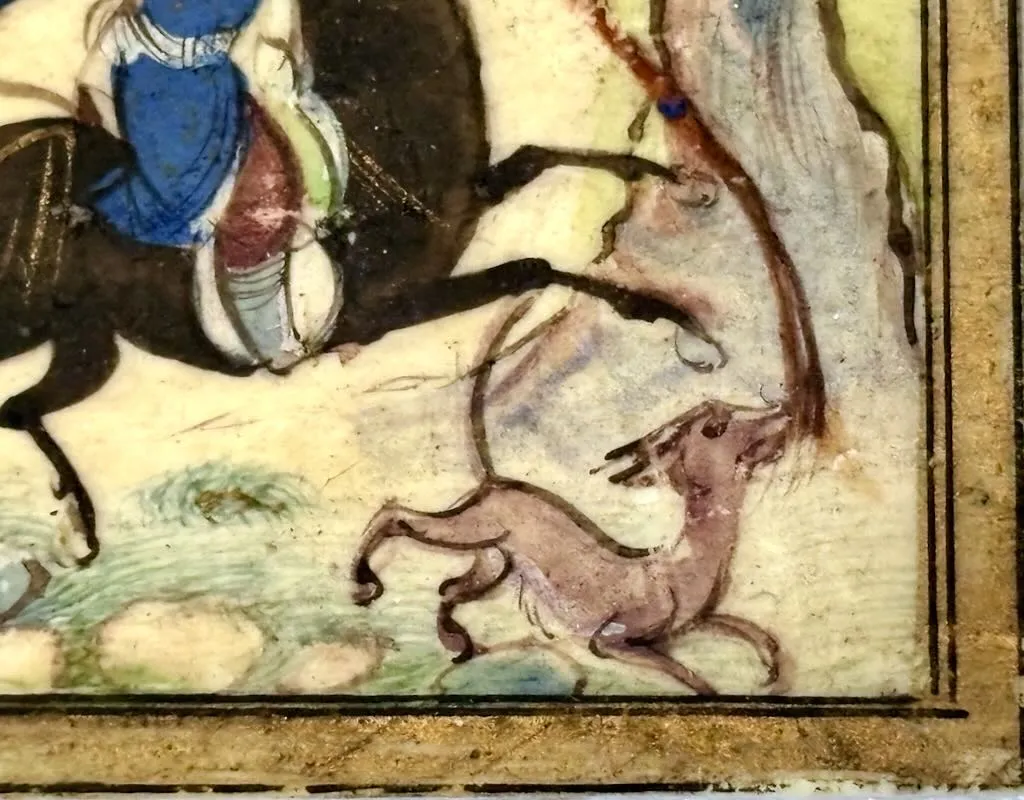
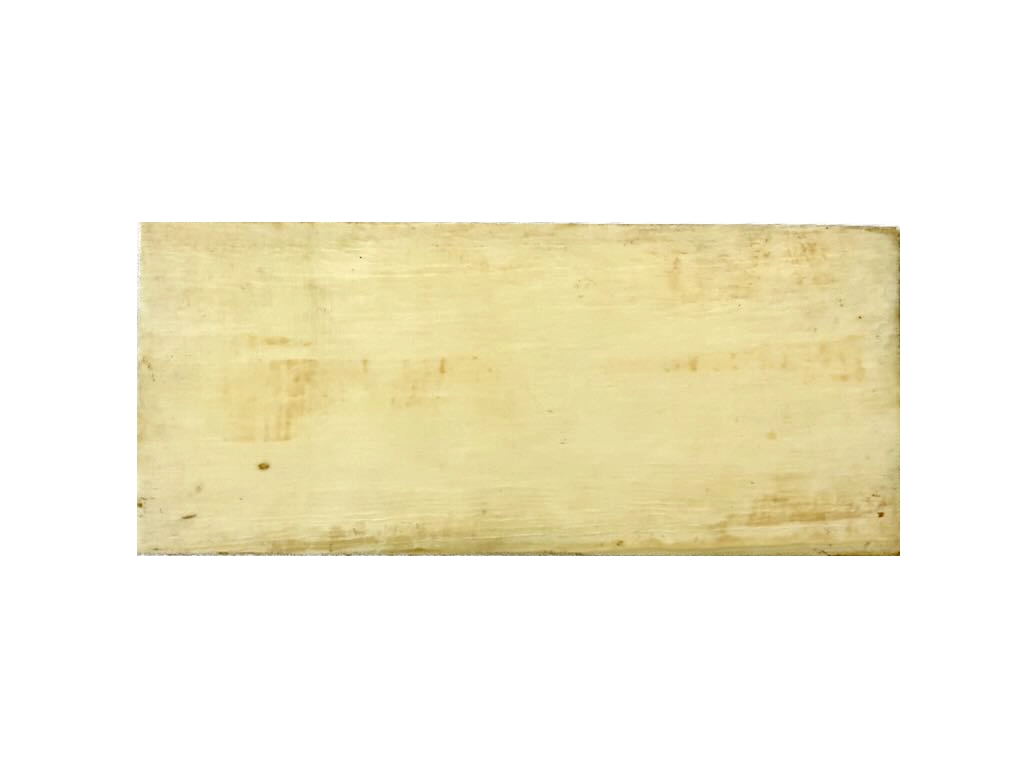
The artist painted this miniature on a carefully prepared polished bone panel that provided a smooth and durable painting surface capable of supporting exceptionally fine brushwork. The painted gold border forms an integral part of the artwork itself, framing the composition in much the same way that illuminated manuscript pages often received decorative borders.
The miniature remains unframed, allowing collectors to appreciate both the painted surface and the original substrate. Examples preserved in this manner provide a direct connection to the artist’s original presentation without later framing concealing the edges or reverse.
Artistic Quality and Workshop Tradition
Although the artist’s signature remains too small to identify with certainty, its discreet placement reflects long-established workshop traditions in Persian miniature painting. Many accomplished painters signed their work modestly, yet only a small number became widely documented outside Iran.
Several qualities distinguish this miniature from later commercial productions. The horses display convincing anatomy and movement, the figures interact naturally within the landscape, and the architectural elements create depth without overwhelming the composition. Even the smallest details remain carefully considered, reflecting an artist who understood both narrative and design.
One particularly engaging aspect of the composition lies in its sense of continuous movement. Instead of presenting isolated figures against a decorative background, the artist connects every element into a flowing visual rhythm that carries the viewer effortlessly from one end of the panel to the other.
Persian Miniatures and the Art of Storytelling
Persian miniature painting developed alongside some of the greatest literary traditions of Persia. Artists illustrated epic poems, romances, historical chronicles, and courtly literature, transforming written stories into richly detailed visual narratives.
Although this hunting scene does not illustrate a specific literary episode that can be identified with certainty, it belongs to the same artistic tradition in which painters celebrated heroic action, elegant courtly life, and the beauty of the natural world. Hunting, horsemanship, music, poetry, and conversation all became recurring themes that collectors continue to associate with Persian miniature painting.
The ability to communicate so much activity within such a small format remains one of the defining achievements of the Persian miniature tradition and continues to fascinate collectors today.
Why Collectors Continue to Seek Early Persian Miniatures
Collectors increasingly distinguish early Persian miniatures from the larger number of later examples produced during the second half of the twentieth century. Earlier works often display stronger draftsmanship, more subtle colour relationships, traditional materials, and compositions rooted in long-established workshop practice.
Miniatures painted on bone appear less frequently than later ivorine examples encountered on today’s secondary market, making well-preserved early works especially appealing to collectors seeking authentic examples from the first decades of the twentieth century.
This miniature is offered individually as one of a small group of early Persian miniature paintings acquired in Iran by the Bernardi family during the 1920s–1930s. Each depicts a different traditional Persian subject and is listed separately, allowing collectors to acquire individual works or assemble their own collection over time.
Provenance
This miniature comes from the Bernardi Family Collection, assembled through acquisitions made in Iran during the early twentieth century. Preserved within the same family for approximately one hundred years, it represents part of a carefully maintained group of Persian miniature paintings chosen for their artistic quality, traditional subjects, and enduring craftsmanship.