

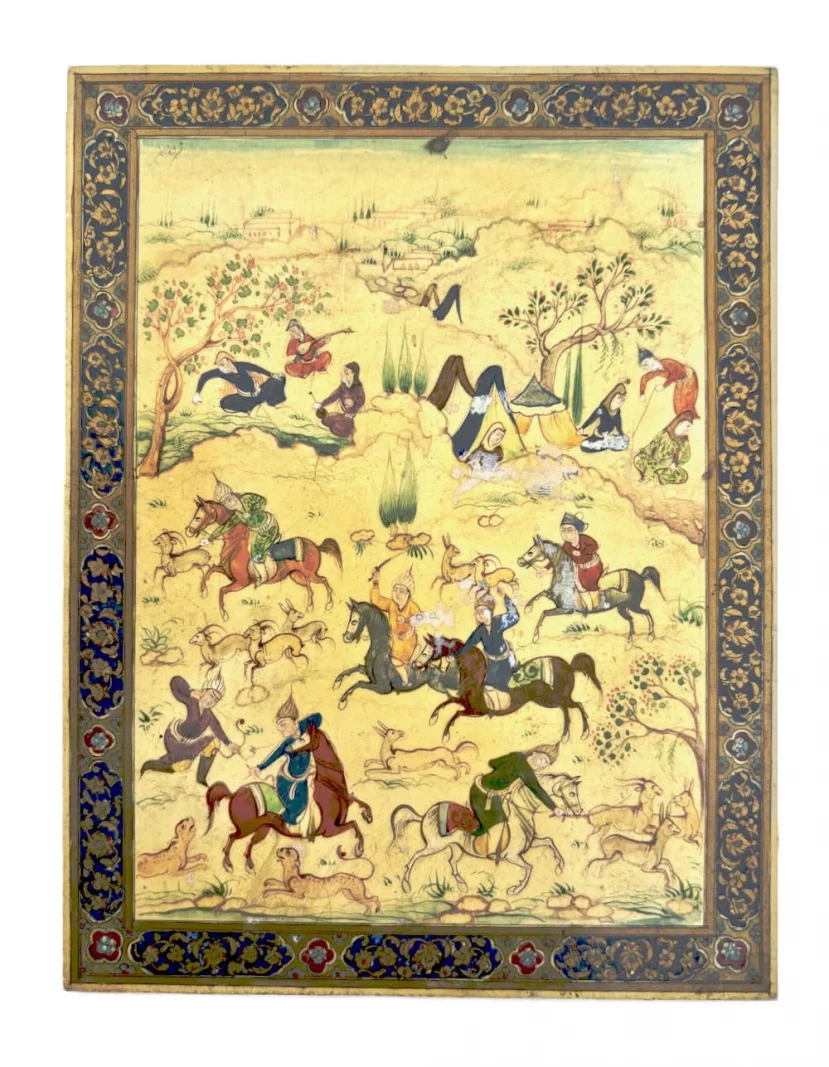
Persian miniature painting ranks among the most refined artistic traditions in the world. For centuries, artists in Persia transformed literature, history, mythology, and daily life into richly detailed images filled with color, movement, and symbolism. These paintings captivated royal courts, illustrated epic manuscripts, decorated luxury objects, and eventually found their way onto jewelry, boxes, lacquerware, and other decorative arts collected throughout the world today.
Unlike many artistic traditions that focused on realism, Persian miniature painters sought something different. They created idealized worlds where color carried emotion, architecture defied conventional perspective, and every detail contributed to a larger narrative. The result was an art form that balanced beauty, storytelling, craftsmanship, and imagination.
Today, collectors encounter Persian miniatures in many forms. Some survive within illuminated manuscripts centuries old. Others appear on mother-of-pearl pendants, painted plaques, lacquer boxes, pen cases, and decorative objects produced during the twentieth century. Understanding the history of Persian miniature painting helps reveal the significance of these objects and the remarkable artistic tradition from which they emerged.
The Origins of Persian Miniature Painting
The roots of Persian painting stretch deep into antiquity. Ancient Persia produced painted ceramics, architectural decoration, and illustrated texts long before miniature painting emerged as a distinct art form. However, the tradition most collectors recognize today developed gradually between the thirteenth and fifteenth centuries.
Several historical events shaped its evolution. The Mongol invasions of the thirteenth century brought Persian artists into contact with Chinese painting traditions. Artists absorbed new approaches to landscape, clouds, mountains, trees, and composition. Rather than copying these influences directly, Persian painters adapted them to local tastes and literary traditions.
As powerful dynasties established courts throughout Persia, rulers sponsored workshops that employed painters, calligraphers, illuminators, and bookbinders. These royal ateliers became centers of artistic innovation. Artists worked collaboratively to create luxurious manuscripts for kings, princes, and wealthy patrons. Over time, Persian miniature painting developed its own distinctive identity. Delicate brushwork, brilliant colors, intricate details, and imaginative compositions became hallmarks of the tradition.
The Golden Age Under the Timurids and Safavids
Many historians regard the Timurid and Safavid periods as the golden age of Persian miniature painting. During the fifteenth century, the city of Herat emerged as one of the most important artistic centers in the Islamic world. Under Timurid patronage, artists refined techniques and established standards that influenced generations of painters.
One name stands above all others: Kamal al-Din Behzad. Behzad revolutionized Persian painting through his sophisticated compositions and remarkable ability to portray human activity. His scenes feel alive. Courtiers converse, craftsmen work, servants move through buildings, and horses gallop across landscapes. Although his paintings remain highly stylized, they possess an energy rarely matched by earlier artists.
Later, during the Safavid dynasty, artistic production flourished in cities such as Tabriz, Qazvin, and Isfahan. Royal patronage encouraged painters to experiment while preserving established traditions. Workshops produced some of the most celebrated manuscripts in Persian history.
These paintings often illustrated literary masterpieces, including:
- The Shahnameh (Book of Kings)
- The Khamsa of Nizami
- The poetry of Hafez
- The works of Saadi
- Historical chronicles and court records
Collectors and museums continue to prize manuscripts from this period because of their exceptional artistic quality and historical significance.
What Makes a Persian Miniature Unique?
At first glance, Persian miniatures differ dramatically from European paintings created during the Renaissance. European artists focused on realism, perspective, and anatomical accuracy. Persian painters pursued a different goal. They aimed to create a complete visual story rather than a realistic snapshot of a single moment. As a result, Persian miniatures display several distinctive characteristics.
Color Takes Center Stage
Color plays a leading role in Persian painting. Artists used brilliant pigments derived from minerals, plants, metals, and other natural materials. Blues, reds, greens, golds, and oranges create vivid compositions that remain striking centuries later.
Rather than imitating nature exactly, painters selected colors for harmony, symbolism, and visual impact. Mountains might appear pink. Trees could display stylized foliage. Clothing often glows with jewel-like intensity. These bold choices contribute significantly to the timeless appeal of Persian miniatures.
Narrative Over Realism
Persian painters emphasized storytelling. A single image often contains multiple actions occurring simultaneously. Figures move through gardens, palaces, battlefields, and landscapes while interacting in ways that advance the narrative.
Buildings may reveal both interior and exterior spaces at once. Walls seem transparent. Multiple viewpoints coexist within the same composition. This approach allows viewers to absorb the entire story rather than focus on a single perspective.
Extraordinary Attention to Detail
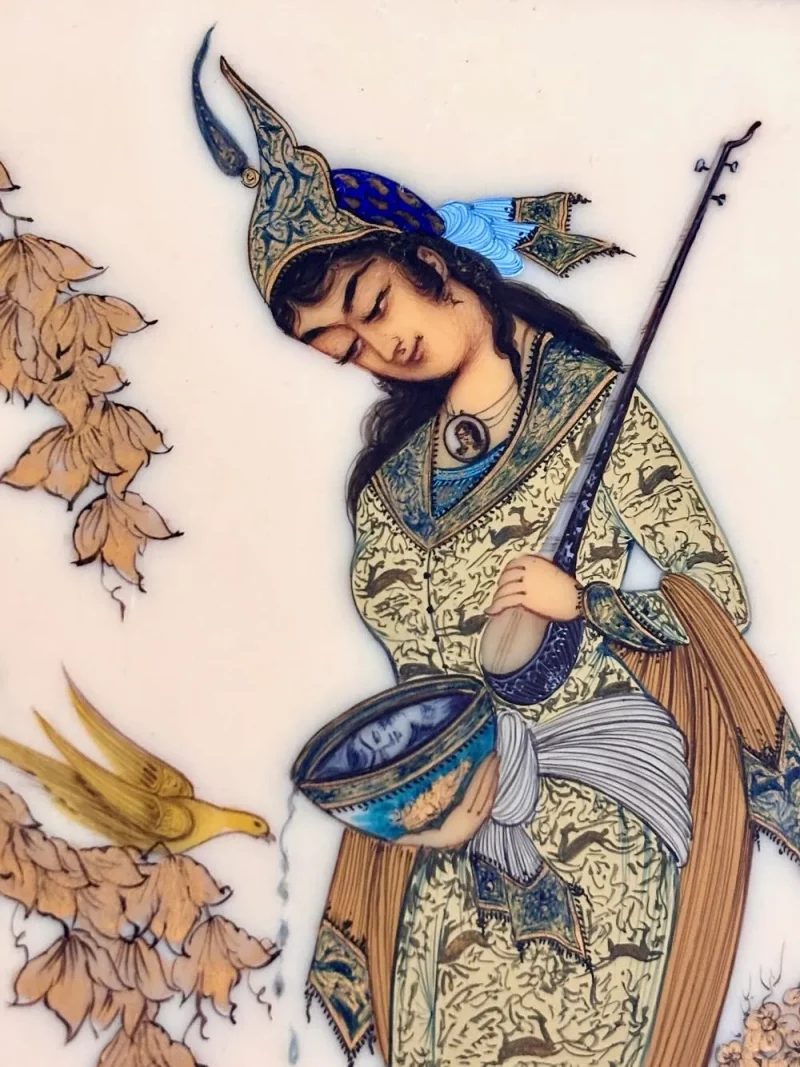
Close examination reveals astonishing craftsmanship. Artists painted facial expressions, jewelry, textiles, weapons, architecture, animals, and vegetation with remarkable precision. Tiny details often remain visible even under magnification.
Because many manuscripts were intended for private viewing, painters understood that patrons would examine their work closely. Every element mattered. This commitment to detail remains one of the defining characteristics of Persian miniature painting.

Popular Subjects in Persian Miniatures
Certain themes appear repeatedly throughout the centuries. Royal courts commissioned paintings that celebrated power, culture, and refinement. Literary patrons sought illustrations for beloved texts. Wealthy collectors requested scenes that reflected ideals of beauty, heroism, and wisdom.
Among the most popular subjects were equestrian scenes. Horsemen appear throughout Persian art. Riders participate in polo matches, military exercises, royal hunts, and ceremonial processions. Horses symbolize nobility, skill, courage, and status. Hunting scenes also proved especially popular. Kings and princes often demonstrated authority through successful hunts. Artists transformed these events into dramatic compositions filled with movement and action.
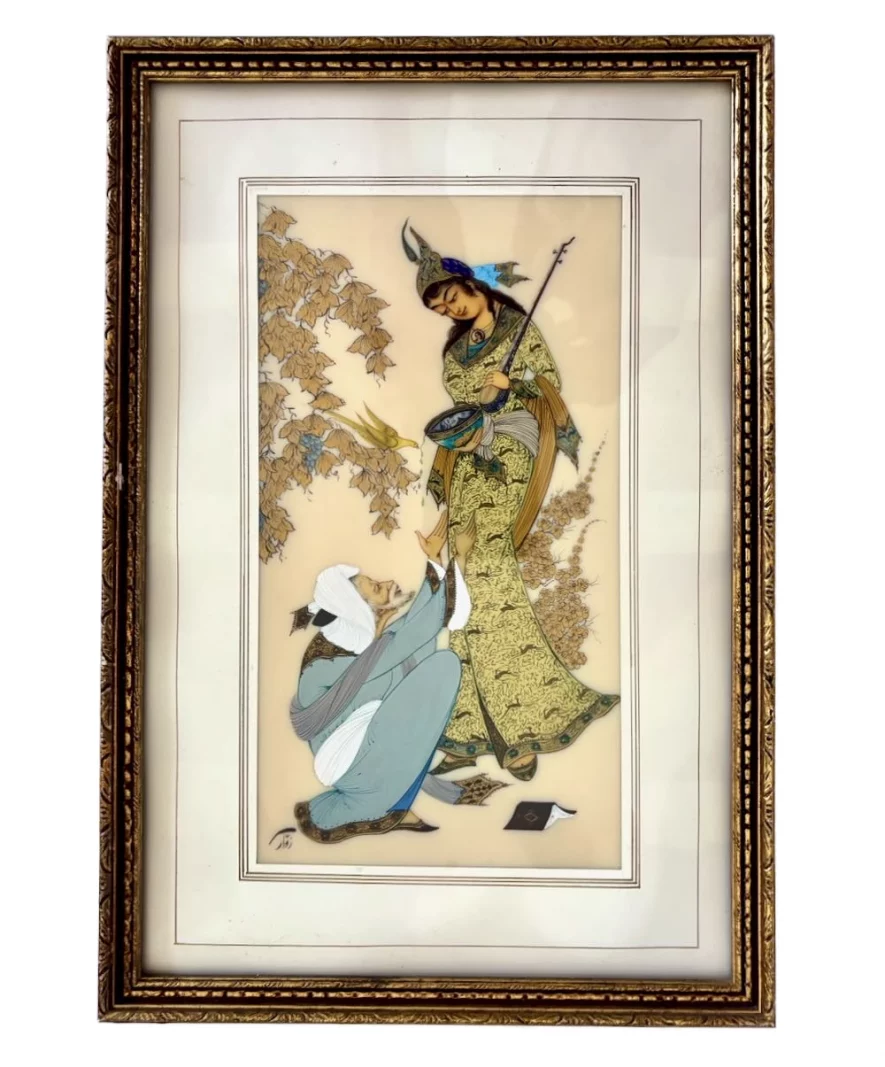
Courtly gatherings represent another important category. Musicians perform, poets recite verses, nobles converse, and servants attend elaborate ceremonies. Meanwhile, literary scenes brought beloved stories to life. Artists illustrated heroes, lovers, warriors, kings, mystics, and legendary figures drawn from Persian literature. Together, these subjects created a visual record of Persian culture while preserving stories for future generations.
Persian Miniatures Beyond Manuscripts
Although miniature painting began primarily as a manuscript art, its influence eventually extended far beyond books. As demand increased, artists applied miniature techniques to a wide variety of decorative objects. Wealthy patrons wanted the same beauty found in manuscripts incorporated into items they could display and enjoy throughout daily life. This transition opened new possibilities for artists and collectors alike.
Lacquer Boxes and Pen Cases
Among the most important decorative applications were lacquer objects. During the Safavid, Zand, Qajar, and later periods, artists decorated pen cases, mirror cases, boxes, book covers, and writing accessories with miniature paintings protected beneath layers of lacquer.
These objects became highly prized luxury items. Many feature hunting scenes, courtly figures, gardens, floral motifs, and literary subjects rendered with extraordinary skill. Today, collectors frequently encounter Persian lacquerware in museums, antique shops, and private collections.
Mother-of-Pearl Miniatures
Mother-of-pearl offered artists a particularly attractive surface. Its natural iridescence enhanced painted scenes while adding depth and luminosity. Artists painted directly onto polished shell surfaces, allowing subtle flashes of color to appear beneath the artwork.
Throughout the twentieth century, craftsmen used this technique for pendants, brooches, plaques, and decorative souvenirs. Many examples depict horsemen, hunting parties, gardens, or romantic scenes inspired by classical Persian miniature traditions. These objects remain popular among collectors because they combine fine painting with the natural beauty of mother-of-pearl.
Jewelry and Personal Accessories
Miniature painting also entered the world of jewelry. Artists decorated pendants, lockets, bracelets, brooches, and other accessories with hand-painted scenes. These pieces allowed owners to carry traditional Persian art in wearable form.
Although smaller than manuscript paintings, many display remarkable skill and attention to detail. Because jewelry often survives with family provenance, these objects can offer fascinating connections to personal histories and cultural traditions.
Decorative Plaques and Wall Art
As international tourism expanded during the twentieth century, artists increasingly produced miniature paintings intended for display. Painted plaques, framed panels, and decorative wall pieces as well as photo albums brought Persian art into homes around the world. Some artists worked on ivory, bone, wood, mother-of-pearl, or specially prepared surfaces.
While quality varies, the finest examples demonstrate techniques directly descended from earlier miniature traditions.
The Revival of Persian Miniatures in the Twentieth Century
The twentieth century witnessed renewed interest in traditional Persian arts. Artists, educators, collectors, and cultural institutions worked to preserve historic techniques while adapting them to modern audiences. Workshops continued to train painters in traditional methods, ensuring that knowledge passed from one generation to the next.
Cities such as Tehran, Isfahan, Shiraz, and Tabriz remained important centers for artistic production. Visitors often purchased miniature paintings, jewelry, lacquerware, and decorative objects as souvenirs or gifts.
Many pieces created during the 1950s through the 1970s combined traditional imagery with forms suited to contemporary tastes. These objects now occupy an interesting position in the antiques market. They represent both an ancient artistic tradition and an important period of cultural revival.
Collecting Persian Miniature Art Today
Collectors approach Persian miniatures from many different perspectives. Some focus on manuscripts. Others seek lacquerware, jewelry, or decorative objects. Many appreciate miniature paintings simply for their beauty and craftsmanship.
When evaluating a piece, several factors deserve attention. Quality of execution remains important. Skilled artists demonstrate confident brushwork, balanced compositions, and careful detail. Condition also matters. Paint loss, cracks, repairs, and excessive wear can affect both appearance and value.
Materials influence desirability as well. Mother-of-pearl, ivory, lacquer, silver-mounted examples, and finely crafted frames often attract greater interest. Finally, provenance adds value and historical context. Knowing where and when an object was acquired can help establish authenticity and cultural significance.
A Living Artistic Tradition
Persian miniature painting continues to inspire artists more than seven centuries after its emergence. Its enduring appeal lies in its unique combination of imagination, storytelling, color, and craftsmanship. Whether preserved within a royal manuscript, painted on a lacquer pen case, or rendered on a mother-of-pearl pendant, the tradition remains immediately recognizable.
For collectors of Persian decorative arts, miniature paintings offer more than beautiful imagery. They provide a direct connection to one of the world’s great artistic traditions. Each painted horseman, garden, palace, and hunting scene reflects centuries of cultural history, artistic innovation, and human creativity.
That legacy continues to shine today, not only in museums and manuscripts, but also in the many decorative objects that carry the spirit of Persian miniature painting into the modern world.