

Understanding Wedgwood Marks
Wedgwood marks are often the first place collectors look when trying to date a piece. Turn a vase or bowl over and the instinct is immediate—there must be an answer in the stamp.
Sometimes there is. More often, the mark provides a framework rather than a precise date.
A single impressed “WEDGWOOD” can appear on pieces made decades apart. Some marks overlap in use, others were applied inconsistently, and in certain cases they were omitted altogether depending on where the piece was sold. That is why experienced collectors rarely rely on marks alone.
The most reliable approach is to begin with the object itself—its material, relief, and construction—and then use the mark to confirm or refine what you already suspect.
Why Marks Matter—and Where They Can Mislead
Marks are useful because they connect a piece to a known period of production. However, they rarely provide an exact date.
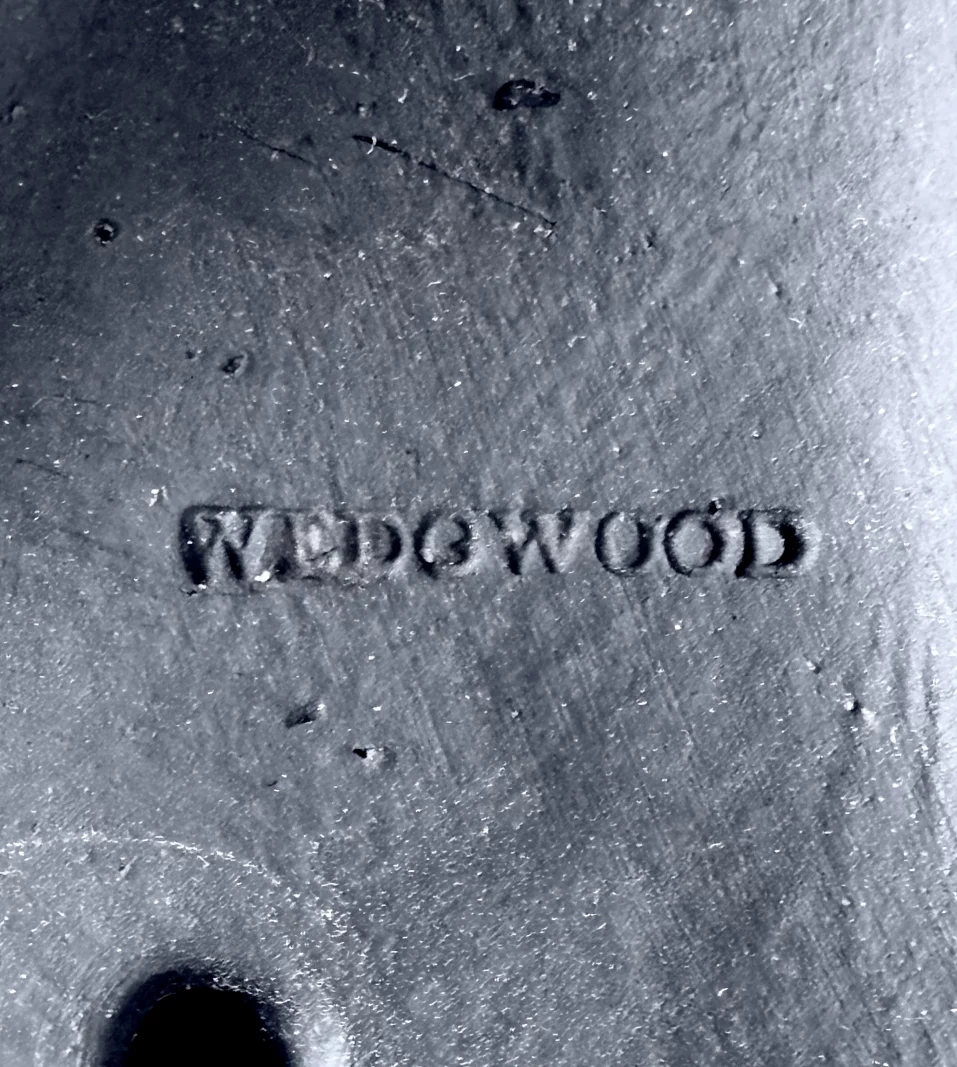
The familiar “WEDGWOOD” stamp is a good example. It has been used, in different forms, from the 18th century into the early 20th century. Without additional context, it offers only a broad timeframe.
Even strong indicators can mislead. The addition of “ENGLAND” after 1891 is often treated as a clear dividing line, and generally it is. However, pieces made for domestic use sometimes omitted this mark, even into the early 20th century. Certain medallions and small ornamental wares from the 1920s, for example, may carry no country mark at all.
Marks should therefore be treated as supporting evidence. When they align with the physical characteristics of the piece, they become reliable. When they do not, they signal that further evaluation is needed.
Early Wedgwood Marks (1759–1780): Variation and Experimentation
The earliest Wedgwood marks are among the most fascinating, but also the most difficult to interpret. They reflect a workshop still refining its methods rather than a fully standardized factory.
During this period, marks vary widely in size, spacing, and clarity. Some were impressed using individual letter punches, while others appear as circular seals or even handwritten-style impressions. Slight distortion or uneven alignment is common and should not be mistaken for later damage.
Common features from this period include:
- Early impressed WEDGWOOD (1759–1769)Among the first marks used on earthenware, often slightly irregular due to the use of separate type.
- Bell Works marks (c.1764–1769)Rare and highly collectible, associated with early production before full standardization.
- Circular seal marks (from 1769)Some appear without outer rims, while others include decorative borders or internal lines.
- ETRURIA marks (1769–1780)Reflect the factory name; more commonly found on basalt and ornamental wares than on jasperware.
- Wedgwood & Bentley marks (1769–1780)Found on decorative wares such as medallions and intaglios. These are among the most desirable early marks.
- Catalogue number marks (e.g., “356”)Seen on intaglios and small decorative pieces, referring to Wedgwood & Bentley design records.
What defines this period is not uniformity but variation. There is no single “correct” appearance, which is why the object itself must always guide interpretation.
Quick Reference: Early Wedgwood Marks
| Mark Type | Date Range | What It Tells You |
|---|---|---|
| Early impressed WEDGWOOD | 1759–1769 | First production marks; often uneven or irregular |
| Bell Works marks | 1764–1769 | Rare early output; highly collectible |
| Circular seal marks | From 1769 | Early attempts at standardization |
| ETRURIA marks | 1769–1780 | Linked to factory; more common on basalt |
| Wedgwood & Bentley | 1769–1780 | Decorative wares; strong collector interest |
| Catalogue numbers (e.g. 356) | 1769–1780 | Intaglios; tied to design catalogues |
Marks from 1790 to the Mid-19th Century: Transition to Consistency
By the late 18th and early 19th centuries, Wedgwood production becomes more structured, though transitional marks still appear.
- WEDGWOOD & SONS (c.1790)Used for a very short time, making it relatively rare.
- Mixed-case and lowercase “Wedgwood” marks (c.1780–1790)Often associated with useful wares and specific production contexts.
- Dated marks (e.g., Feb 2nd, 1805)These indicate when a design was first introduced, not necessarily when the piece was made.
- Printed marks (1812–1822)Found on early bone china and earthenware, sometimes in red, blue, or gold.
- Short-lived factory marks (e.g., c.1840)Useful when identified correctly, though limited in duration.
As production becomes more consistent, marks become clearer and more standardized, but interpretation still requires context.
Understanding Variations in the “WEDGWOOD” Name
The way the name itself appears can offer subtle clues.
1 – WEDGWOOD (uppercase)Most commonly associated with formal marking and later standardization.
2 – Wedgwood (mixed case)Often linked to useful wares and late 18th-century production.
3 – wedgwood (lowercase)Typically seen within a narrower late 18th-century timeframe.
These variations reflect differences in production and usage rather than strict chronological rules. They are most useful when considered alongside other features.
“ENGLAND” and “MADE IN ENGLAND”: A Key Turning Point
The addition of a country name is one of the most useful dating tools.
| Mark | Date Range | What It Tells You |
|---|---|---|
| WEDGWOOD (no country) | Pre-1891 | Earlier production; often aligns with finer craftsmanship |
| WEDGWOOD ENGLAND | 1891–1907 | Early export period; transitional production |
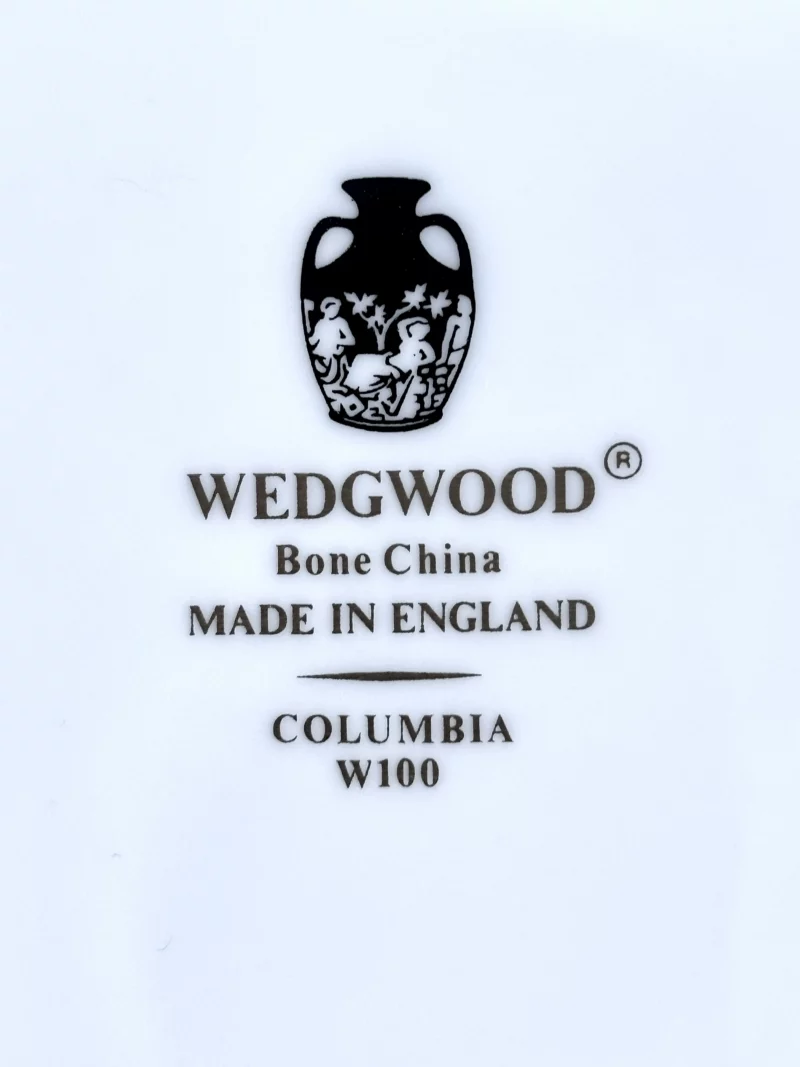
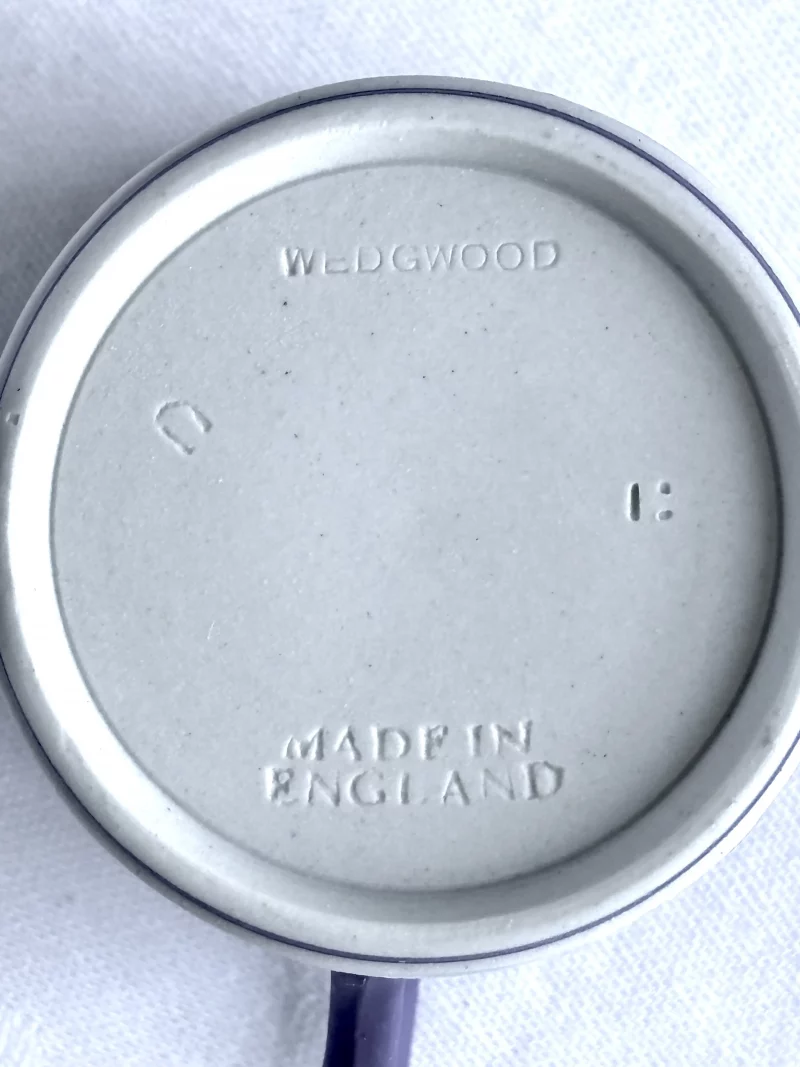
| WEDGWOOD MADE IN ENGLAND | 1908 onward | Standardized 20th-century production |
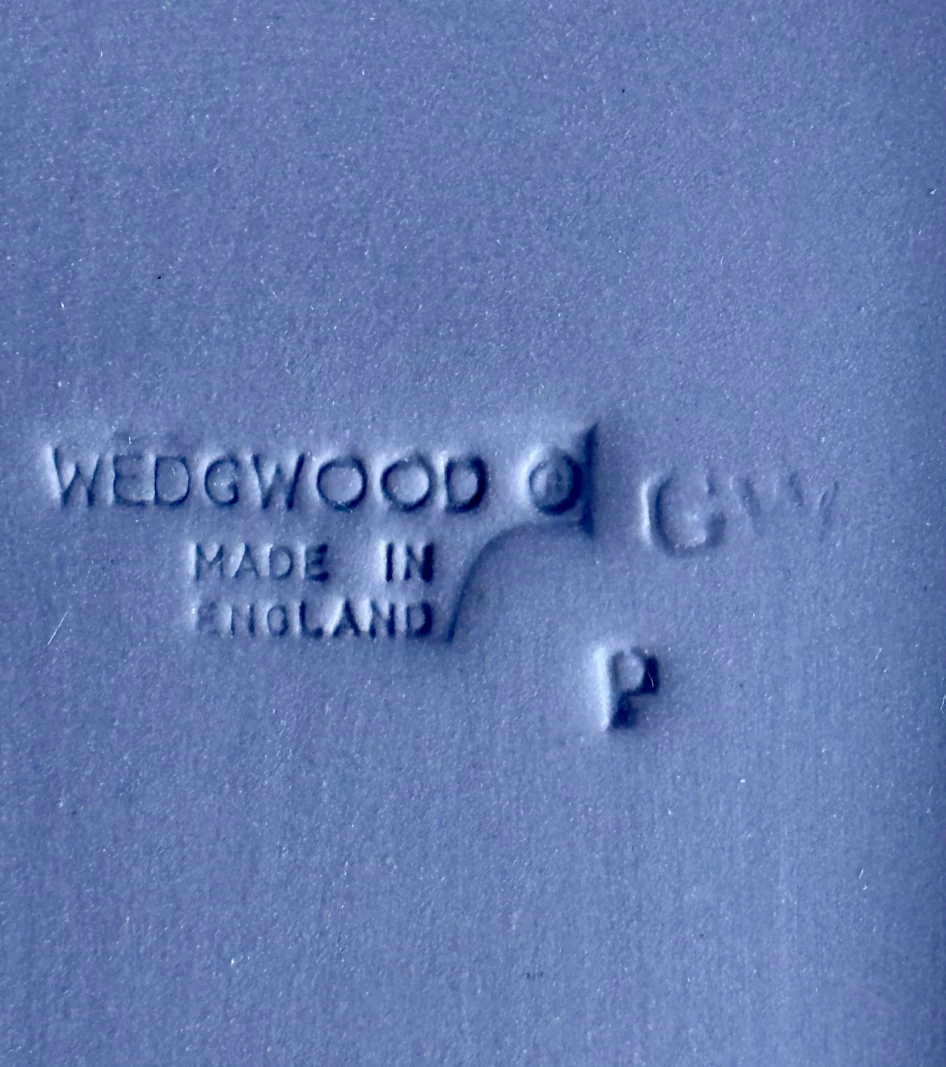
| WEDGWOOD + ® symbol | From 1975 | Modern branding and trademark protection |
This change was driven by export regulations, particularly for the United States. It provides a reliable dividing line, although exceptions do occur.
The Three-Letter Date Code System
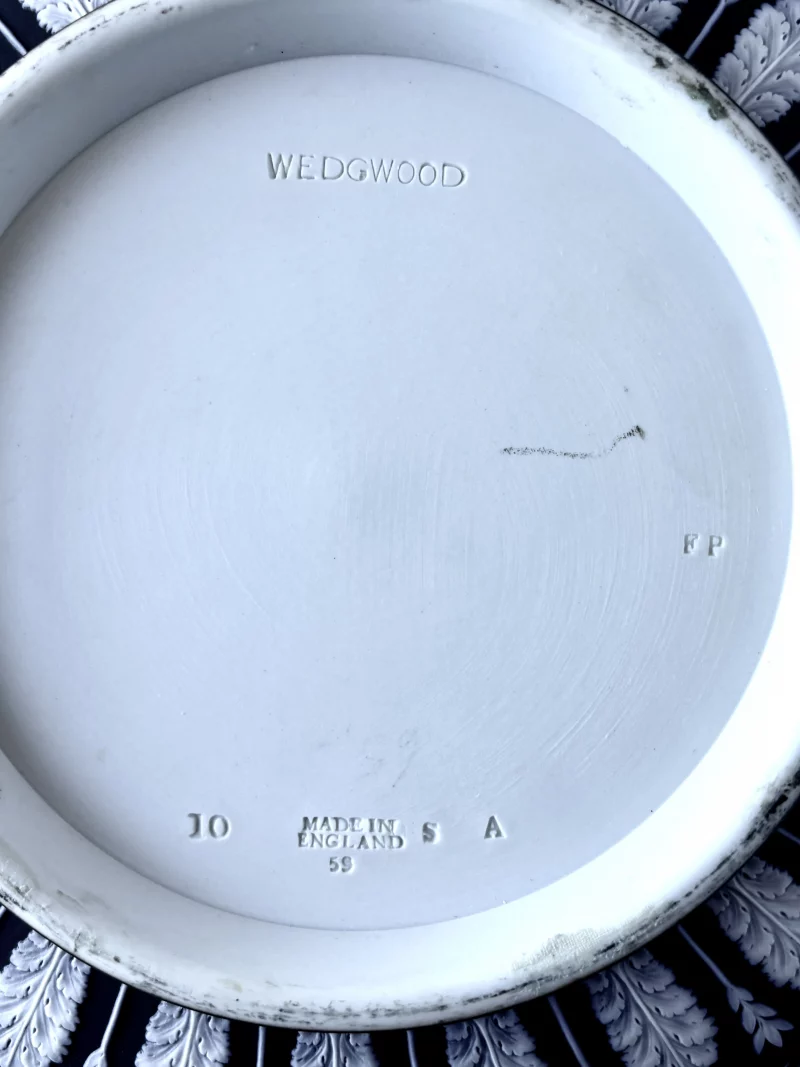
Introduced in 1860, the three-letter code system is one of Wedgwood’s most precise dating tools.
- First letter: month
- Second letter: potter or batch
- Third letter: year
The system begins with O = 1860, and the alphabet continues sequentially. However, the sequence repeats over time, meaning the same letter can represent multiple years.
Simplified Year Letter Reference
| Letter | Year | Letter | Year |
|---|---|---|---|
| O | 1860 | Z | 1871 |
| P | 1861 | A | 1872 |
| Q | 1862 | B | 1873 |
| R | 1863 | C | 1874 |
| S | 1864 | D | 1875 |
| T | 1865 | E | 1876 |
| U | 1866 | F | 1877 |
| V | 1867 | G | 1878 |
| W | 1868 | H | 1879 |
| X | 1869 | J | 1881 |
| Y | 1870 | K | 1882 |
From 1898 onward, the sequence repeats, but these later examples are usually easier to identify because they appear alongside “ENGLAND.”
How to Use the Date Code Correctly
The presence of a three-letter code can narrow a date significantly, but it must be interpreted carefully.
A code that appears to indicate 1874 could also correspond to a later cycle. The surrounding features—mark style, body type, and whether “ENGLAND” is present—help determine the correct period.
In practice, the date code works best as a confirmation tool rather than a standalone answer.
Potter’s Marks and the “Moustache” Mark
Small marks near the main stamp often cause confusion.
These may appear as:
- short dashes or “moustache”-like marks
- single letters
- small symbols above or below the main mark
These are generally potter’s marks or tally marks, used to track production and labor. They helped identify the individual responsible for the piece so that work could be recorded and paid.
Most belong to the period between the late 18th century and the mid-19th century, though they can appear outside that range. They are not date indicators and should not be interpreted as such.
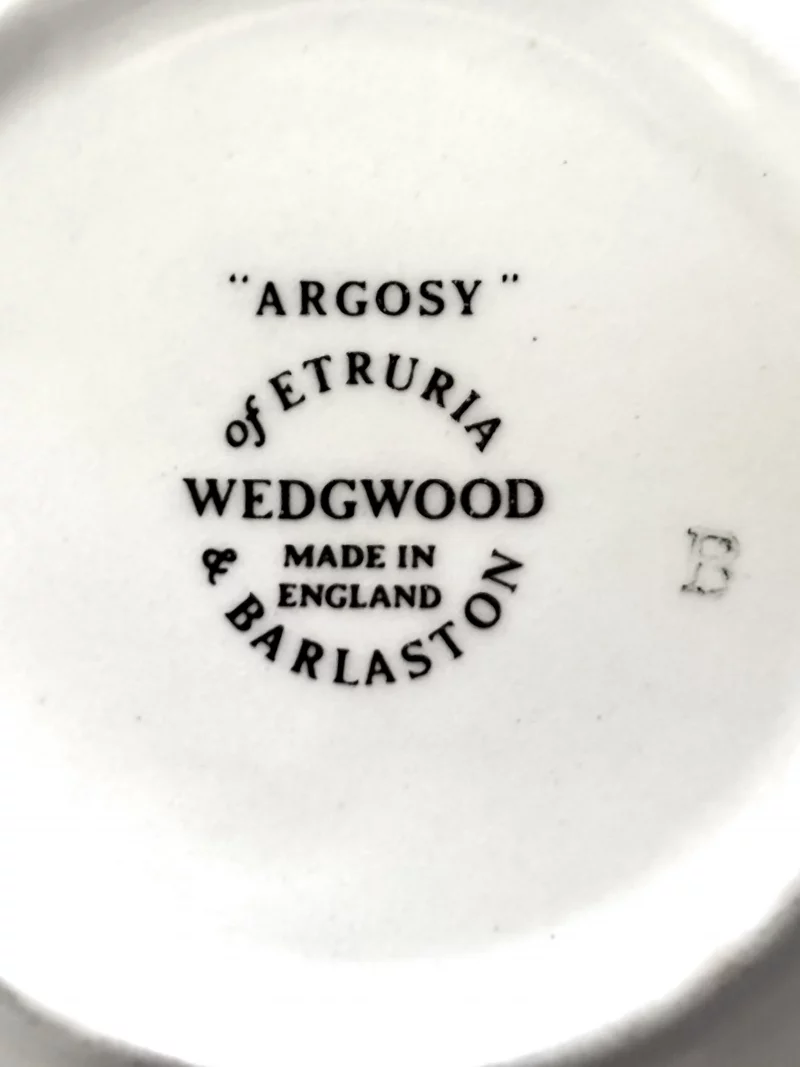
Factory Names: ETRURIA and BARLASTON
Some marks include factory names, which provide additional context.
- ETRURIA
- Rare early use around 1840–1841
- Reappears from the early 20th century, often with ENGLAND
- BARLASTON
- Used from around 1939 into the mid-20th century
These indicate where the piece was made rather than when it was made. Their presence can help confirm a timeframe, but their absence is not meaningful on its own.
When Marks Can Be Misleading
Marks can sometimes create false impressions.
Clay movement during firing can distort impressions, making them appear irregular or uneven. This has led to the common belief that imperfect marks always indicate early production, which is not the case.
Curved or misaligned marks can also result from firing conditions rather than how they were applied. Over-interpreting these details is one of the most common mistakes collectors make.
Additional Indicators You May Encounter
Some pieces include additional markings that can provide context.
- Size codes (c.1870–1930)Often divisible by six, reflecting how items were arranged in the kiln.
- Shape numbersFound on earlier jasperware and some later pieces.
- Catalogue referencesSeen on cameos and intaglios, linked to factory design records.
These features are secondary clues. They rarely provide exact dates but can support a broader conclusion.
A Practical Way to Evaluate Marks
A structured approach makes interpretation more reliable.
- Start by identifying whether the mark is impressed, printed, or applied in ink. This alone places the piece within a general production context.
- Next, look for the presence of a country name. The addition of “ENGLAND” immediately narrows the timeframe, though it should not be treated as absolute proof.
- Then examine the lettering style. Serif details, spacing, and depth can reveal whether the mark belongs to an earlier or later period.
Finally, check for additional symbols or codes. Date codes, factory names, and small tally marks all contribute to the overall picture.Each observation builds on the others. Taken together, they provide a far more reliable result than any single feature.
How Marks Influence Value
Marks alone rarely determine value, but they can reinforce it.
Collectors tend to favor:
- early impressed marks
- marks associated with known historical periods
- combinations that confirm early production
Rare marks such as Wedgwood & Bentley can significantly increase desirability, particularly when paired with early craftsmanship.
More common later marks tend to confirm production rather than elevate it.
Final Thoughts
Wedgwood marks are best understood as part of a broader system rather than a simple timeline.
- Early marks show experimentation and variation.
- 19th-century marks reflect growing consistency.
- 20th-century marks reveal standardization and global production.
The key is to use each element—mark, material, and craftsmanship—together. When they align, you can date a piece with confidence. Used this way, a mark becomes more than a stamp. It becomes a connection to the history of the object and the process that created it.
Other Wedgwood Articles:
How to Date Wedgwood Jasperware: Relief, Translucency, Body Color Explained