
Description
Vintage 1970s Jim Thompson Thai Silk – 7 Yards, Butterfly & Floral Botanical, Bangkok Flagship Provenance
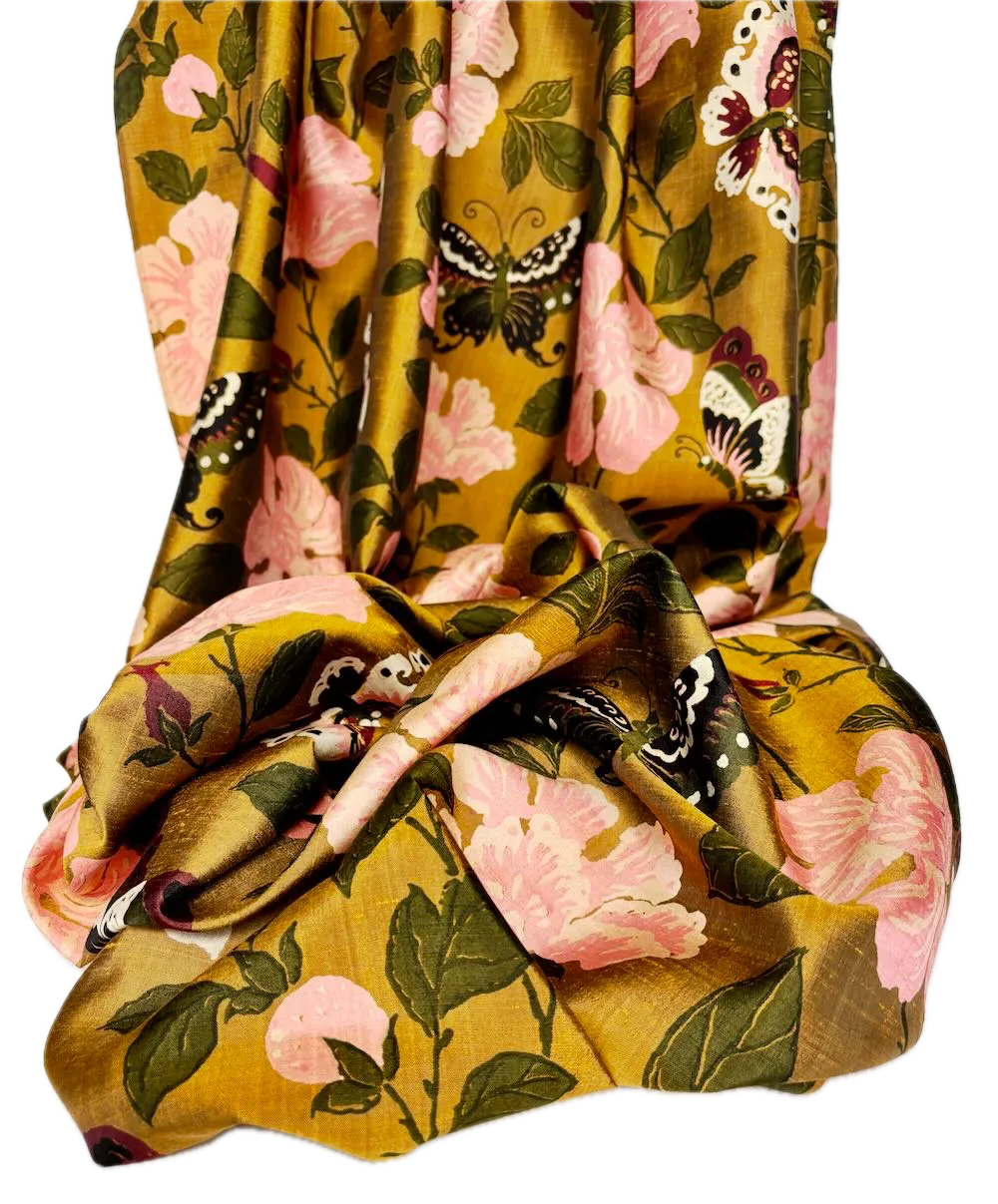
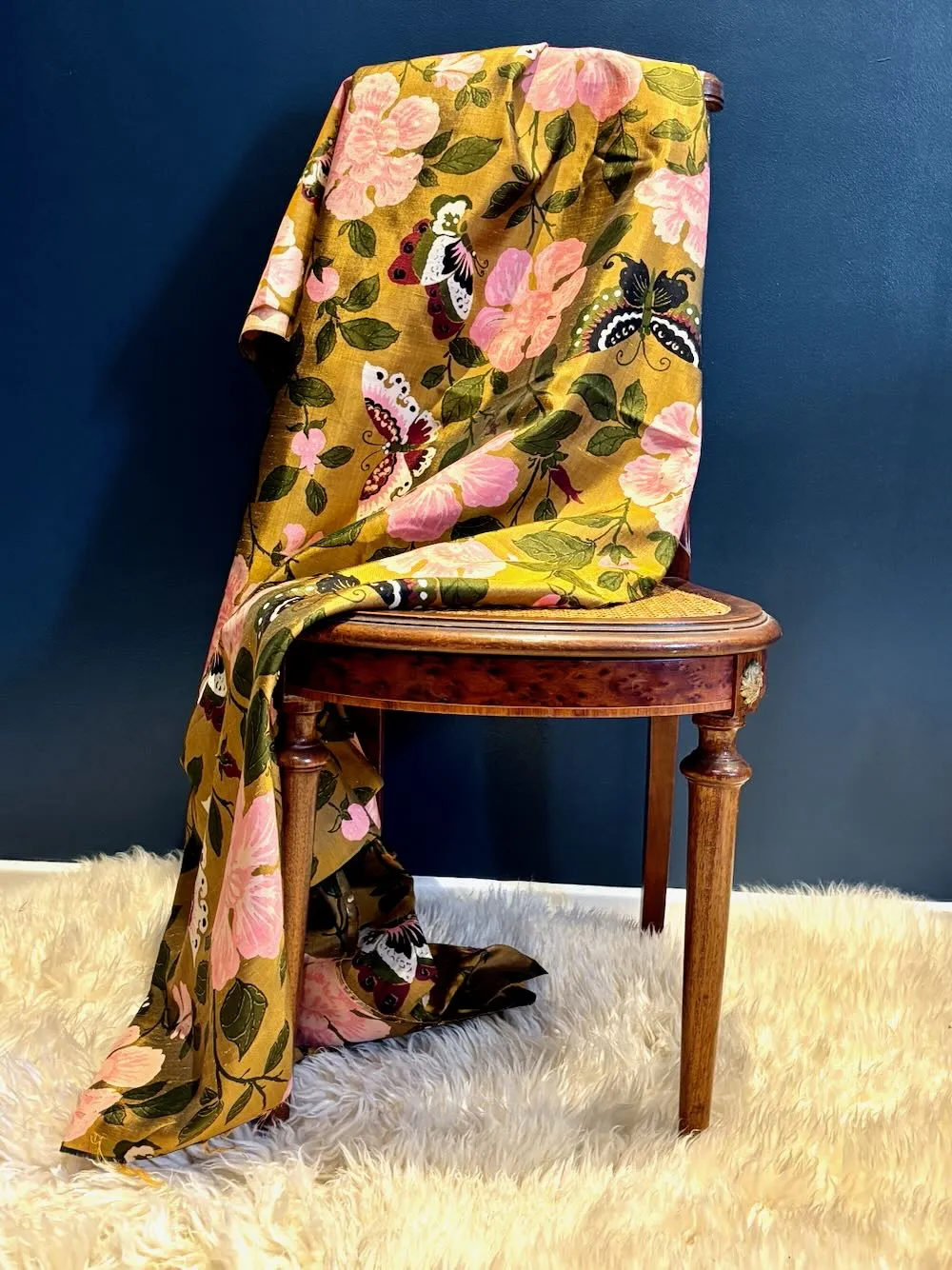
This exceptional length of vintage Jim Thompson Thai silk captures a moment when traditional craftsmanship and global design sensibility converged at their peak. Measuring an impressive 253 inches (approx. 7.03 yards / 6.43 meters), this continuous, uncut textile offers both rarity and remarkable versatility—equally suited to couture, interiors, or serious textile collecting.
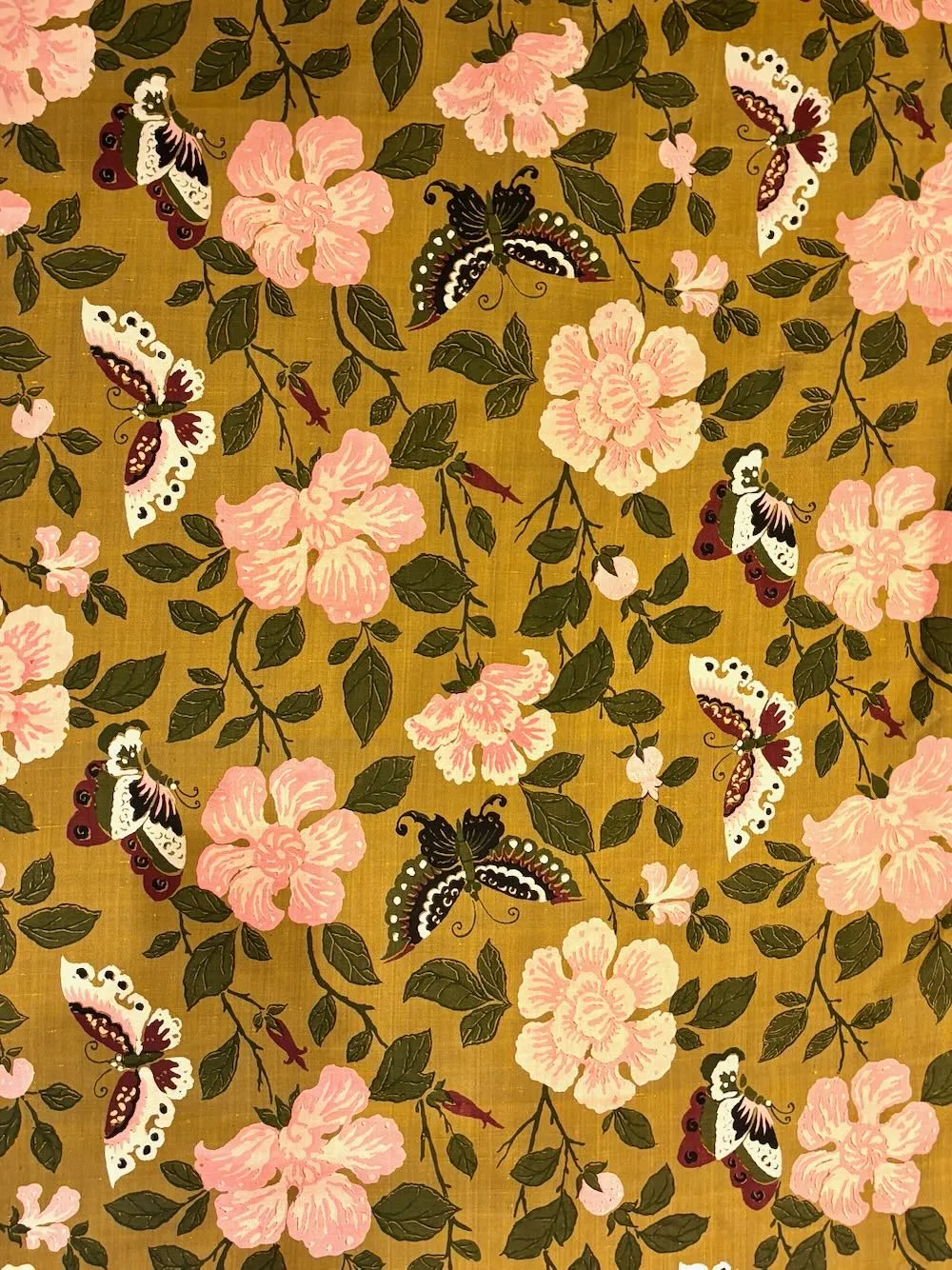
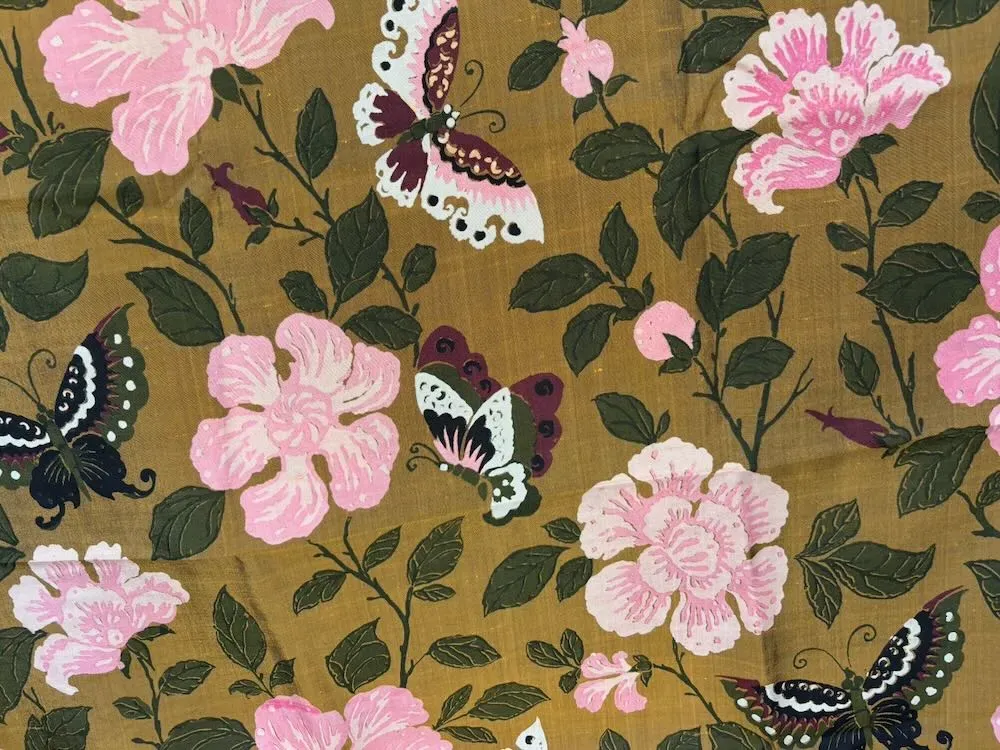
The design features a richly layered botanical composition set against a warm ochre ground. Oversized pink blossoms—reminiscent of hibiscus or peonies—intertwine with finely rendered butterflies, creating a fluid, painterly surface that feels both decorative and alive. The palette—dusty pinks, greens, burgundy, and cream—sits firmly within the refined earth tones that defined Jim Thompson’s 1970s collections.
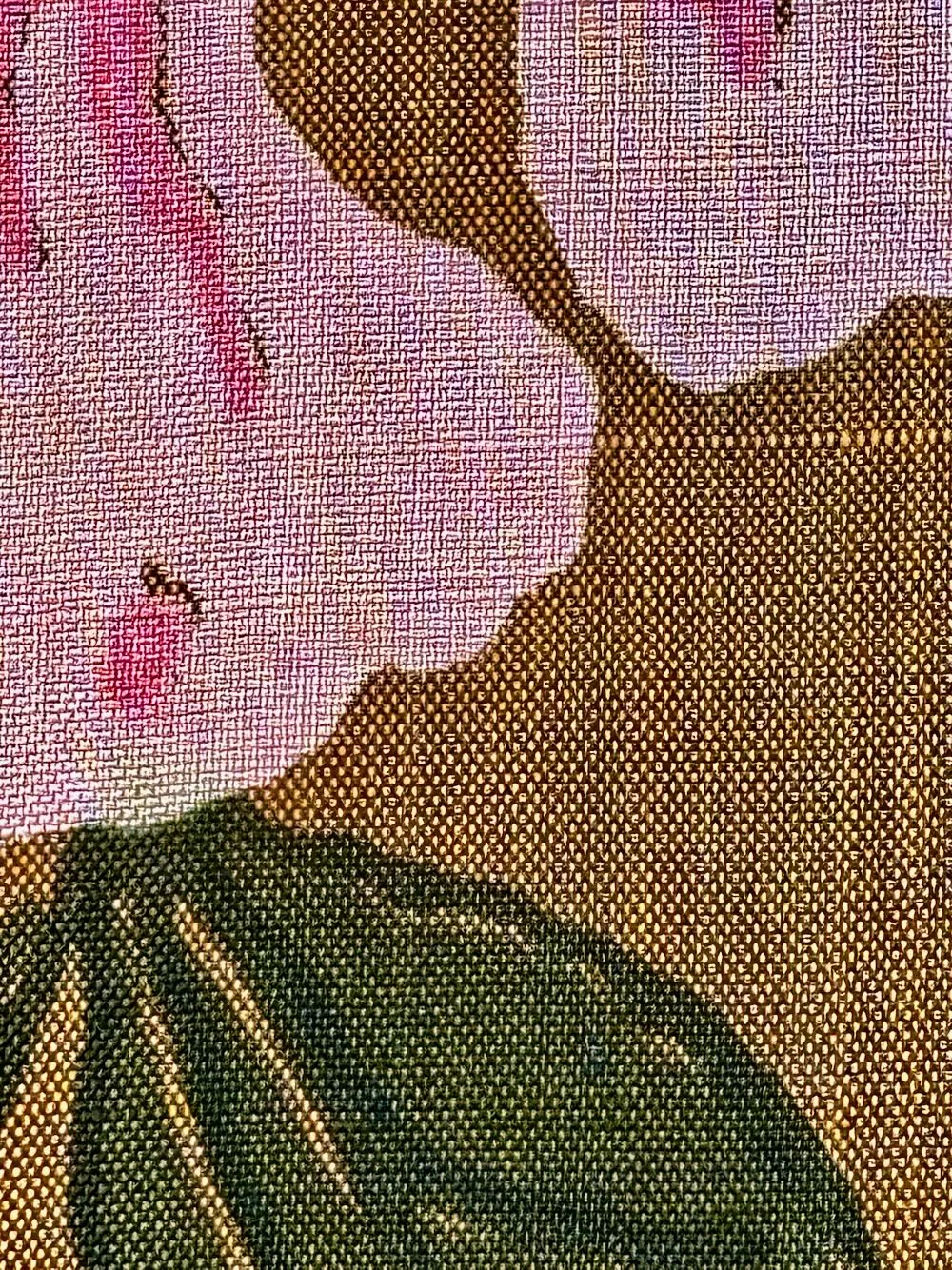
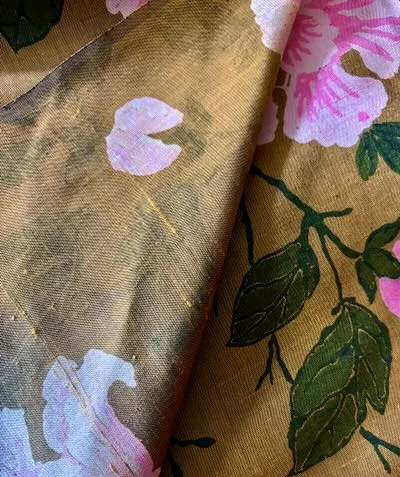
Look closer and the silk reveals its character. Subtle irregularities in the weave—those small, luminous slubs—catch the light and confirm the handwoven origin of the fabric. The print sits beautifully within that texture, allowing the dye to penetrate rather than merely sit on the surface, producing depth and softness that synthetic or later reproductions cannot replicate.
This is not a fragment or remnant. It is a full, continuous length—something rarely preserved in this condition—and that scale transforms its potential. It can become drapery, upholstery, multiple garments, or remain exactly as it is: a substantial and authentic piece of textile history.
Jim Thompson and the Legacy of Thai Silk
Jim Thompson’s name is inseparable from the revival of Thai silk in the mid-20th century. An American architect and former OSS officer, Thompson settled in Thailand after World War II and recognized the quiet brilliance of local weaving traditions that had yet to reach an international audience.
In 1948, he founded the Thai Silk Company and began working directly with artisan weavers, particularly in the Ban Krua community. Rather than industrializing the craft, he refined it—introducing new dyes, expanding the color palette, and adapting traditional techniques to suit modern interiors and fashion. His fabrics gained global recognition after appearing in the Broadway production of The King and I, and soon found their way into couture houses, film, and high-end interiors.
Even after his mysterious disappearance in 1967—an event that remains one of Southeast Asia’s enduring enigmas—the brand continued to grow, carrying forward his vision. By the 1970s, Jim Thompson silks had evolved to include more complex printed designs layered over handwoven grounds, bridging traditional technique with contemporary aesthetics.
The Surawong Flagship Store Experience
This textile was acquired in July 1976 at the Jim Thompson flagship store on Surawong Road in Bangkok, the same location originally established in 1967 and still operating today.
At that time, the experience of purchasing silk there differed entirely from modern retail. Fabrics were not displayed openly. Instead, they were kept in large wooden cabinets, and bolts were brought out individually by staff, then draped, unfolded, and presented with care. The process emphasized touch, movement, and light—qualities intrinsic to silk itself. That setting reflected how these textiles were understood: not as simple yardage, but as material with presence, intention, and lasting value.
Design Context and 1970s Aesthetic
The butterfly and floral composition aligns closely with Jim Thompson’s mid-to-late 1970s printed silk designs. During this period, the company embraced larger-scale motifs and more expressive surface treatments, often blending Western decorative traditions—such as botanical illustration and chinoiserie—with Thai craftsmanship.
Butterflies appear repeatedly across Thompson’s design vocabulary, serving both as decorative elements and as symbols of transformation and movement. Here, they interact naturally with the floral forms, creating rhythm across the surface without rigid repetition. The result is a textile that feels at once structured and organic—decorative, but never static.
Condition and Preservation
This piece remains in pristine, unused condition:
-
No fading
-
No stains
-
No structural damage
-
No hemming or alterations
-
Original edges intact
The vibrancy of the color and the suppleness of the silk speak to both the quality of the original production and careful long-term storage.
Rarity and Collectability
Large, continuous lengths of vintage Jim Thompson silk rarely survive in this state. Many were cut for garments or interiors, leaving only fragments on the secondary market. The combination of:
-
full 7-yard length
-
excellent condition
-
period-correct design
-
documented flagship provenance
places this textile in a different category than typical vintage fabric offerings. It appeals not only as material, but as a complete and usable artifact of design history.