
Description
Wedgwood Egyptian Collection Ankhesenamun Trophy Plate, Terracotta on Primrose Jasperware, Limited Edition of 500, Wedgwood Collectors Society, 1978
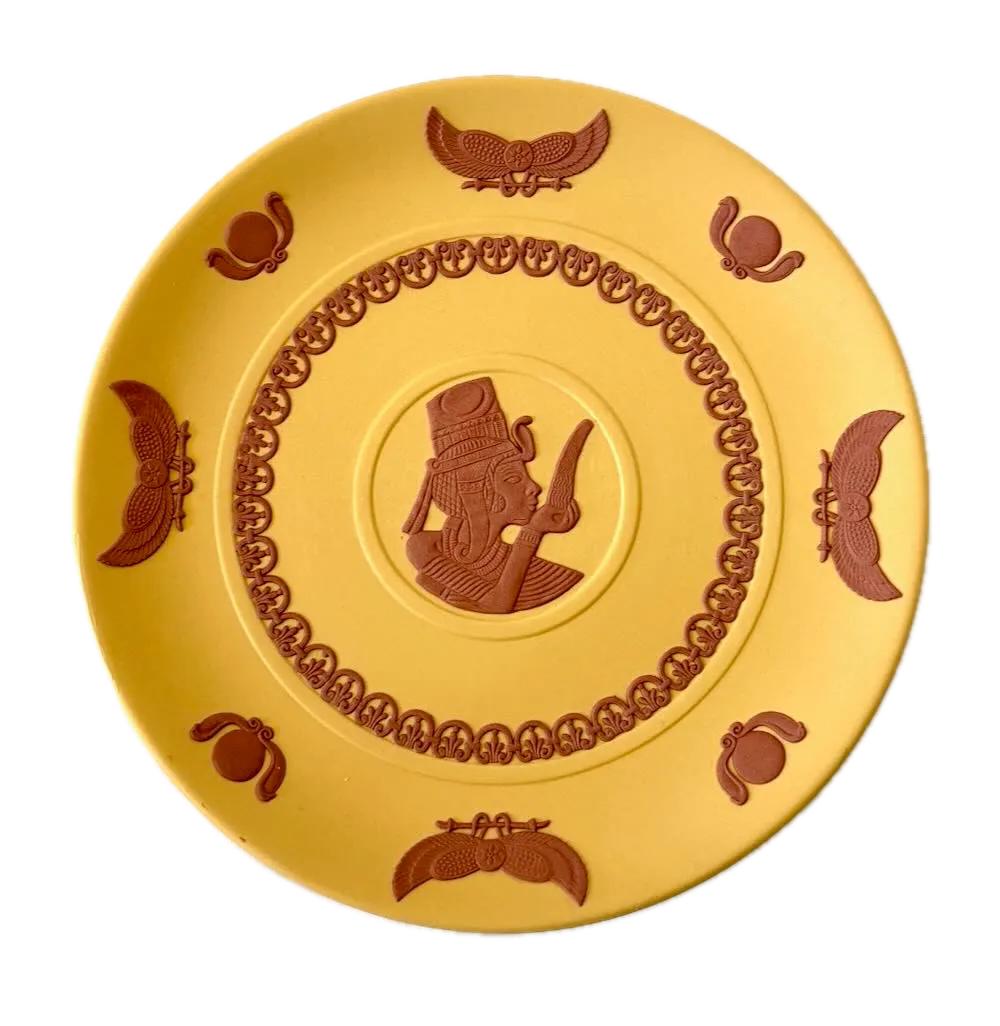
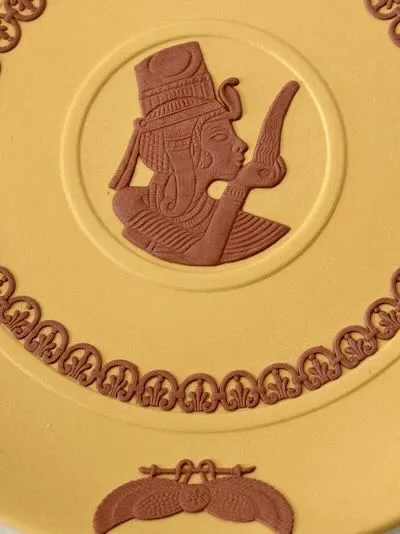
This is a rare Wedgwood Egyptian Collection “Ankhesenamun” trophy plate, produced in 1978 as a limited edition of only 500 pieces in primrose jasper and commissioned exclusively for the Wedgwood Collectors Society. Unlike the more widely available pieces from the Egyptian series, this example belongs to a much smaller, more deliberate production and carries a distinct collector-focused identity.
The colorway immediately sets it apart. Executed in terracotta on primrose jasperware, the warm yellow ground gives the piece a softer, more architectural presence, while the reddish-brown relief provides a strong, earthy contrast reminiscent of ancient Egyptian carved and painted surfaces. This combination is among the most visually distinctive in the series and is encountered far less often than the standard blue or black basalt examples.
A Composition Rooted in Egyptian Revival Design
At the center is a finely modeled profile of Queen Ankhesenamun, the wife of Tutankhamun, rendered in the stylized manner associated with ancient Egyptian art. The elongated eye, structured headdress, and composed profile reflect the formal visual language of New Kingdom portraiture.
Encircling the medallion is a repeating decorative band that reinforces the symmetry of the design, followed by a broader field populated with Egyptian symbols. Winged forms and scarab motifs are arranged rhythmically around the plate, creating a sense of order and ceremonial balance rather than simple ornament.
The winged scarab, in particular, carries strong symbolic meaning. In ancient Egyptian belief, it represents renewal, protection, and the cycle of rebirth—an image that became central to both ancient and later Egyptian Revival design.
The Wedgwood Egyptian Collection
This plate forms part of Wedgwood’s Egyptian Collection, introduced in the late 1970s during a renewed global fascination with ancient Egypt. The collection coincided with the international touring exhibition of Tutankhamun’s treasures, which brought Egyptian design back into prominence and influenced decorative arts across Europe and the United States.
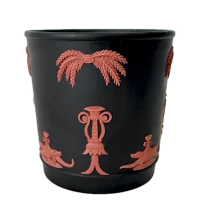
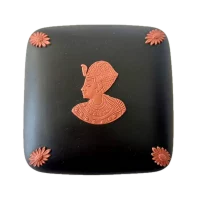
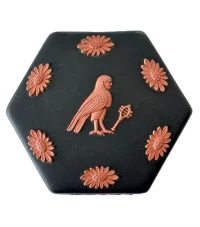
Wedgwood translated these ancient motifs into their established jasperware medium, combining classical restraint with archaeological inspiration. While many pieces from the collection were produced in broader numbers, certain editions—such as this one—were reserved for a more limited audience.
Wedgwood Collectors Society and Limited Edition
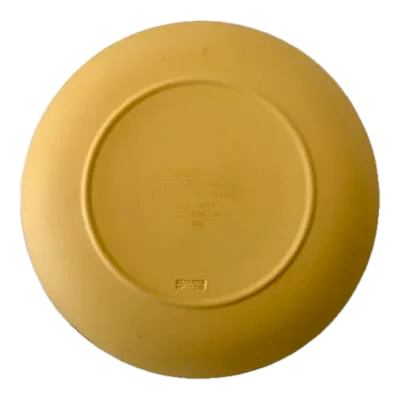
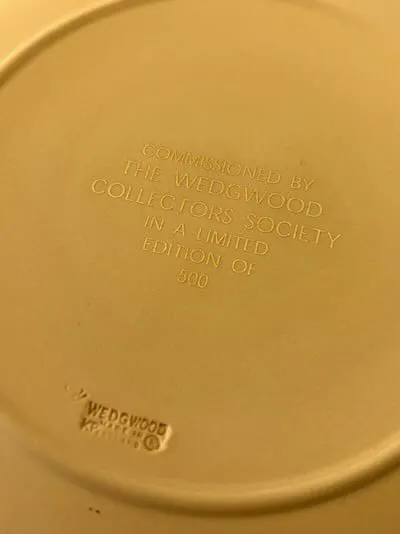
The reverse carries a clear gold inscription stating that the piece was commissioned by the Wedgwood Collectors Society in a limited edition of 500, in addition to the impressed Wedgwood mark. This dual marking is significant, as it confirms both its exclusivity and its intended audience.
The Wedgwood Collectors Society, established in the late 1960s, was created to engage dedicated collectors through special commissions, limited editions, and pieces not available through standard retail channels. Items produced for the Society were typically issued in controlled numbers and often featured distinctive backstamps or inscriptions, as seen here.
While the Society itself no longer operates in its original form, these commissioned pieces remain among the more sought-after modern Wedgwood issues, particularly when tied to well-defined themes such as the Egyptian Collection.
Condition and Presentation
The plate is in very good condition. The surface remains clean with strong, even color, and the applied relief decoration is intact with no visible chips or losses. The gold inscription on the reverse is clear and well preserved, adding both visual interest and confirming its limited edition status.
At 6 3/4 inches, it sits comfortably between cabinet piece and display object. The scale allows for easy presentation, while the clarity of the design and the strength of the color give it a presence that reads beyond its size.