

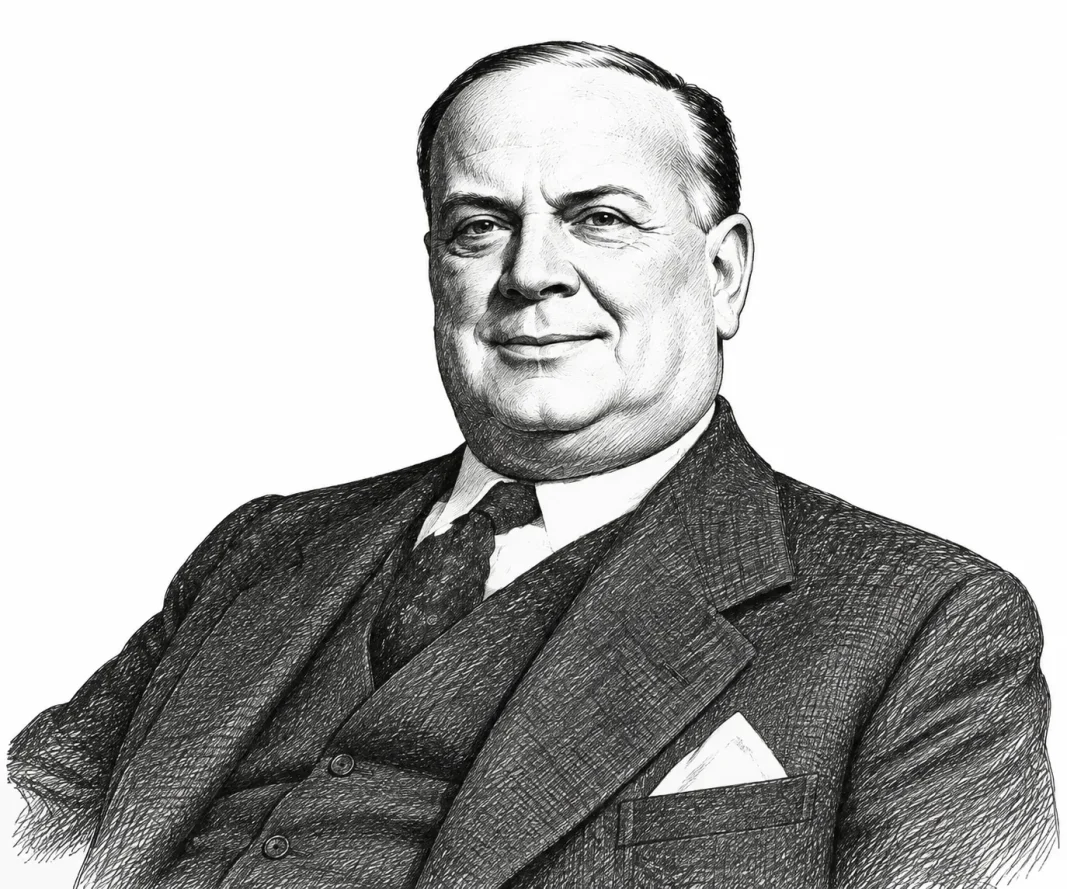
Few names in fashion have achieved the immediate recognition of Gucci. More than a century after its founding in Florence, the house has developed a visual vocabulary that extends far beyond a single product or logo. Bamboo handles, horsebit hardware, green-and-red Web stripes, the interlocking GG, Flora prints and distinctive leather goods have all become recognizable elements of Gucci design.
Yet the history of Gucci is more complex than the story of a famous fashion label. Gucci began with luggage and leather goods, expanded into shoes, handbags and accessories, entered ready-to-wear fashion, and eventually developed an extensive world of jewelry, watches, fragrances, decorative objects and lifestyle products.
Its history also demonstrates an unusual ability to reinterpret its own past. Designs introduced decades ago repeatedly return in altered forms, allowing Gucci’s archive to function not simply as a record of what the company once made, but as an active source for contemporary design.
The History of Gucci Begins in Florence
Guccio Gucci was born in Florence on March 26, 1881. As a young man he moved to London and in 1897 began working as a porter at the Savoy hotel. There he encountered wealthy international travelers and, importantly, the fine luggage that accompanied them.
Gucci’s own historical archive identifies this experience as formative. After returning to Florence, Guccio eventually established an artisanal luggage business in 1921 on Via della Vigna Nuova. From the beginning, two influences came together: the traditions and craftsmanship of Tuscany and the sophisticated world of international travel that Guccio had observed in London.
This combination proved important. Gucci was not originally conceived primarily as a clothing company. It emerged from a culture of luggage, travel accessories and leather craftsmanship. The relationship between Gucci and travel has consequently survived for more than a century, even as the company has expanded into almost every category associated with luxury fashion.
Leather Goods, Luggage and the Early Gucci Identity
Florence had a long tradition of skilled leather-working, providing an appropriate environment for Guccio Gucci’s enterprise. The early business concentrated on luggage and accessories for an affluent clientele. Travel itself carried considerable social meaning during this period. Fine trunks, suitcases and leather accessories were not merely utilitarian objects; they communicated quality, taste and status.
During the late 1930s Gucci began incorporating canvas into its products. Among the important early developments was the Diamante fabric, characterized by a small diamond pattern. Gucci regards this textile as a predecessor of the monogrammed canvases that later became among its most recognizable materials.
The introduction of canvas also illustrates something that would repeatedly occur throughout Gucci’s history: practical circumstances could generate enduring design ideas.
Innovation, Scarcity and the Gucci Bamboo Bag
The 1940s presented European manufacturers with wartime and postwar shortages. Traditional luxury materials could be difficult to obtain, forcing designers and craftspeople to experiment. Gucci’s response produced one of the house’s most enduring designs.
In 1947, bamboo was used to create the curved handle of what became known as the Bamboo bag. The material was lightweight and resilient, and skilled artisans could heat and bend it into a rigid handle. The resulting contrast was striking: a polished, sculptural natural handle attached to a finely constructed handbag.
What began partly as an inventive response to material limitations became a Gucci signature. The Bamboo design has subsequently been revisited many times, and its survival demonstrates a recurring characteristic of Gucci: successful historical ideas are rarely abandoned completely. They are reinterpreted.
The Horsebit and Gucci’s Equestrian Vocabulary
Another important strand of Gucci design emerged from equestrian imagery. Horse riding and the social world surrounding it provided a vocabulary of straps, buckles, bits and related hardware that could be translated into luxury accessories.
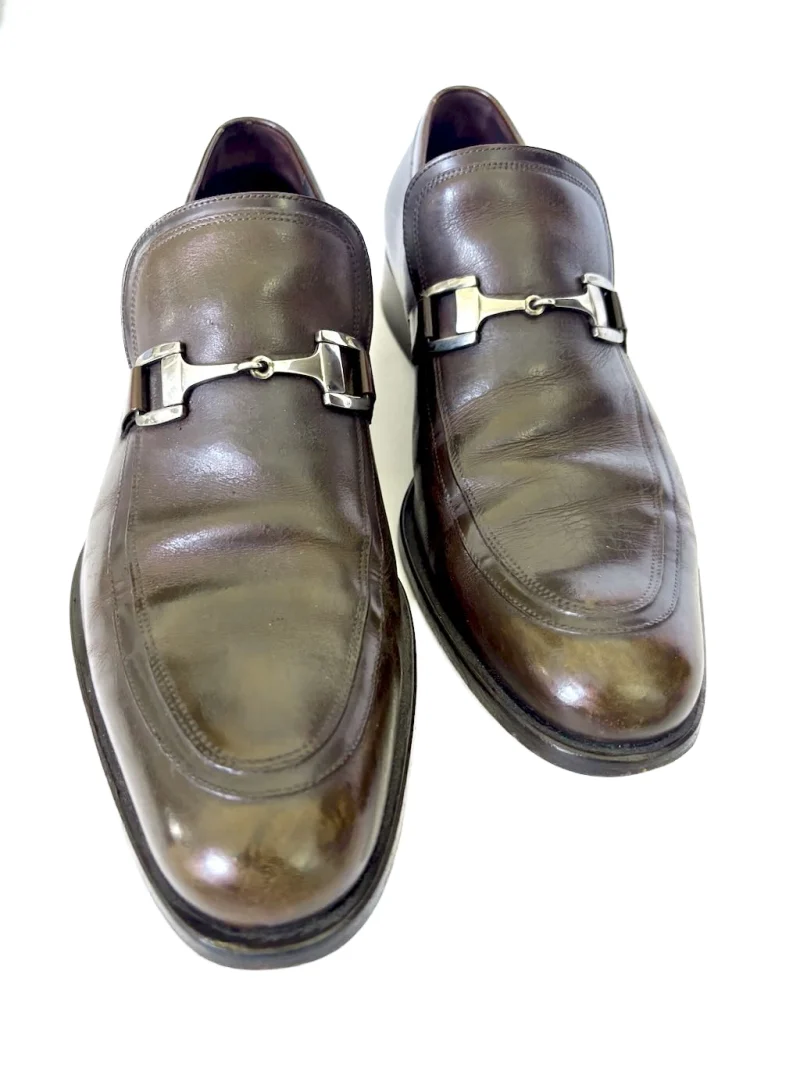
The horsebit became particularly important. In 1953 Gucci introduced its now-famous Horsebit loafer, placing metal hardware resembling a horse’s bit across the vamp of the shoe. The combination was distinctive: the relaxed form of a loafer gained a polished decorative element associated with equestrian equipment.
The Horsebit subsequently migrated across Gucci’s collections and became a recurring motif on handbags, shoes, belts and other accessories. Its endurance demonstrates one reason Gucci objects from different decades can still appear related. The company developed a group of recognizable design elements and repeatedly applied them in new contexts.
The importance of the loafer extends beyond Gucci’s commercial history. Examples of Gucci loafers from around 1972 are preserved by the Costume Institute of the Metropolitan Museum of Art in New York, demonstrating the design’s place within the broader history of 20th-century fashion.
Gucci Goes International
The 1950s transformed Gucci from a respected Italian leather-goods business into an increasingly international luxury house. In 1953 the company opened its first New York store. The same year was significant for another reason: Guccio Gucci died, leaving the expanding business to the next generation of the family.
Gucci attracted an increasingly international clientele that included film stars, socialites, dignitaries and wealthy travelers. The relationship between luxury goods, travel and celebrity proved especially powerful. A Gucci handbag carried by a famous woman could become internationally recognizable long before social media or contemporary digital marketing existed. The house was becoming more than a manufacturer. It was developing a mythology.
Jackie Kennedy and the Gucci Jackie Bag
Among the handbags closely associated with Gucci’s international rise was a soft, curved hobo-style design that became strongly linked with Jacqueline Kennedy Onassis. Her repeated use of the bag helped make the form recognizable, and it eventually became known as the Jackie.
The relationship between an individual and an accessory illustrates another recurring theme in fashion history. Certain designs acquire significance not simply because of their construction, but because of the people who use them and the cultural moment in which they appear. Gucci has repeatedly returned to this archival design. The contemporary Jackie 1961 explicitly acknowledges the historical model while adapting it for another generation.
The Flora Motif: Gucci Beyond Leather
One of Gucci’s most famous designs originated not with luggage or a handbag but with a silk scarf. In the 1960s the house developed the elaborate Flora motif, a richly detailed composition of flowers, plants and insects. It became one of Gucci’s enduring textile designs and expanded the visual identity of the company beyond leather, canvas and equestrian hardware.
Flora demonstrated that Gucci could create recognizable identity through illustration and pattern as effectively as through construction and hardware. The motif subsequently appeared across scarves, clothing, handbags and other objects and has been repeatedly revisited by later Gucci designers.
Its longevity is especially interesting because Flora represents a very different side of Gucci from the restrained leather luggage of its beginnings. One is practical and architectural; the other decorative, botanical and exuberant. Both nevertheless became part of the same house vocabulary.
The GG Monogram and the Power of a Name
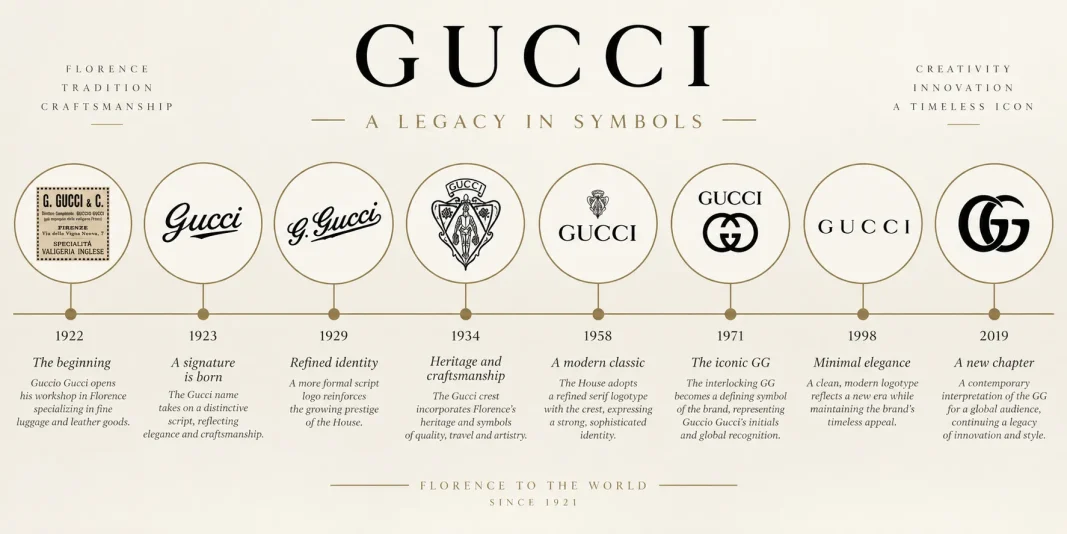
Few fashion symbols are as immediately identifiable as Gucci’s paired Gs. The GG refers to founder Guccio Gucci and developed into a recurring decorative device during the postwar decades. It eventually appeared in textiles, canvas, hardware, buckles, jewelry and countless other forms.
The success of the GG illustrates the transformation of a designer’s initials into an ornamental motif. At Gucci, the letters can be conspicuous or remarkably discreet. They may cover an entire canvas surface or appear only as a small metal clasp. This versatility helped the motif survive changes in fashion. Rather than belonging exclusively to one particular handbag or decade, the GG became part of the broader language from which successive Gucci designers could draw.
Gucci’s Web Stripe
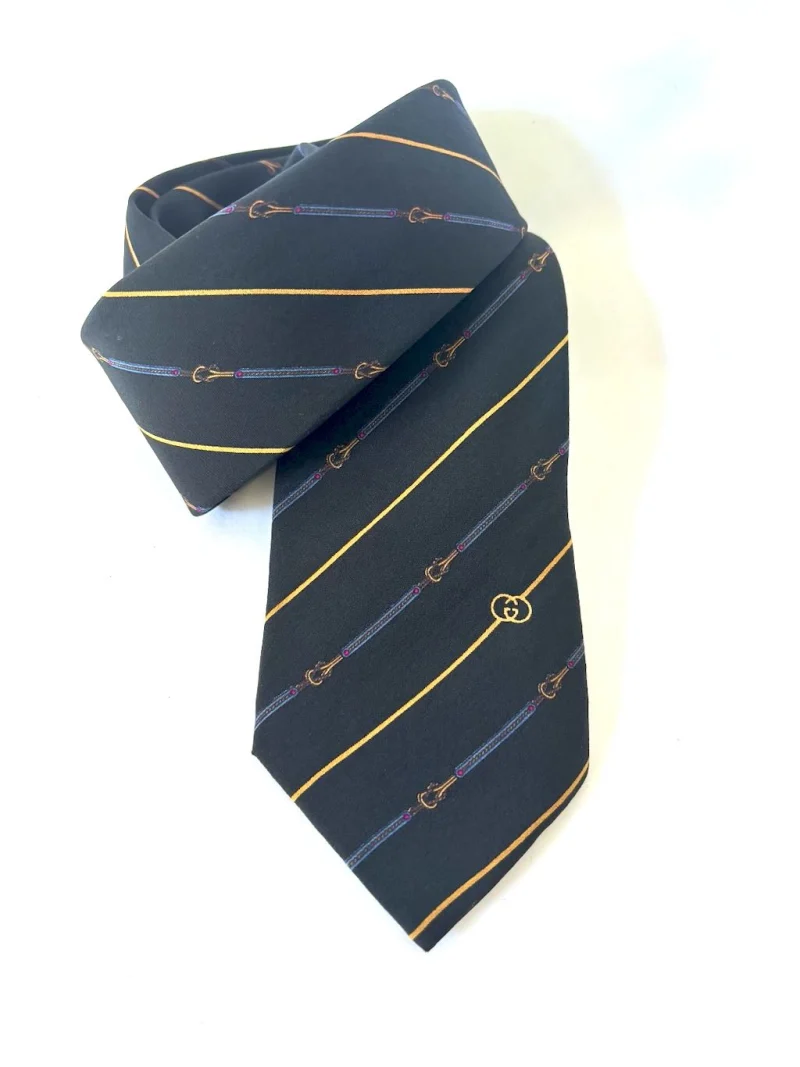
The green-and-red Web stripe became another recognizable Gucci code. Like the Horsebit, it evokes the house’s equestrian associations. Bands of contrasting color provided a strong graphic device that could be applied across luggage, handbags, shoes, clothing and accessories.
The Web demonstrates how relatively simple visual elements can acquire tremendous identity through repetition. A stripe has no inherent connection to a particular fashion house, but consistent use over decades can transform it into a signature. Together, the Horsebit, Bamboo, Flora, GG and Web created a design vocabulary broad enough to evolve while remaining recognizably Gucci.
From Accessories to Gucci Fashion
Although leather goods remained fundamental, Gucci gradually moved deeper into clothing. The house began producing ready-to-wear during the mid-1960s. In 1972 it opened its first store specifically devoted to clothing at 699 Fifth Avenue in New York.
This was an important transition. A company known primarily for objects carried or worn as accessories was becoming a complete fashion house capable of dressing its clientele.
During the 1970s Gucci also began presenting collections, often at New York’s St. Regis hotel. In 1981 the house presented a Flora-inspired collection in Florence’s famous Sala Bianca at Palazzo Pitti. The use of an established archival motif for fashion also anticipated something that would become increasingly important at Gucci: its own history could provide material for new design.
Gucci in the 1970s and 1980s: Creating a Lifestyle
The expansion of Gucci did not stop with clothing. During the 1970s and 1980s the company broadened its range of lifestyle products dramatically. Gucci’s own archive records such varied objects as board games, tennis equipment, umbrellas, dog carriers and decorative pieces.
This is important when considering Gucci’s history because it demonstrates that the contemporary idea of a luxury brand offering an entire lifestyle is not entirely new. A customer could encounter Gucci through a handbag or pair of shoes but also through objects used at home, while traveling, playing sport or caring for a pet.
The house was effectively extending its design identity into daily life. This period is also particularly interesting to collectors today. Vintage Gucci from the 1970s and 1980s can reveal a much wider variety of forms than someone familiar only with current handbags might expect.
Gucci Handbags and Leather Goods
Despite its expansion, handbags and leather goods have remained central to Gucci’s identity. This continuity makes sense. They connect contemporary Gucci directly to Guccio Gucci’s original luggage atelier. A handbag also provides an unusually concentrated expression of design. Shape, leather, lining, stitching, handles, clasps, hinges and other hardware must work both aesthetically and mechanically.
Gucci has exploited these possibilities particularly effectively. Some bags announce their identity through monogram canvas or familiar stripes. Others are far more restrained, relying on proportion, material and a single piece of distinctive hardware. That diversity is important when examining vintage Gucci. Not every authentic Gucci handbag must display an obvious GG monogram across its exterior.
An Atelier85 Vintage Gucci Example
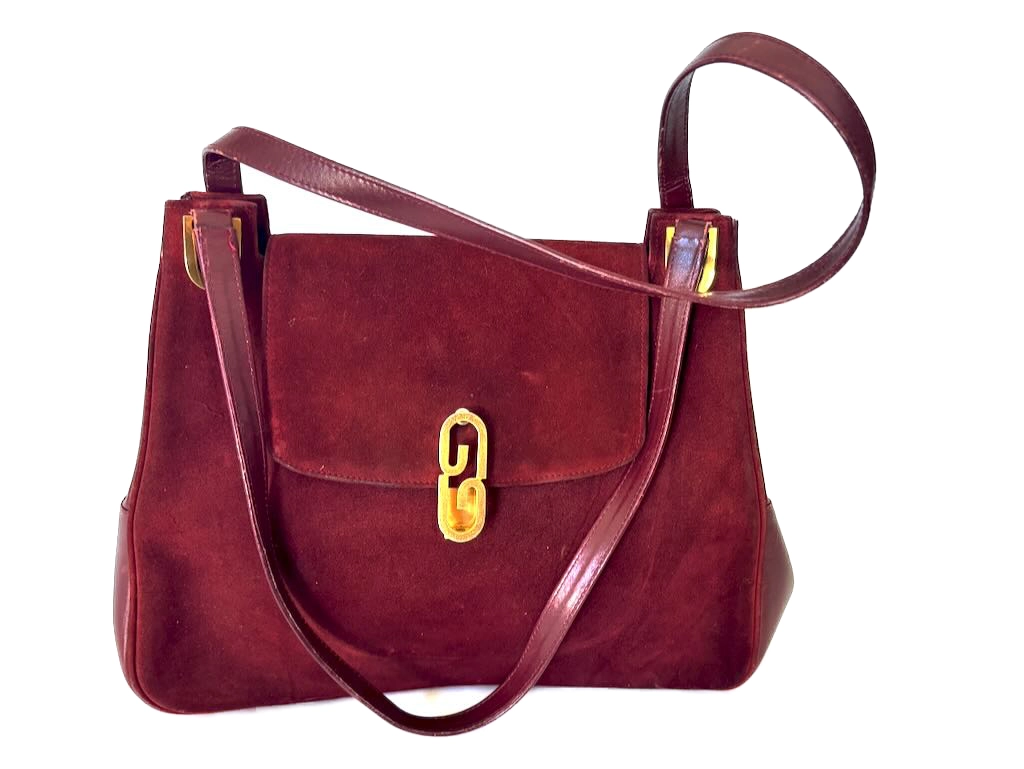
A vintage burgundy suede Gucci handbag currently in the Atelier85 collection illustrates this quieter approach. Probably purchased during the 1980s from the Gucci boutique on Via Condotti in Rome, the handbag combines burgundy suede with matching leather and sculptural gold-tone G hardware.
Its exterior does not depend upon repeating monograms. Instead, the identity of the bag emerges from its materials, construction and distinctive closure. It provides a useful reminder that vintage designer objects should be examined as designs in their own right rather than judged solely by the prominence of a logo.
Gucci Shoes
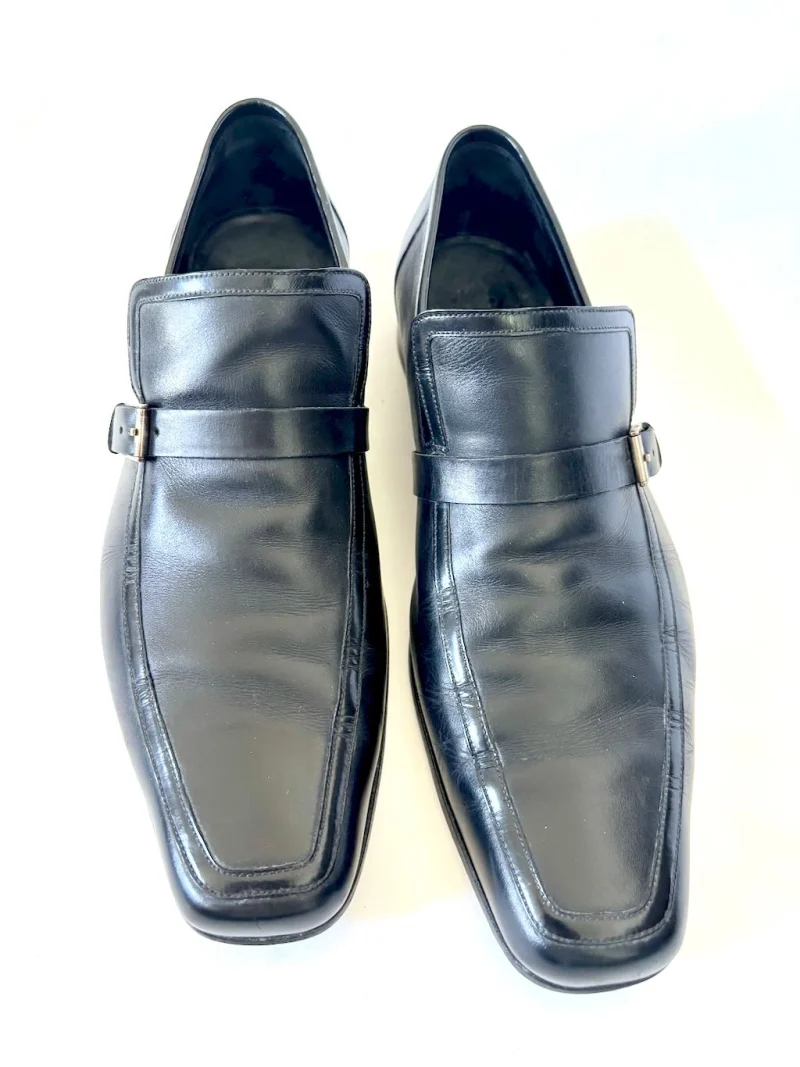
Shoes form another major chapter in Gucci design. The Horsebit loafer remains the obvious historical landmark, but Gucci’s footwear eventually expanded far beyond it into pumps, boots, sandals, sneakers and highly decorative statement shoes.
The enduring importance of the Horsebit loafer lies partly in its adaptability. It bridges formal and casual dress and can be reinterpreted without losing the essential visual device that identifies it. Museum collections have helped confirm the loafer’s significance beyond the commercial history of Gucci. Its preservation by institutions such as the Metropolitan Museum of Art places it within a larger narrative of modern fashion and design.
Scarves, Textiles and Printed Design
Gucci’s silk scarves deserve attention independently from its handbags. Textiles allowed the company to work with color, drawing and surface pattern in ways quite different from leather construction.
Flora is the best-known example, but scarves and printed textiles became an important part of Gucci’s visual world. Their imagery could subsequently migrate onto garments, linings, bags and decorative objects. For a company founded around leather and luggage, this ability to develop a strong textile identity represents a significant expansion of its design capabilities.
Jewelry, Watches and Accessories
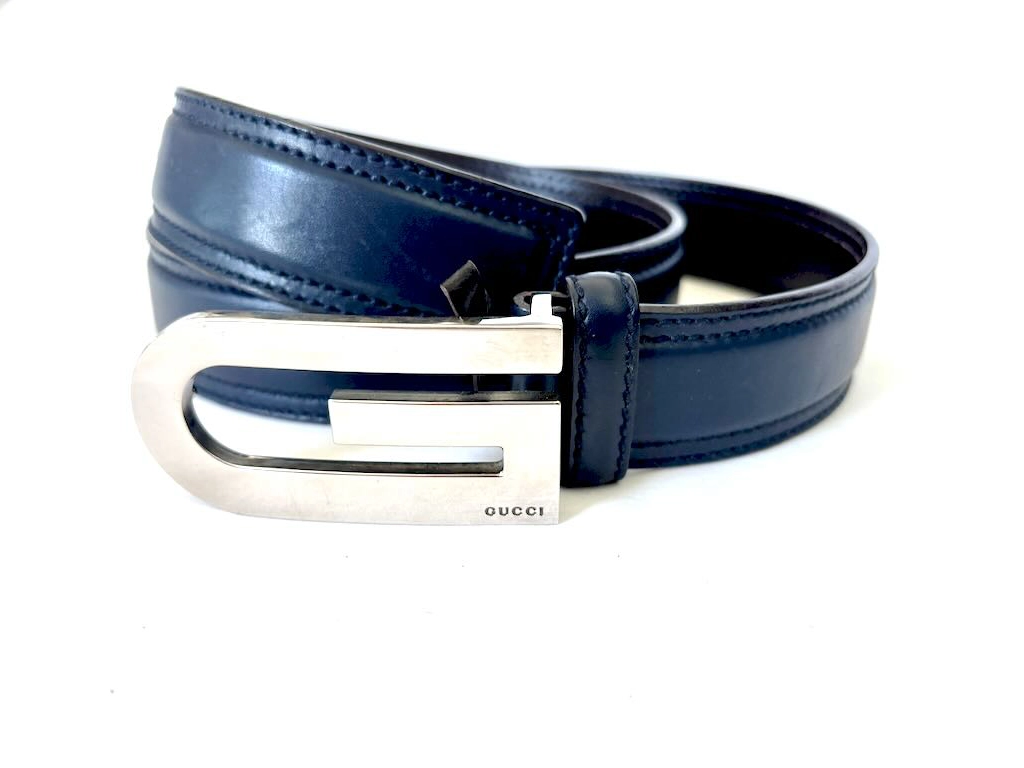
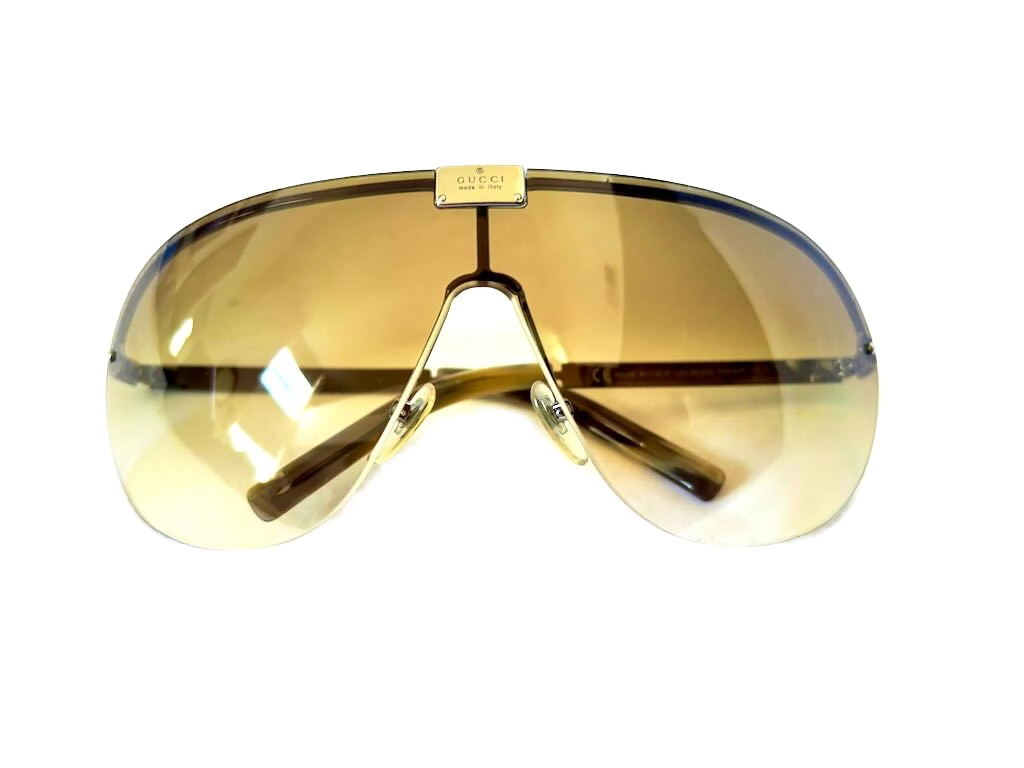
As Gucci evolved into a comprehensive luxury house, accessories expanded accordingly. Belts became natural vehicles for recognizable Gucci buckles and hardware. Sunglasses offered another means of applying logos and house codes. Jewelry translated familiar symbols into precious or decorative materials, while watches brought Gucci into another specialized area of personal luxury. Small leather goods—wallets, card cases, cases and belts—remained especially close to the company’s original expertise.
The Gucci Archive today treats these categories as significant parts of the house’s history rather than secondary merchandise. Its collections include vintage handbags, small leather goods, belts, jewelry and luggage alongside clothing, textiles, scarves and footwear.
Gucci Décor and the Idea of the Luxury Home
Gucci’s interest in decorative and lifestyle objects provides an important connection between fashion and the decorative arts. The company’s historical production of décor and unusual lifestyle pieces during the 1970s and 1980s anticipated the broader contemporary luxury market in which fashion houses design objects for both the body and the home.
Today the Gucci universe includes decorative objects and home-oriented design alongside fashion and accessories. For collectors, these less familiar objects can be particularly intriguing because they reveal how a fashion house translates its visual language into different materials, scales and functions. A motif that works on a scarf can become a decorative surface. Hardware associated with handbags can inspire objects unrelated to clothing. The boundaries between fashion, graphic design, industrial design and the decorative arts become increasingly fluid.
Family Control, Expansion and Turbulence
Gucci’s enormous growth was accompanied by complicated family and corporate history.
As successive generations of the Gucci family became involved in the company, disagreements over ownership, management and direction intensified. By the 1980s the business that had grown from Guccio Gucci’s Florentine workshop was facing both internal conflict and questions about how the brand should develop.
The eventual transition away from family control represented a profound change.
Yet this difficult period also set the stage for one of the most influential transformations in modern fashion history.
Tom Ford and the Reinvention of Gucci
Tom Ford became Gucci’s creative director in 1994 and dramatically altered the image of the house. Rather than simply reproducing its traditional leather-goods heritage, Ford created a sleek, sensual and overtly glamorous vision of Gucci suited to the 1990s.
The transformation was significant enough to attract the attention of fashion historians. The Museum at the Fashion Institute of Technology identifies Ford’s alluring Gucci designs as one of the forces behind luxury’s resurgence during the 1990s. His success also encouraged other established fashion houses to recruit designers capable of reinventing historic brands.
Ford’s Gucci was characterized by confident tailoring, body-conscious silhouettes, rich materials, polished surfaces and provocative evening-wear. The Victoria and Albert Museum preserves examples of his work for the house and describes Ford as particularly renowned for glamorous evening-wear. His final Gucci collection in 2004 included dramatic silk-jersey dresses that referred both to his own work and to earlier designers such as Halston.
Ford demonstrated something crucial about heritage brands: history could provide authority without requiring stylistic conservatism. Gucci could be more than 70 years old and still appear provocative and contemporary.
Frida Giannini and a Renewed Interest in Heritage
Frida Giannini became Gucci’s creative director in 2006. Her period at the house brought renewed attention to recognizable Gucci heritage, including archival prints, equestrian references and accessories.
This approach demonstrated another way of working with a historic brand. Instead of breaking dramatically with the past, familiar elements could be refined, recombined and made relevant to a contemporary market. Gucci’s archive was becoming increasingly important not merely as corporate history but as a working design resource.
Alessandro Michele and the Eclectic Gucci Universe
Alessandro Michele became creative director in 2015 and initiated another striking transformation. Under Michele, Gucci embraced an eclectic visual world in which periods, genders, patterns and references could coexist. Vintage-inspired clothing, historical motifs, embroidery, animals, flowers, elaborate jewelry and unconventional combinations replaced the more restrained expectations often associated with traditional luxury.
His approach also demonstrated the extraordinary flexibility of Gucci’s established symbols. Horse-bits, GG monograms, Web stripes and archival handbag forms could survive within a completely different aesthetic environment. Michele’s Gucci frequently treated history not as a chronological progression but as a vast collection of images and objects available for reinterpretation.
Gucci in the 21st Century
Creative leadership continued to evolve after Michele. Sabato De Sarno became creative director in 2023. In 2025 Gucci named Demna as creative director, beginning another chapter in a house that has repeatedly changed its appearance while retaining recognizable elements from its past. This continual reinvention may be one of the most important explanations for Gucci’s longevity.
The company does not possess one fixed aesthetic. The restrained leather craftsmanship of early Gucci, the colorful Flora motif, equestrian hardware, Tom Ford’s sensual minimalism and later eclectic fashion can look radically different. What connects them is a shared archive of materials, motifs, objects and references.
The Gucci Archive at Palazzo Settimanni
Few things demonstrate the importance Gucci places on its history more clearly than its archive. Palazzo Settimanni in Florence dates to the 15th century and was acquired by Gucci in 1953. It served at different times as a factory, workshop and showroom.
For Gucci’s centenary in 2021, the historic building was restored as the home of the Gucci Archive. The collection extends across three floors and contains more than 30,000 objects. Vintage handbags occupy a dedicated area. Other sections preserve small leather goods, belts, luggage, jewelry, textiles, scarves, dresses and footwear.
The scale of the archive demonstrates how broad Gucci’s production has become since 1921. More importantly, the archive is not conceived merely as storage. It operates as a repository of design ideas—a physical record from which the house can continue to reinterpret its own history.
Understanding Vintage Gucci
The growing interest in vintage designer fashion has made earlier Gucci increasingly collectible. However, identifying vintage Gucci requires more care than simply finding a familiar logo. Gucci has existed for more than a century. Manufacturing methods, labels, stamps, materials, hardware and product categories have changed considerably during that time.
An object should therefore be considered as a whole. Construction quality, materials, hardware, interior finishing, markings, stylistic characteristics and documented history can all contribute to an attribution. A known purchase history can be especially valuable.
Collectors should also be cautious about online claims assigning exact dates or model names solely from serial numbers, stamps or visual resemblance. Resale terminology frequently becomes repeated until it appears authoritative even when no original Gucci documentation has been produced. Whenever possible, identification should be supported by Gucci archival information, period documentation, museum collections or other reliable evidence.
Why Vintage Gucci Remains Relevant
The appeal of vintage Gucci is not simply nostalgia. Earlier objects reveal how an influential design house responded to changing ideas of luxury, travel, fashion and modern life. A 1950s loafer, 1960s silk scarf, 1970s handbag or 1990s Tom Ford dress may appear completely different, yet each represents a particular moment in the development of the same company. Vintage pieces can also reveal designs and categories that are no longer prominent in current collections.
For someone interested in design history, this is particularly valuable. Fashion houses are often discussed through famous designers or runway collections, but their history also survives in functional objects: luggage carried through airports, handbags used every day, shoes worn for decades, scarves carefully stored in drawers and decorative objects placed in homes. These objects provide a more intimate record of design.
More Than a Fashion Label
The history of Gucci ultimately tells the story of a company that repeatedly expanded the definition of what it could design. It began with luggage and leather goods in Florence. And then it developed innovative handbags and distinctive hardware. Later it created shoes, scarves and textiles. It entered ready-to-wear fashion and subsequently extended its identity into jewelry, watches, accessories, fragrance, lifestyle products and objects for the home.
At the same time, it accumulated an extraordinary visual vocabulary. Bamboo, Horsebit, Flora, GG and Web are not merely logos or decorations. They are fragments of the company’s history that have survived because successive generations of designers found new ways to use them. That may be Gucci’s most important design achievement. The house has changed dramatically since Guccio Gucci opened his Florentine shop in 1921, yet more than a century later, ideas developed during different moments of that history continue to appear in new forms.
For collectors, designers and anyone interested in the decorative arts, Gucci therefore offers something more interesting than a chronology of fashion. It provides a case study in how design becomes heritage—and how heritage can remain alive through continual reinvention.
Related Atelier85 Collection
Explore our Vintage Gucci Burgundy Suede Handbag with Gold G Clasp, probably purchased from the Gucci boutique on Via Condotti in Rome during the 1980s. Its suede construction and sculptural gold-tone G closure provide an excellent example of the quieter side of vintage Gucci design.
Further Research
The official Gucci history and archive provide an extensive chronology of the house from Guccio Gucci’s beginnings in Florence through its contemporary collections:
Gucci — The Gucci Archive at Palazzo Settimanni
The Metropolitan Museum of Art’s Costume Institute preserves Gucci loafers dating to approximately 1972, providing an institutional example of the house’s historic footwear:
The Metropolitan Museum of Art — Gucci Loafers
The Victoria and Albert Museum and the Museum at the Fashion Institute of Technology preserve and discuss important Tom Ford-era Gucci fashion, documenting the house’s influential reinvention during the 1990s and early 2000s.