
Description
Vintage Gucci Burgundy Suede Handbag
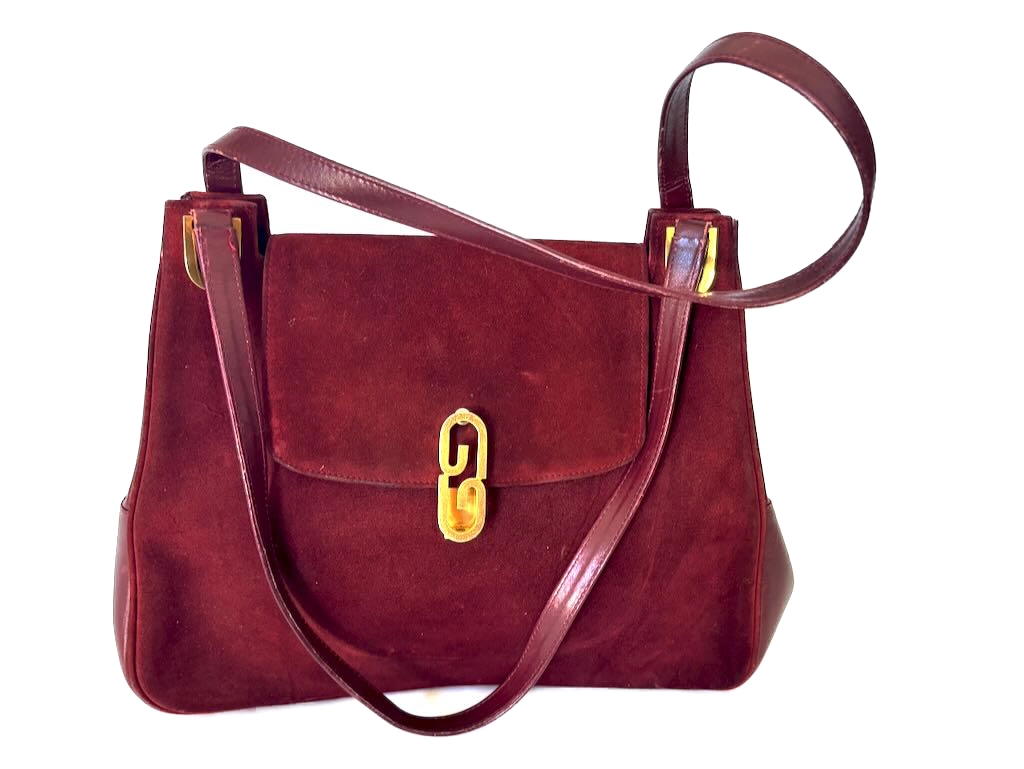
This elegant vintage Gucci handbag combines rich burgundy suede, matching leather and distinctive gold-tone hardware in a sophisticated design believed to date from the 1980s.
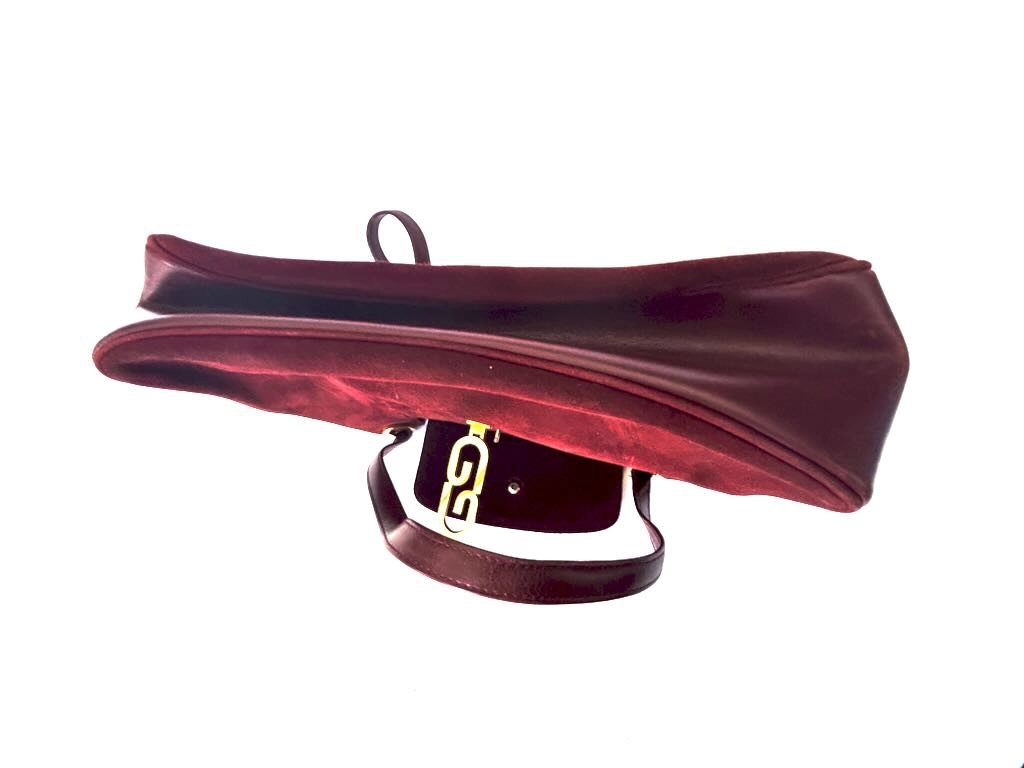
The handbag has a structured yet softly shaped body with gently expanding gusseted sides. Burgundy suede covers the principal exterior surfaces, while smooth coordinating leather defines the edges, sides and long carrying strap. The restrained use of a single color allows the unusual gold-tone clasp to become the focal point of the design.
The present owner personally purchased the handbag from the Gucci boutique on Via Condotti in Rome, probably during the 1980s, and has retained it for approximately four decades.
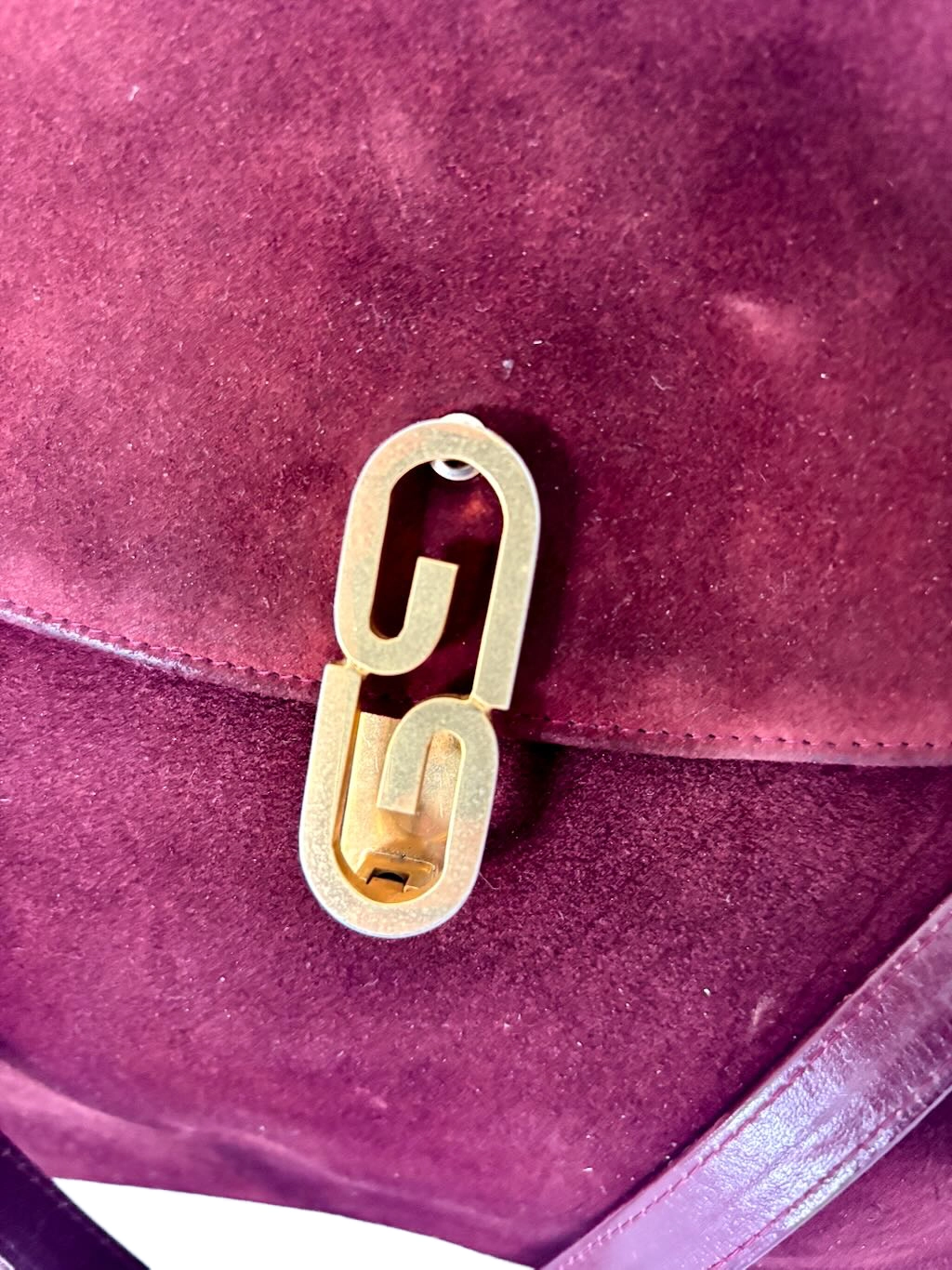
Distinctive Gold G Clasp
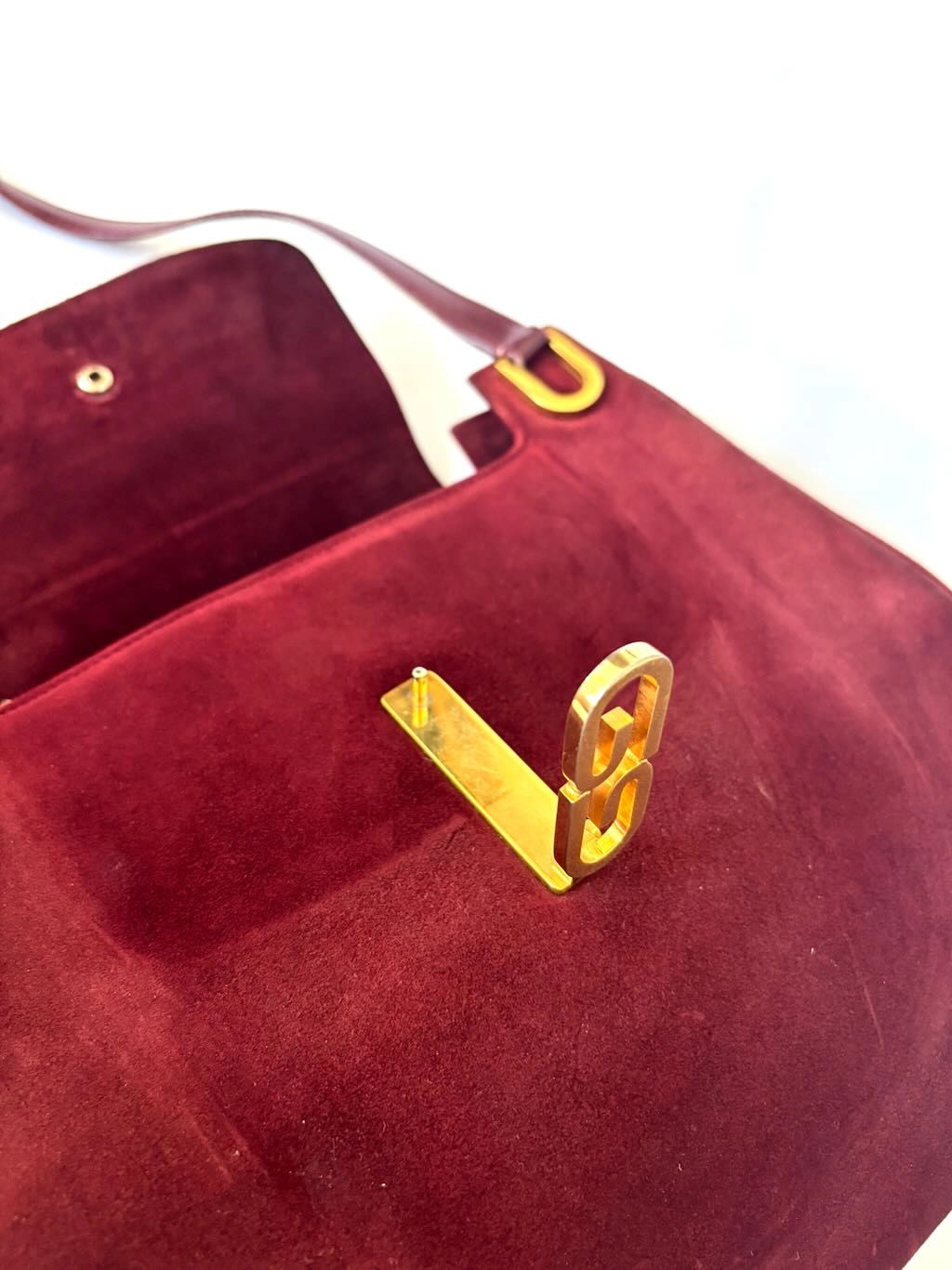
The most recognizable feature of this vintage Gucci handbag is its sculptural gold-tone closure. Two elongated geometric forms create a stylized G motif at the center of the flap.
The hinged mechanism lifts away from the bag to release the flap and folds back into position when closed. Rather than using a conventional turn-lock or magnetic closure, Gucci made the hardware an integral decorative element of the handbag.
We have deliberately avoided assigning a particular model name to the bag or a proprietary name to its clasp without documentary evidence identifying Gucci’s original terminology for this design.
Burgundy Suede and Leather Construction
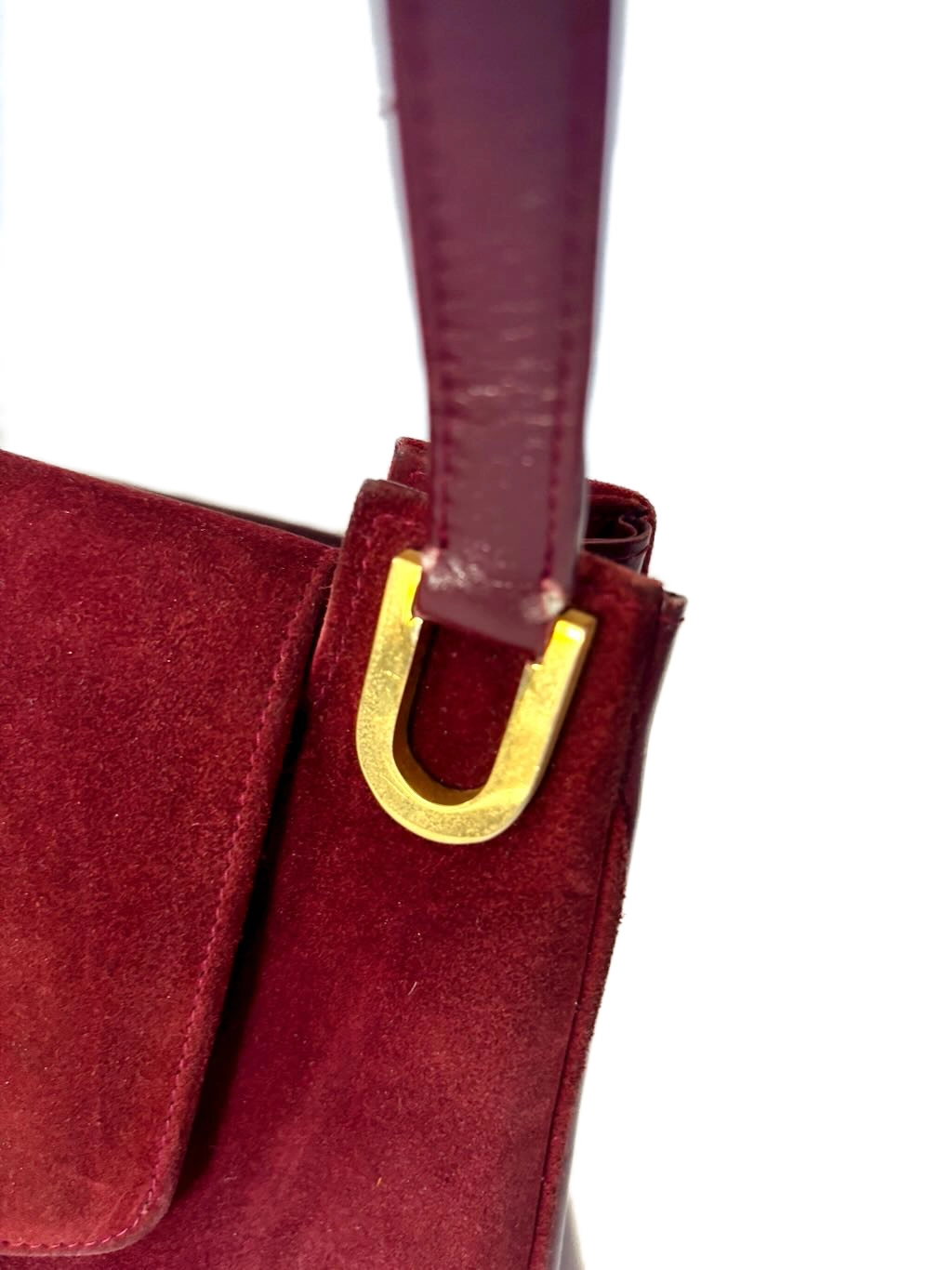
The deep burgundy suede gives the handbag a particularly rich surface, changing subtly according to the direction of the nap and the light falling across it. Smooth burgundy leather provides contrast along the sides, edges and strap.
Gold-tone U-shaped fittings secure the strap at the upper sides of the handbag. Their substantial geometric form complements the central closure without overwhelming the relatively understated design.
The approximately 20-inch strap allows the bag to be carried as a handbag or, depending on the wearer, over the shoulder.
Interior and Gucci Mark
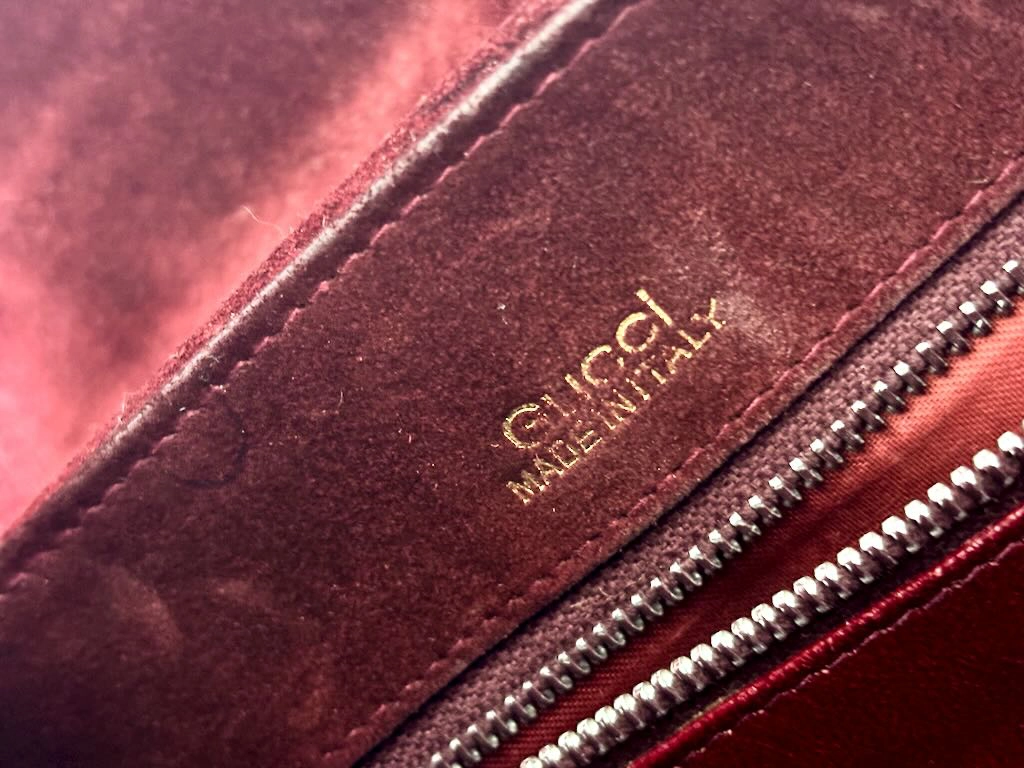
The burgundy color continues inside the handbag, where suede and leather create a coordinated interior. Interior storage includes pockets as well as a zippered compartment.
The interior carries the gold-stamped identification:
GUCCI
MADE IN ITALY
The combination of the interior Gucci marking, materials, construction and distinctive hardware is consistent with the quality expected of Gucci leather goods from this period.
Gucci and Italian Leather Goods
Guccio Gucci established his business in Florence in 1921 after earlier working at London’s Savoy hotel, where the luggage carried by international travelers helped inspire his interest in luxury travel goods. Gucci’s beginnings were therefore closely connected with luggage and fine leather craftsmanship rather than fashion alone. Gucci
During the decades that followed, Gucci expanded internationally and developed an increasingly broad design vocabulary. By the 1950s and 1960s, handbags, the GS monogram, the Flora motif and other recognizable house designs had helped establish Gucci among an international clientele. Ready-to-wear followed, and Gucci opened its first store devoted to clothing in New York in 1972. By the 1970s and 1980s, the company was producing not only fashion and leather goods but an increasingly diverse range of lifestyle and decorative objects. Gucci
The Interlocking G itself became an enduring part of Gucci’s visual language. Gucci’s own archival material traces Double G designs to the 1970s, while surviving historical designs demonstrate the company’s repeated use of G-shaped hardware as both a functional and decorative element. Gucci
Probably Dating from the 1980s
The handbag was personally purchased from Gucci’s Via Condotti boutique in Rome, probably during the 1980s. Although the exact year is no longer remembered, this direct purchase history provides useful evidence for its period.
The design is also compatible with Gucci’s broader output of the late 20th century. We nevertheless prefer to describe the handbag simply as probably 1980s rather than assigning it to a specific year, collection or named model without supporting Gucci documentation.
Condition
The handbag remains in good vintage condition after approximately four decades.
It has been used rather than preserved as an unused archival piece, and the burgundy suede shows the natural tonal variation, surface wear and signs of handling expected with age. The leather and hardware likewise show normal vintage wear. These characteristics are visible in the photographs and form part of the object’s history rather than being concealed through restoration.
Importantly, the handbag remains functional. The unusual front clasp operates correctly, the strap and its fittings remain secure, and the interior zipper functions properly.
The handbag was stored for many years in its original Gucci dust bag. The dust bag is no longer included with the sale.
Vintage Gucci Collecting Interest
Vintage Gucci leather goods offer an opportunity to follow the changing design language of a fashion house whose origins were firmly rooted in luggage, leather and travel.
This handbag is particularly appealing for its restrained design. There is no repeating exterior monogram or conspicuous printed branding. Instead, Gucci’s identity appears through the quality of the suede and leather, the Italian construction, the interior mark and, most visibly, the unusual gold G-form closure.
Its burgundy palette also gives the bag considerable versatility. It can function as a collectible vintage Gucci accessory while remaining entirely wearable today.
Authenticity
This handbag was personally purchased by the present owner from the Gucci boutique on Via Condotti in Rome, probably during the 1980s.
It is additionally marked GUCCI MADE IN ITALY internally and displays construction, materials and hardware consistent with vintage Gucci leather goods.
No original receipt or dust bag accompanies the handbag, and we have not identified a documented Gucci model name for this particular design. We therefore describe it according to its observable characteristics rather than assigning an unsupported model designation.
Related Research
For a broader history of the Italian fashion house, its leather-goods heritage and the development of its designs, see our forthcoming Atelier85 article Gucci: A Century of Italian Luxury, Fashion and Design.
Gucci also maintains an extensive historical chronology and archive documenting the development of the house from its Florentine luggage origins through fashion, leather goods, accessories and lifestyle design:
History of Gucci — Official Gucci Archive
Gucci’s archive at Palazzo Settimanni in Florence now contains more than 30,000 objects. Its collections encompass vintage handbags and luggage as well as small leather goods, belts, jewelry, textiles, scarves, dresses and footwear—an unusually broad record of the house’s design history.