
Description
Vintage Baluchi Embroidery on a Black Cotton Shirt
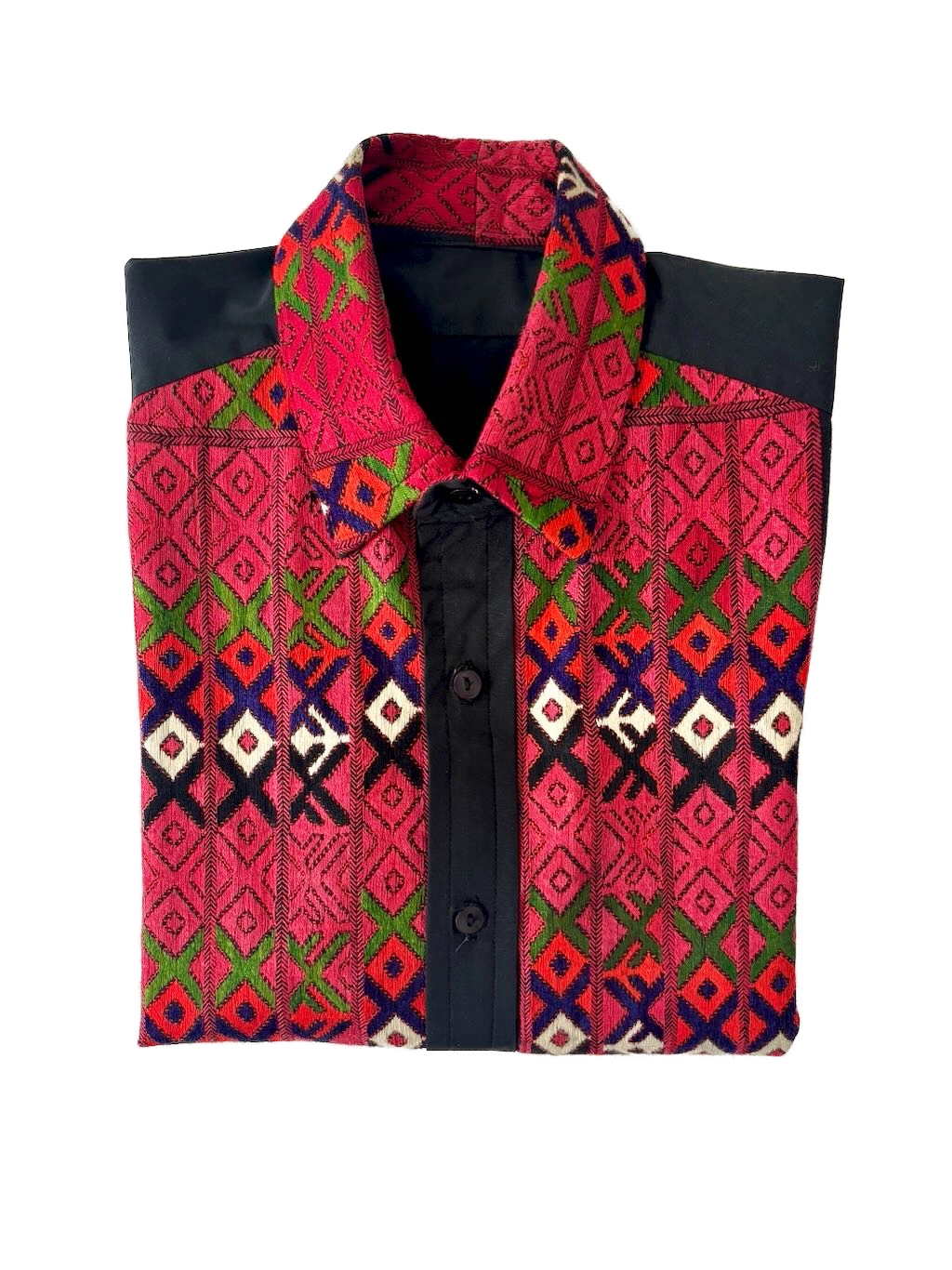
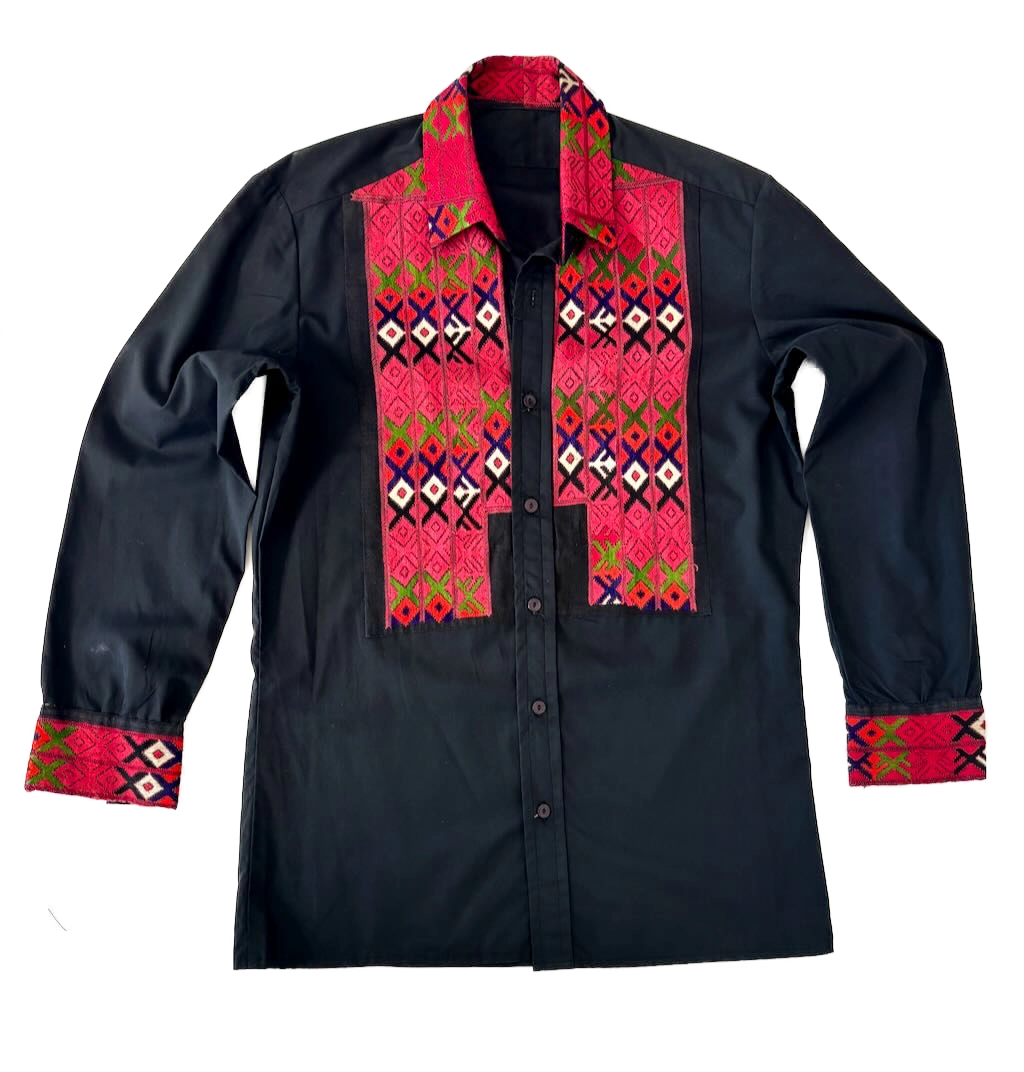
This distinctive vintage black cotton shirt features traditional Baluchi embroidery, celebrated for its intricate geometric patterns, vibrant colors, and exceptional needlework. Acquired in Iran in the early 1970s, the garment incorporates richly embroidered textile sections across the chest, collar, and cuffs.
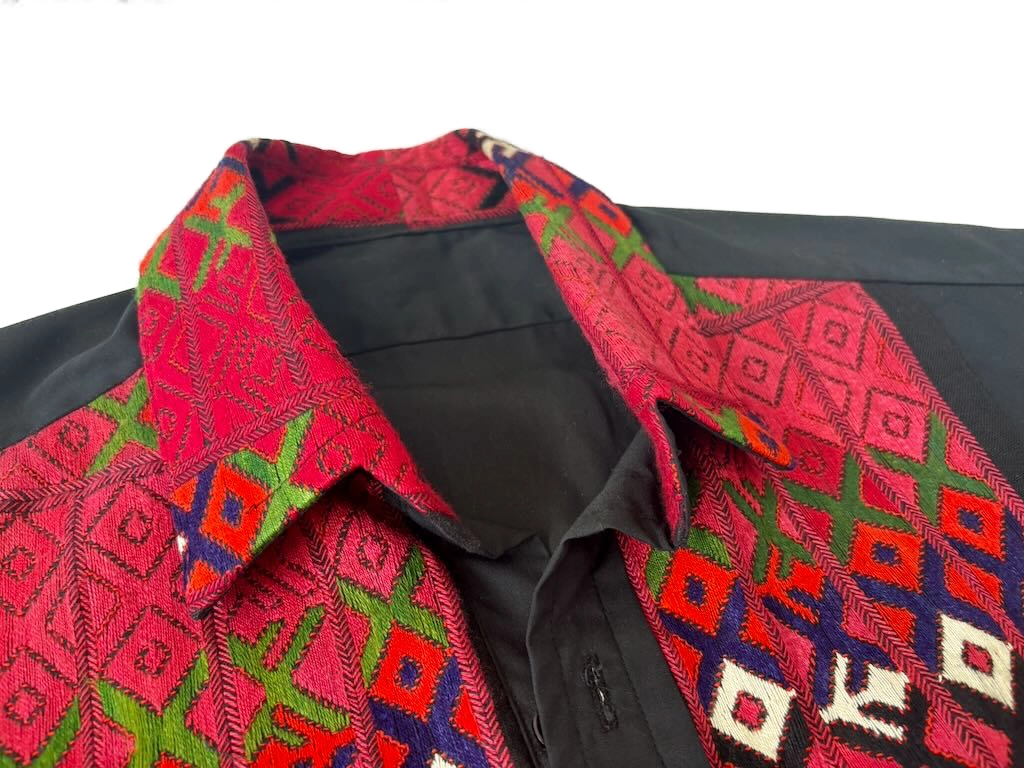
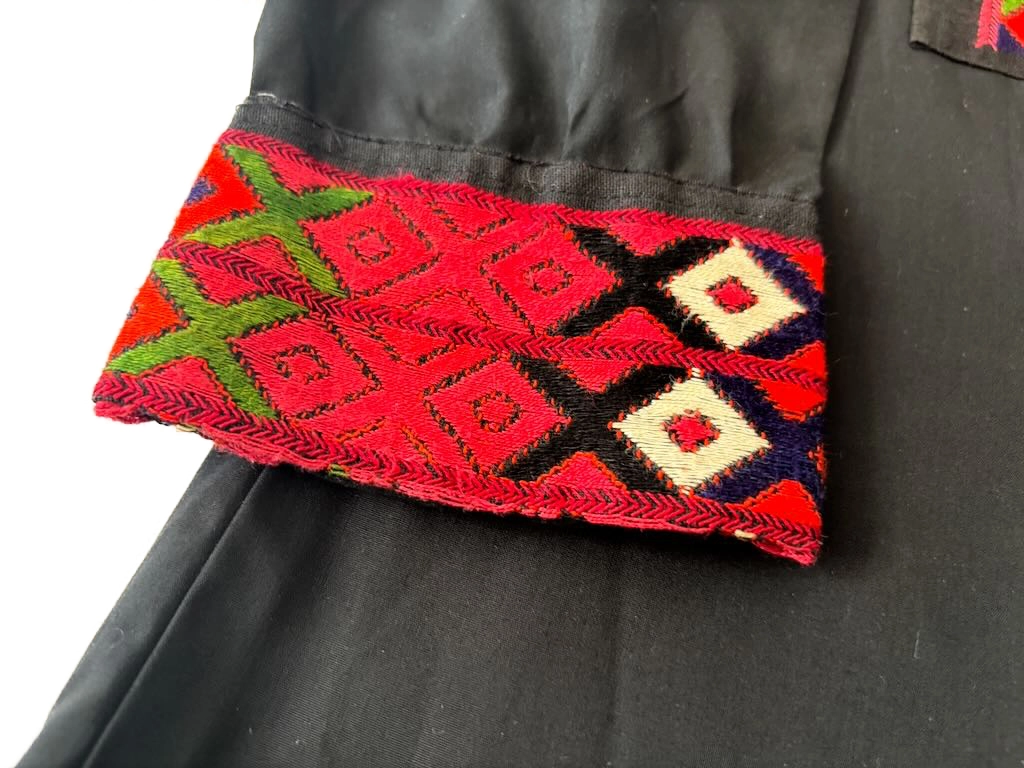
The principal attraction of this piece is its beautiful Baluchi embroidery. The black cotton provides a dramatic background for the colorful needlework, allowing the geometric patterns to stand out. The embroidered sections feature interlocking diamonds, angular forms, repeating borders, and closely arranged motifs that reflect the distinctive visual traditions of Baluchi textile craftsmanship.
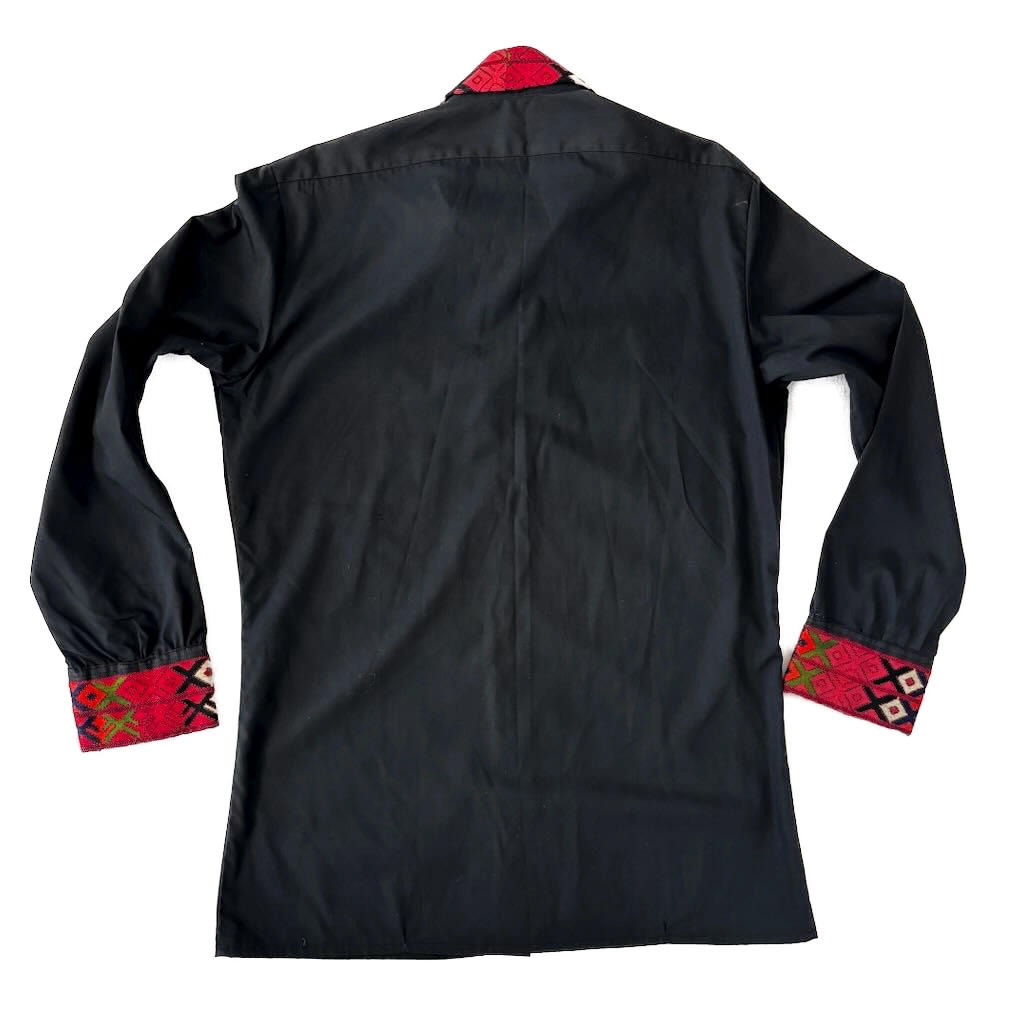
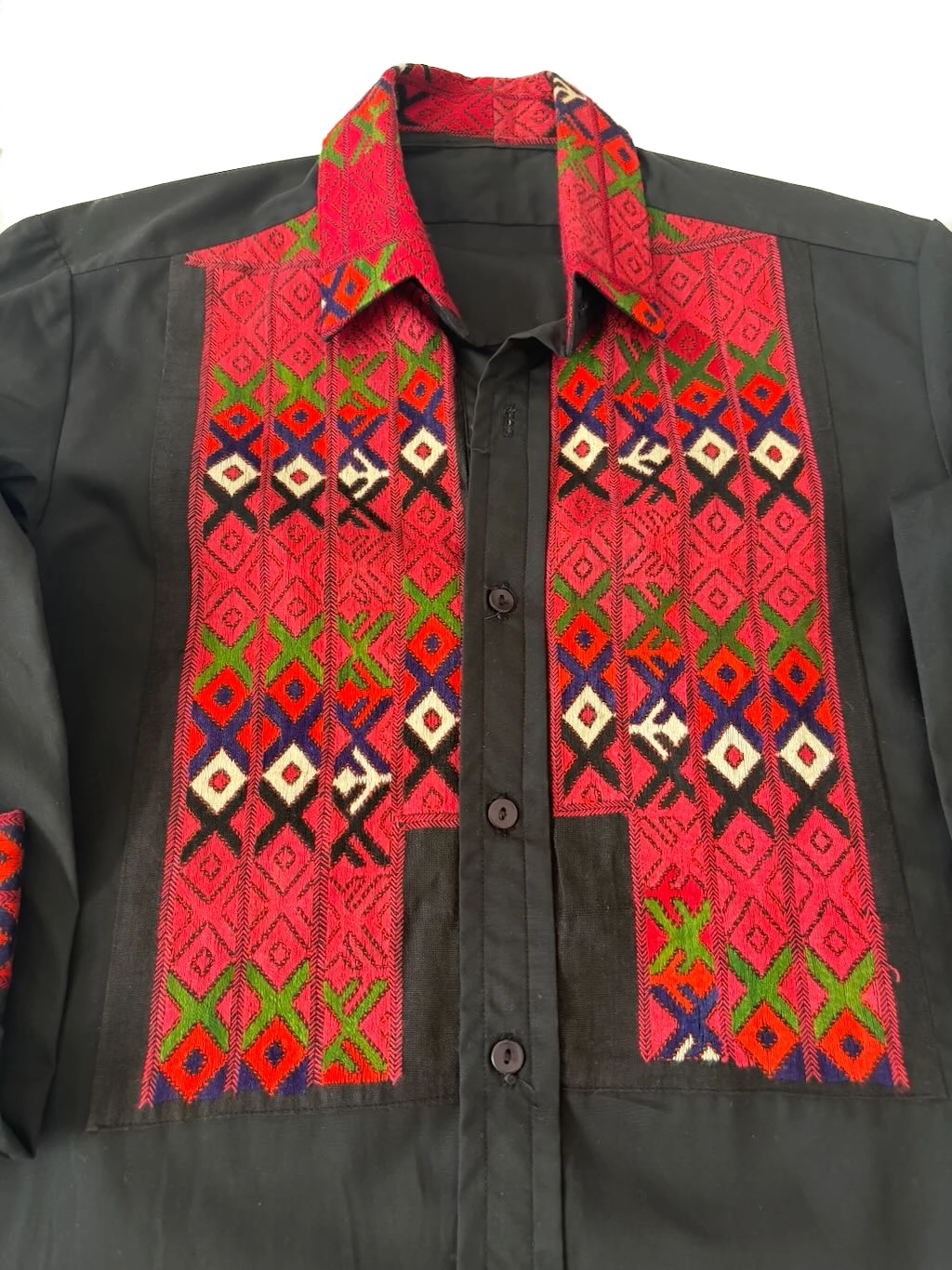
Two prominent embroidered panels decorate the front of the shirt, creating a striking vertical composition. Additional embroidery embellishes the collar and cuffs, bringing the different elements together in a coordinated design. The combination of intricate needlework and restrained black fabric gives the garment a distinctive character.
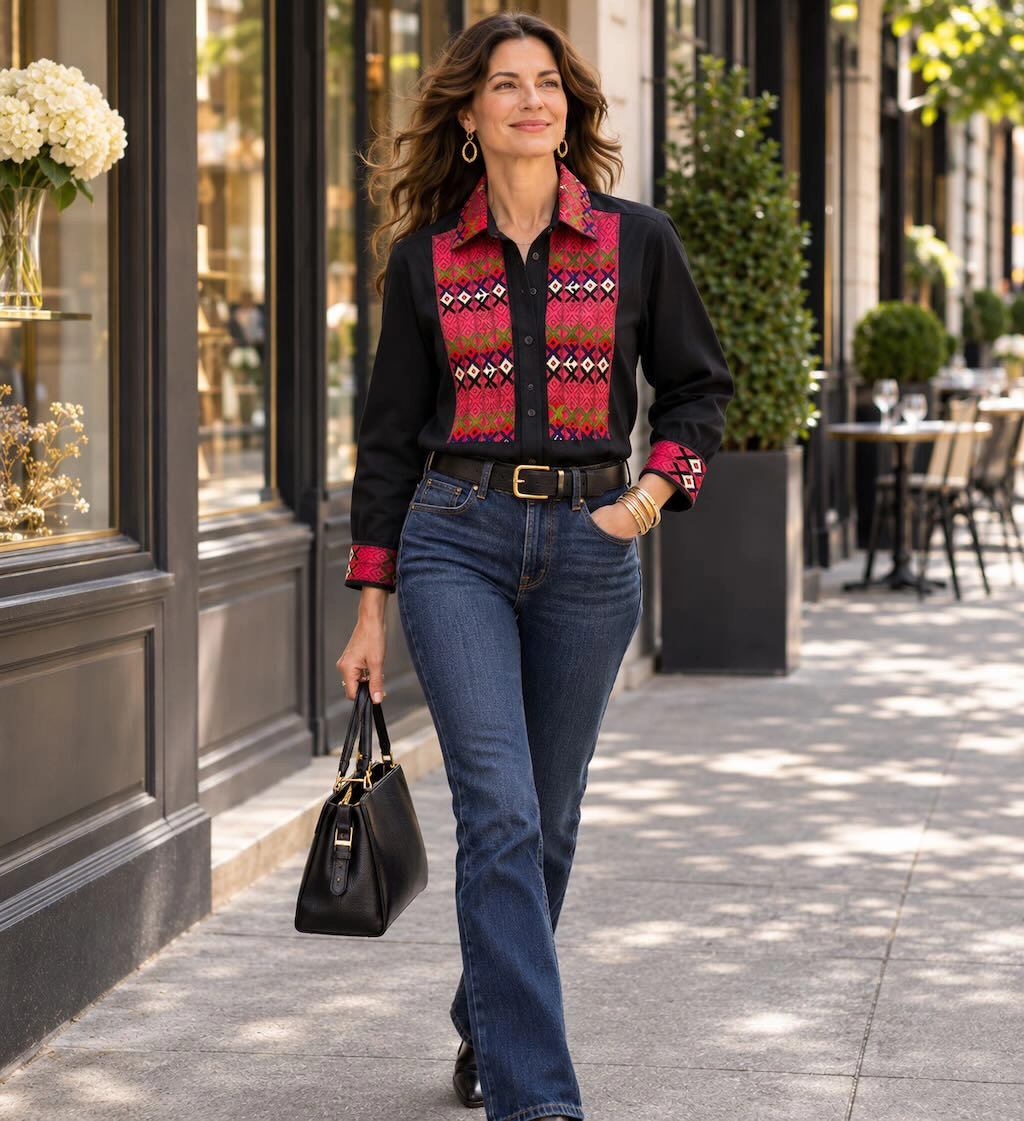
Although the shirt has traditionally masculine styling, its proportions and decorative appearance make it particularly appealing as a women’s vintage tunic-style shirt. It could be worn with jeans, tailored trousers, or leggings for a relaxed yet sophisticated look.
Equally important, the embroidery offers possibilities beyond the existing garment. A skilled tailor or textile specialist could carefully remove the embroidered sections and incorporate them into a new shirt, tunic, jacket, or other textile creation.
Traditional Baluchi Embroidery and Its Cultural Heritage
Baluchi embroidery is among the distinctive textile traditions of the regions inhabited by the Baluch people, particularly southeastern Iran and neighboring areas of Pakistan and Afghanistan.
For generations, Baluchi women have developed elaborate embroidery techniques to decorate clothing and household textiles. Their work is particularly recognizable for its precise geometric compositions, dense stitching, and carefully balanced arrangements of color.
Traditional designs often feature diamonds, triangles, stepped forms, angular patterns, and repeated borders. Artisans combine these elements into complex compositions that demonstrate both technical skill and a sophisticated understanding of pattern.
Many embroidered garments incorporate separate decorative sections, particularly around the neckline, chest, sleeves, and cuffs. These areas provide opportunities for elaborate ornamentation while allowing the surrounding fabric to remain relatively simple.
The embroidery frequently represents many hours of patient work. Its value lies not only in its visual beauty but also in the craftsmanship and cultural traditions that shaped its creation.
Intricate Geometric Needlework
The embroidery on this shirt demonstrates the visual richness associated with traditional Baluchi textiles.
The front panels contain densely arranged geometric motifs, with contrasting colors defining the individual shapes. Repeated diamonds and angular patterns create a lively rhythm, while narrow decorative borders organize the composition.
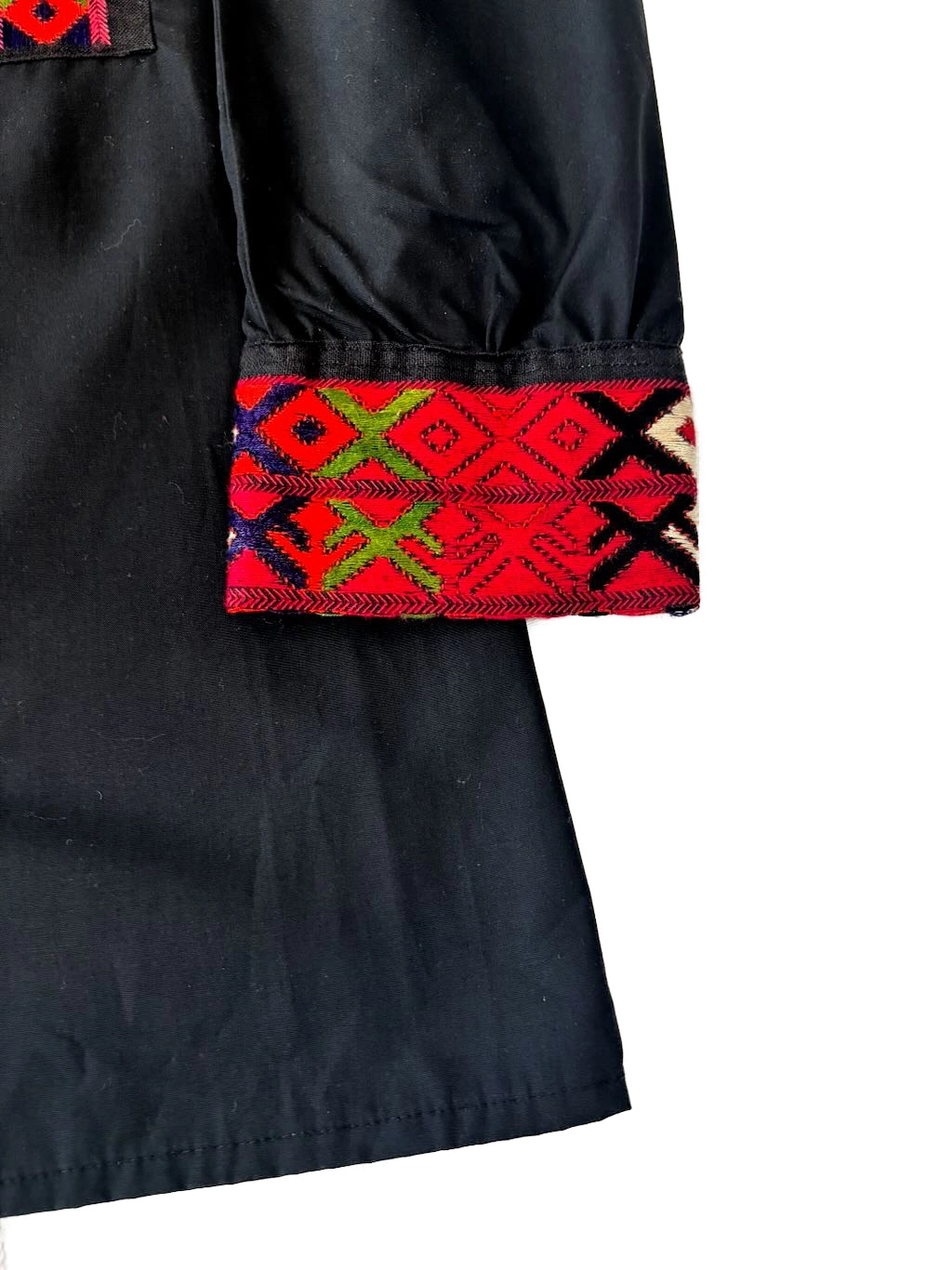
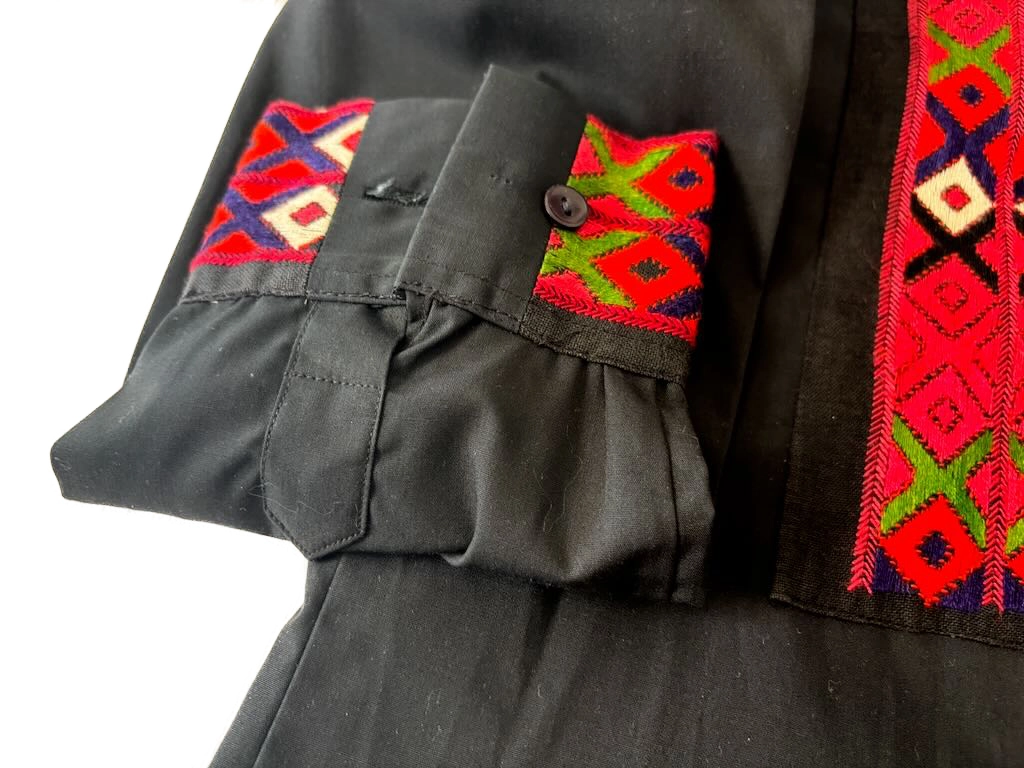
The collar features additional embroidery that frames the neckline and complements the larger panels below. Similarly, the embroidered cuffs introduce colorful ornamentation at the ends of the sleeves.
Together, these elements create a cohesive decorative arrangement. The embroidery remains the focal point, while the black cotton serves as a neutral foundation.
The individual stitches and subtle variations in the patterns contribute to the character of the textile. Unlike mass-produced embroidered garments, traditional handwork reflects the skill and decisions of the person who created it.
A Wearable Vintage Garment or Reusable Embroidered Baluchi Textile
One of the most appealing aspects of this piece is its versatility.
As a garment, the shirt offers a distinctive combination of traditional textile art and contemporary styling. Its longer body and colorful embroidery make it particularly attractive as a women’s tunic-style shirt.
Worn with denim jeans and simple accessories, it could create an individual look that celebrates traditional craftsmanship without appearing overly formal.
However, the value of this piece extends beyond its present use as clothing.
The embroidered sections appear to have been applied to the black cotton shirt rather than worked directly into the garment fabric. Consequently, a skilled tailor may be able to remove and transfer them to another garment.
The chest panels could become the decorative centerpiece of a new tunic or jacket. Likewise, the embroidered collar and cuffs could be reused to create a coordinated design.
This possibility is especially valuable for collectors and textile enthusiasts who appreciate traditional embroidery but prefer a different garment style, size, or fabric.
The shirt and embroidery may not have originated during the same period. Their precise individual dates remain unknown, although the complete garment was acquired in Iran in the early 1970s.
Fit, Measurements, and Styling
The shirt has traditional men’s button-front styling, but its sleeve proportions suggest that it may have been altered or adapted for a shorter arm length.
For this reason, we recommend considering it primarily as a women’s tunic-style shirt or as a unisex garment for someone whose measurements are compatible.
The chest measures approximately 19½ inches (49.5 cm) across when laid flat, giving an approximate circumference of 39 inches (99.1 cm). The overall length is approximately 30 inches (76.2 cm).
Important Sizing Note: The sleeves measure approximately 23 inches (58.4 cm) from the shoulder to the cuff. They may be shorter than expected on a typical men’s shirt. Please compare the measurements with a garment that fits comfortably before purchasing.
We have deliberately avoided assigning a modern clothing size because vintage garments often differ from contemporary sizing standards.
For buyers primarily interested in the embroidery, the existing shirt also provides a convenient way to preserve and display the embroidered sections until they are incorporated into another garment.
Condition
The shirt remains in good vintage condition and appears to have been worn very little, possibly only once. The colorful embroidery retains its decorative appeal, and the garment presents well overall.
As with any vintage textile, minor signs of age, storage, or handling may be present. Please examine the photographs carefully, as they form an important part of the description.
Acquired in Iran in the early 1970s, this garment offers an attractive example of traditional Baluchi embroidery incorporated into vintage clothing.
Its combination of intricate needlework, cultural heritage, and potential for reuse makes it appealing to collectors of Persian tribal textiles, enthusiasts of vintage fashion, and designers seeking authentic embroidered elements.