
Description
Egyptian Revival Shriner Desk Match Holder & Ashtray Cast Iron Gilt Metal, c.1920s
This Egyptian Revival desk accessory captures a very specific cultural moment in the early 20th century, when design, symbolism, and daily ritual intersected in unexpected ways. Likely dating to the 1920s, the piece reflects the renewed fascination with ancient Egypt following the discovery of Tutankhamun’s tomb, while also embedding the visual language of fraternal identity within a functional object.
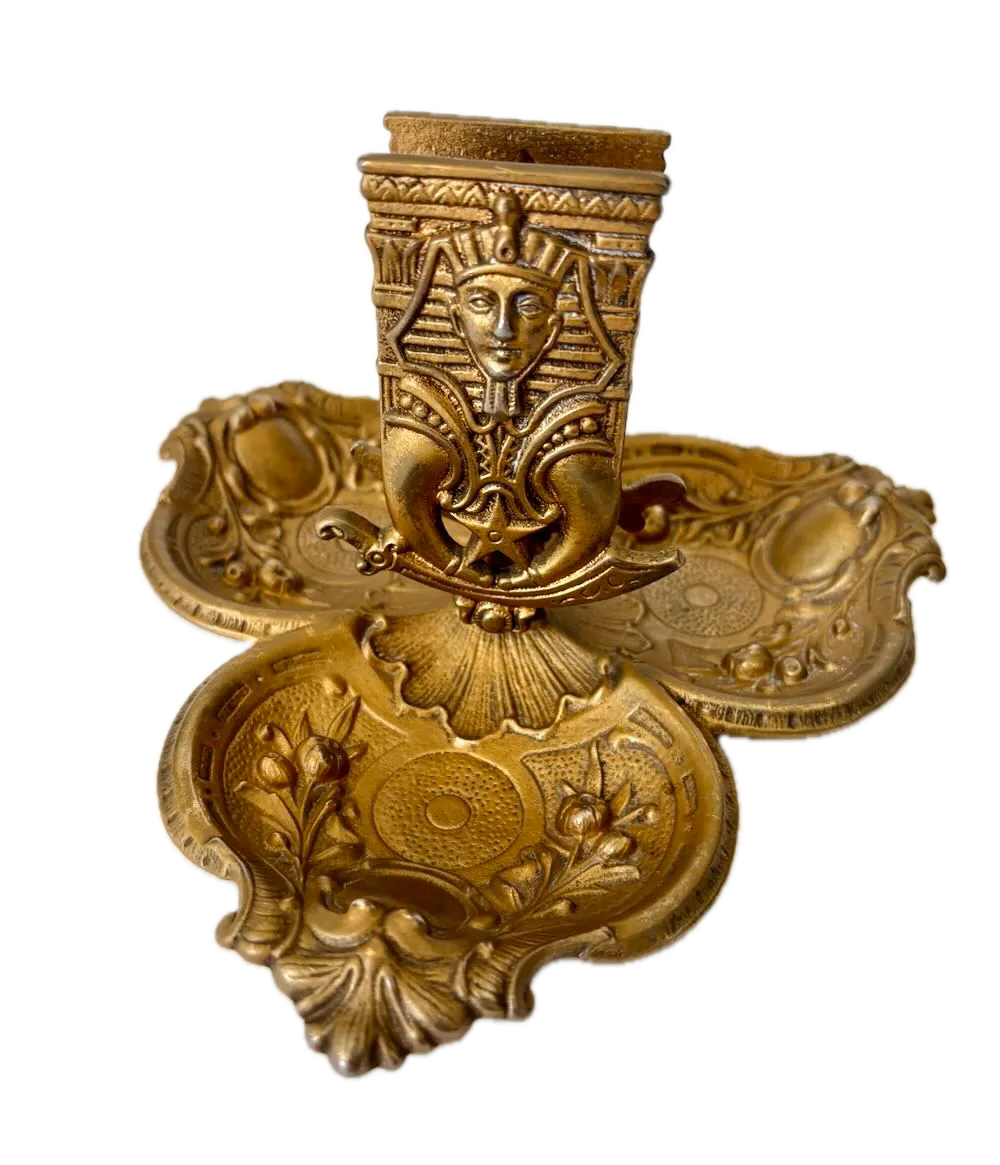
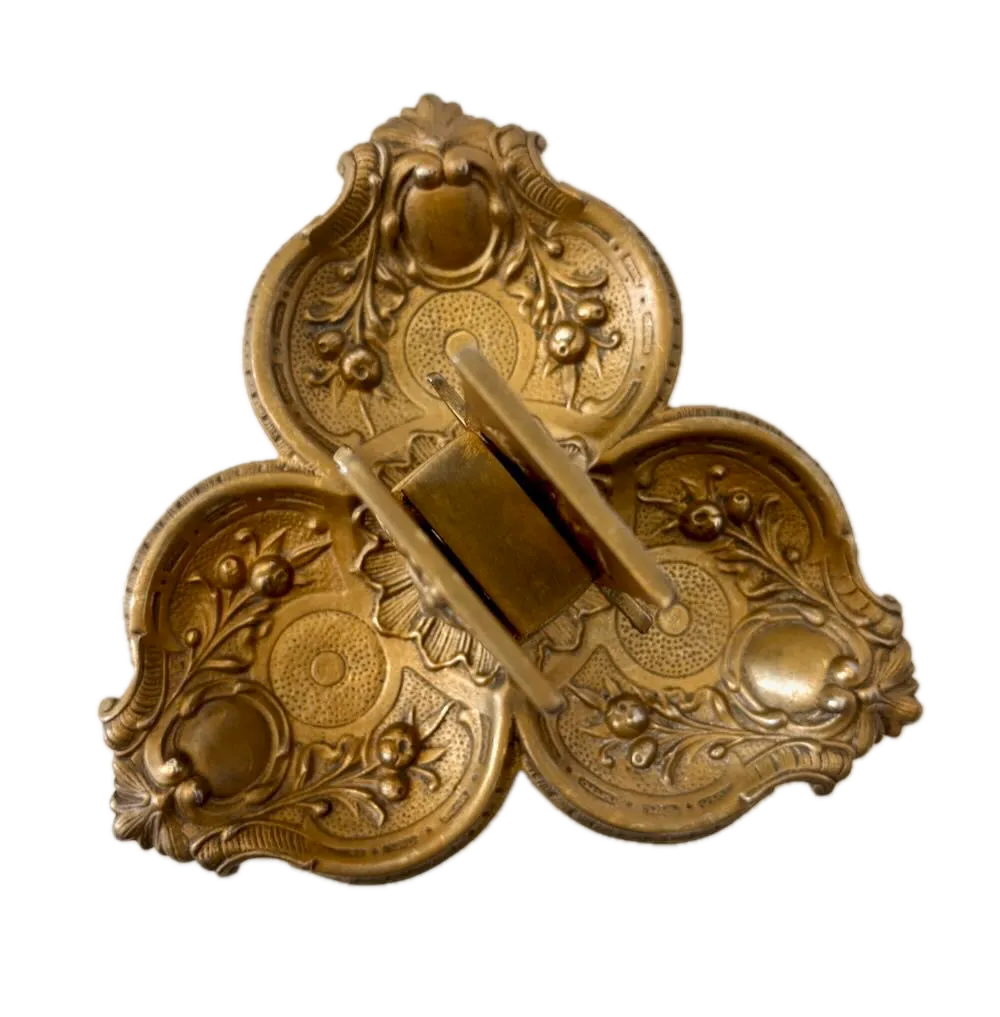
At first glance, it presents as a richly detailed decorative form. Look closer, and it reveals itself as a carefully composed desk piece, combining a central match holder with a three-lobed base designed to serve as ashtrays or catch-all trays. Objects like this were meant to sit on a desk or table, used daily but also quietly communicating status, affiliation, and taste.
Egyptian Revival Meets Fraternal Symbolism
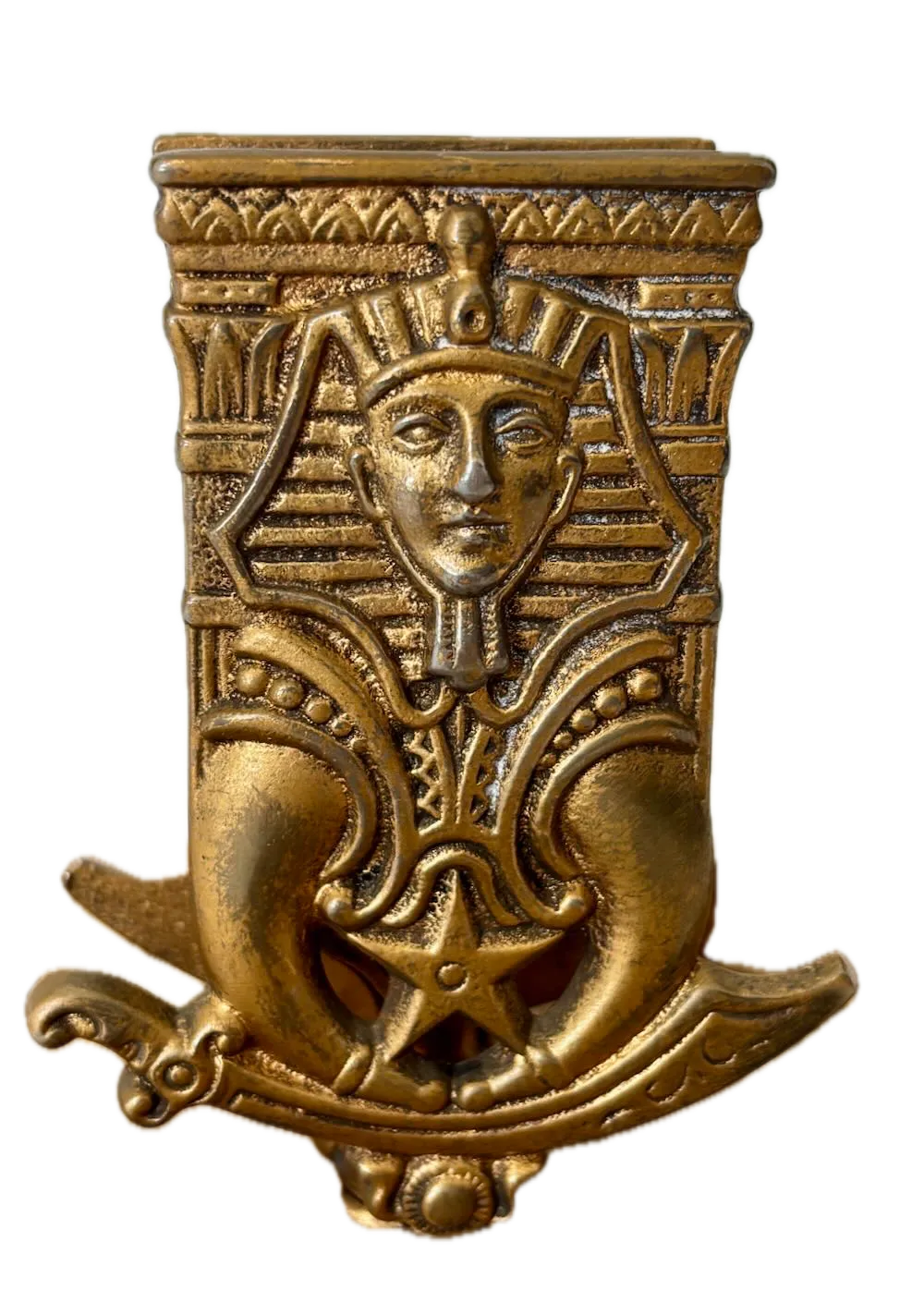
The central upright element features a stylized pharaonic face framed by strong geometric and symbolic forms. Beneath it, a curved scimitar supports a five-pointed star, enclosed by crescent-like shapes—an arrangement closely associated with the Ancient Arabic Order of the Nobles of the Mystic Shrine, more commonly known as the Shriners.
This is where the piece becomes particularly interesting. It is not simply Egyptian Revival in the decorative sense; it is part of a broader visual system tied to fraternal organizations that flourished in the early 20th century. Desk objects like this allowed members to incorporate symbolic references into everyday life in a subtle and refined way. Rather than overt display, the symbolism is integrated into the design itself.
The popularity of Egyptian imagery during the 1920s provided the perfect visual language for this expression, blending historical reference with contemporary identity.
Design, Form, and Function
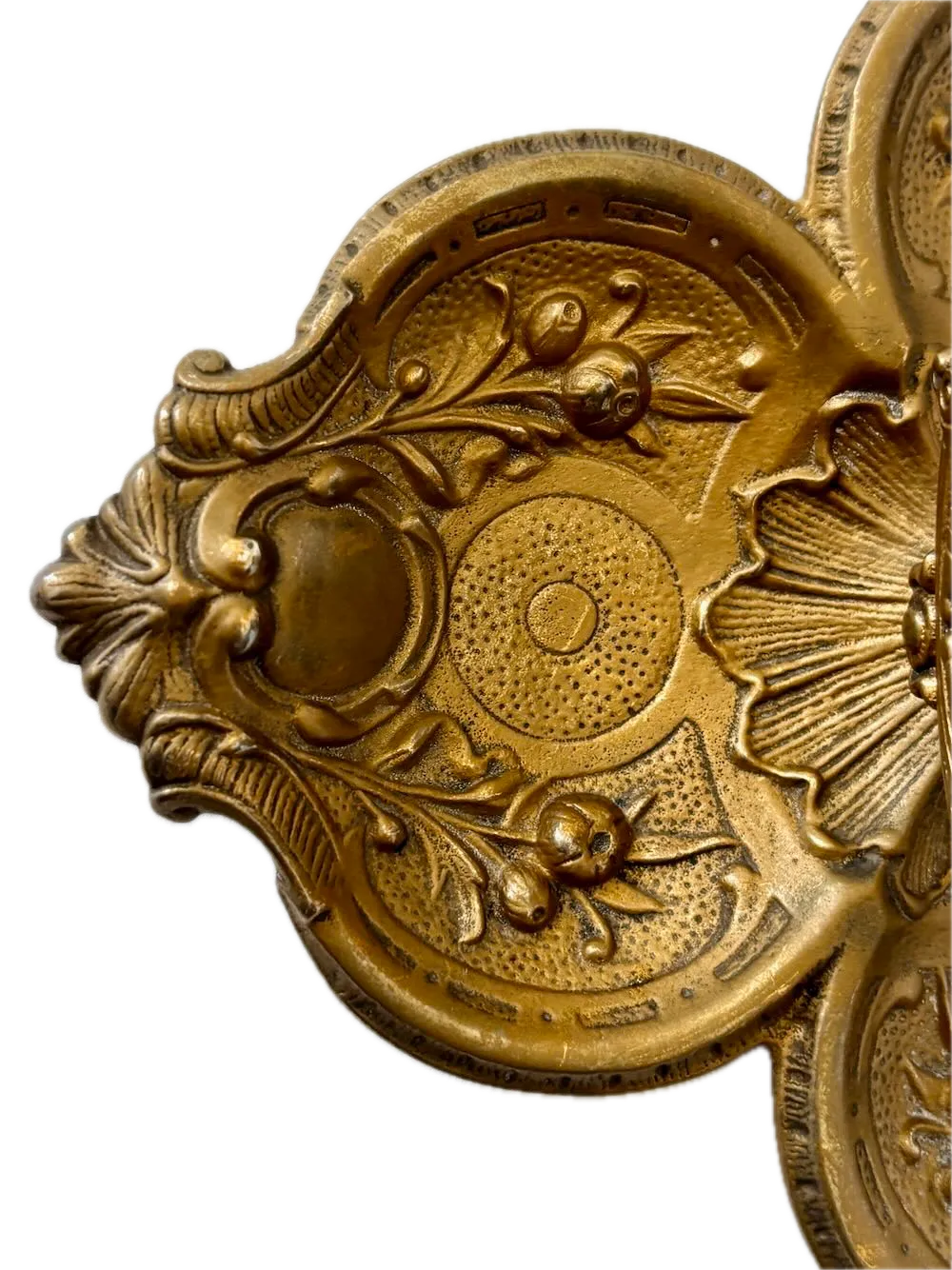
The base is formed as a trefoil or three-lobed structure, each section decorated with floral and classical motifs. The detailing combines acanthus-like forms, stylized botanical elements, and textured surfaces that create depth and visual rhythm across the piece.
Functionally, each lobe serves as a shallow tray, traditionally used as an ashtray or for small desk items such as clips, pins, or matches. The central upright holder is sized to accommodate a standard matchbox, reinforcing its role as part of a smoking or writing desk set.
The composition is balanced and sculptural, with the vertical element anchoring the design while the three trays radiate outward. This creates a sense of movement and symmetry that aligns well with both late Art Deco and lingering revivalist influences.
Material and Production Context
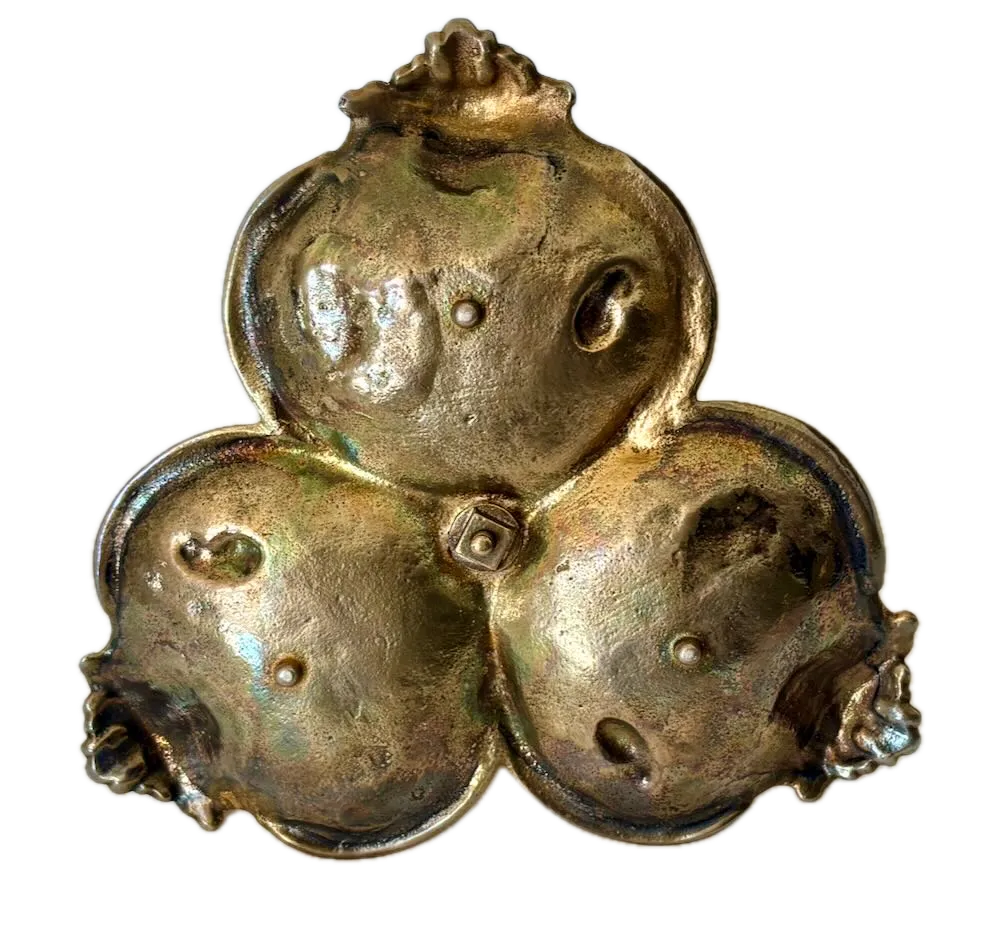
The piece is cast in iron and finished with a gilt or brass-toned surface, a common approach in American decorative metalwork of the early 20th century. This allowed manufacturers to achieve the visual richness of brass while maintaining durability and production efficiency.
While the piece is unmarked, the quality of casting, the subject matter, and the overall design are consistent with production by companies such as H.L. Judd & Co., a major American manufacturer known for ornamental hardware and decorative desk accessories. Without a maker’s mark or catalog reference, attribution remains stylistic rather than definitive, which is the appropriate and responsible way to present it.
It is also worth noting that many desk set components from this period were produced without markings, particularly when sold as part of larger sets or through retail channels.
A Decorative Object with Cultural Presence
What elevates this piece beyond a simple desk accessory is its layered identity. It operates simultaneously as a functional object, a decorative sculpture, and a cultural artifact. It reflects a time when even everyday items were designed with intention, carrying references that extended beyond their immediate use.
Today, it can be appreciated in multiple ways. It works as a display object within an Egyptian Revival or Art Deco context, as part of a collection of fraternal memorabilia, or simply as a distinctive sculptural piece with strong visual presence.
The wear to the gilt finish and surface is consistent with age and use, contributing to the authenticity and character of the piece rather than detracting from it. The underlying form remains strong, and the detailing is still clearly defined.