

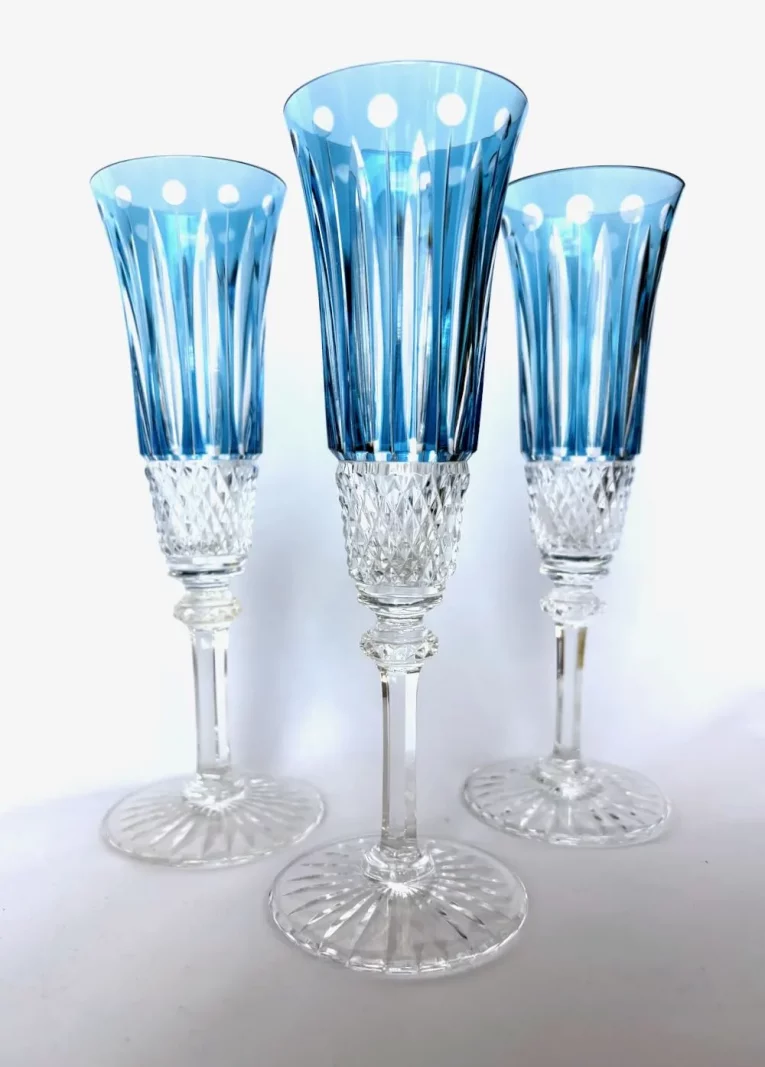
Saint-Louis crystal represents one of the highest achievements in the history of European luxury glassmaking. For more than four centuries, the French crystal house has produced objects that combine technical precision, artistic refinement, and extraordinary control of light. From royal commissions and diplomatic tables to contemporary luxury interiors, Saint-Louis remains one of the most respected names in the world of fine crystal.
Founded in 1586 in the Lorraine region of France, the company originally operated as a modest glassworks before transforming into one of Europe’s great crystal manufacturers. In 1767, King Louis XV granted the factory permission to produce crystal glass, elevating its status and setting Saint-Louis on the path toward international recognition. Over time, the company became celebrated for deeply cut crystal, rich overlay colors, and remarkable craftsmanship that continues largely by hand today.
Unlike mass-produced luxury goods, Saint-Louis crystal still passes through numerous specialized artisans before a single piece reaches completion. Glassblowers, cutters, engravers, polishers, and finishers each contribute to the final object. Many techniques require years of apprenticeship and are still performed using methods developed generations ago.
The result is crystal that feels alive in the hand. Light fractures differently through Saint-Louis crystal because of the depth of the cutting, the density of the lead crystal, and the precision of the polishing. Even before identifying the mark beneath the base, experienced collectors often recognize Saint-Louis by its brilliance alone.
The Art of Colored Overlay Crystal
Saint-Louis became especially famous for its mastery of colored overlay crystal, sometimes called cased crystal. This demanding process involves layering molten colored crystal over a clear crystal body while the material remains extremely hot. The object is then cut deeply enough to reveal portions of the clear crystal beneath the colored surface.
The effect creates dramatic contrast between color, transparency, and reflected light. Ruby red, cobalt blue, emerald green, amethyst, chartreuse, and sky blue became some of the most celebrated Saint-Louis tones. Each color behaves differently during firing, and subtle tonal variations naturally occur between production periods and individual batches.
Ruby crystal remains one of the most technically difficult colors to produce because it traditionally derives from gold chloride. During production, the crystal may initially appear dull or straw-colored before heat treatment transforms it into deep ruby red. Slight variations in firing temperature, mineral composition, and cutting depth can alter the final appearance, which explains why hand-crafted Saint-Louis crystal often displays small but desirable differences even within matching services.
Collectors and interior designers increasingly appreciate these variations because they confirm the handmade nature of the crystal. Perfect uniformity often signals industrial production, while subtle shifts in tone reveal the touch of the artisan and the realities of traditional crystal making.
Saint-Louis and the Tommy Pattern
Among all Saint-Louis creations, the Tommy pattern remains perhaps the company’s most recognizable and enduring design. Introduced in 1928, Tommy combines multiple styles of cutting into a composition that feels simultaneously classical and dramatic.
The pattern incorporates diamond cutting near the lower bowl, elongated vertical bevel cuts rising upward through the color overlay, and pearl-like cuts near the rim and stem. Together these surfaces refract light from nearly every angle, transforming the crystal into something almost architectural.
Tommy stemware gained international prestige after the famous 1938 state banquet at the Palace of Versailles honoring King George VI and Queen Elizabeth of the United Kingdom. The table setting featured extensive Saint-Louis Tommy crystal, helping establish the pattern as one of the great luxury services of the twentieth century.
Today the Tommy collection continues in production and remains strongly associated with formal entertaining, grand interiors, and high luxury dining. Unlike many discontinued crystal patterns that survive only through collectors, Tommy occupies a rare position: it exists simultaneously as a historic design and a living luxury product still admired by contemporary buyers.
Why Vintage Saint-Louis Crystal Still Matters
Although Saint-Louis continues to produce crystal today, vintage late twentieth-century examples possess their own appeal. Many collectors believe pieces from the 1970s through the 1990s retain especially sharp hand-cutting and slightly heavier visual depth compared to some later production.
Older examples also capture subtle changes in color formulas and workshop practices over time. Variations between emerald greens, ruby reds, or cobalt overlays often reflect differences in firing techniques and manual finishing rather than inconsistency. For many crystal enthusiasts, these nuances enhance rather than diminish the beauty of a collection.
Original acid-etched Saint-Louis marks and surviving labels add further authenticity and desirability. Unused or lightly used examples with intact stickers are increasingly difficult to find because luxury crystal was typically purchased to be enjoyed rather than preserved untouched.
The tactile experience also matters. Saint-Louis crystal carries a density, balance, and resonance that distinguishes it from ordinary glassware. When lightly tapped, the crystal produces the long, clear ring collectors associate with fine lead crystal craftsmanship.
Crystal as Display, Luxury, and Performance
Saint-Louis crystal occupies a unique position between decorative art and functional luxury. A set of colored Tommy hock glasses can transform a dining table into something theatrical, yet the glasses remain fully usable objects intended to heighten the sensory experience of wine, candlelight, and hospitality.
Colored crystal also interacts with interiors differently throughout the day. Morning light softens the tones, while evening candlelight intensifies them. Deep ruby and cobalt appear jewel-like at night, while chartreuse and sky blue often glow more vividly in daylight.
Because of this relationship with light, Saint-Louis crystal became closely associated with wealth, ceremony, and display. The pieces were never designed to disappear quietly into a cabinet. They were created to command attention and communicate refinement.
That visual presence explains why colored Saint-Louis crystal continues attracting not only collectors, but also designers, entertainers, architects, and lovers of decorative arts. The crystal functions equally well within traditional interiors, maximalist settings, and contemporary spaces seeking moments of color and brilliance.
Caring for Saint-Louis Crystal
Fine crystal requires thoughtful care to preserve its clarity and brilliance over time. Hand washing remains strongly recommended, especially for deeply cut colored overlay crystal.
Use lukewarm water rather than hot water, as sudden temperature changes can stress the crystal. Mild soap without aggressive citrus additives helps preserve both clarity and polish. Wash glasses individually rather than allowing them to contact one another in the sink.
When drying stemware, avoid twisting the bowl against the stem, which places stress on the narrowest structural point of the glass. Instead, support the bowl gently while polishing with lint-free linen or microfiber cloths.
Dishwashers should generally be avoided. Strong detergents and high heat may gradually etch the crystal surface, producing the cloudy appearance collectors sometimes call “sick crystal.” Once this damage occurs, it cannot truly be reversed.
Properly maintained Saint-Louis crystal can remain brilliant for generations. Many surviving examples from the mid twentieth century still display remarkable clarity and sharpness today.
The Enduring Appeal of Saint-Louis
Saint-Louis crystal continues to endure because it combines technical mastery with emotional impact. The objects capture light, amplify color, and transform ordinary moments into something ceremonial. Even a single glass can alter the atmosphere of a table.
In a world increasingly dominated by machine-made perfection and disposable luxury, Saint-Louis still represents the value of skilled human craftsmanship. Every cut, polished surface, and layer of color reflects time, labor, and artistic control accumulated across centuries.
That sense of permanence explains why Saint-Louis crystal remains admired not only as tableware, but also as collectible decorative art. The pieces connect history, luxury, craftsmanship, and personal ritual in a way few modern objects achieve.
For many owners, the appeal ultimately becomes simple: Saint-Louis crystal brings beauty into everyday life while still carrying the grandeur of Europe’s great decorative traditions.