


Description
Vintage Fenton Hobnail Milk Glass Epergne Centerpiece
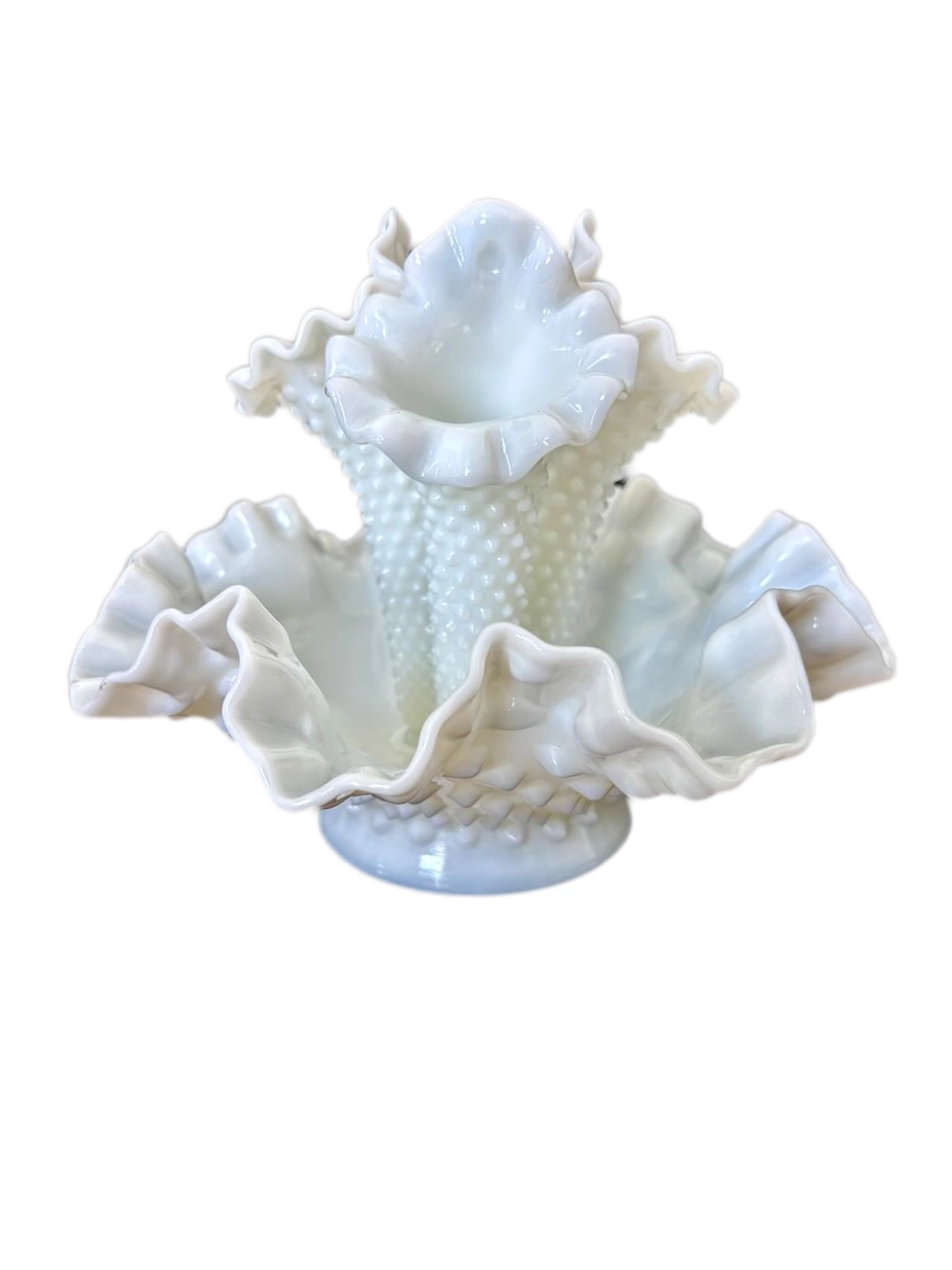
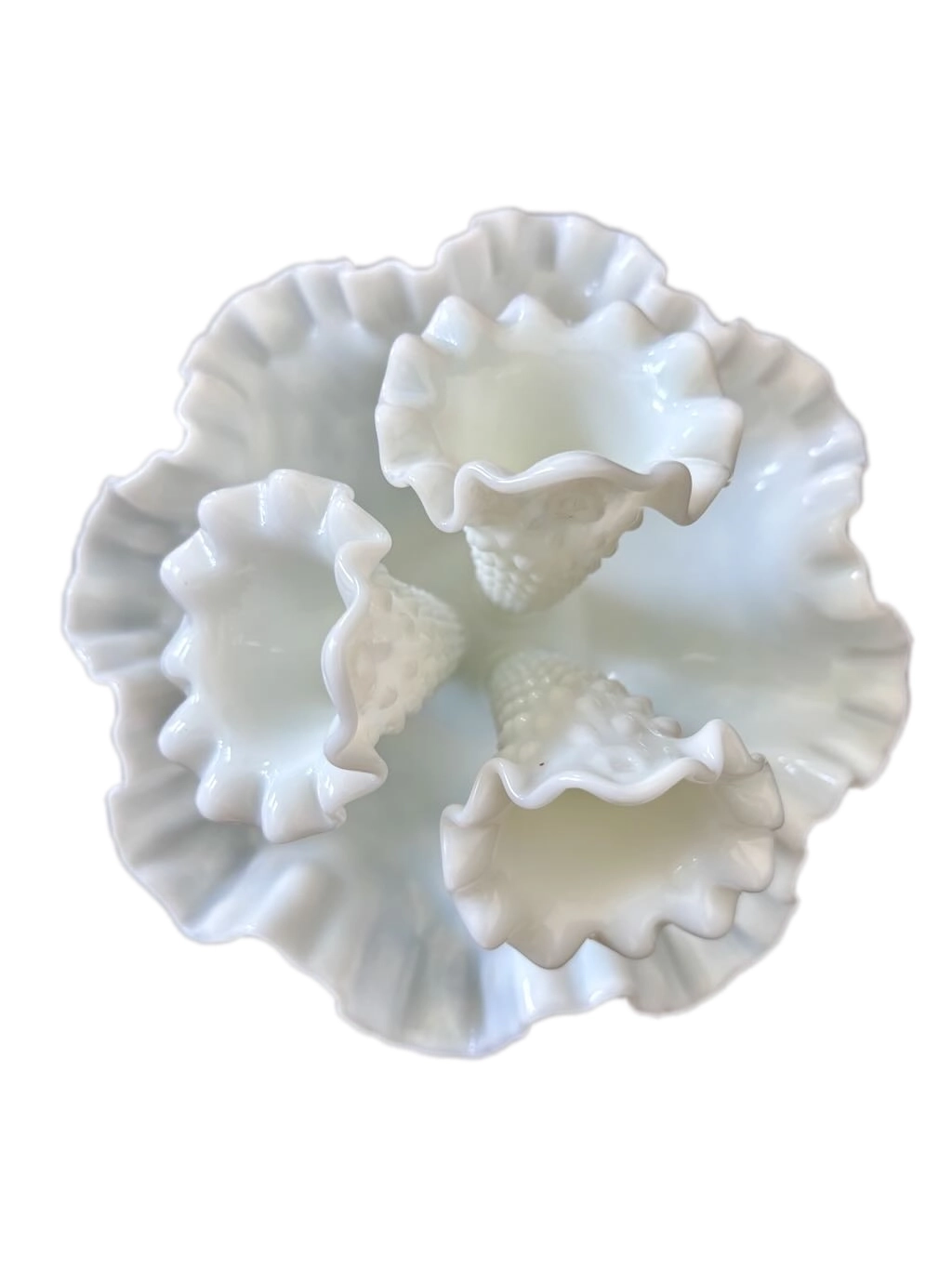
This vintage Fenton Hobnail epergne combines one of the company’s most recognizable glass patterns with an elaborate four-piece centerpiece form. A broad ruffled bowl supports three individual trumpet-shaped horns, creating a sculptural arrangement that changes considerably depending on the viewing angle.
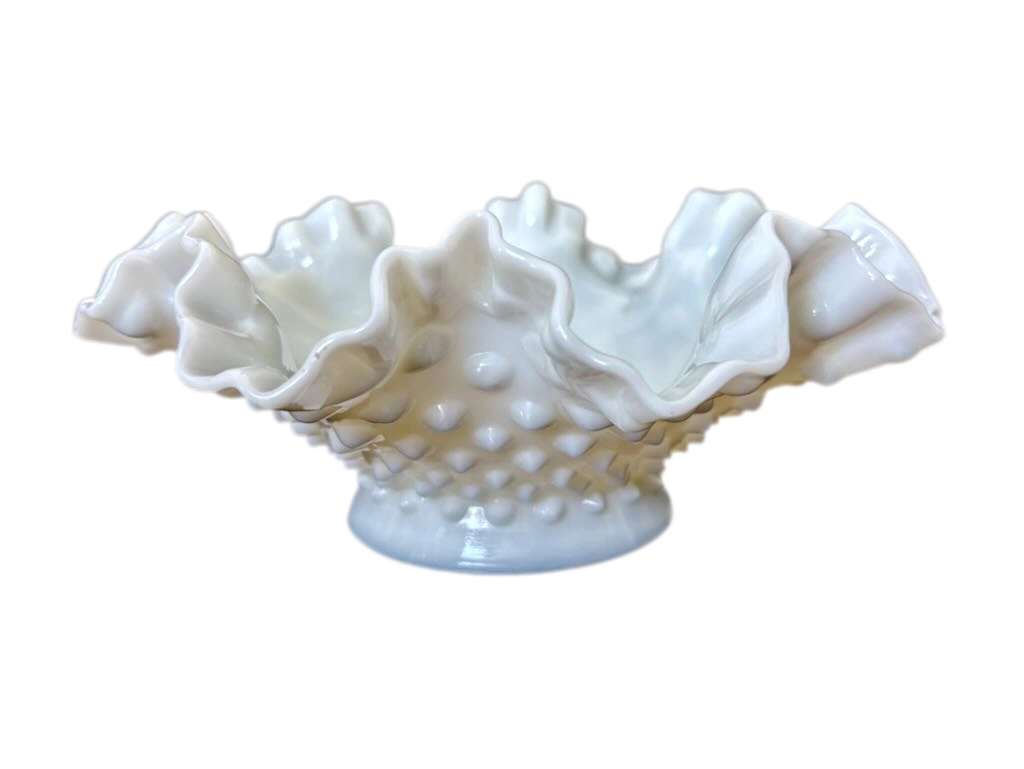
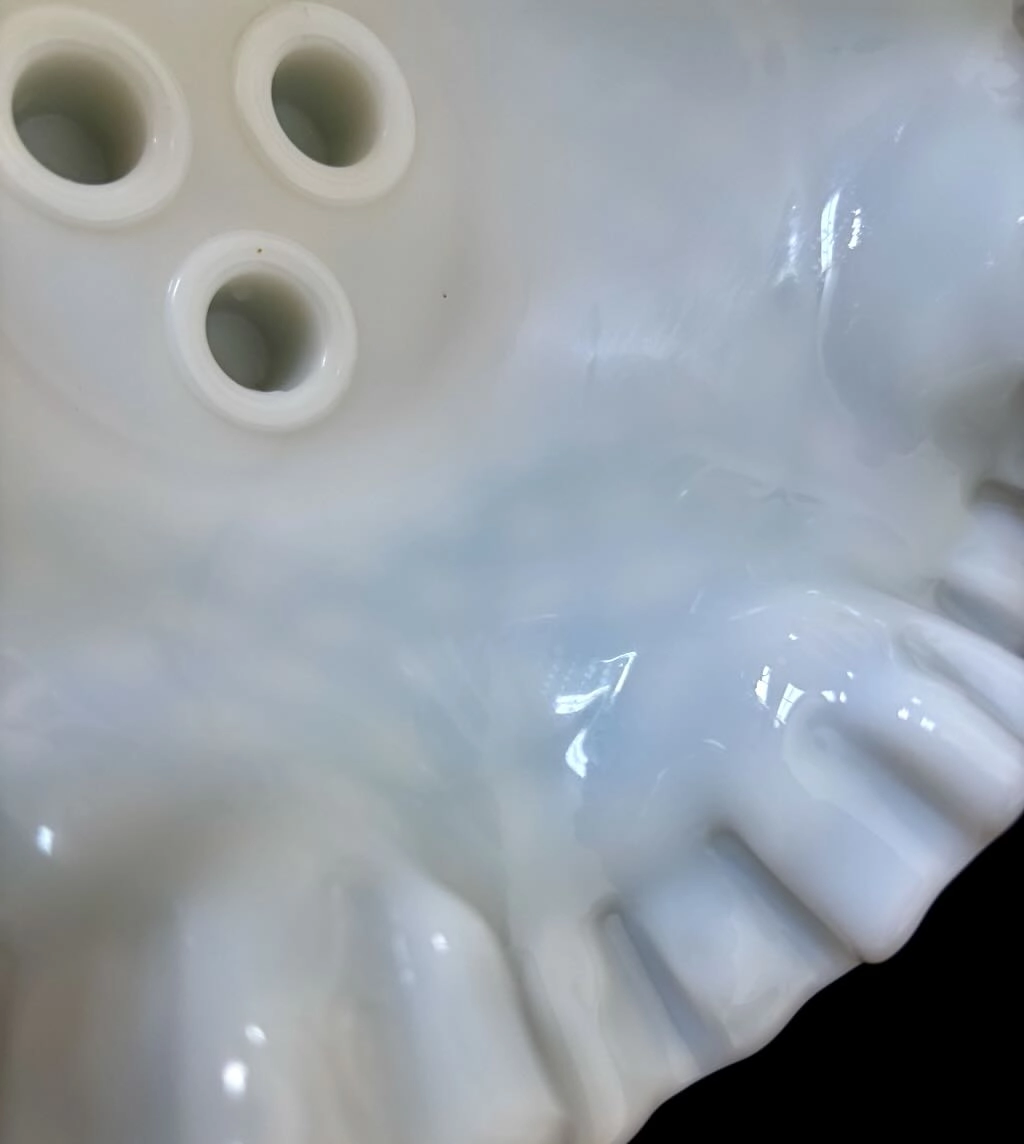
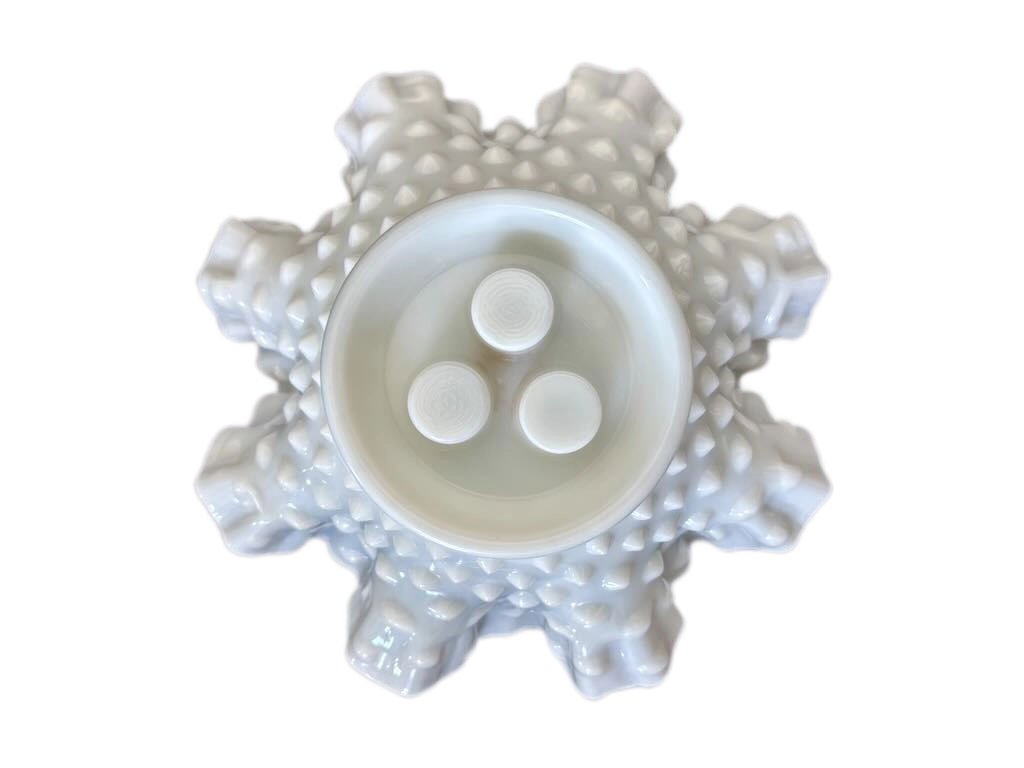
The bowl measures approximately 8.25 inches across and has a deeply undulating ruffled edge. Rows of raised hobnails cover its exterior above a smooth circular foot. Three sockets arranged in the center receive the removable horns and hold them upright when the epergne is assembled.
Each slender horn continues the hobnail texture along its tapering body before opening into a generously flared and ruffled mouth. With all three horns inserted, the piece reaches approximately 6.75 inches high and becomes a striking tabletop centerpiece.
White Milk Glass with Subtle Translucency
Although predominantly opaque white, this particular Fenton Hobnail epergne shows a degree of translucency where the glass becomes thinner. It is especially noticeable around portions of the ruffled edges and horns, where light passing through the glass produces subtle changes in tone and depth.
This quality gives the otherwise monochromatic piece additional visual dimension. The raised hobnails catch light across the exterior while the smooth interior of the bowl and flared trumpet openings provide a contrasting surface.
Three Removable Hobnail Trumpet Horns
The three matching horns make the centerpiece considerably more architectural than a conventional Hobnail bowl. Each horn tapers to a narrow cylindrical end that fits into one of the three sockets molded into the center of the bowl.
Because the horns remain completely removable, the arrangement can also be disassembled for cleaning, storage and safer handling. The complete survival of the bowl together with all three matching inserts is particularly important to the integrity of an epergne of this type.
Fenton Hobnail Milk Glass
The Fenton Art Glass Company became one of the best-known American makers of decorative glass during the 20th century. Founded in 1905 by brothers Frank L. and John W. Fenton, the company produced an extensive range of colors, textures and decorative forms.
Hobnail became especially closely associated with Fenton. Its regularly repeated raised bumps create a strongly textured surface that works particularly well in opaque white milk glass. On elaborate forms such as this epergne, the orderly hobnail pattern contrasts with the irregular movement of the hand-worked ruffled edges.
Dating the Vintage Fenton Hobnail Epergne
Neither the bowl nor the three horns carries a molded Fenton signature that we can identify. Earlier Fenton production commonly relied on removable labels rather than permanent molded identification, and such labels frequently disappeared through decades of handling and cleaning.
Based on the form, construction, Hobnail pattern and absence of a molded signature, we believe this is a mid-20th-century Fenton example, probably produced before 1970. Without an original label or documented early purchase record, we prefer the broader dating rather than assigning it to a particular decade.
Condition of the Fenton Hobnail Epergne
The four-piece vintage Fenton Hobnail epergne remains in good vintage condition. The bowl and all three removable trumpet horns are intact, with no chips.
The ruffled edges and projecting hobnails are especially vulnerable areas on pieces of this type, making their condition important. Minor surface wear consistent with age and previous use may be present. The photographs provide detailed views of the bowl, sockets, horns, ruffled edges and assembled centerpiece and form an important part of the condition description.
Collecting and Decorative Interest
Epergnes were designed as elaborate table centerpieces, traditionally allowing flowers or other decorative material to be arranged at several levels. Fenton translated the form into its characteristic Hobnail glass, combining a practical centerpiece with the highly sculptural qualities of hand-shaped decorative glass.
This example is visually effective even without flowers. The three trumpet forms rise from the broad ruffled bowl while the repeated hobnails and softly irregular edges create changing patterns of light and shadow. Its neutral white glass also allows it to work comfortably with traditional, mid-century and contemporary interiors.
Authenticity
We attribute this epergne to the Fenton Art Glass Company based on its Hobnail pattern, milk glass, construction, proportions, removable trumpet forms and comparison with known Fenton examples.
The set is unmarked and no original Fenton label survives. We therefore identify it through its physical characteristics and documented comparisons rather than representing it as a signed or labeled piece.