
Description
Fine Persian Illuminated Floral Miniature on Bone with Courtly Scene c. 1920–1935
Persian miniature painting has long celebrated both narrative and ornament. While many artists focused on hunting scenes, courtly gatherings, or episodes from Persian literature, others created highly decorative compositions in which elaborate floral illumination became the principal artistic achievement.
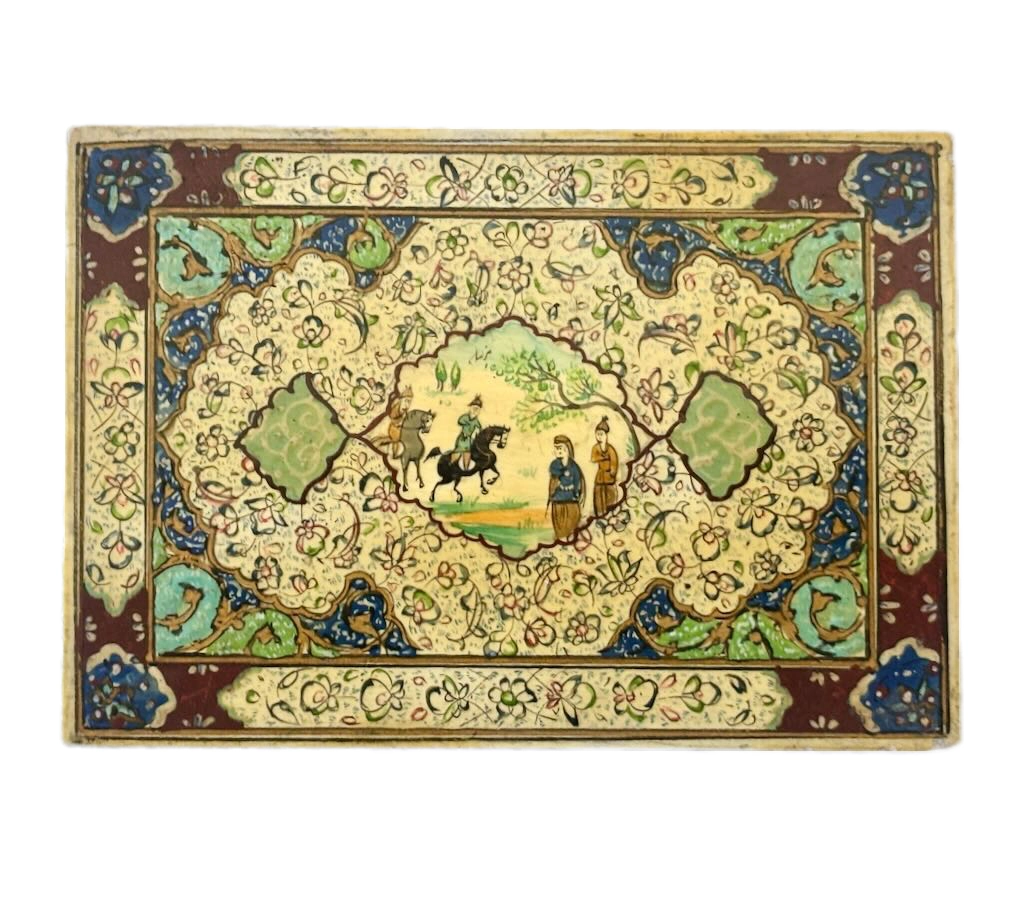
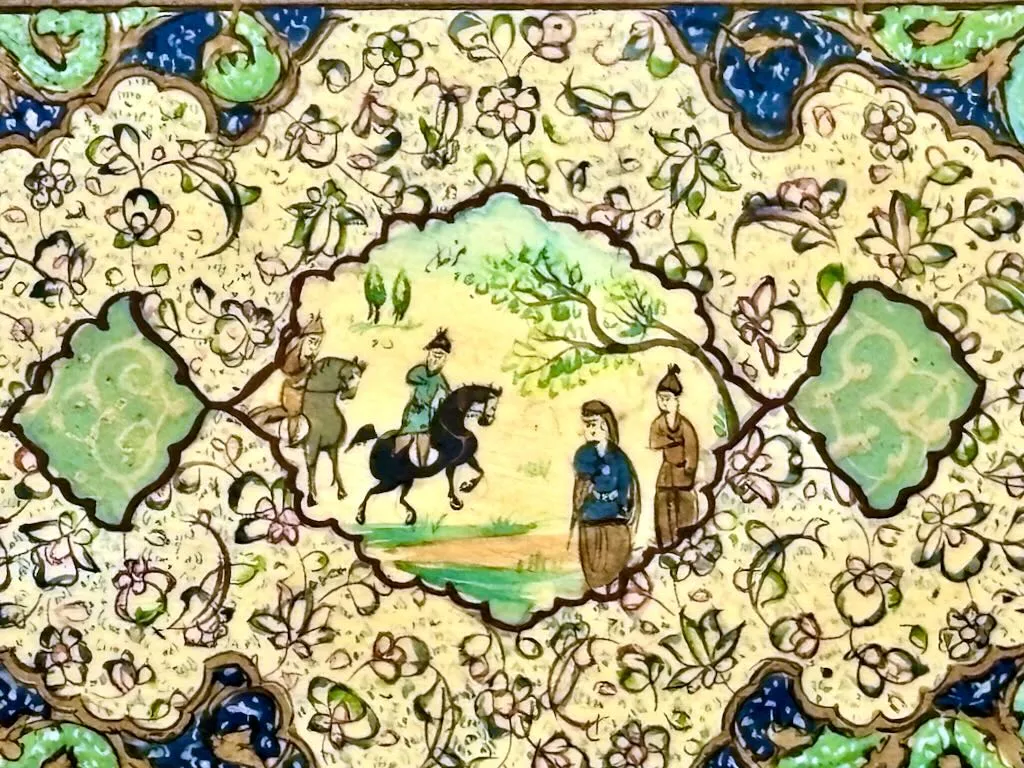
This remarkable early twentieth-century miniature belongs to that distinguished tradition, combining an exquisitely painted ornamental border with a finely executed central courtly scene. The result is a work that rewards close study from every angle and demonstrates the extraordinary patience and precision associated with Persian miniature painting.
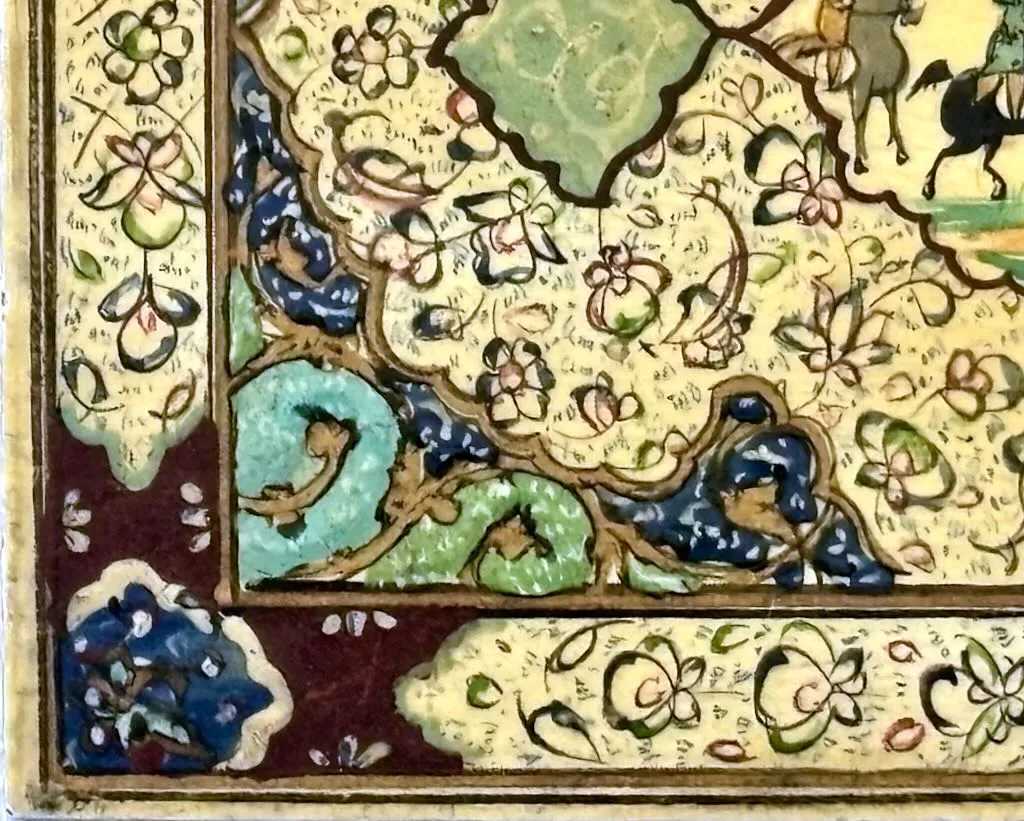
Unlike the narrative miniatures from the same collection, the floral decoration immediately commands attention. Delicate blossoms, scrolling vines, arabesques, and decorative cartouches cover nearly the entire surface, creating a rich tapestry of color and movement. Rather than serving as a simple border, the ornament becomes the dominant artistic element, while the central painting appears almost like a precious jewel set within an illuminated manuscript page.
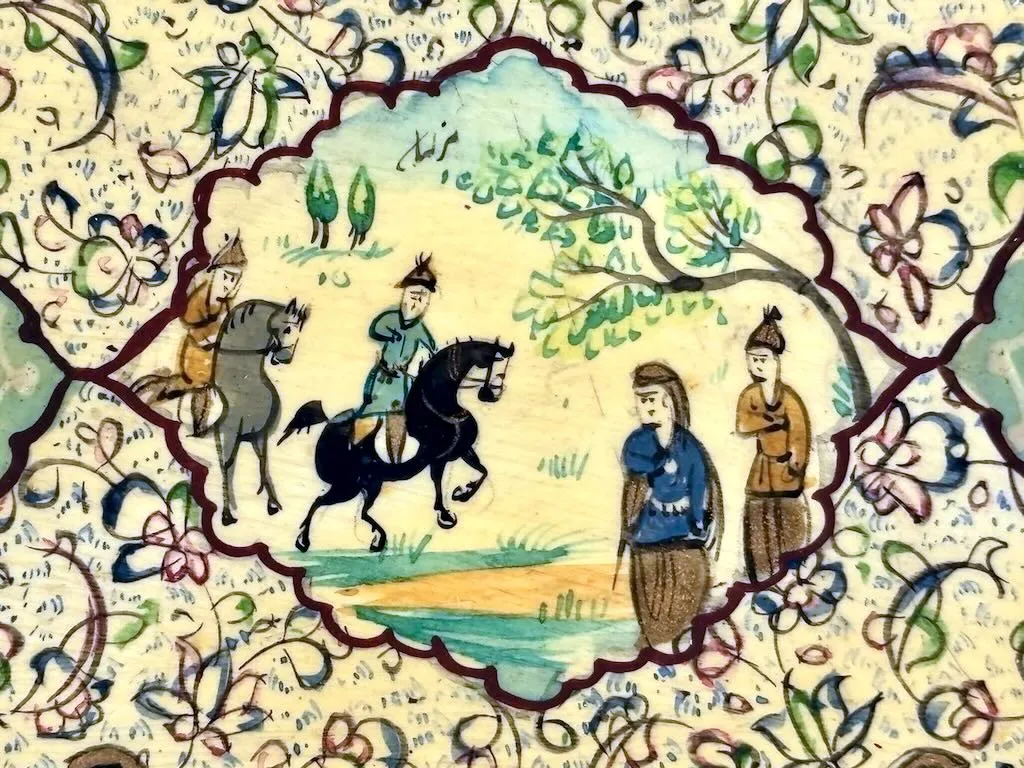
At the center of the composition, a mounted nobleman approaches attendants gathered beneath a flowering tree. Although modest in scale, the scene contains remarkable detail, including carefully painted garments, expressive figures, architectural elements, and a beautifully balanced landscape. Above the figures, the artist incorporated Persian calligraphy together with a clearly visible signature, both preserved with exceptional clarity.
Inspired by the Persian Tradition of Illumination
Persian artists achieved international recognition not only for their miniature paintings but also for their mastery of illumination. Manuscripts, book-bindings, pen boxes, mirror cases, and other luxury objects often featured intricate floral ornament that transformed everyday objects into works of art.
This miniature reflects that same decorative tradition. The scrolling floral patterns display remarkable consistency throughout the composition, while the artist carefully balanced every blossom and vine to create harmony without repetition. Even after nearly one hundred years, the decoration retains an extraordinary freshness that immediately distinguishes this work from many later Persian miniatures.
The illuminated border also demonstrates an important artistic principle found throughout Persian decorative arts. Rather than separating the central image from its surroundings, the ornament enriches it, allowing the floral design and painted figures to function together as a unified composition.
Hand-Painted on Natural Bone
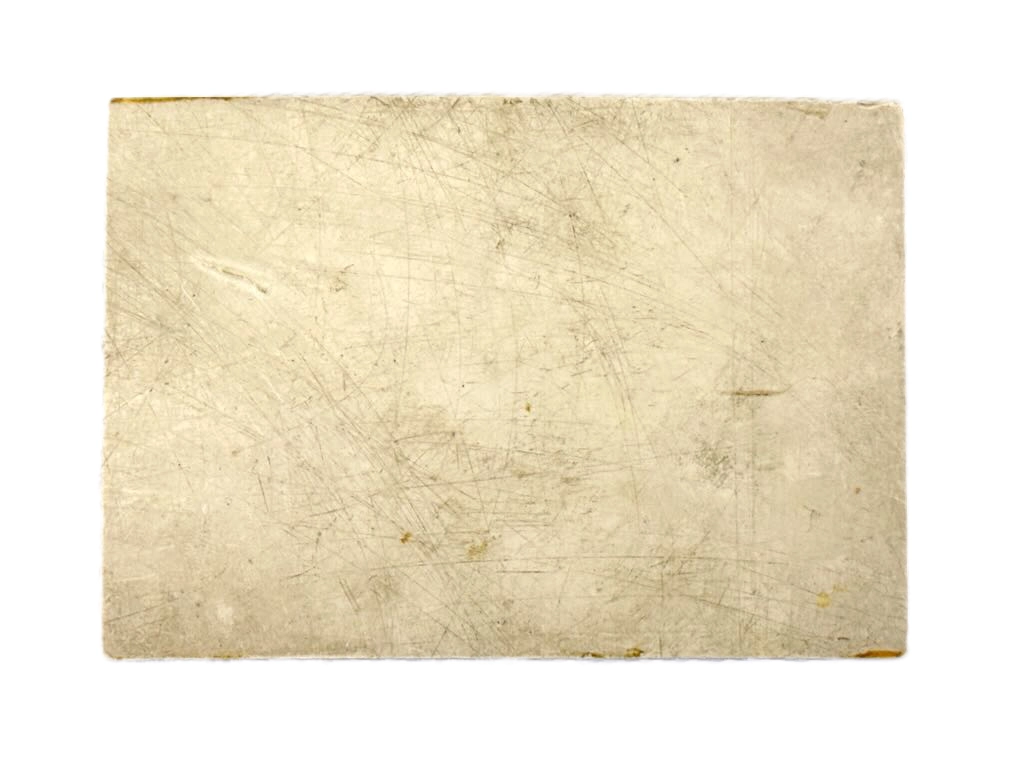
The miniature has been painted on a carefully prepared natural bone panel measuring approximately 2⅜ × 3½ inches. Bone provided Persian miniature artists with a durable, exceptionally smooth painting surface capable of supporting extremely fine brushwork and delicate color transitions. Its naturally warm tone also enhanced the richness of traditional pigments while contributing a subtle luminosity that synthetic materials rarely achieve.
The panel is noticeably thicker than the other Persian bone miniatures from this collection, giving it a more substantial presence in the hand while providing a rigid support for the intricate decoration. Its polished surface and carefully finished edges further reflect the care invested in its preparation before painting began.
Collectors interested in the traditional materials used by Persian miniature artists may also enjoy our companion article, Why Master Persian Miniature Artists Selected Bone, Ivory and Mother of Pearl, which explores the history and characteristics of the natural materials favored by Persian painters before modern substitutes became widely available.
An Early Transparent Protective Coating
One characteristic sets this miniature apart from every other Persian bone miniature in this collection. The painted surface and the edges of the bone panel retain an early transparent protective coating that has helped preserve the remarkable vibrancy of the pigments and the extraordinary detail of the floral ornament.
Whether applied by the artist or very early in the miniature’s history, the coating appears entirely consistent with the age of the piece. Rather than obscuring the painting, it enhances the visual depth of the colors while helping protect the delicate surface from wear during decades of careful handling. The exceptional preservation of both the illuminated decoration and the artist’s signature likely owes much to this early protective finish.
A Signed Work of Exceptional Decorative Quality
Although the artist’s signature has not yet been conclusively identified, it remains clearly visible within the central painted panel. Signatures on Persian miniatures from this period often identify individual artists or workshops rather than internationally recognized painters. Nevertheless, they provide an important point of reference for collectors and may assist future research into the workshop responsible for the painting.
The signature also reinforces the miniature’s carefully finished presentation. Combined with the elaborate ornament, the polished bone support, and the transparent protective coating, it contributes to a work that possesses a distinctly refined character within this group of early Persian miniatures.
A Distinctive Addition to a Persian Art Collection
This miniature comes from the Bernardi Family Collection, acquired in Iran during the 1920s–1930s and preserved within the family for approximately one century.
Although it shares its early twentieth-century origin and natural bone support with the other miniatures in the collection, its artistic emphasis differs significantly. Here, decorative illumination takes precedence over narrative, creating an object that appeals equally to collectors of Persian miniature painting, manuscript illumination, and Islamic decorative arts.
Its combination of intricate floral ornament, finely executed central painting, clearly preserved signature, and unusually well-preserved surface makes this a particularly attractive example of early Persian craftsmanship. Whether displayed individually or alongside other Persian miniatures, it represents a beautiful expression of the elegance and refinement that continue to distinguish Persian decorative arts.