
Description
Persian Solid Silver Box by Hossein Parvaresh, Isfahan
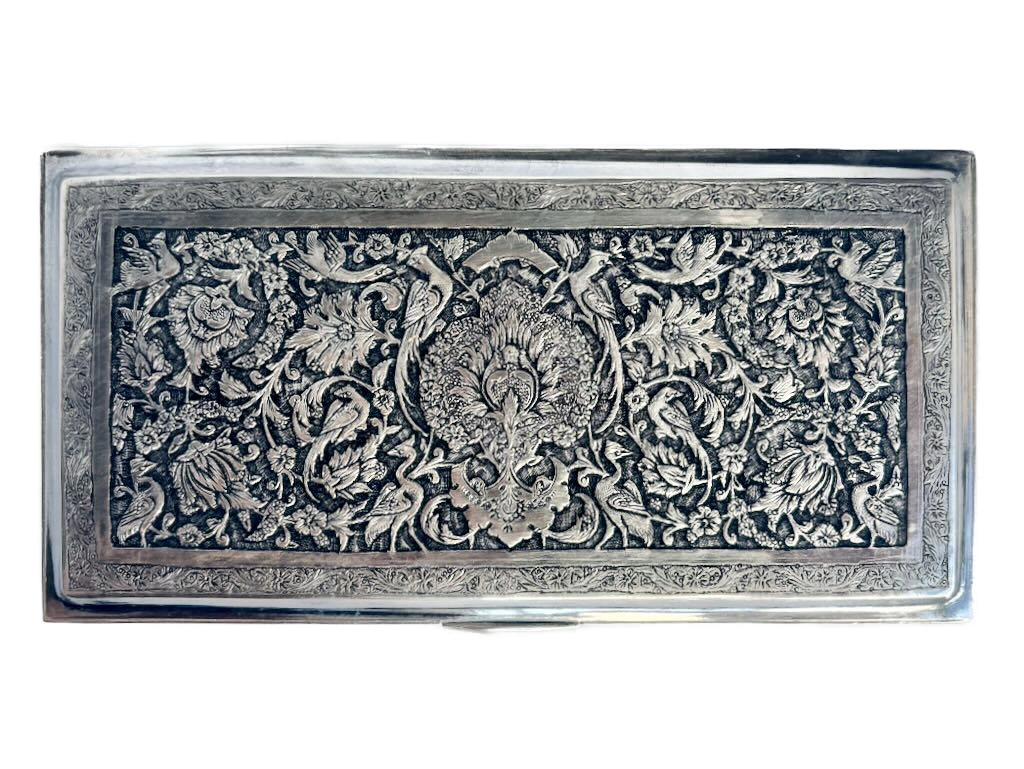
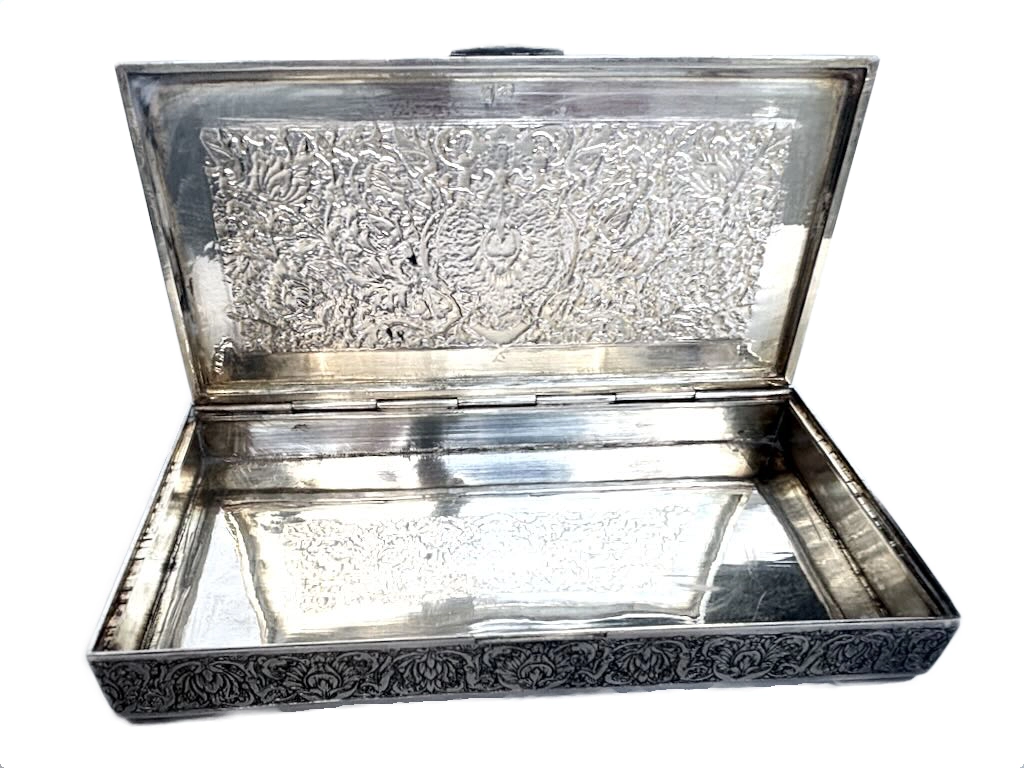
This exceptional mid-twentieth-century Persian solid silver box features an elaborate composition of birds, blossoms, and scrolling foliage, executed in the traditional silverworking techniques of Isfahan. Its richly ornamented surfaces, substantial weight, and distinctive Persian hallmarks make it an appealing example of Pahlavi-era Iranian decorative silver.
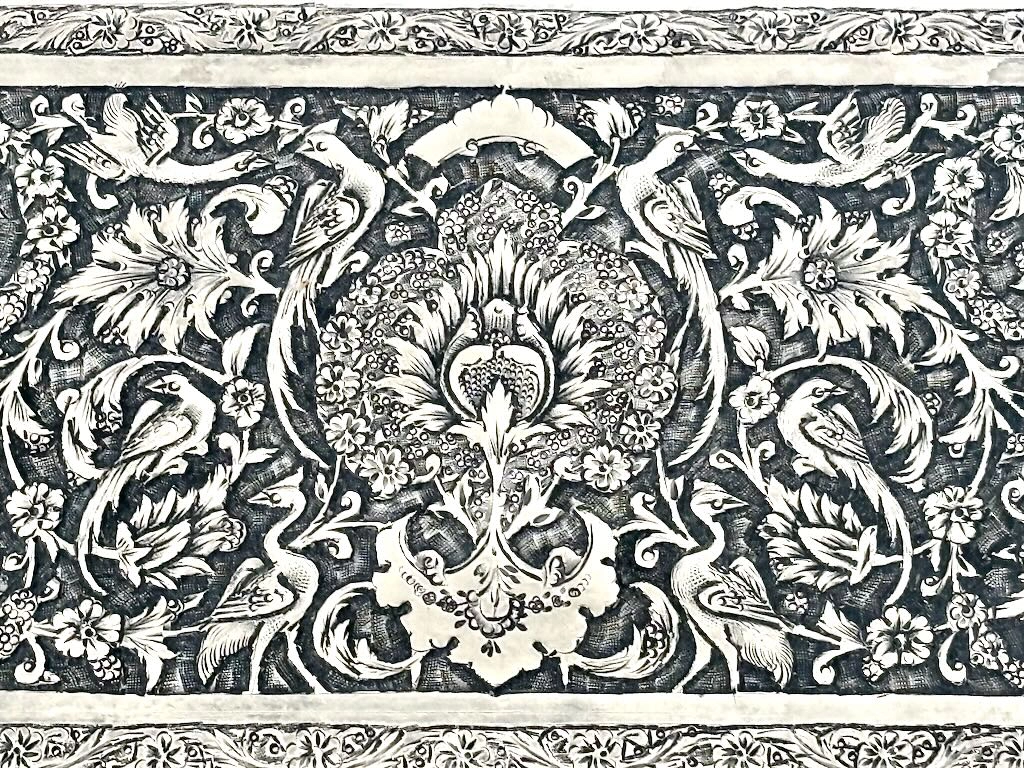
The rectangular hinged lid displays a symmetrical arrangement of birds among flowering branches and intricate foliate scrolls. The composition reflects the Persian gol-o-morgh, or bird-and-flower, tradition, a celebrated decorative theme that appears throughout Iranian painting, textiles, ceramics, and metalwork.
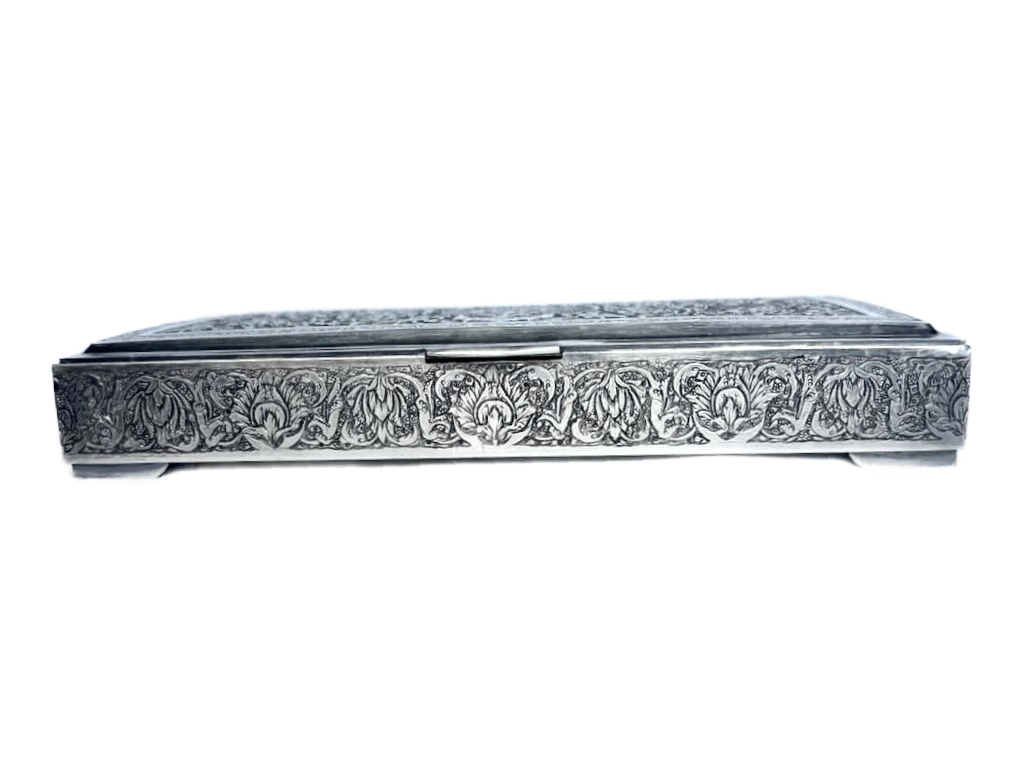
Fine engraved lines define the birds’ feathers, while carefully worked floral motifs create an elaborate pattern across the silver surface. The ornament continues around the sides, where scrolling foliage and blossoms complement the central design.
The contrast between the raised and engraved areas and the naturally darkened recesses gives the decoration remarkable depth. The silver retains an aged patina that emphasizes the intricacy of the workmanship.
The box measures approximately 6⅜ inches long and weighs 321 grams, giving it a substantial presence. Originally suitable for cigarettes or other small personal articles, it also serves beautifully as a decorative keepsake box.
Hossein Parvaresh and the Silversmiths of Isfahan
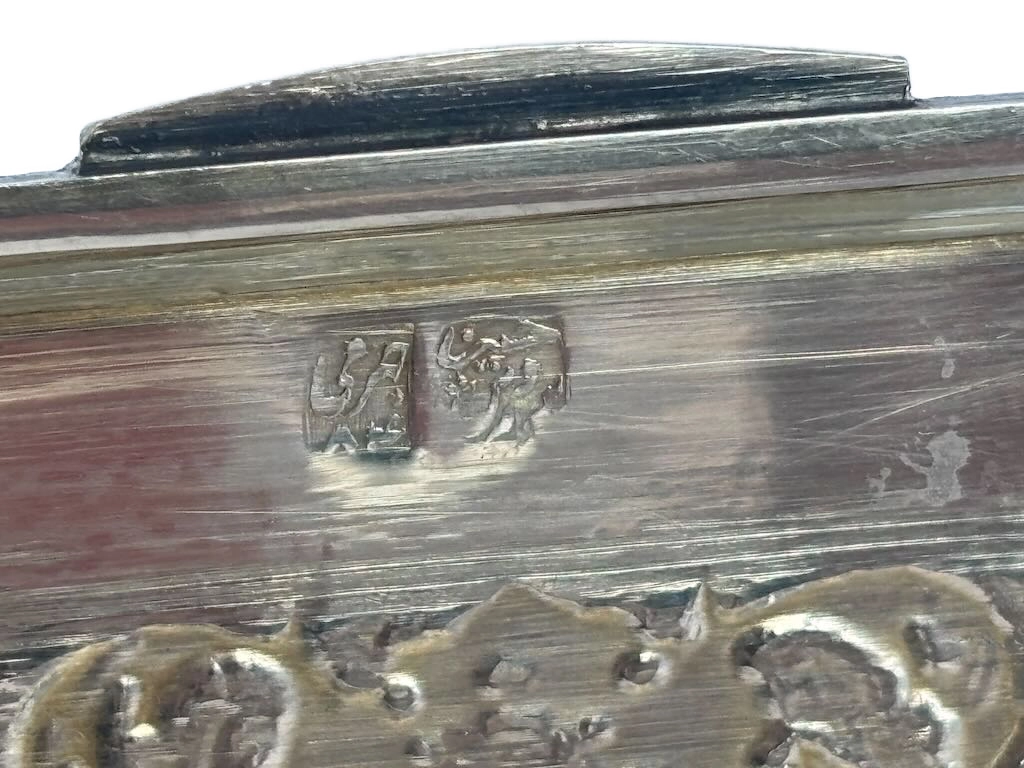
The hallmarks appear to identify the maker as Hossein Parvaresh (حسین پرورش), a silversmith associated with the distinguished silverworking tradition of Isfahan.
During the early and middle decades of the twentieth century, Isfahan remained one of Iran’s most important centers of decorative metalwork. Skilled craftsmen produced elaborate silver trays, vessels, boxes, and ceremonial objects, often combining traditional Persian ornament with forms suited to contemporary domestic life.
Members of the Parvaresh family became associated with this flourishing craft tradition. Their work reflects the technical skill and ornamental richness for which Isfahan silver became renowned.
The attribution of this box is supported by its apparent hallmark combination and by documented examples of Hossein Parvaresh silver in museum and specialist auction collections.
National Museums Scotland identifies Husain Parvaresh among the silversmiths represented in its Kronfol Collection of Iranian silver. The museum’s research provides valuable documentation of Persian silverworking techniques, historical makers’ marks, and the use of the 84 silver standard during the first half of the twentieth century.
For further historical context, see Remarkable Iranian Silver: The Kronfol Collection, published by National Museums Scotland.
The Hossein Parvaresh and Jahrami Hallmarks
Two impressed punches provide particularly important evidence of the box’s origin and attribution.
The right-hand mark appears to contain the Persian name حسین پرورش, identifying Hossein Parvaresh. The adjacent punch appears to show جهرمی, or Jahrami, above the Persian numerals ۸۴.
The number 84 represents the traditional Persian silver standard of 875 parts silver per thousand, equivalent to 87.5% silver content. This standard derives from the Russian zolotnik system. It appears on numerous examples of Iranian silver from the first half of the twentieth century.
The combination of Parvaresh and Jahrami is especially significant. Chiswick Auctions documented a closely comparable Persian silver cigarette box, catalogued as Isfahan, circa 1950, bearing the workshop mark of Hussain Parvaresh and the retailer’s mark of Jahrami.
That example also featured engraved floral scrolls and long-tailed birds, demonstrating a close relationship in subject, technique, and period.
The corresponding marks provide persuasive evidence for attributing this box to the same maker and retailing tradition. However, the attribution remains based on visual comparison rather than independent authentication of the individual punches.
Gol-o-Morgh: The Persian Bird-and-Flower Tradition
The decorative composition belongs to the Persian gol-o-morgh tradition, literally meaning “flower and bird.” This artistic theme became especially prominent in Iranian decorative arts during the Safavid and Qajar periods and continued to influence craftsmen well into the twentieth century.
Birds appear among flowering branches, curling leaves, and carefully arranged blossoms. The compositions often celebrate the beauty of nature while suggesting themes of harmony, love, and the relationship between the natural and spiritual worlds.
In Persian poetry and painting, the nightingale and rose became particularly familiar symbols of longing and beauty. However, the broader bird-and-flower tradition includes many species and ornamental arrangements.
On this silver box, the artisan organized the birds and flowers into a dense, balanced composition. Their intricate forms create movement across the lid, while the surrounding foliage unifies the design.
The birds’ long tails and carefully engraved feathers provide an appealing contrast to the rounded blossoms and flowing leaves. Together, these details create a richly decorative surface that rewards close examination.
Qalam-Zani and Traditional Persian Silver Engraving
The decoration demonstrates the skill associated with qalam-zani, the Persian art of engraving and chasing metal.
Artisans use specialized tools to create detailed patterns on silver, copper, brass, and other metals. By varying the depth and direction of their marks, they develop intricate designs that combine delicate linework with stronger sculptural effects.
Floral ornament, birds, architectural motifs, and geometric patterns are among the traditional subjects of Persian metal engraving. The process requires considerable control, particularly when working with densely arranged compositions. Fine lines must remain clear, while the overall design retains its visual balance.
On this box, the detailed treatment of the birds’ plumage, flower petals, and scrolling foliage demonstrates the decorative possibilities of the technique.
The darker recesses enhance the engraved pattern, allowing the brighter silver surfaces to stand out. This contrast is an important part of the object’s visual character and contributes to its richly textured appearance.
Persian Silver During the Pahlavi Era
During the Pahlavi period, Iranian silversmiths continued to produce finely decorated objects that reflected both traditional craftsmanship and changing domestic tastes.
Silver boxes, trays, tea services, and ornamental vessels became important elements of household furnishing and entertaining. Many pieces combined established Persian decorative motifs with forms intended for modern use.
Rectangular cigarette boxes were particularly suited to this period. Their broad, flat lids provided an ideal surface for elaborate engraving, while their hinged construction made them practical containers.
Today, such pieces are appreciated both for their original function and as examples of twentieth-century Iranian decorative craftsmanship.
This box illustrates that combination particularly well. Its traditional bird-and-flower decoration brings an established Persian artistic vocabulary to a functional silver object.
Condition and Family Provenance
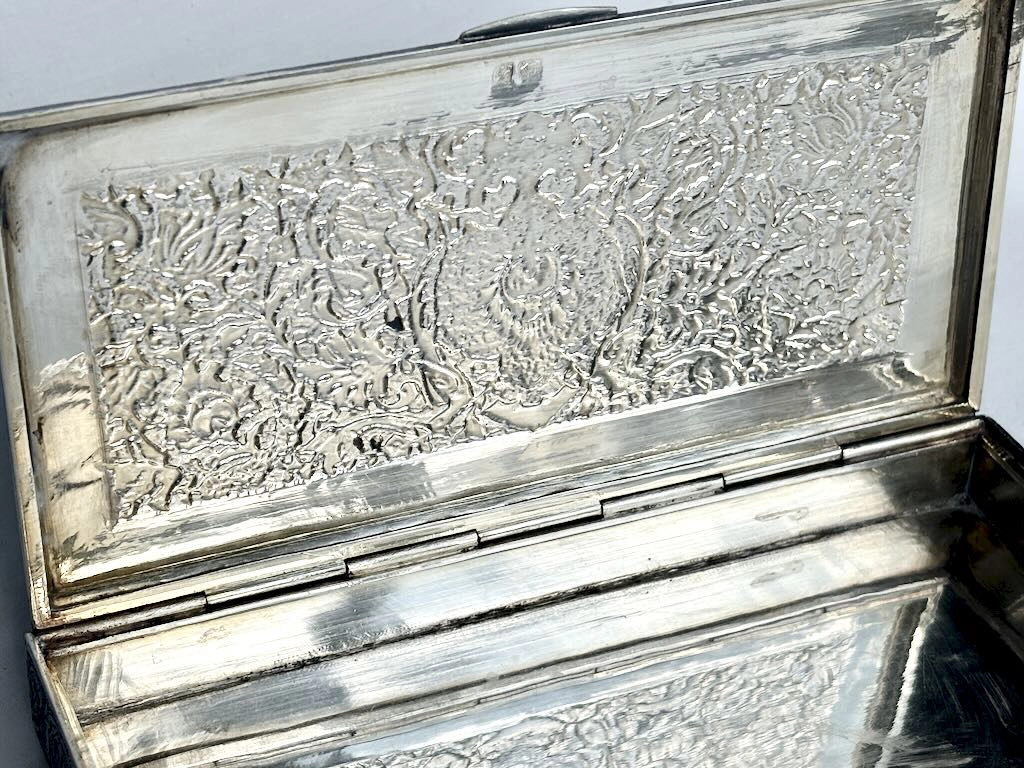
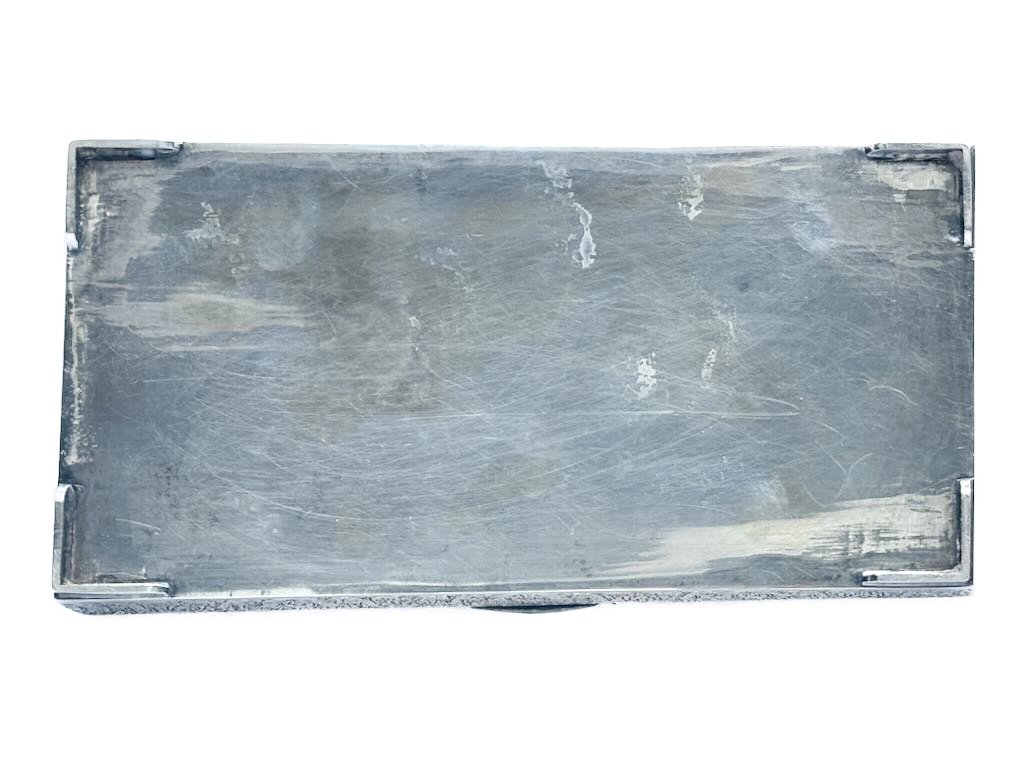
The box remains in good vintage condition, with its hinged lid opening and closing securely. The silver shows natural tarnish and age-related surface characteristics. The engraved decoration retains its intricate detail, and the darkened areas contribute to the contrast and depth of the design.
The box has not undergone extensive polishing, allowing its aged appearance to remain visible. A collector may choose to preserve this patina or undertake careful professional cleaning according to personal preference.
The piece has remained in the Bernardi Family Collection since the early 1950s, establishing a family history of more than seven decades.
Its substantial silver weight, richly engraved Persian ornament, and compelling attribution to Hossein Parvaresh make it a distinctive example of mid-twentieth-century Isfahan silverwork.