



Description
Persian Qajar Silver Repoussé Mirror with Miniature Paintings & Calligraphy, Iran c.1900
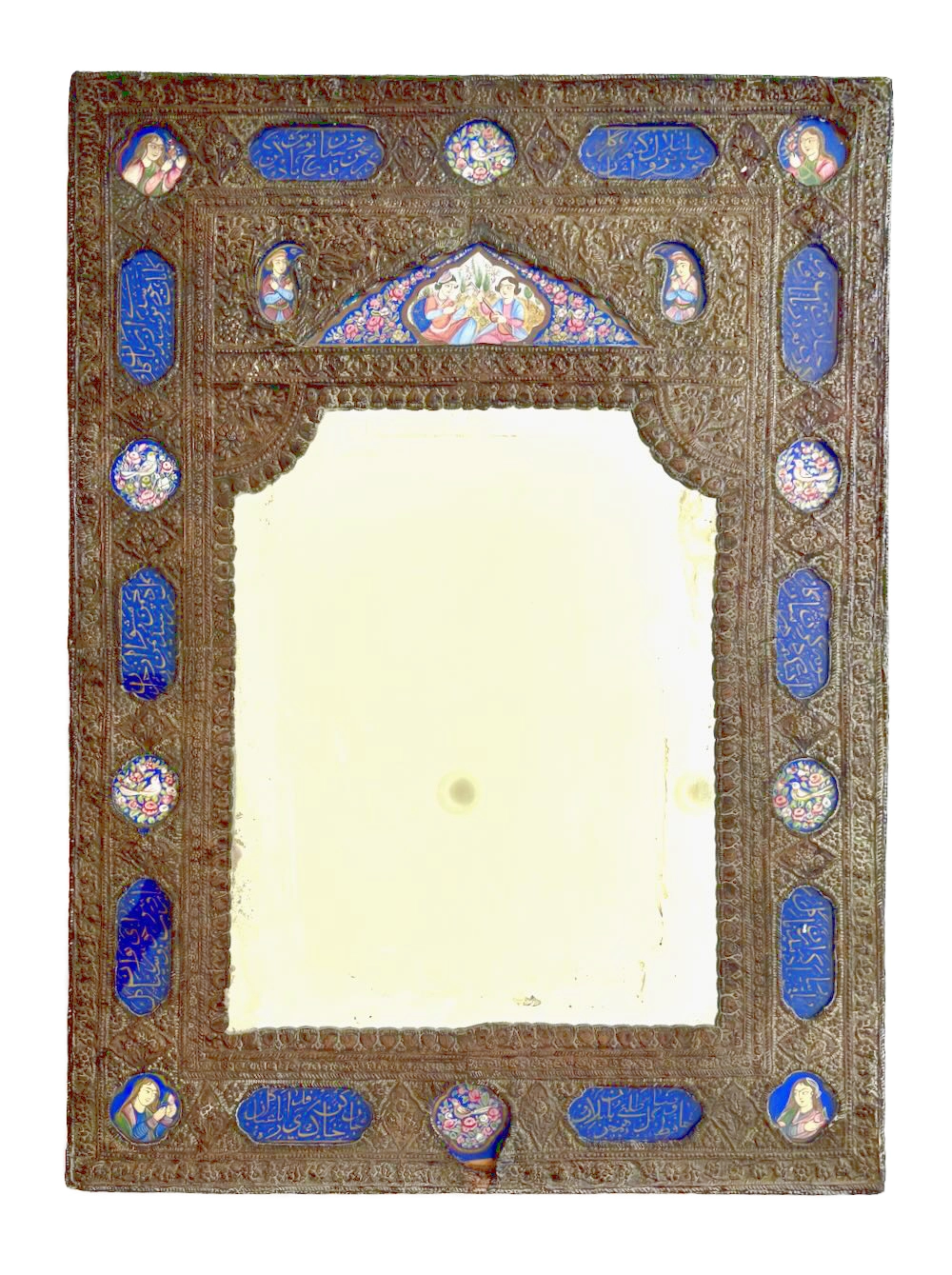
This remarkable Persian Qajar silver repoussé mirror is a highly decorative and architecturally inspired work from the late Qajar period, dating approximately to the late 19th or early 20th century. The piece combines repoussé silverwork, poetic calligraphy, miniature painting, and aged mirror glass into a richly layered object that reflects the aesthetic language of Persian court and domestic decorative arts.
Unlike later tourist export pieces, this mirror was acquired in Tehran from an antiques dealer approximately 60–70 years ago and has remained in the same family collection since. It has been in the United States since the 1970s.
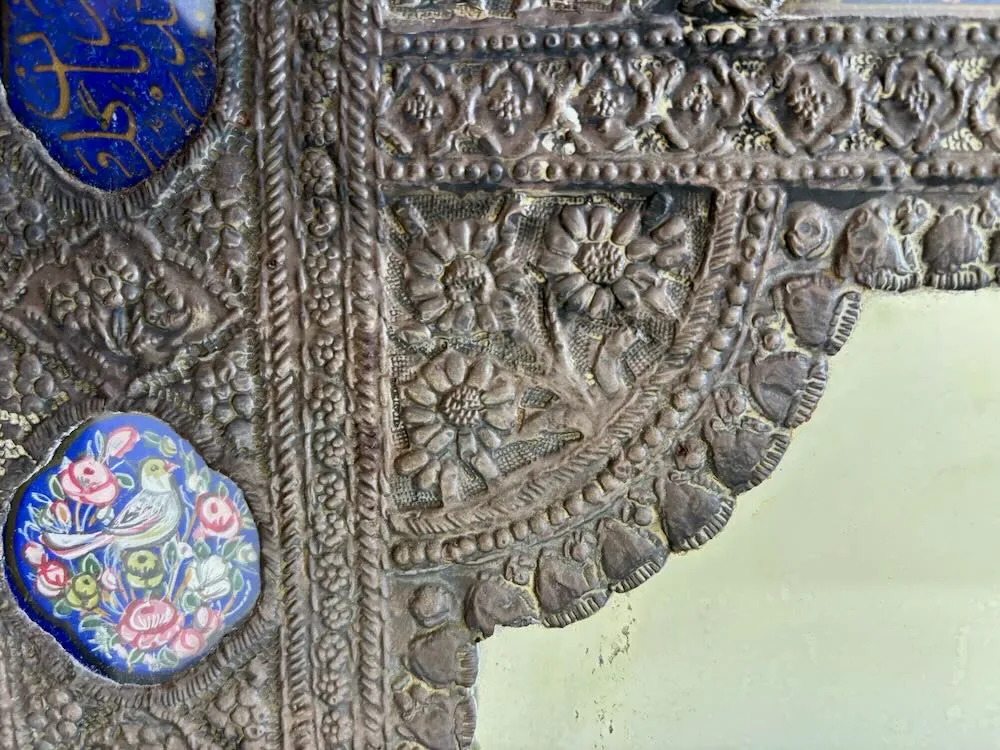
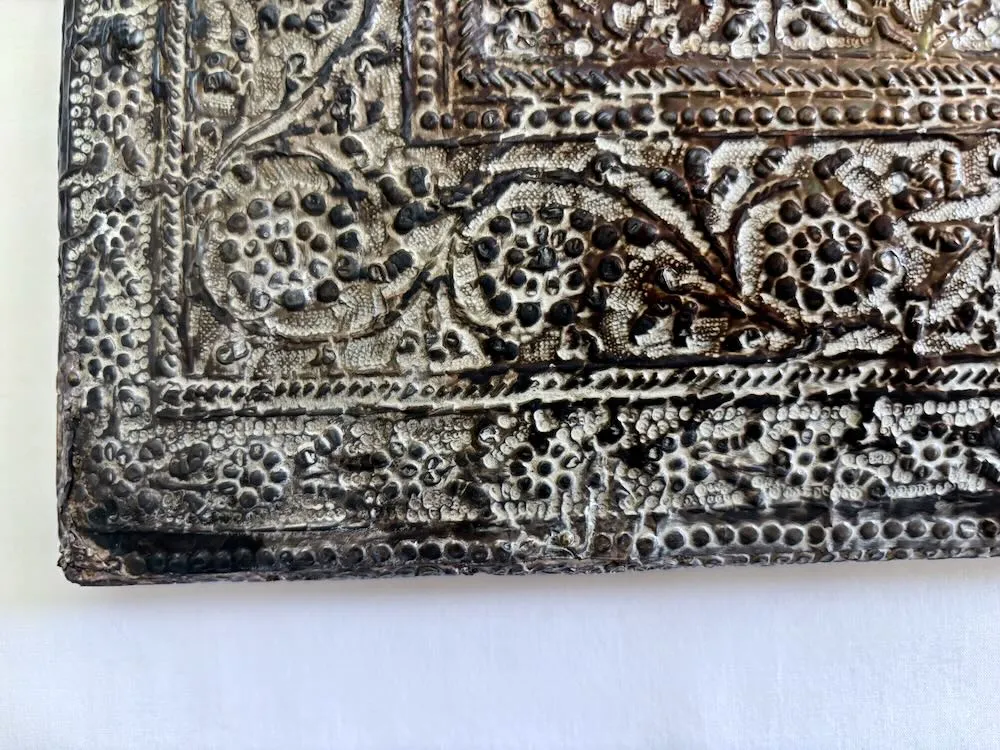
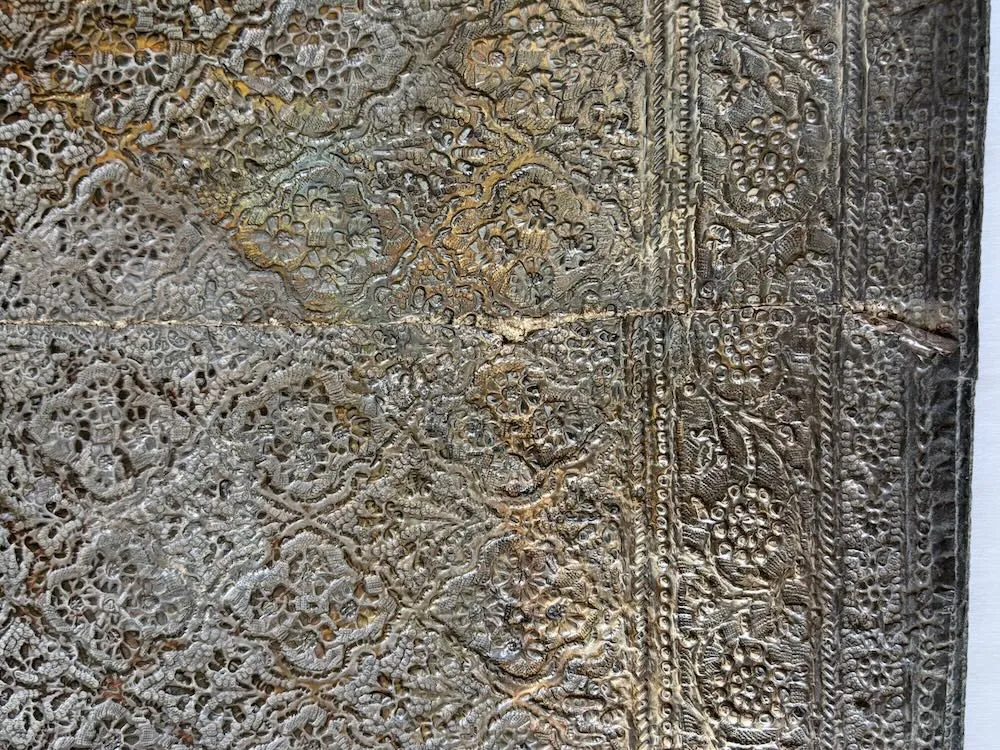
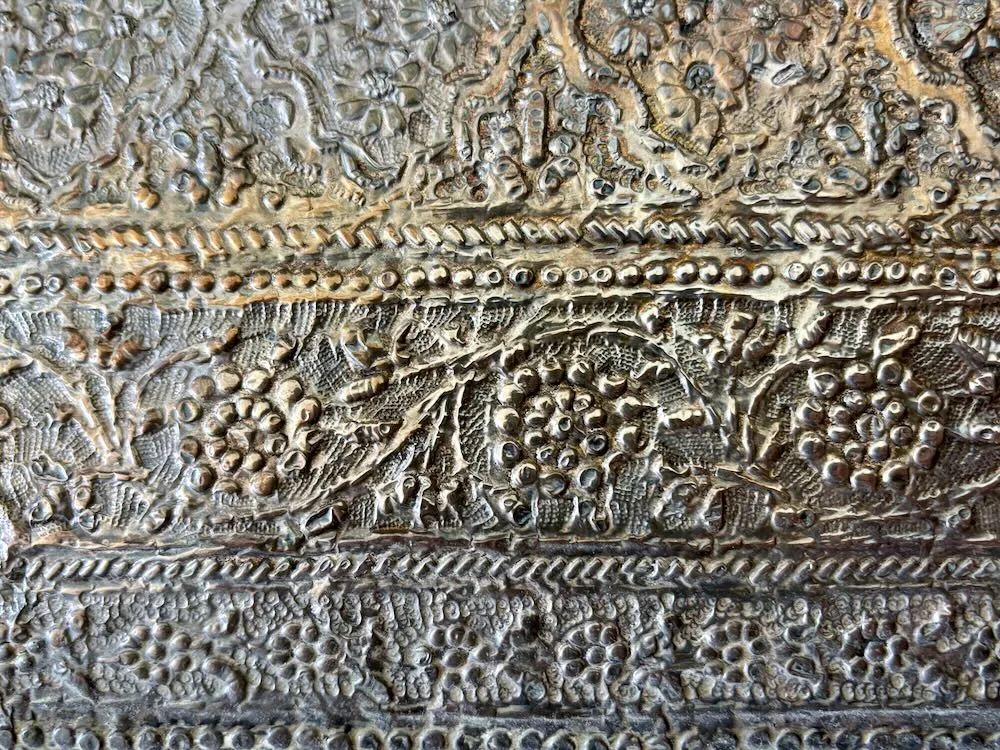
The frame is clad in repoussé silver over a structural backing, likely wood, and worked throughout with dense floral arabesques, scrolling vines, rosettes, and geometric lattice motifs. The craftsmanship creates an almost textile-like surface, with deeply embossed ornament continuing across both the front and reverse. Even the back panel was treated as a decorative surface rather than left unfinished, an indication of the care and expense involved in its production.
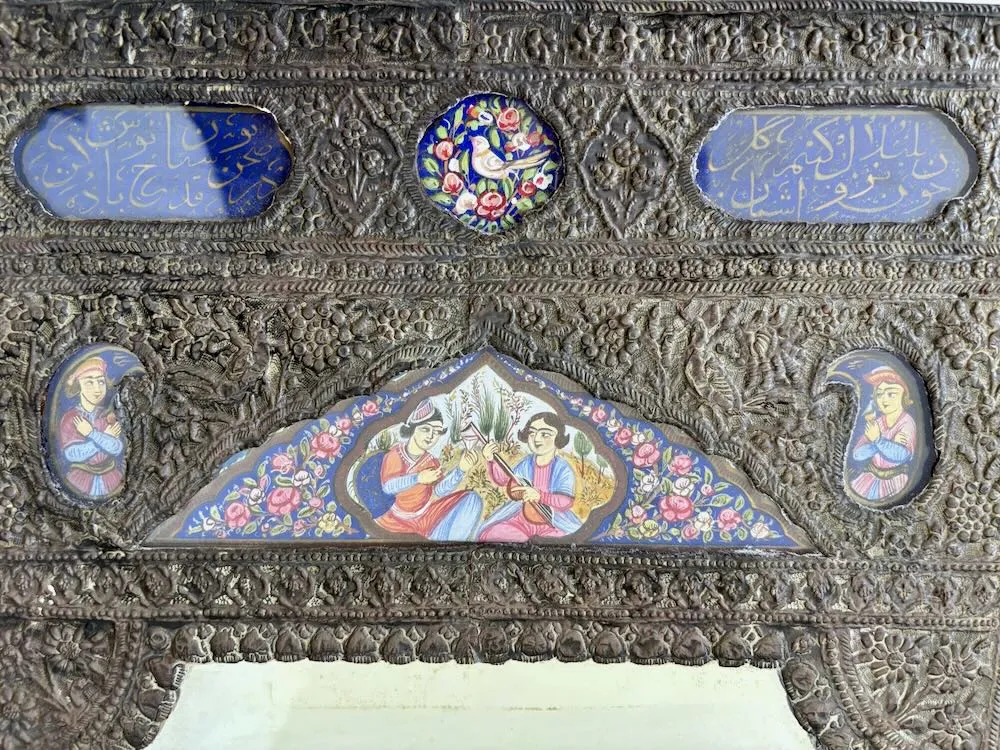
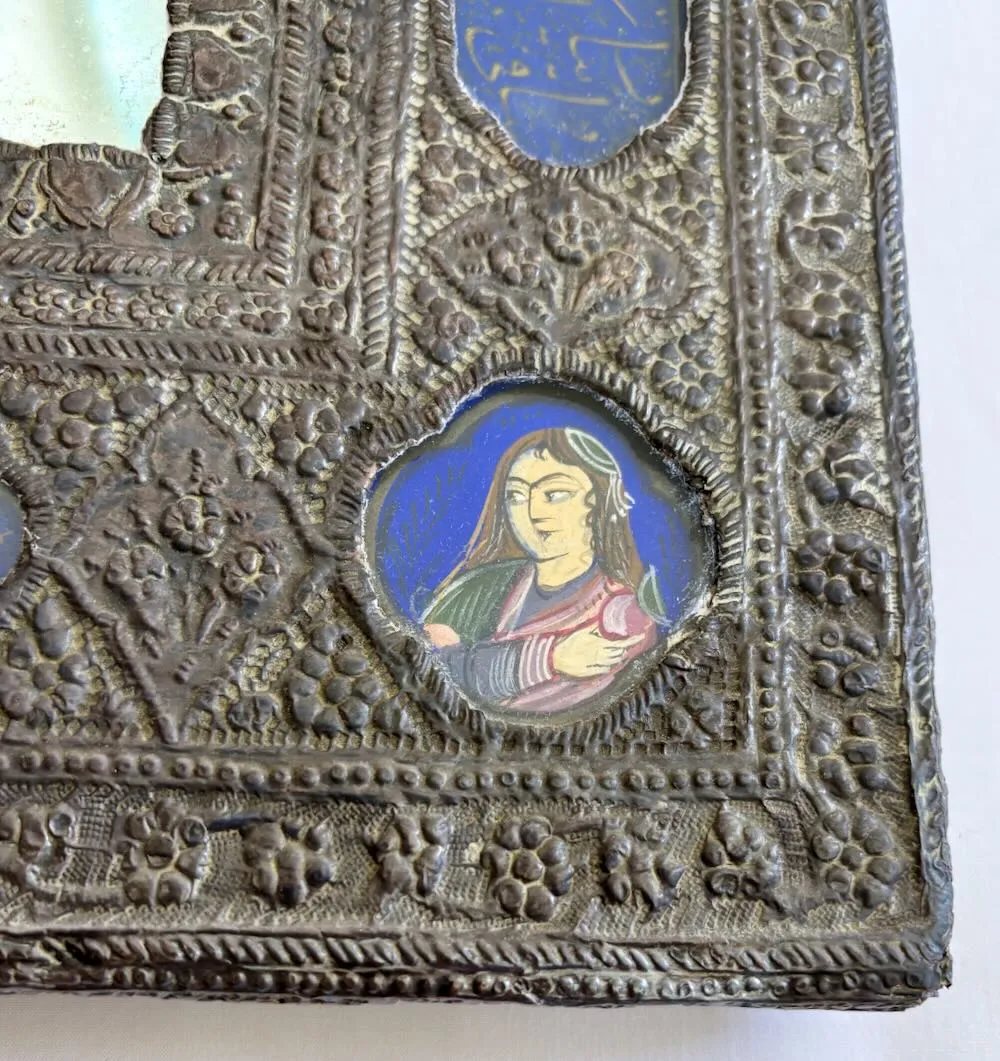
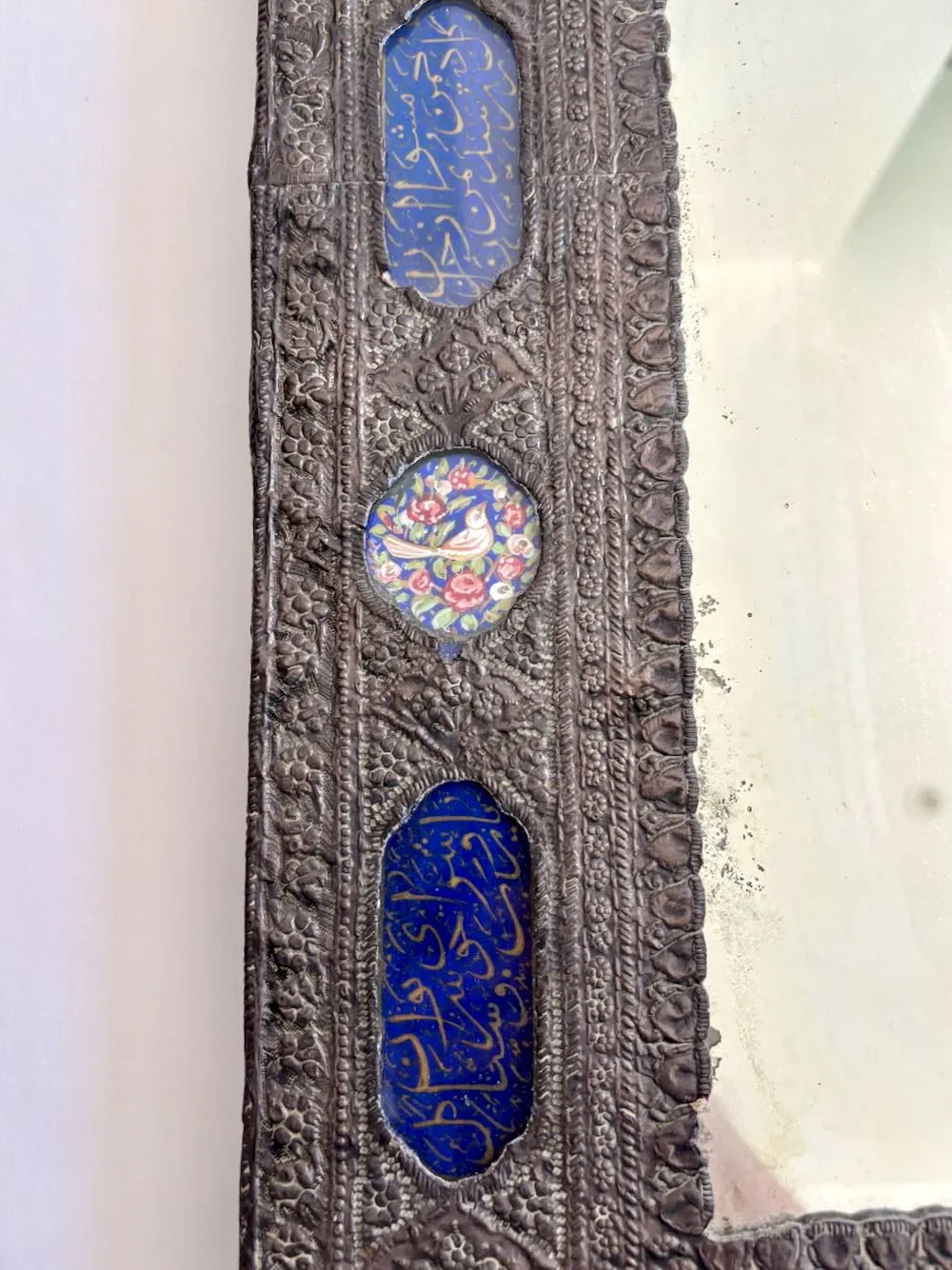
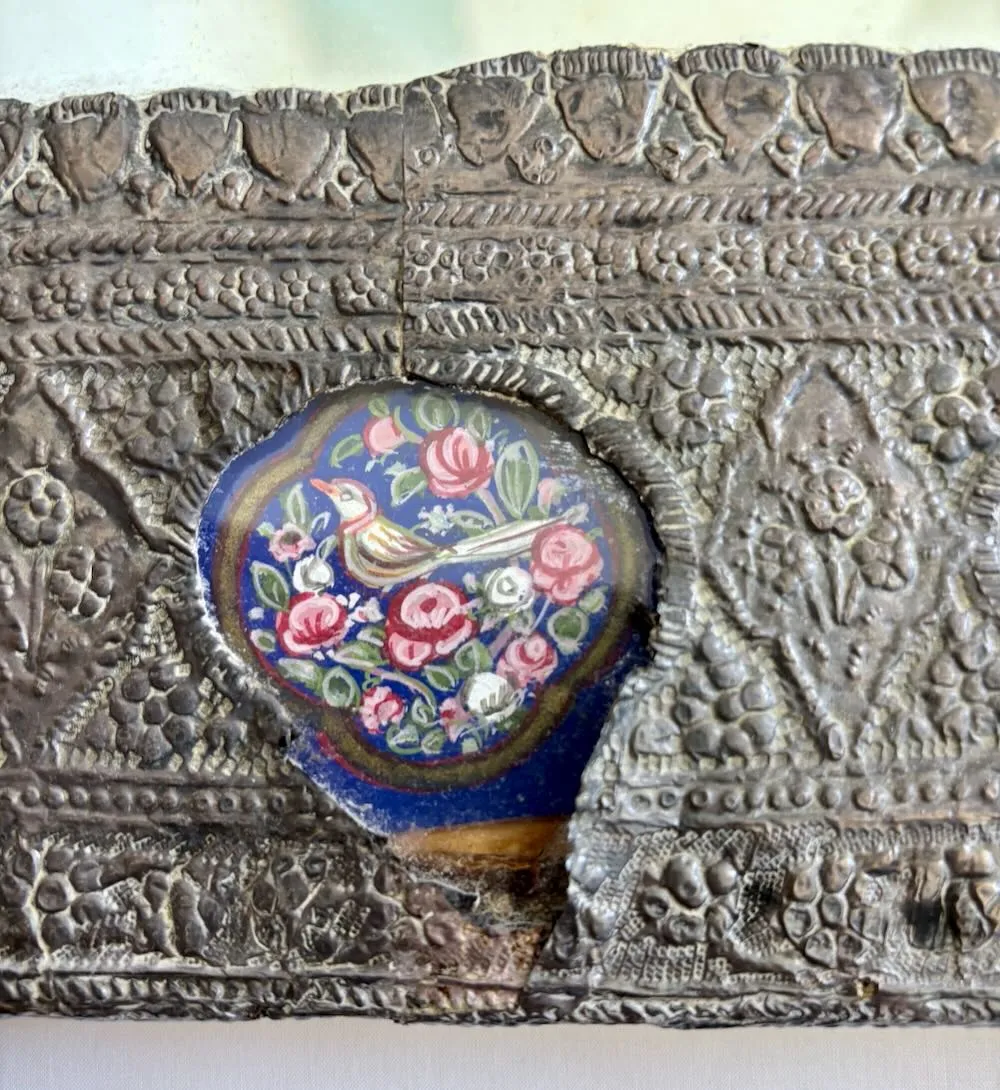
The architectural form surrounding the mirror opening recalls Persian arches and niche forms seen in Qajar interiors. Around the frame are cobalt-blue cartouches containing elegant gilt Persian calligraphy beneath glass. The inscriptions appear poetic rather than religious, with references associated with classical Persian literary traditions. Interspersed among them are miniature paintings depicting courtly figures, birds among flowers, and romantic or garden scenes rendered in vivid polychrome colors under protective glass.
The contrast between the aged silver surface and the luminous cobalt-blue panels gives the mirror exceptional visual presence. The original mirror glass survives with natural foxing, haze, and age-related spotting that contribute to the authenticity and atmosphere of the piece. Rather than appearing overly restored or modernized, the mirror retains the character of an object that has genuinely lived through more than a century of history.
Artistic and Historical Context
During the Qajar dynasty (1789–1925), Persian decorative arts experienced a revival of elaborate surface ornament and miniature-inspired imagery. Courtly themes, floral motifs, poetry, and calligraphy were integrated into everyday luxury objects ranging from lacquer work and manuscripts to mirrors, boxes, and architectural decoration.
This mirror reflects that environment particularly well. The miniature portraits and floral imagery relate closely to Qajar painting traditions, while the repoussé metalwork echoes the intricate ornamental vocabulary found in Persian metal arts and architectural decoration of the period.
The poetic inscriptions further distinguish the piece from ordinary decorative mirrors. Persian calligraphy was not merely decorative but cultural and literary, often referencing themes of beauty, gardens, love, wine, nature, and classical poetry associated with figures such as Hafez and Saadi. Even without a complete scholarly translation, the visual rhythm of the script forms an integral part of the artistic composition.
Construction and Condition
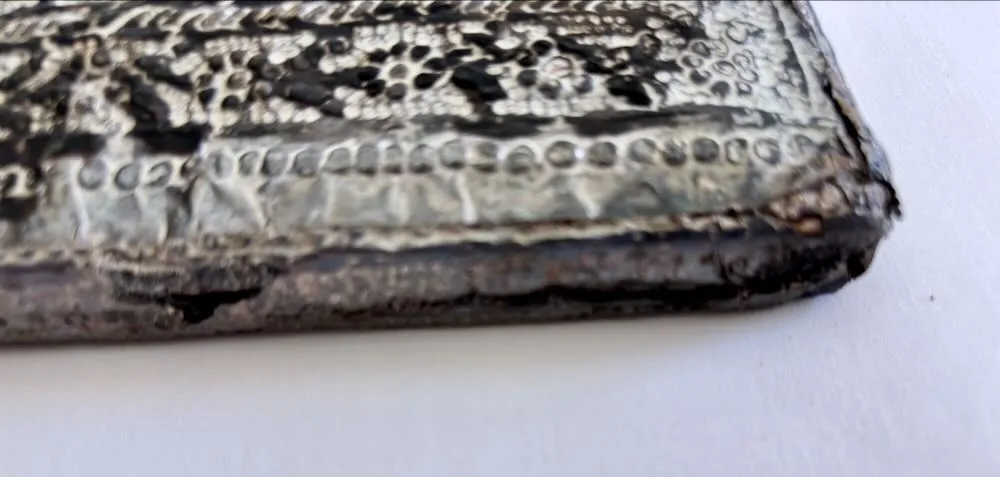
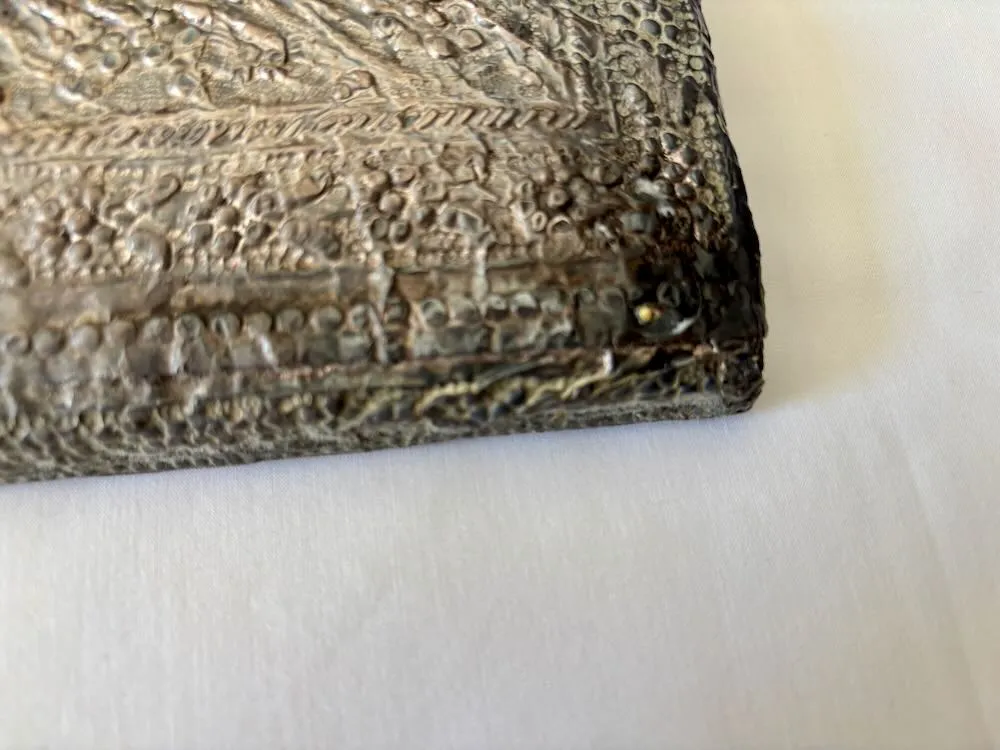
The repoussé silver surface remains largely intact and retains strong detail throughout. Areas of natural tarnish, oxidation, lifting, and wear are present, especially near some corners and edges, consistent with age and the thinness of the silver overlay. The piece has not undergone modern restoration or polishing.
The miniature paintings and calligraphic panels beneath glass remain vibrant and visually striking. The original mirror glass shows expected age-related foxing and surface haze.
The mirror is intentionally offered in largely untouched condition so the next owner may decide whether to preserve its aged surface exactly as found or pursue professional conservation according to personal preference.
No hanging hardware is currently attached.
Provenance
Acquired in Tehran, Iran from an antiques dealer approximately 60–70 years ago. Subsequently retained in the same family collection and brought to the United States in the 1970s.