
Description
Vintage Neoclassical Silverplate Sphinx Figural Stands
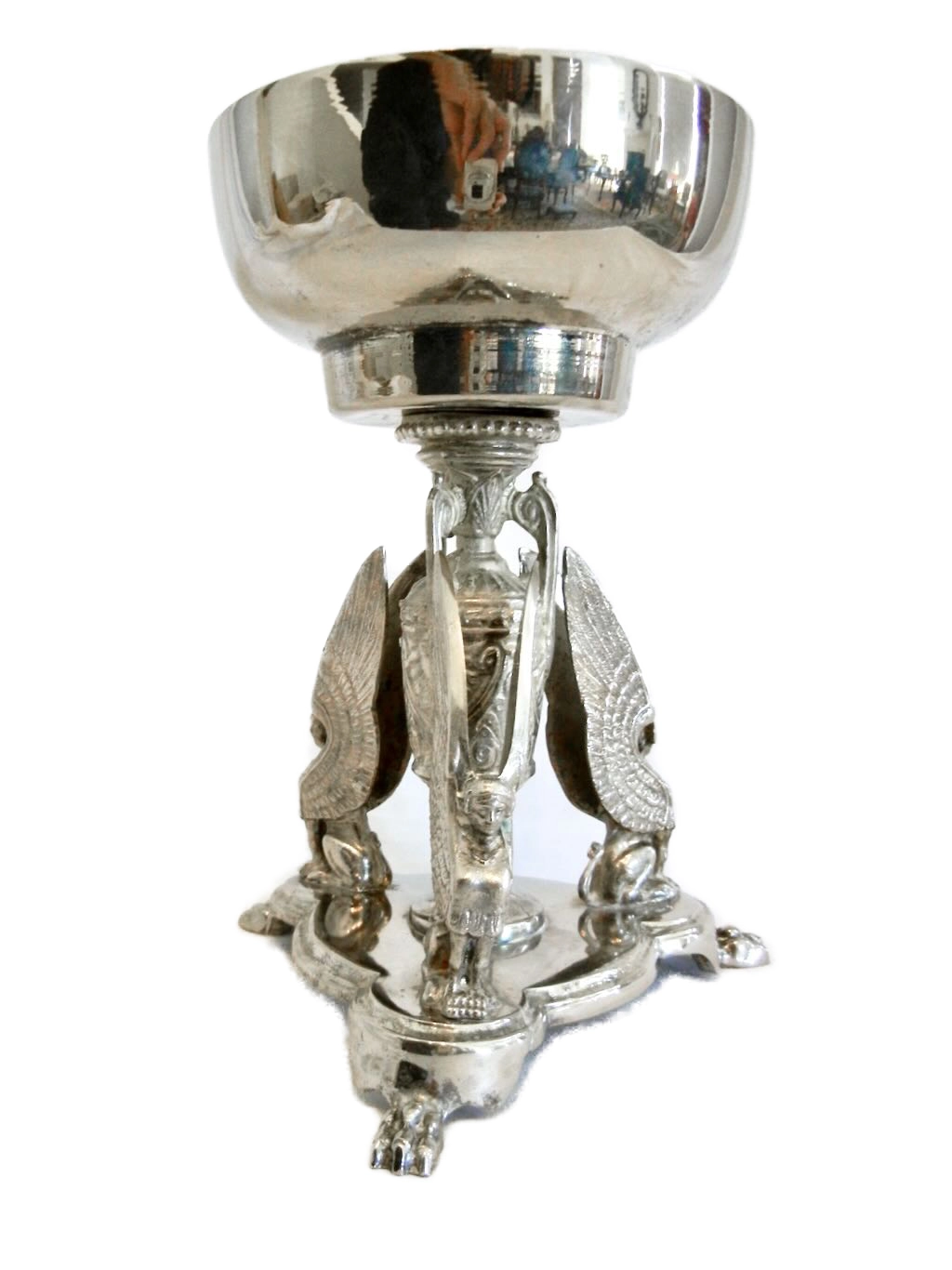
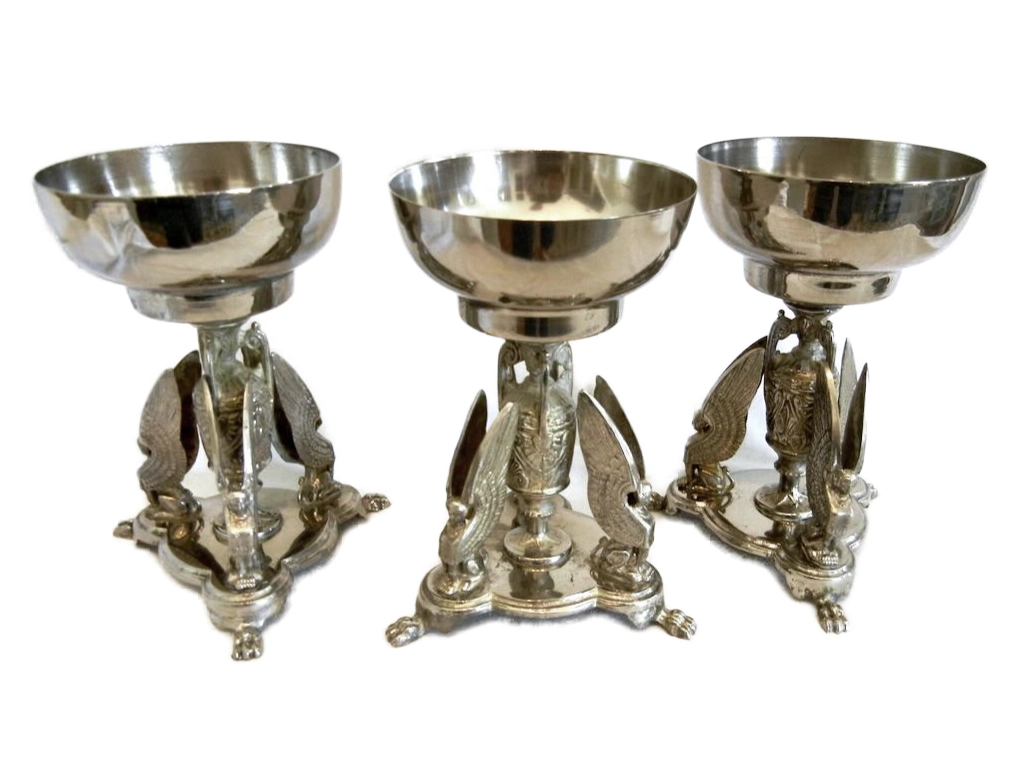
These Neoclassical Silverplate Sphinx figural stands feature an unusual combination of winged mythical creatures, ornamental urns, scrolling decoration and prominent paw feet. The set includes three matching stands, each with an elaborate sculptural design and a shallow circular bowl at the top.
Each stand rises from a shaped three-sided base supported by three substantial paw feet. Three seated winged sphinxes surround a decorated central urn, creating an architectural arrangement beneath the upper bowl. Large feathered wings, elongated bodies and curling tails give the figures a dramatic appearance from every angle.
The silverplate has developed areas of patina and surface variation that emphasize the relief and intricate details of the design.
Neoclassical Silverplate Sphinx Design
The Neoclassical Silverplate Sphinx stands combine several decorative traditions rather than following one historical style literally. Their winged sphinxes closely resemble the creature found in classical Greek mythology, while the overall fascination with sphinx imagery also connects the design to the Egyptian Revival movement.
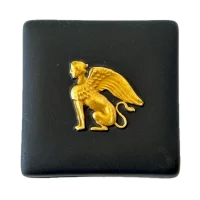
Ancient Egyptian art generally portrayed the sphinx as a recumbent creature with a human head and lion’s body. Greek artists transformed the sphinx into a winged mythical creature, frequently giving it a female head and a more upright form. The seated, dramatically winged figures on these stands follow the classical tradition more closely.
During the 19th century, European and American designers freely combined Greek, Roman and Egyptian motifs. Decorative objects could therefore incorporate classical urns, paw feet, sphinxes and other ancient-inspired elements within a single composition. This eclectic approach became an important feature of historicist design.
Winged Sphinxes and Classical Urns
Three sphinxes encircle the central urn on each stand. The figures have carefully modeled wings with rows of individual feathers, patterned bodies and elongated forms. Their placement creates an open framework that allows the ornamental urn to remain visible between them.
The urn provides another strong classical element. Its scrolling handles and decorated body contrast with the mythical creatures surrounding it, while the shallow circular bowl above completes the symmetrical composition.
Large paw feet extend from the shaped base beneath each sphinx. This combination of mythical figures, urn forms and animal feet gives the stands an elaborate appearance associated with decorative tableware inspired by antiquity.
An Unusual and Mysterious Function
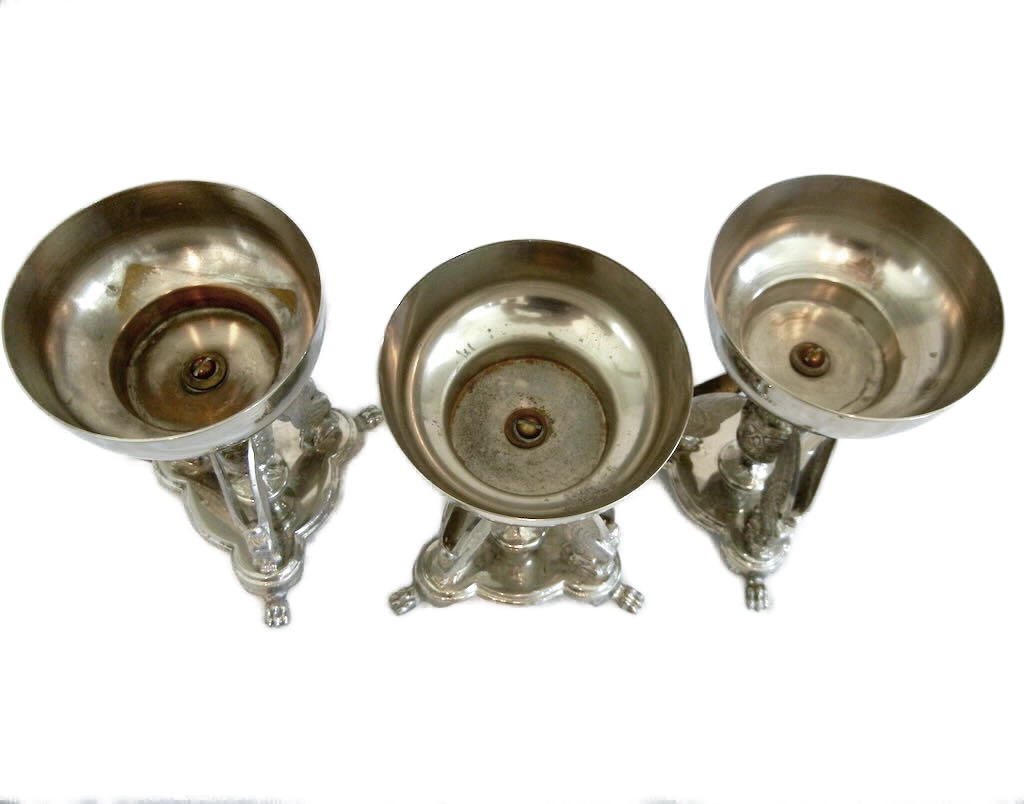
The original purpose of these Neoclassical Silverplate Sphinx stands remains uncertain. Each piece has a shallow metal bowl at the top and was acquired with a small, heavy fitted glass insert. The glass inserts appeared later than the metalwork and may have been replacements.
Their size could accommodate substantial candles, suggesting that the stands may have served as decorative candle holders. However, designers also used similar elevated figural forms for compotes, dessert stands and other decorative table pieces.
Without maker’s marks or original documentation, identifying one function with certainty would be speculative. Their sculptural form allows them to stand successfully as decorative objects regardless of their original use.
Detailed Multipart Construction
The stands use multipart construction with separately formed decorative components. Mechanical fasteners secure the three sphinxes to the base, while the central urn and upper section form additional parts of the assembled structure.
This method allowed the maker to create considerable depth and detail. Open spaces separate the figures, projecting wings extend beyond the central structure, and the paw feet provide a substantial visual foundation.
No maker’s marks or identifying stamps appear on the pieces. Their precise manufacturer and country of origin therefore remain unknown.
Neoclassical Decorative Metalwork
These three stands capture the enthusiasm for antiquity that influenced decorative arts during the 19th and early 20th centuries. Rather than reproducing an ancient object, the unknown maker combined recognizable historical motifs to create something imaginative and theatrical.
The classical urn, powerful paw feet and mysterious winged sphinxes make the set especially distinctive. Viewed together, the three matching pieces create an impressive display of sculptural historicist design.