
Description
Persian Market Scissors Possibly Qajar Era with J. A. Henckels Solingen Steel & Eastern Inscription 19th Century
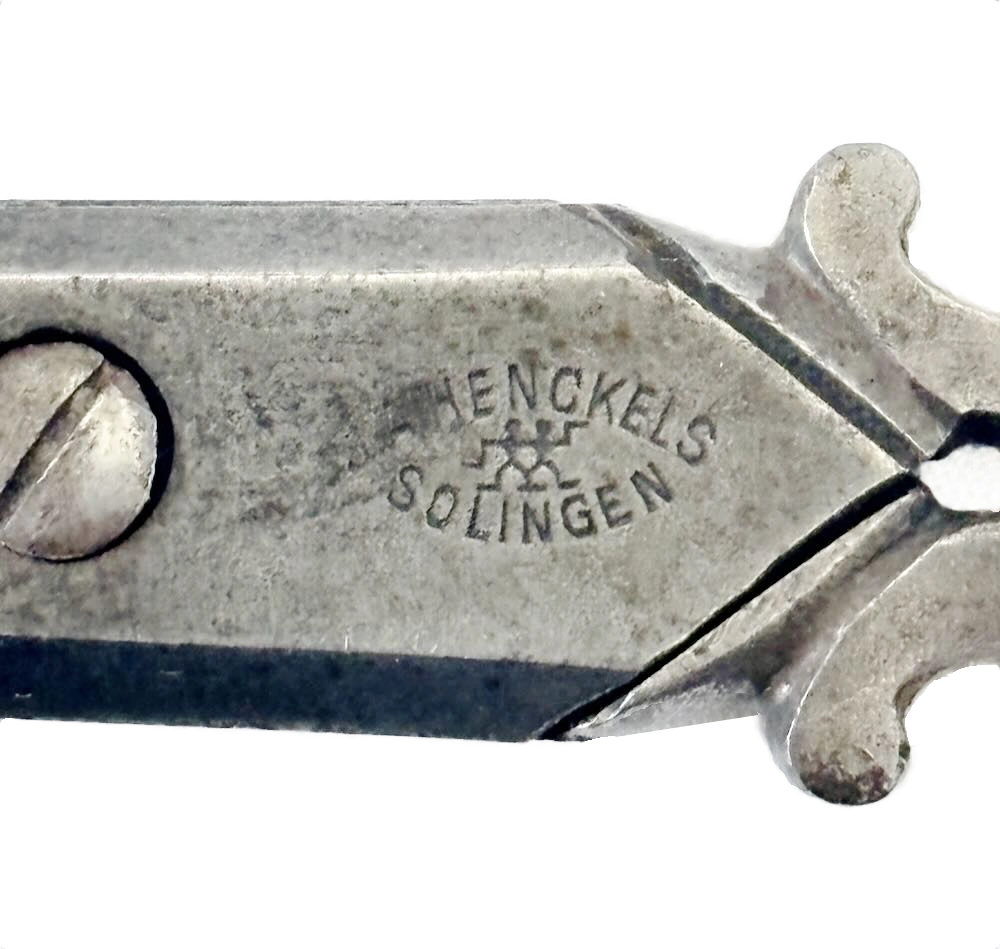
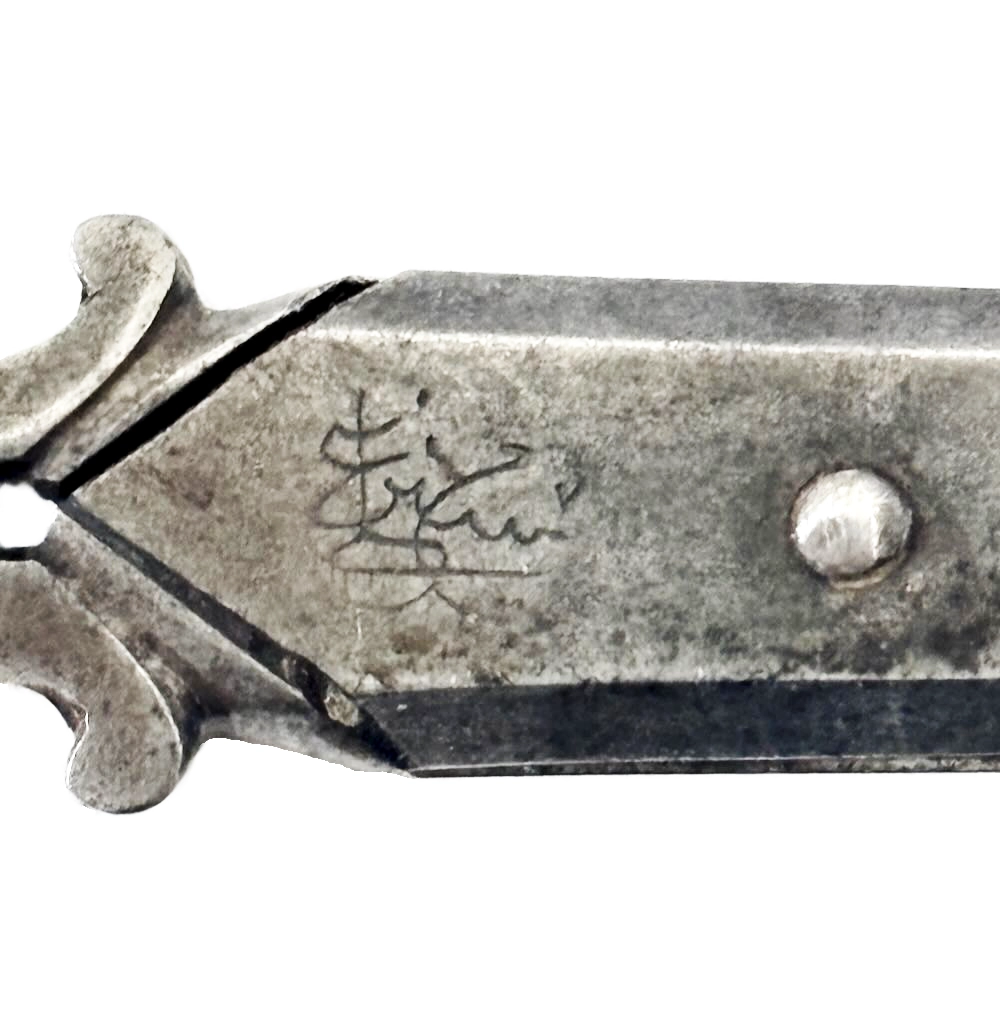
These elegant antique scissors represent a fascinating intersection of European craftsmanship and Middle Eastern history. Bearing the well-known J. A. Henckels Solingen mark on one side and an engraved inscription in an Eastern script on the other, they tell the story of an object that likely traveled through the commercial networks linking Europe and Persia during the late nineteenth century.
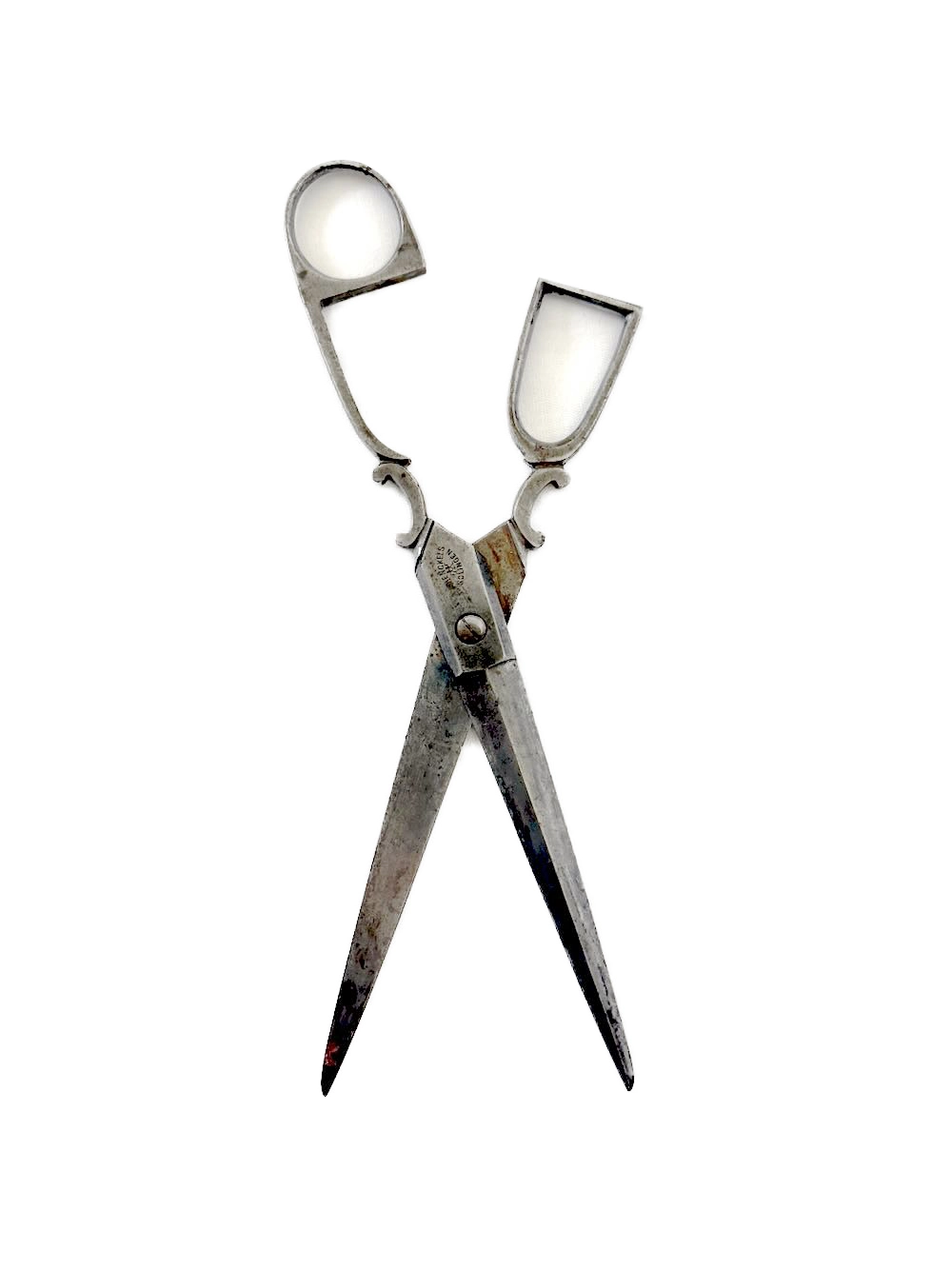
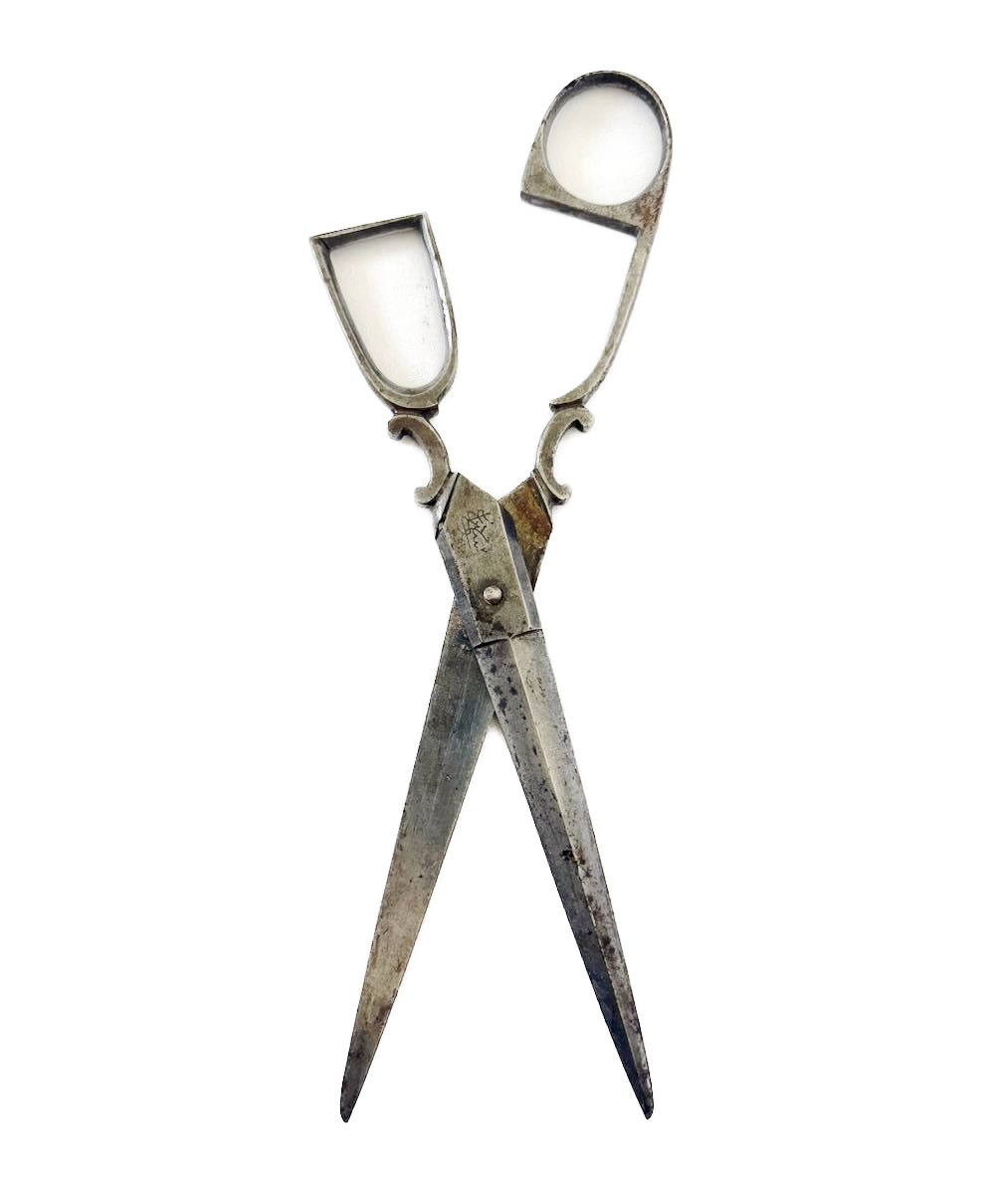
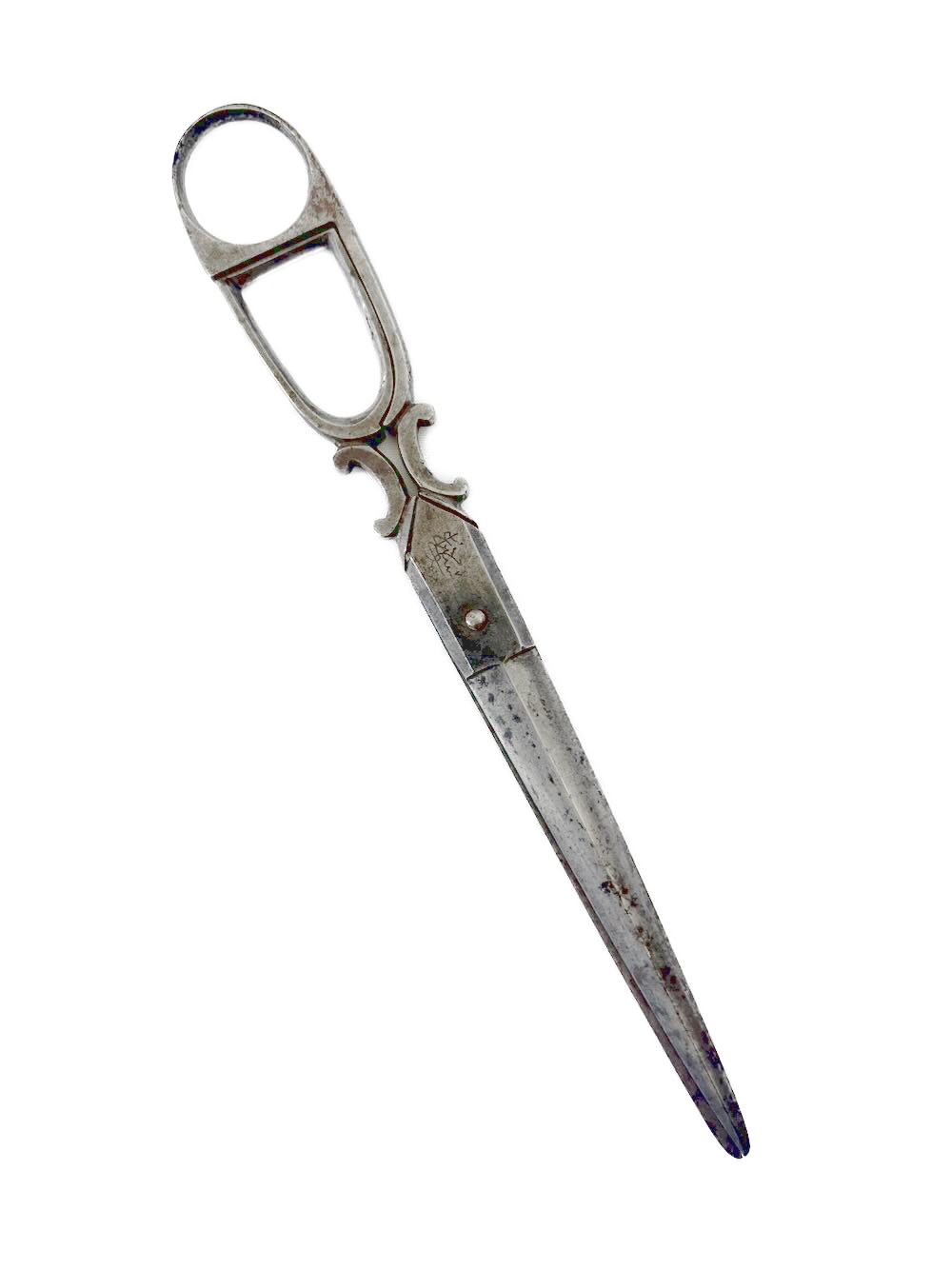
Acquired in Iran and preserved within the Bernardi Family Collection for generations, the scissors retain both their historical character and original functionality. While modest in scale, they are remarkably refined in form, with graceful open handles, long slender blades, and proportions closely related to specialized paper and calligraphy scissors documented in museum collections.
Unlike ordinary household scissors, examples of this type were often associated with writing, manuscript preparation, paper cutting, and other scholarly or artistic pursuits. Their elegant form reflects a tradition in which everyday tools could also embody craftsmanship and beauty.
Solingen Steel and the Persian Market
During the nineteenth century, Solingen in Germany was internationally renowned for producing some of the finest edged tools and blades in the world. Merchants throughout the Ottoman Empire and Persia imported Solingen steel for its durability, precision, and reputation.
The presence of the J. A. Henckels mark firmly connects these scissors to that tradition. Founded in 1731, J.A. Henckels became one of Solingen’s most respected manufacturers and exported blades and cutting tools across Europe, the Middle East, and beyond.
Imported European steel was highly prized in Persia during the Qajar period. As a result, objects incorporating Solingen blades frequently found their way into Persian households, workshops, and markets. This pair appears to belong to that broader historical exchange, combining European manufacture with evidence of local ownership or use.
The Additional Eastern Inscription
One side of the scissors bears the J. A. Henckels Solingen mark. The opposite side carries a hand-engraved inscription in an Eastern script.
The inscription has not been conclusively identified. However, its placement and execution suggest a deliberate secondary marking rather than part of the original German manufacture. It may represent an owner’s mark, retailer’s inscription, workshop identification, or a later personalization associated with its use within the Persian market.
Regardless of its exact meaning, the presence of both marks significantly enhances the historical interest of the piece by documenting multiple stages in its life and use.
Related Museum Examples
Scissors of closely related form appear in institutional collections, including the Smithsonian Institution, where similar long-bladed examples are cataloged as Ottoman calligraphy paper scissors.
While the Smithsonian examples differ in their inscriptions and precise attribution, they demonstrate that this distinctive scissor form belongs to a recognized historical tradition rather than a purely domestic or utilitarian type.
The long blades, elegant proportions, and compact handles seen in this example strongly align with those specialized paper and manuscript scissors associated with scholarly and artistic activities throughout the broader Islamic world.
Form and Design
The visual appeal of these scissors extends well beyond their functionality.
The elongated blades taper gracefully toward the tip, while the open circular handles create an elegant silhouette uncommon in later industrial scissors. Decorative shaping near the pivot softens the transition between blade and handle and contributes to the overall refinement of the design.
Even when displayed closed, the object possesses a sculptural quality that reflects the nineteenth-century appreciation for well-made tools.
Condition
The scissors remain in very good antique condition.
The original marks remain visible. Surface wear and patina are consistent with age and use. The blades continue to open and close properly and still retain enough edge to cut paper, demonstrating that the original mechanism remains functional.
As with most antique cutting tools of this age, they are offered primarily as a historical and collectible object rather than for regular use.
Historical Significance
Objects such as these remind us that the nineteenth century was a period of extensive cultural and commercial exchange. Goods, materials, and ideas moved between Europe and the Middle East with increasing frequency, creating objects that embodied influences from multiple traditions.
Whether used by a merchant, scholar, calligrapher, or private owner, these scissors survive today as a tangible connection to that history.
Their combination of Solingen steel, Eastern inscription, Persian provenance, and documented historical form makes them a particularly intriguing example for collectors of Persian, Ottoman, Islamic, and writing-related antiques.