
Description
Persian Minakari Enamel Bowl Gol-o-Bolbol Motif Pahlavi Era Tehran Mid Century
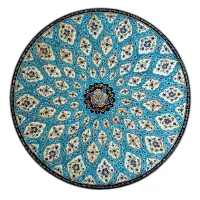
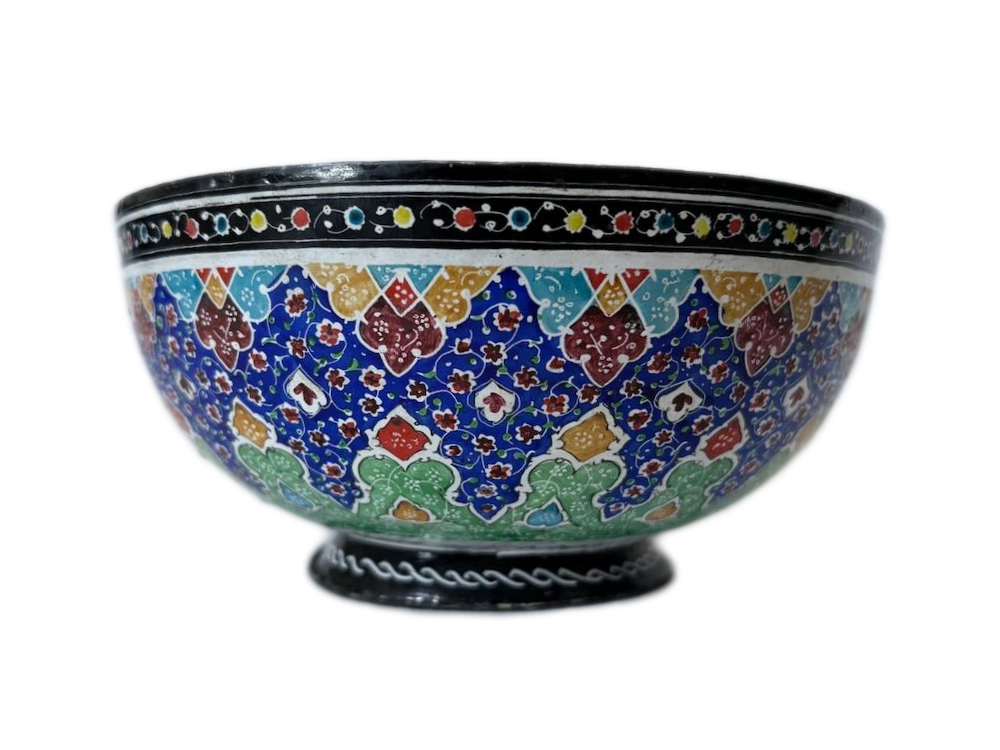
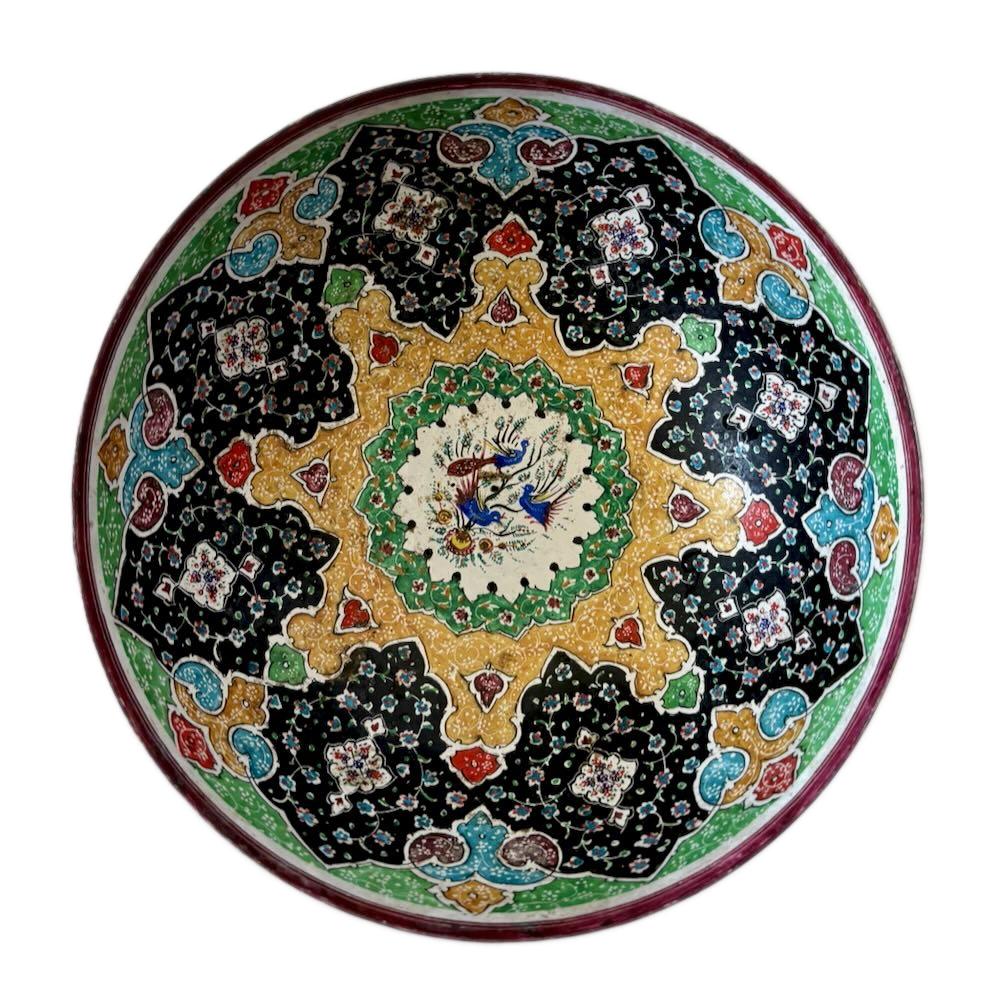
This richly decorated Persian Minakari enamel bowl was acquired by family in Tehran during the 1960s and represents the vibrant decorative arts tradition associated with mid-20th century Iranian craftsmanship during the Pahlavi era. The bowl features dense floral and geometric ornamentation executed in vivid cobalt blue, turquoise, green, black, red, and gold tones surrounding a central Gol-o-Bolbol motif depicting birds among flowering forms.
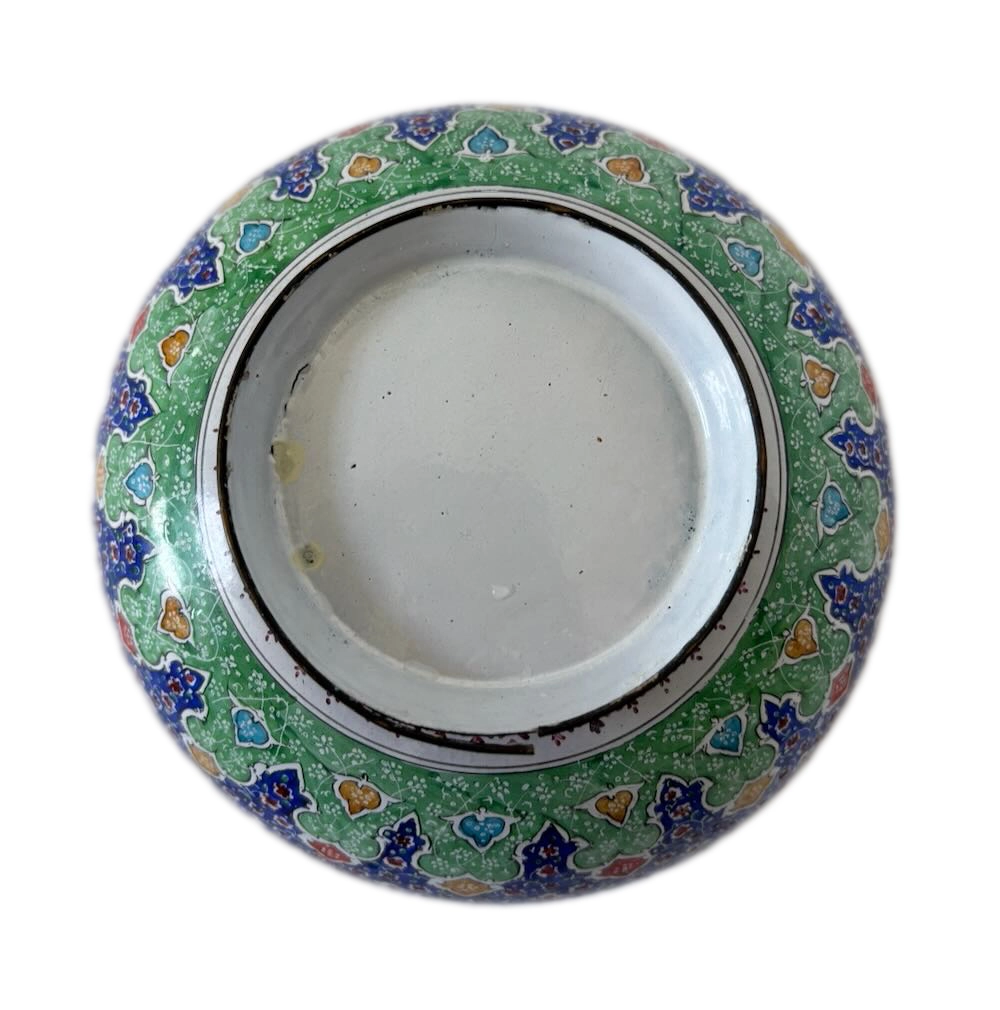
The exterior carries an equally elaborate continuous pattern rarely seen on simpler export examples, giving the piece strong decorative presence from every angle. The combination of repeating arabesque forms, floral detailing, and jewel-like color palette reflects the enduring influence of Persian architectural ornament and miniature painting traditions translated into enamelwork.
Persian Minakari and the Gol-o-Bolbol Tradition
Minakari is one of the most recognized forms of Persian decorative art, traditionally created by applying colored enamel decoration over metal surfaces, most commonly copper. The process requires multiple firings to achieve the luminous layered surface and intricate detail associated with Iranian enamelwork.
At the center of this bowl is a classic Gol-o-Bolbol composition — literally “flower and nightingale” — a beloved Persian artistic theme symbolizing beauty, poetry, longing, and harmony with nature. The motif appears throughout Persian painting, poetry, textiles, lacquer work, and enamel arts, making this bowl part of a much broader artistic tradition deeply rooted in Iranian culture.
The overall composition also reflects the ornamental vocabulary seen in Persian tilework and manuscript illumination, with repeating floral scrolls and stylized cartouche forms arranged in radial symmetry.
Decorative Character and Display Appeal
Unlike many simpler Minakari bowls that leave portions undecorated, this example is extensively ornamented across both interior and exterior surfaces. The contrast between the dark central field and the bright green and turquoise borders creates strong visual depth, while the small-scale floral detailing gives the piece a refined hand-crafted character.
The bowl retains its lower metal foot trim. The upper metal rim trim is no longer present, revealing the underlying edge beneath. Rather than diminishing its decorative impact entirely, the absence of the upper trim allows the enamel surface and hand decoration to remain the visual focus of the piece.
Its size makes it highly versatile for display on a shelf, console, cabinet, or grouped with other Persian decorative objects and Islamic art pieces.
Condition
Good vintage condition overall consistent with age and use. The bowl retains vibrant enamel decoration with no major cracks or structural damage observed. The upper metal rim trim is missing, while the lower trim remains present. Minor age-related wear, surface irregularities, and light discoloration consistent with vintage Minakari work and long-term storage may be present. Please review photographs carefully as they form part of the description.