


Description
Vintage Bavarian Cobalt Blue and Gold Porcelain Covered Dish
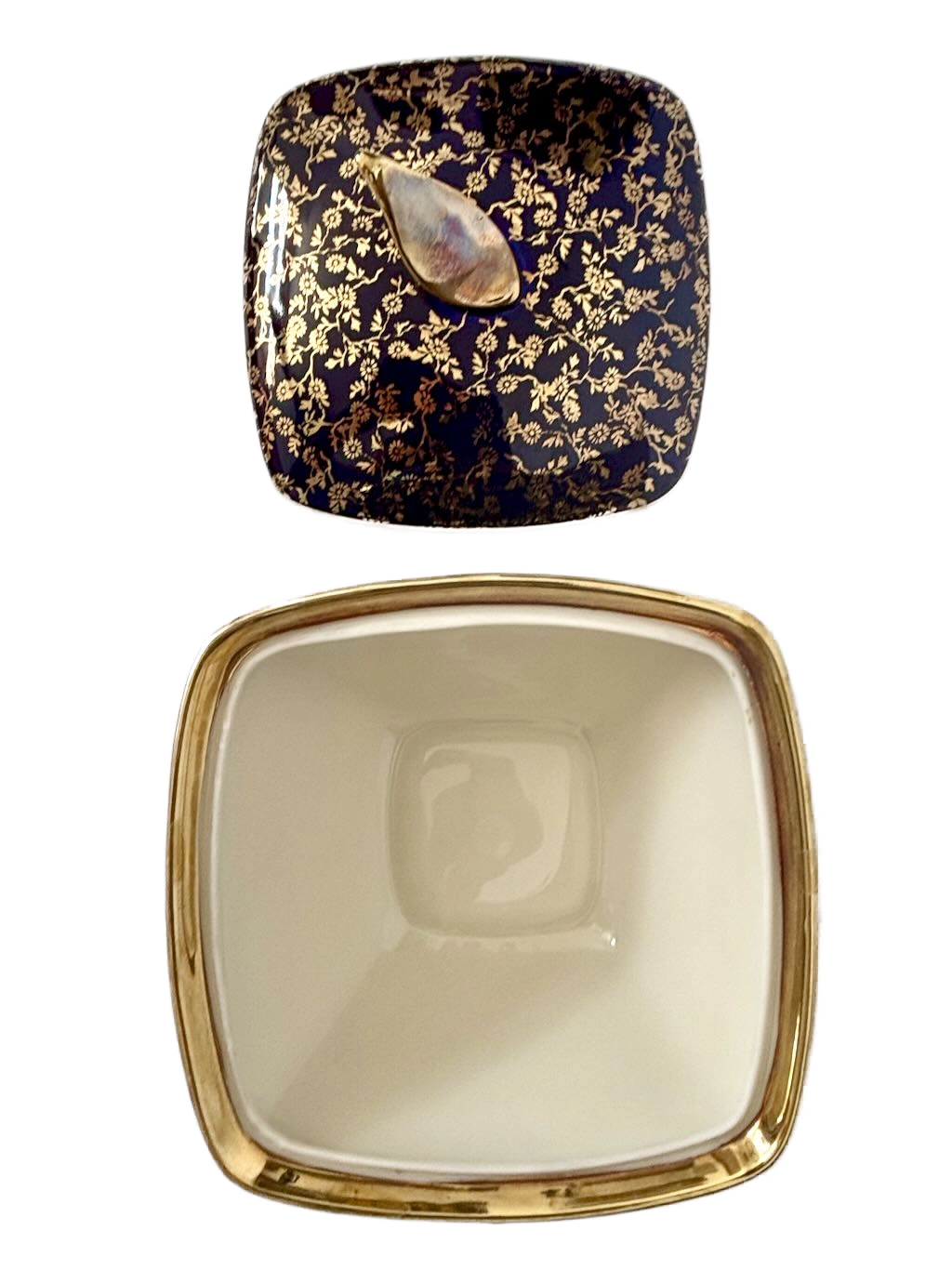
This elegant vintage Bavaria Waldershof Echt Cobalt Covered Porcelain Dish combines a magnificent cobalt blue ground with an intricate network of gold floral decoration. Its softly squared silhouette, gently domed lid, and sculpted leaf-shaped finial create a distinctive decorative object that reflects the refined craftsmanship and ornamental tastes of mid-twentieth-century European porcelain.
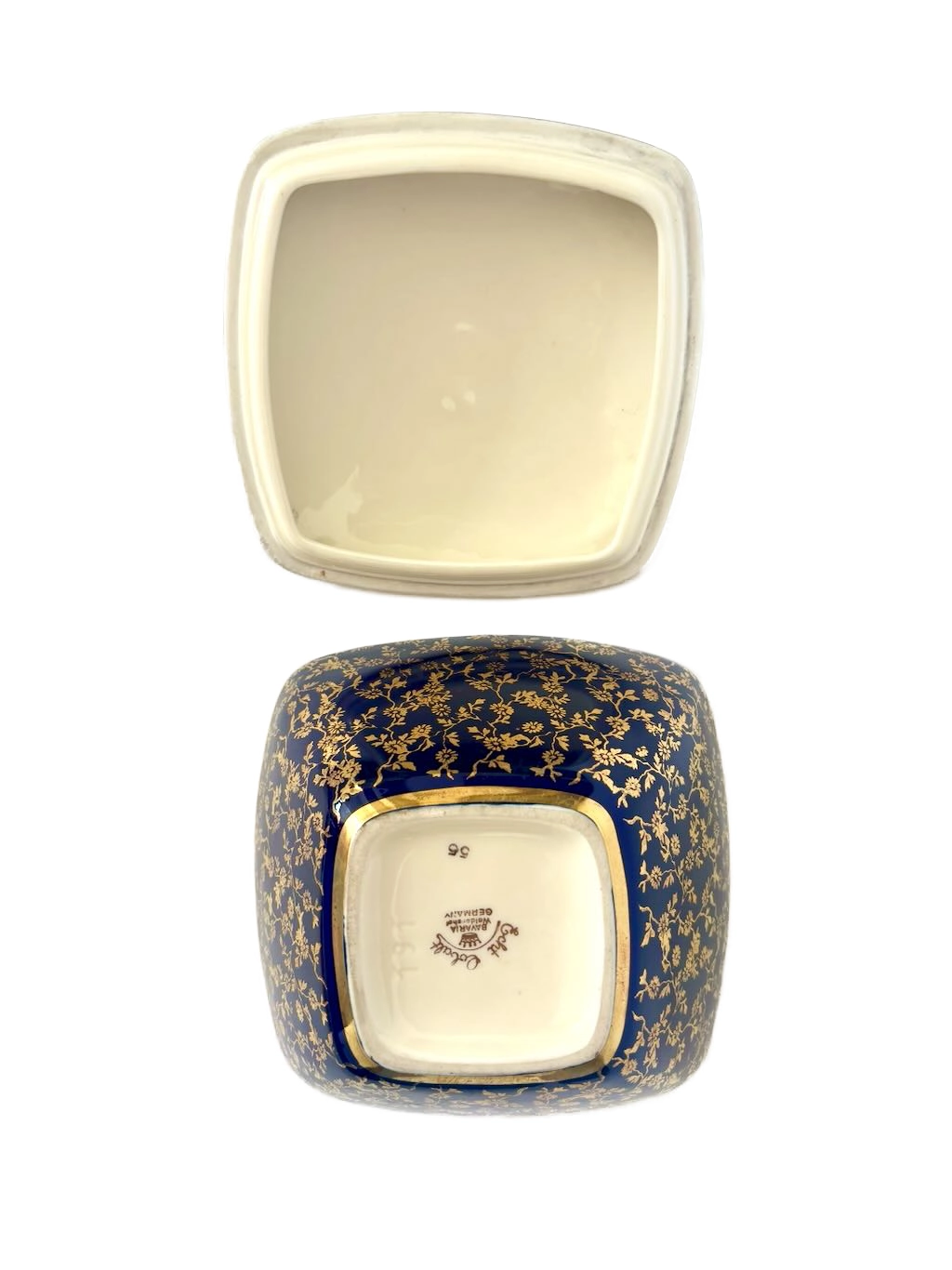
The rich cobalt surface provides a dramatic background for delicate gold blossoms, leaves, and intertwining branches. The decoration extends across the domed lid and the sides of the dish, forming a continuous floral pattern reminiscent of luxurious brocades and decorative chintz textiles.
A broad gilt border frames the base, while a narrower gold band outlines the lid. At the center, a sculpted leaf-shaped handle adds an unusual finishing touch. Its softly iridescent surface contrasts with the deep cobalt glaze and brilliant gold ornament.
The interior features a smooth ivory-white glaze, providing a pleasing contrast to the richly decorated exterior. The rounded-square form gives the piece an architectural quality, while its generous depth makes it suitable for holding wrapped sweets, small keepsakes, or jewelry.
Echt Cobalt and the Tradition of Bavarian Porcelain
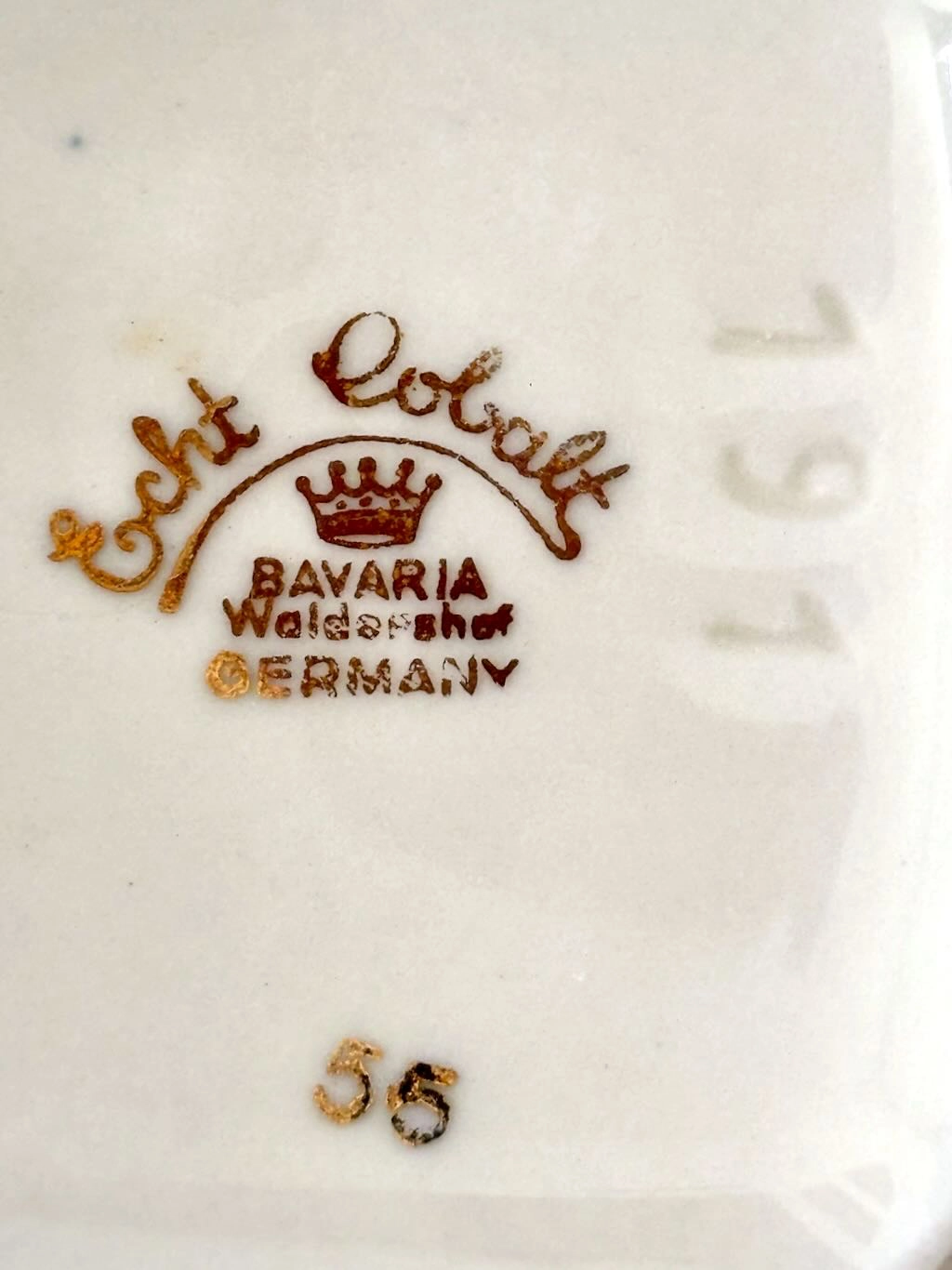
The underside bears a gold backstamp reading Echt Cobalt, Bavaria Waldershof Germany, accompanied by a crown and the number 56.
The German expression Echt Cobalt translates as “genuine cobalt,” referring to the cobalt-based coloring traditionally prized for producing intense blue tones in porcelain decoration.
Cobalt blue has a distinguished history in European ceramics. Porcelain manufacturers valued its exceptional depth and brilliance, particularly when combined with gilded ornament. The contrast between deep blue and gold became associated with luxurious tableware and decorative porcelain.
During the nineteenth and twentieth centuries, Bavarian porcelain manufacturers developed a wide range of cobalt-decorated wares, from formal dinner services to ornamental boxes, vases, and covered dishes.
This example reflects that tradition through its saturated blue surface and elaborate gold floral decoration. The gilding remains particularly attractive across the principal decorated areas, preserving the richness of the original design.
Waldershof and Bavaria’s Porcelain Heritage
Waldershof lies in northeastern Bavaria, within a region historically associated with German porcelain production. Nearby towns, including Selb, Marktredwitz, and Waldsassen, developed important ceramic industries supported by skilled craftsmen and established manufacturing traditions.
During the early twentieth century, Waldershof became home to several porcelain enterprises. Among them was the Johann Haviland porcelain factory, established in 1907, which later became associated with Richard-Ginori and Rosenthal. Another local manufacturer, Franz Neukirchner, also contributed to the town’s porcelain industry.
These companies formed part of Bavaria’s broader tradition of producing both practical and highly decorative porcelain for domestic and international markets.
Although the backstamp on this covered dish clearly identifies Waldershof as its place of origin, it does not conclusively establish which local manufacturer produced or decorated the piece.
Its cobalt ground, elaborate gilding, and elegant form nevertheless reflect the decorative craftsmanship for which Bavarian porcelain became widely appreciated.
Gold Floral Decoration and Sculpted Leaf Finial
The most striking feature of this covered dish is its elaborate floral ornament.
Fine gold branches spread across the cobalt surface, supporting numerous small blossoms and delicately shaped leaves. The pattern creates a dense yet graceful composition, with the intertwined stems lending movement and continuity to the decoration.
The design recalls the richly patterned textiles and floral ornament frequently associated with traditional European interiors. Its combination of cobalt and gold also complements Hollywood Regency and other decorative styles that favor luxurious surfaces, bold contrasts, and ornamental detail.
The leaf-shaped finial provides a particularly attractive focal point. Rather than using a conventional round knob, the designer chose an elongated, sculptural form with a softly lustrous finish.
The handle’s organic shape complements the floral decoration while introducing a subtle contrast in texture and color.
The softly rounded corners of the lid and base further distinguish the piece from conventional circular bonbonnières. Together, these details create a decorative object with both visual richness and an appealing sense of proportion.
A Versatile Mid-Century Decorative Object
Covered porcelain dishes such as this served several purposes in European households. Often called bonbonnières, they traditionally held chocolates, sweets, or other small delicacies. Similar pieces also found use as decorative containers for jewelry and personal keepsakes.
Today, this covered dish offers considerable versatility. It would make an elegant accent on a dressing table, sideboard, coffee table, or display shelf.
The deep cobalt blue provides a dramatic contrast against lighter surroundings, while the extensive gold ornament complements traditional interiors and more eclectic decorative arrangements.
Its approximately 5.5-inch width gives it enough presence to display individually without requiring a large space.
For collectors of Bavarian porcelain, cobalt blue decorative wares, or mid-century European accessories, this covered dish offers an attractive combination of distinctive form, intricate ornament, and historical character.
Condition and Provenance
This covered dish remains in good vintage condition, with no chips. There is slight loss of gilding along the rims, consistent with age and handling. The elaborate gold floral decoration remains well preserved, retaining its attractive contrast against the rich cobalt blue.
The lid and base are complete, including the sculpted leaf-shaped finial. Please examine the photographs carefully for details of the finish and condition.
The piece has remained in the Bernardi Family Collection since the 1960s, providing a documented family history extending over six decades.
Its elegant proportions, richly decorated surface, and distinctive leaf finial make it a charming example of vintage Bavarian decorative porcelain.


