
Description
Vintage Japanese Blue & White Crackle Glaze Hexagonal Ginger Jar
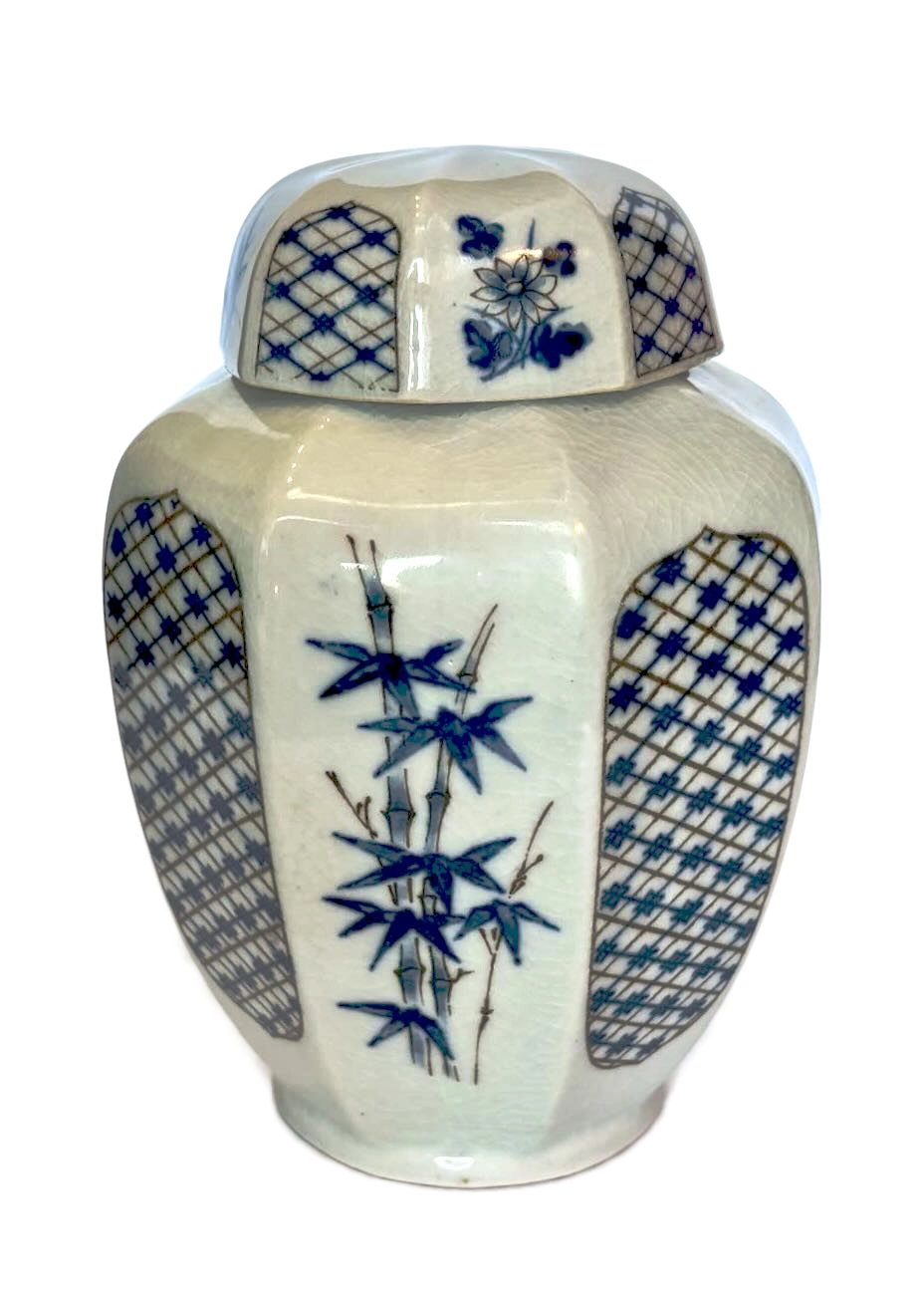
Japanese blue and white porcelain became highly popular throughout Britain and Europe during the mid-twentieth century because it successfully combined traditional craftsmanship with clean, elegant design. This beautifully proportioned hexagonal ginger jar reflects that tradition perfectly. Its graceful faceted form, hand-painted decoration, and unusual three-piece construction immediately distinguish it from the more common round ginger jars produced during the same period.
The alternating decorative panels create a balanced composition that remains attractive from every angle. One panel displays delicate bamboo painted in underglaze cobalt blue, while the next features a finely executed lattice pattern that adds rhythm and contrast without overpowering the overall design. Together they create a harmonious decorative scheme that feels both traditional and distinctly mid-century.
The matching lid continues the same thoughtful design. A butterfly hovers above flowering foliage, introducing another traditional East Asian motif while completing the decoration with elegance and restraint. Every element works together, giving the jar a refined appearance that suits both traditional interiors and contemporary decorative settings.
A Beautiful Example of Mid-Century Japanese Export Porcelain
During the 1950s through the 1970s, Japanese potteries produced some of the finest decorative porcelain for export to Europe and North America. Rather than copying antique Chinese ceramics directly, many workshops developed their own interpretations. They used traditional motifs, carefully balanced proportions, and distinctive crackle glazes.
This ginger jar represents that successful combination of old and new. Its bamboo decoration recalls centuries of East Asian artistic tradition, while the crisp hexagonal form gives the piece a clean architectural quality that appealed to Western buyers during the post-war years.
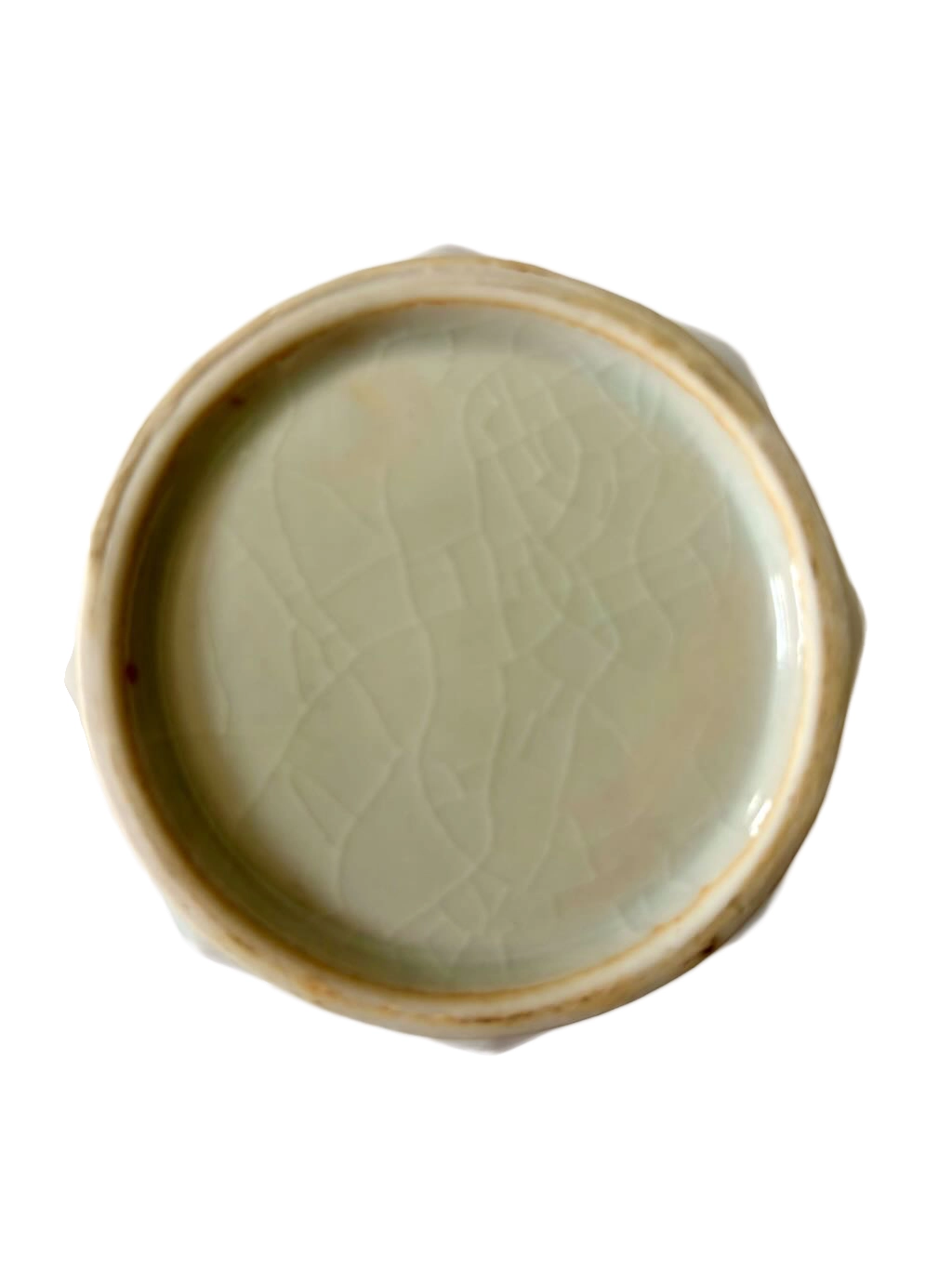
The absence of a factory mark is not unusual. Many Japanese export ceramics from this period originally carried paper labels that disappeared over time, leaving otherwise unmarked examples such as this one.
Unusual Three-Piece Construction
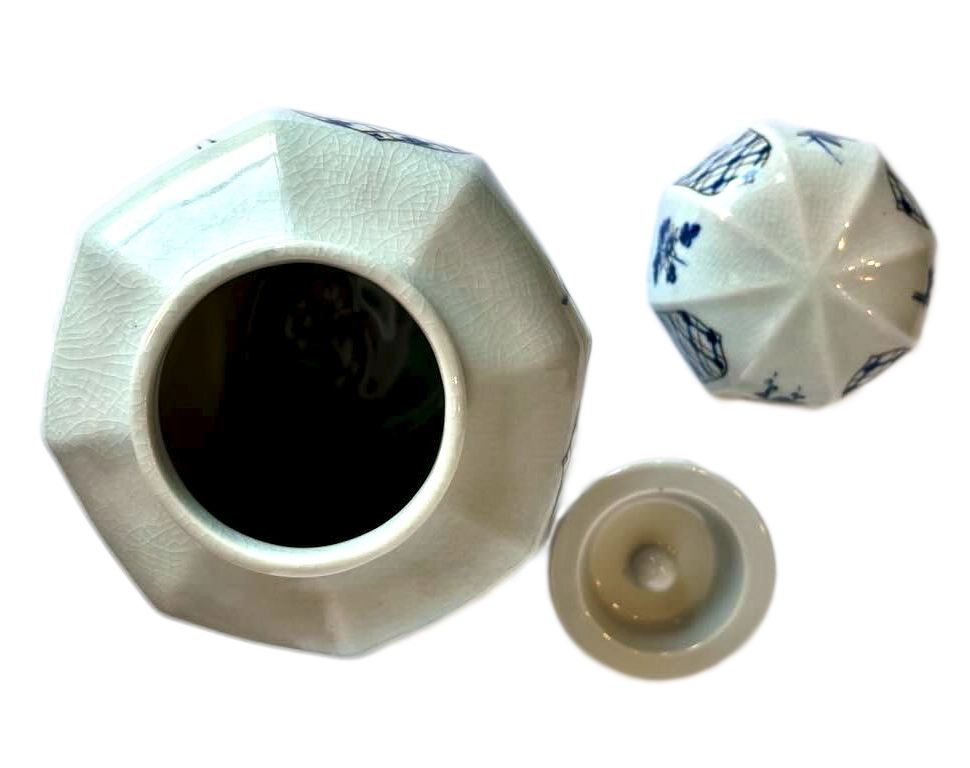
One feature immediately separates this jar from many decorative ginger jars found on today’s market. In addition to the body and matching lid, it includes a fitted inner porcelain cover that creates a three-piece construction.
This additional component demonstrates a higher level of craftsmanship than many comparable decorative jars. It also reflects traditional covered storage vessels that inspired many Japanese export designs during the mid-twentieth century.
Because the inner cover remains with the jar, the piece survives exactly as intended. Collectors often appreciate complete examples since secondary components frequently become separated over decades of use.
Intentional Crackle Glaze and Hand-Painted Decoration
The fine crackle visible across the surface forms part of the original glazing process and should not be confused with damage or age-related deterioration. Potters intentionally created this decorative finish to add texture and visual depth beneath the glossy surface.
Against the soft ivory-toned glaze, the cobalt blue decoration appears especially vibrant. The bamboo panels display confident brushwork with subtle tonal variation, while the geometric lattice panels provide visual structure throughout the design.
The butterfly decorating the lid introduces another traditional symbol associated with beauty and transformation. Combined with the floral decoration, it creates an elegant finishing detail that rewards closer examination.
Decorative Appeal That Complements Many Interiors
Blue and white ceramics have remained popular for centuries because they adapt easily to a wide variety of decorating styles. This ginger jar displays beautifully on its own, yet it also complements collections of Asian ceramics, English blue and white porcelain, chinoiserie furnishings, and traditional country house interiors.
Its proportions make it particularly versatile. At approximately 6¾ inches high, it commands attention without overwhelming surrounding objects. Consequently, it works equally well on a bookshelf, side table, mantel, or within a display cabinet.
The hexagonal silhouette also adds visual interest. As light moves across the faceted sides, the alternating painted panels create changing reflections that continually draw the eye.
This vintage Japanese ginger jar comes from the Bernardi Family Collection. It was acquired in the United Kingdom during the 1960s and has remained carefully preserved for decades. Today it offers collectors an attractive example of mid-century Japanese porcelain that combines traditional decorative motifs, quality craftsmanship, and enduring display appeal.