


Description
Vintage Charles Jourdan Handbag with Sculptural Leatherwork
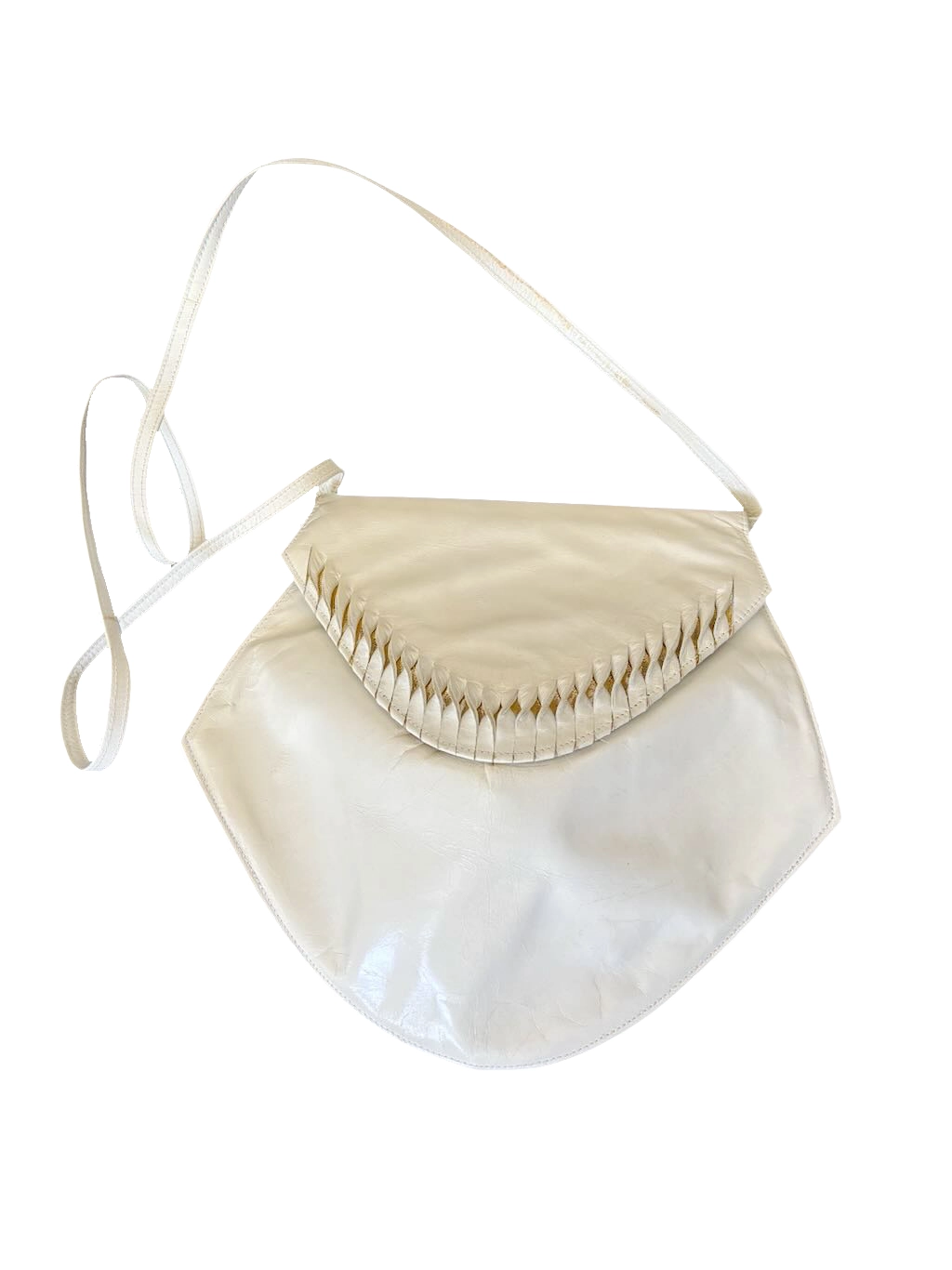
This vintage Charles Jourdan handbag combines soft metallic white leather with an unusual geometric construction and intricate cut-leather decoration. Purchased directly from the Charles Jourdan boutique on the Avenue des Champs-Élysées in Paris during the mid-to-late 1980s, the shoulder bag reflects the house’s longstanding interest in treating leather construction itself as an element of design.
Its softly lustrous surface gives the white leather a subtle metallic or pearlescent quality rather than the appearance of conventional matte leather. Light moves across the irregular planes of the bag, emphasizing its three-dimensional form and giving the surface a changing sheen.
Charles Jourdan Shoulder Bag with a Geometric Form
The silhouette immediately distinguishes this Charles Jourdan shoulder bag. Rather than using a conventional rectangular body, the designer created a broad geometric shape with angular sides and a softly curved lower edge.
The leather remains supple, but a firmer internal structure supports the bag and gives definition to its unusual silhouette. This combination allows the exterior to retain the tactile quality of soft leather while maintaining the architectural geometry of the design.
A long, slender leather strap allows the handbag to sit comfortably on the shoulder. Its approximately 19-inch (48.3 cm) drop gives the bag the elegant elongated proportions characteristic of many shoulder bags of the period.
Cut and Twisted Leather Creates the Decoration
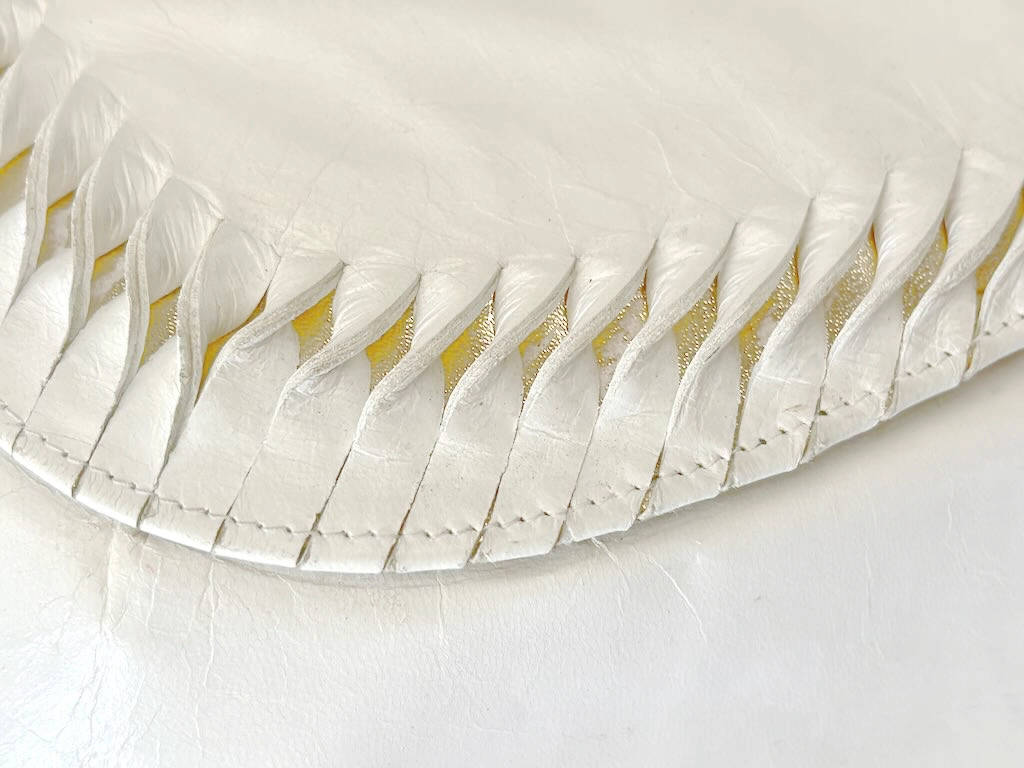
The most distinctive feature appears along the curved edge of the flap. Narrow sections of leather have been precisely cut and manipulated into a repeated twisted pattern, producing a dimensional border rather than an applied ornament.
As each strip twists, glimpses of a reflective gold-toned surface appear beneath the white leather. The effect changes with the light and viewing angle, creating flashes of gold between the folded sections. The detail is particularly effective against the pearlescent finish of the surrounding leather.
This construction illustrates an approach found in some of the most interesting vintage Charles Jourdan handbags: seams, folds, openings and leather manipulation become part of the decoration rather than simply serving a structural purpose.
Metallic White Leather with a Pearlescent Sheen
The leather contributes as much to the design as the unusual construction. Its white finish has a restrained metallic sheen that catches light across the surface without becoming highly reflective.
Because the leather is soft, natural creases appear where it follows the bag’s three-dimensional structure. These variations give the surface depth and help reveal how the handbag was constructed rather than indicating the kind of heavy wear associated with a frequently used bag.
The combination of metallic white and glimpses of gold gives the handbag a sophisticated character while remaining remarkably restrained. There is no prominent exterior logo competing with the shape or leatherwork; the design itself provides the visual identity.
Leather Interior and Original Charles Jourdan Plaque
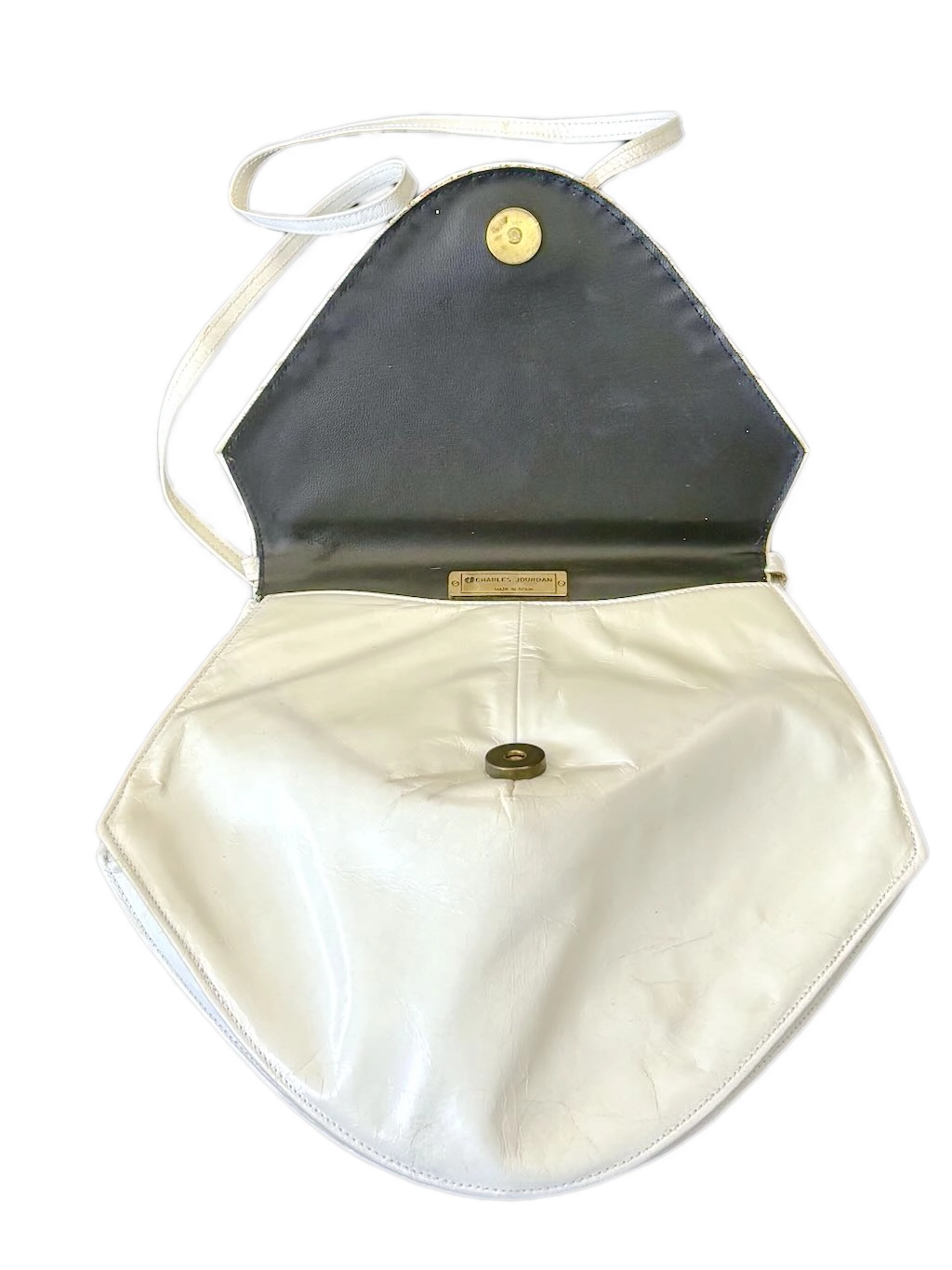
Opening the flap reveals a contrasting dark interior that creates a dramatic counterpoint to the pale exterior. The interior is leather lined and includes a zippered pocket for smaller personal items.
The original rectangular gold-tone plaque remains attached inside and reads CHARLES JOURDAN / MADE IN SPAIN. The bag also retains its circular magnetic closure, which remains functional.
The Made in Spain marking is entirely consistent with Charles Jourdan’s history as an international fashion house. Although the company was founded in Romans-sur-Isère and became one of the important names in French footwear, Charles Jourdan used manufacturing outside France for certain products and periods.
A 1980s Charles Jourdan Designer Handbag
By the 1980s, Charles Jourdan had developed far beyond the footwear company established earlier in the century. Shoes remained central to its identity, but handbags and other leather accessories allowed the house to apply its interest in construction, proportion and material to different forms.
That design philosophy is particularly visible in this 1980s Charles Jourdan handbag. The geometric body, manipulated leather border and shimmering surface transform functional components into decorative features. Instead of relying on conspicuous branding, the bag draws attention through material and construction.
Charles Jourdan’s reputation had been built partly on this willingness to experiment. Across its footwear and accessories, the house explored geometry, unusual proportions, distinctive surfaces and unexpected details while maintaining the technical knowledge associated with luxury leather goods.
Purchased at the Charles Jourdan Champs-Élysées Boutique
The documented history of this handbag adds an important dimension to the piece. It was personally purchased at the Charles Jourdan boutique on the Avenue des Champs-Élysées in Paris during the mid-to-late 1980s.
That provenance places the bag within the period when Charles Jourdan remained an internationally recognized French fashion house with its own retail presence. The original interior branding and Made in Spain plaque remain with the handbag, preserving further evidence of its history.
Collectible Vintage French Designer Fashion
This vintage Charles Jourdan leather handbag offers more than a recognizable designer name. Its unusual construction represents a period when handbag design could be experimental without depending upon oversized logos or immediately identifiable monograms.
The metallic white leather, flashes of gold, sculptural silhouette and carefully manipulated flap give the bag a distinctive presence more than three decades after it was made. Its geometric character also connects naturally with the architectural approach to form that appeared repeatedly in Charles Jourdan shoes and accessories.
For collectors of vintage designer handbags, 1980s fashion and French design, it provides an especially interesting example of Charles Jourdan’s work beyond footwear and demonstrates why the house’s vintage leather goods deserve renewed attention.