
Description
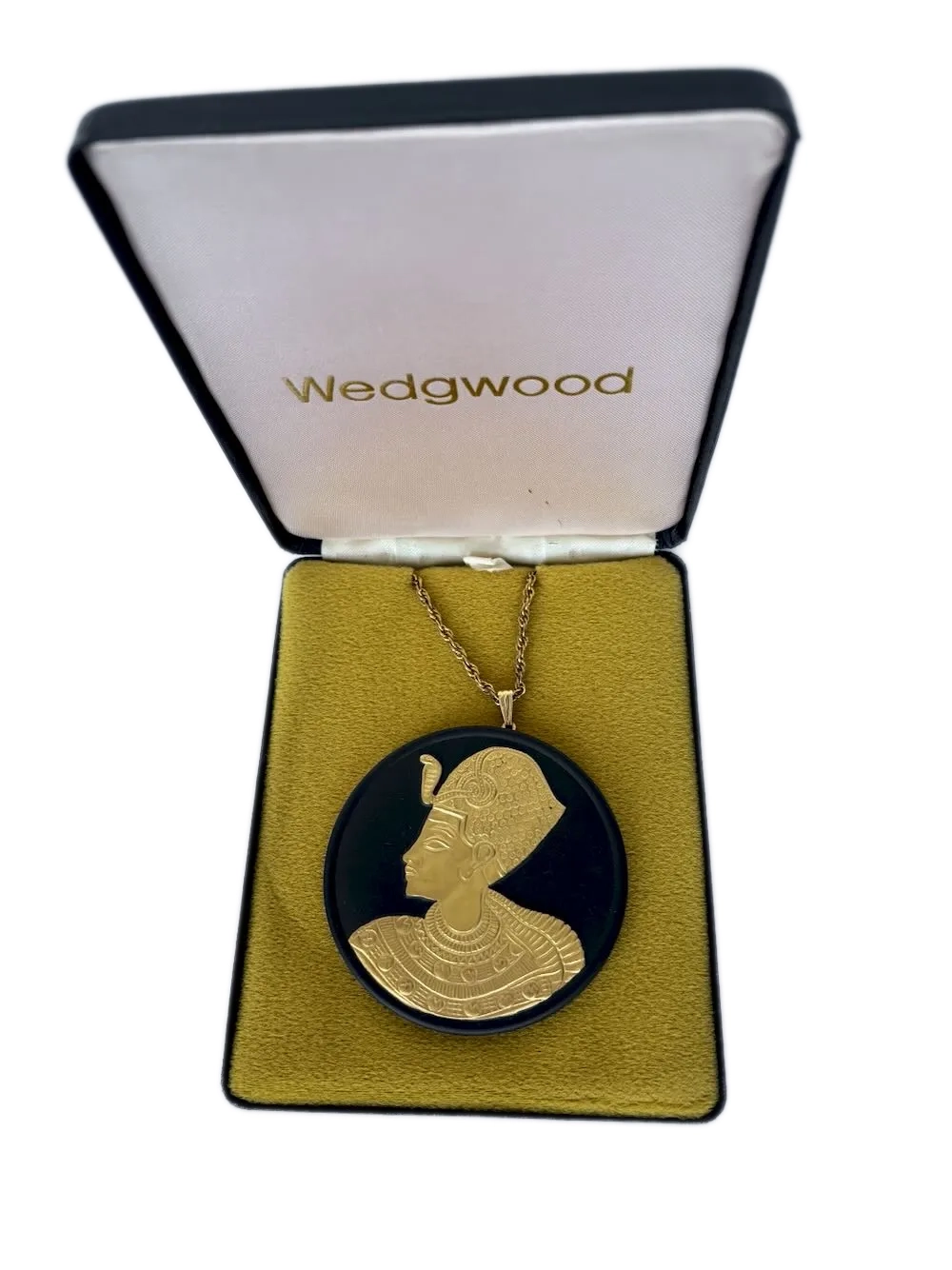
Wedgwood 7cm Tutankhamun Black Basalt Pendant Necklace Boxed
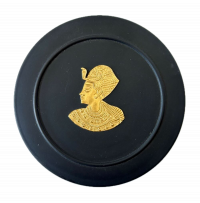
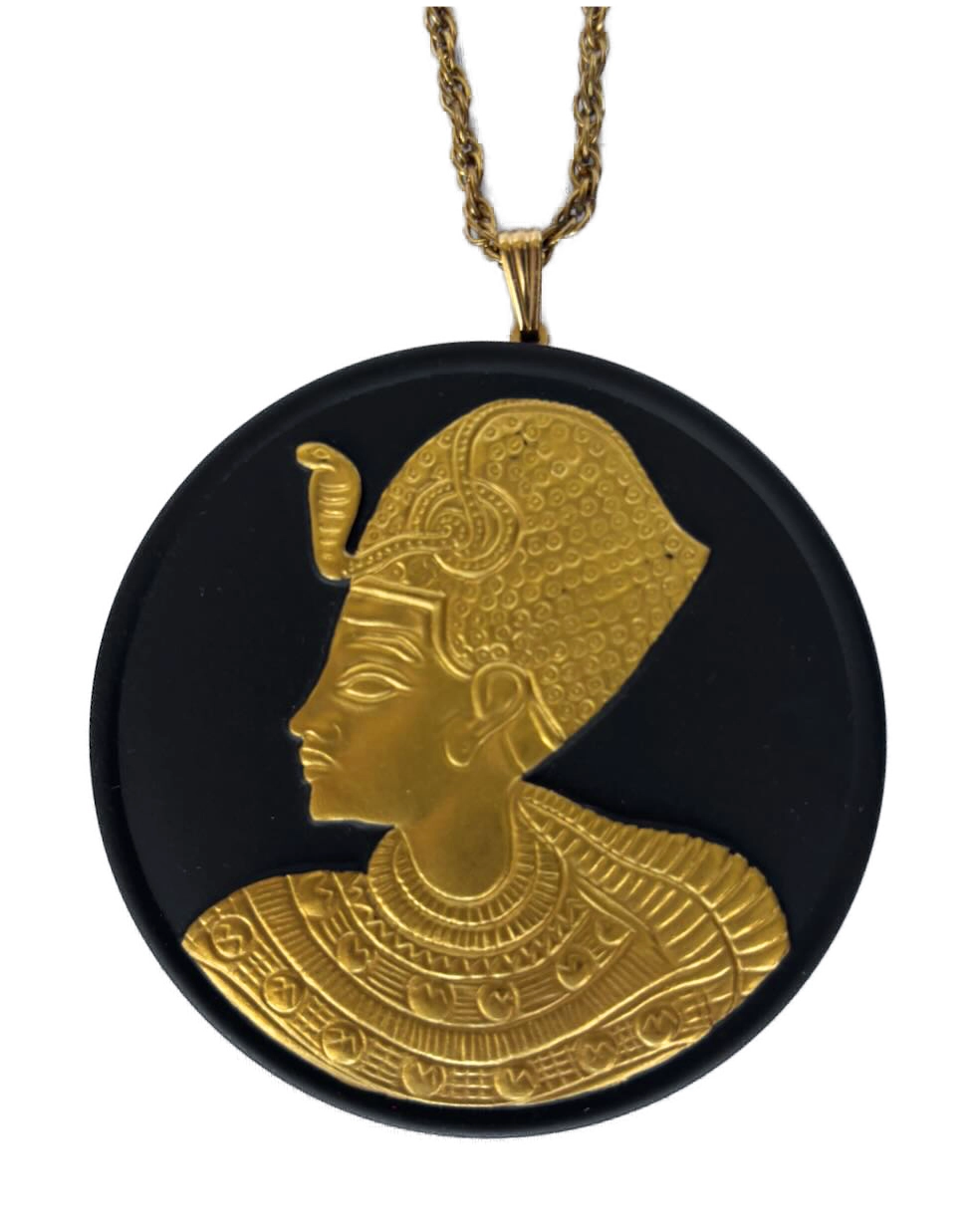
This striking Wedgwood Egyptian Revival pendant necklace features a large 7 cm black basalt medallion decorated with a gilt profile portrait of Tutankhamun rendered in crisp raised relief. Produced during the late twentieth century Egyptian Revival period, the design reflects the renewed fascination with ancient Egypt that swept through fashion, decorative arts, jewellery, and interior design following the internationally celebrated Tutankhamun exhibitions of the 1970s.
The pendant is impressive in scale, measuring approximately 7 cm (about 2.75 inches) in diameter, giving it far greater visual presence than many smaller Wedgwood jewellery pieces from the same era. Against the deep matte black basalt ground, the gold portrait stands out dramatically, emphasizing the stylized headdress, collar, and elegant side profile associated with ancient Egyptian royal imagery.
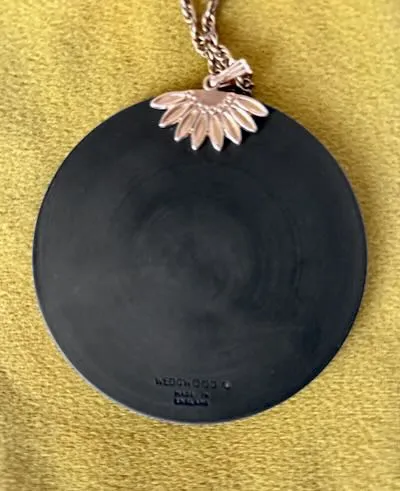
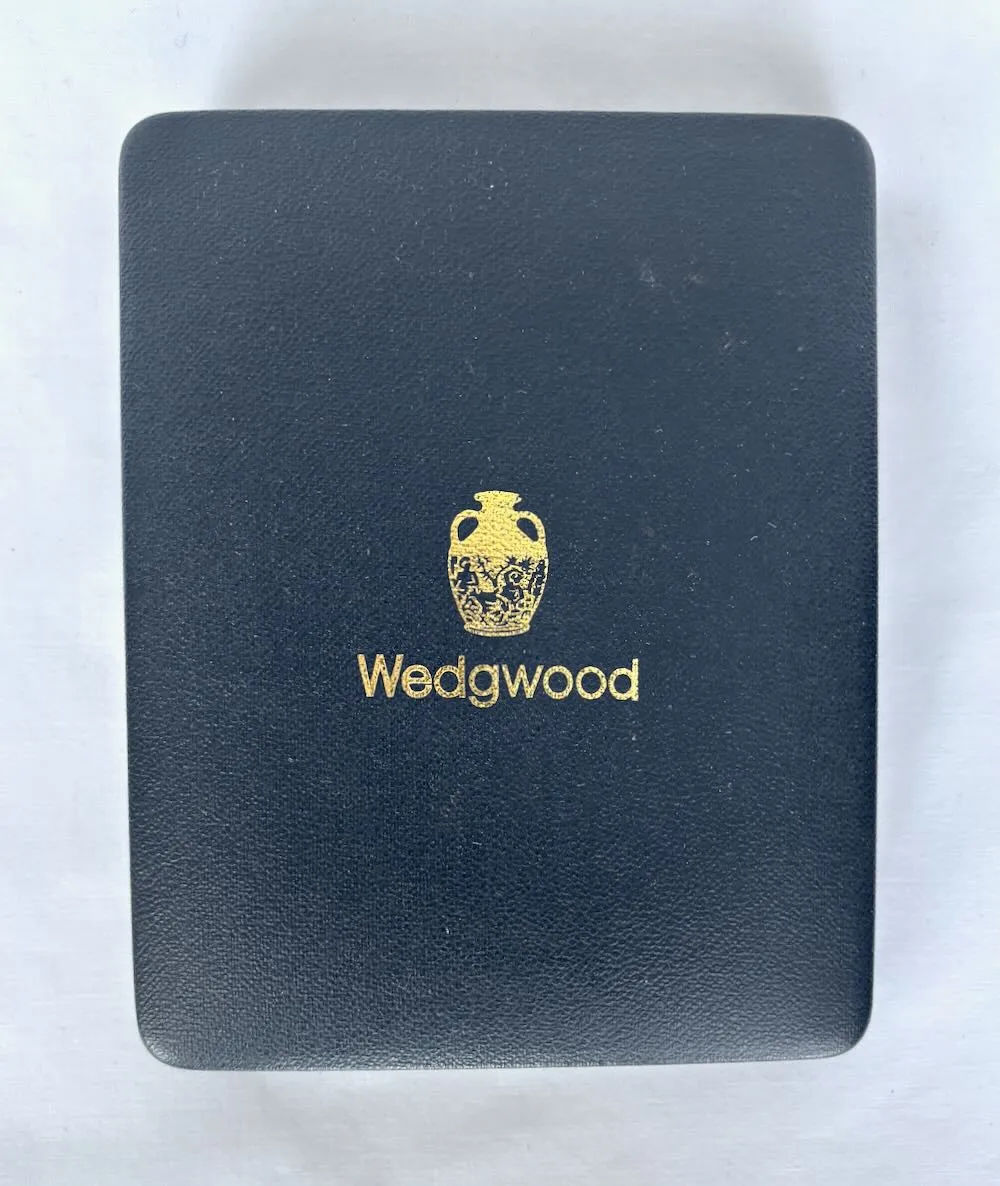
The necklace retains its original gilt chain measuring approximately 28 inches (71.1 cm) long and is accompanied by its original Wedgwood presentation box with gold Wedgwood logo to both the exterior and interior. The reverse of the pendant is impressed:
WEDGWOOD
MADE IN
ENGLAND
The piece appears to have never been used and remains in very good vintage condition with strong gilt decoration, clean surfaces, and original presentation box included.
Wedgwood and the Egyptian Revival Movement
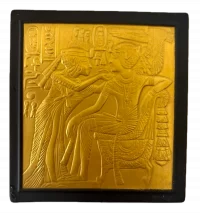
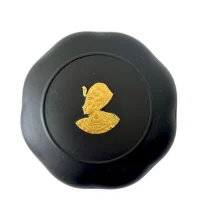
During the late 1970s and early 1980s, Wedgwood produced a remarkable series of Egyptian Revival decorative objects and jewellery inspired by ancient Egyptian art and archaeology. The worldwide fascination with Tutankhamun and the major museum exhibitions of the era created renewed demand for designs incorporating pharaonic imagery, hieroglyphics, temple motifs, and archaeological aesthetics.
Wedgwood interpreted this movement through the company’s historic ceramic traditions, particularly its use of black basalt. Originally developed in the eighteenth century by Josiah Wedgwood, black basalt is a dense unglazed stoneware prized for its smooth matte finish and sculptural qualities. The material proved especially suited to Egyptian Revival themes because its dramatic black surface created a powerful contrast against gold decoration.
Unlike many mass-produced Egyptian-style accessories of the period, Wedgwood’s basalt jewellery retained a refined and sculptural elegance rooted in the company’s long decorative arts tradition. These pieces translated archaeological inspiration into wearable decorative art while preserving the precision associated with Wedgwood craftsmanship.
Tutankhamun and Twentieth Century Egyptomania
Few historical figures shaped twentieth century Egyptomania more than Tutankhamun. Following the discovery of his tomb in 1922 and the internationally touring exhibitions of his treasures during the 1970s, the young pharaoh became one of the most recognizable symbols of ancient Egypt worldwide.
Designers across fashion, cosmetics, jewellery, furniture, and decorative arts embraced Egyptian imagery during this period. Wedgwood’s interpretation distilled those influences into a bold and highly graphic composition. The side-profile portrait recalls both ancient Egyptian wall reliefs and the stylized visual language of Art Deco Egyptian Revival design earlier in the century.
The result feels simultaneously ancient and modern, allowing the pendant to function both as jewellery and as a miniature sculptural object.
A Dramatic Statement Pendant
At approximately 7 cm (2.75 inches) in diameter, this is not a delicate cameo pendant. Its scale gives it the presence of a true statement medallion. The contrast between matte black basalt and luminous gilt decoration creates a strong visual effect whether displayed in its original box or worn with the long gilt chain.
The proportions and presentation reflect the bold jewellery styling popular during the late 1970s and early 1980s, when oversized pendants and historically inspired accessories became fashionable once again.
Examples retaining their original Wedgwood presentation boxes and preserved gilt surfaces are increasingly difficult to locate, particularly in apparently unused condition.