
Description
Wedgwood Black Basalt Egyptian Sphinx Monopodia Candlestick, Early 19th Century (circa 1800–1815)
A rare and architecturally striking Wedgwood black basalt Egyptian Revival candlestick, dating to the early 19th century, circa 1800–1815. This sculptural form belongs to the height of the Regency-era fascination with ancient Egypt, when Wedgwood translated archaeological inspiration into refined neoclassical design.
Design and Form
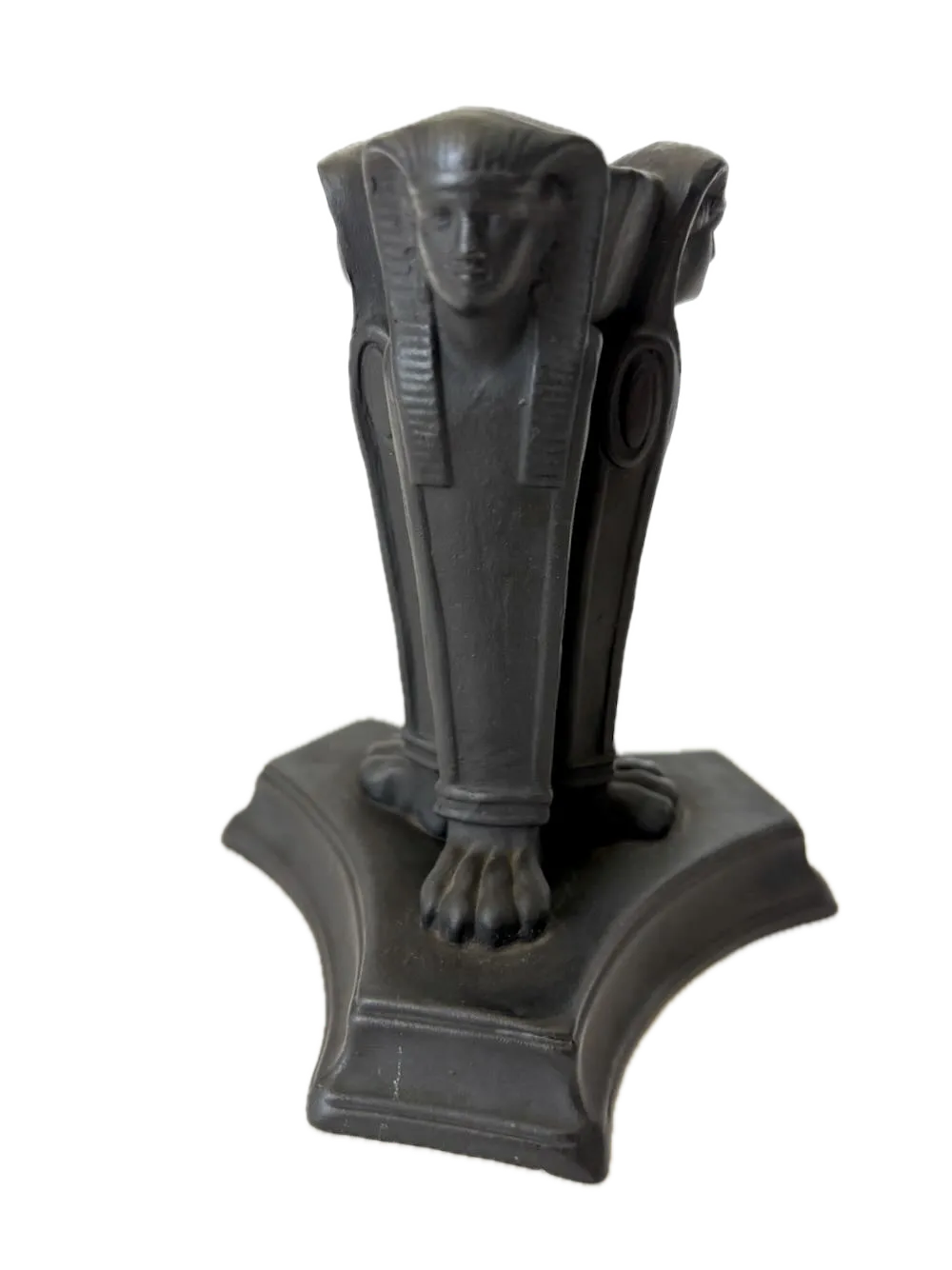
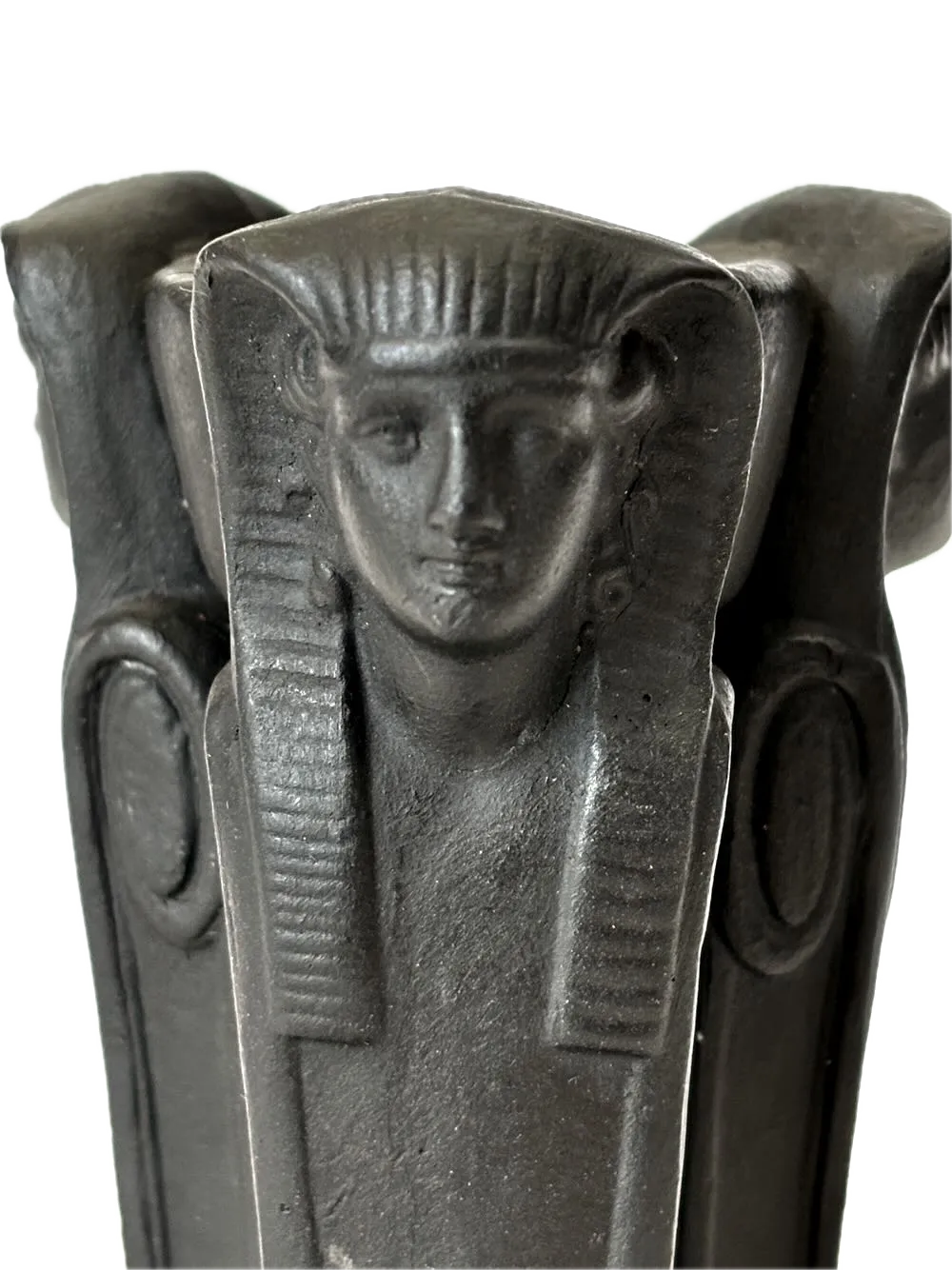
The candlestick is modeled as a monopodia, a three-legged form in which each support is rendered as a stylized sphinx figure. Here, three Egyptian-inspired sphinxes rise from a triangular plinth, their human heads crowned with the traditional nemes headdress, complete with defined lappets and finely articulated features. The faces are serene and idealized, reflecting the neoclassical interpretation of Egyptian art prevalent in the period.
Each sphinx terminates in a lion’s paw foot, grounding the piece with a sense of strength and symmetry, while the triangular base with stepped moulding reflects contemporary Regency design principles. Oval cartouche-like panels decorate the sides of the supports, reinforcing the Egyptian theme without overwhelming the sculptural clarity of the form.
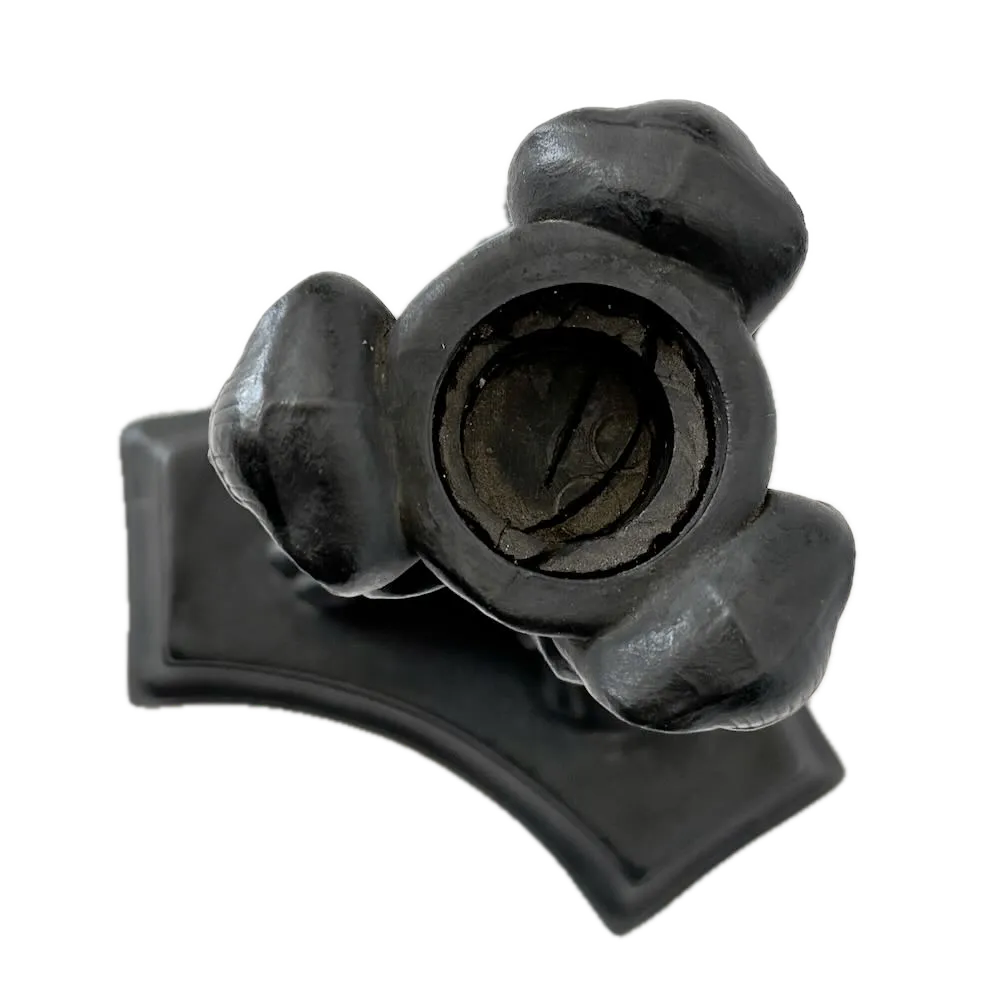
The upper section retains the central socket, though the original candle nozzle or sconce is no longer present. Historically, these nozzles were often decorated in contrasting rosso antico (terracotta-colored) elements, creating a striking two-tone effect against the black basalt body.
Material and Craftsmanship
Executed in Wedgwood’s renowned black basalt, this piece exemplifies one of the firm’s most technically accomplished ceramic bodies. Developed in the 18th century, black basalt is a dense, unglazed stoneware with a smooth, velvety surface, prized for its ability to emulate carved stone or ancient bronze.
The crispness of the modeling seen here — particularly in the facial features, headdress detailing, and paw feet — is characteristic of early production, when mould work and finishing were executed to a particularly high standard. The surface has developed a soft, natural patina consistent with age, enhancing its sculptural depth.
Context and Rarity
This form belongs to the Egyptian Revival movement that followed Napoleon’s campaign in Egypt (1798–1801), which ignited widespread interest in Egyptian art and symbolism across Europe. Wedgwood was at the forefront of this movement, producing a range of Egyptian-inspired objects, though complex architectural forms such as this monopodia candlestick were made in relatively limited numbers.
Importantly, this specific model was not reproduced in later Wedgwood Egyptian revival campaigns, including the 20th-century revivals. As a result, surviving examples can be confidently attributed to the early 19th century, enhancing both their historical significance and collectability.
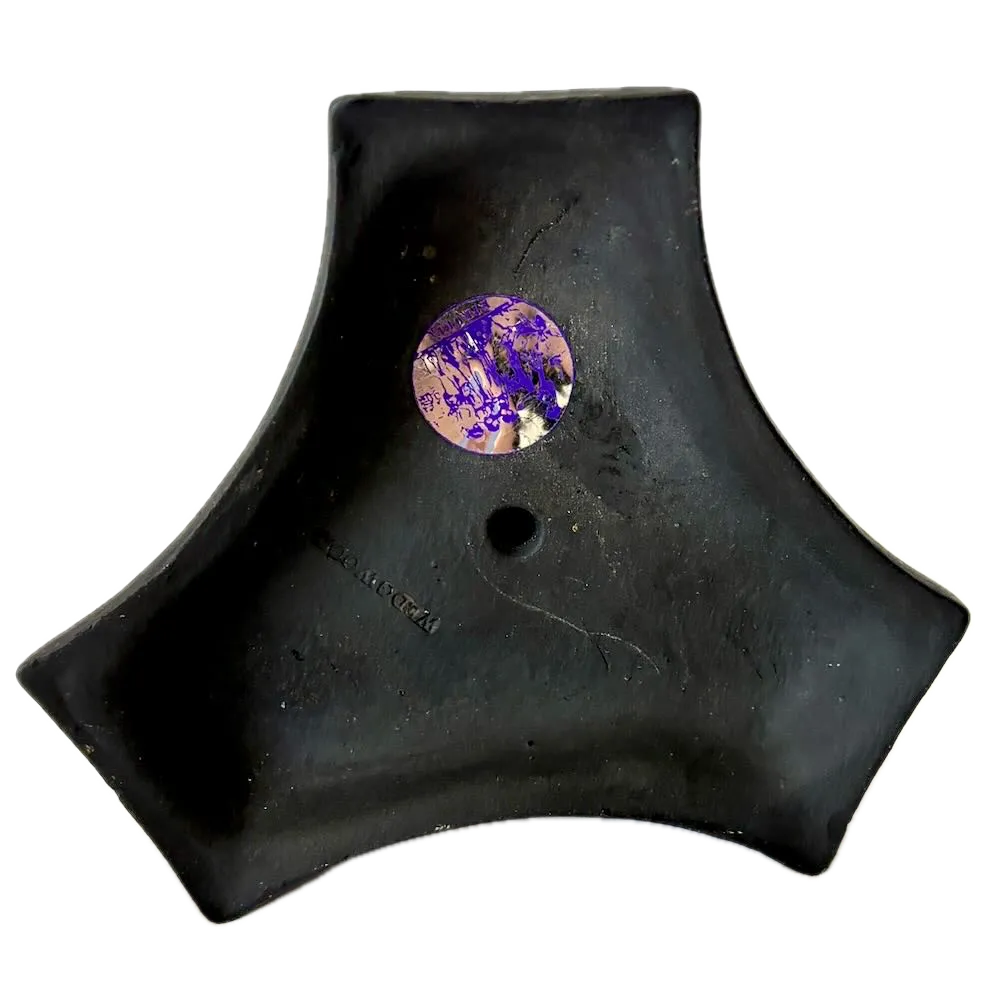
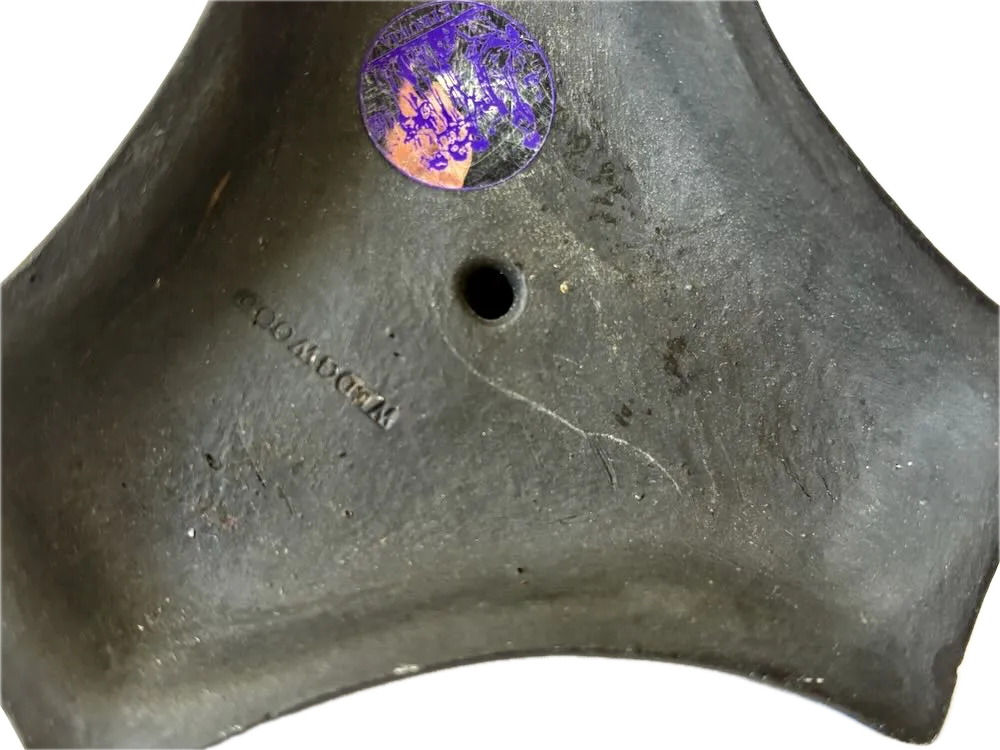
The underside bears the impressed WEDGWOOD mark, without the later addition of “ENGLAND,” consistent with production prior to 1891 and fully in line with an early 19th-century date.
The candlestick remains structurally sound, with well-preserved modeling throughout. The absence of the original nozzle is noted, but does not detract from the piece’s strong sculptural presence and rarity as an early Wedgwood Egyptian form.