
Description
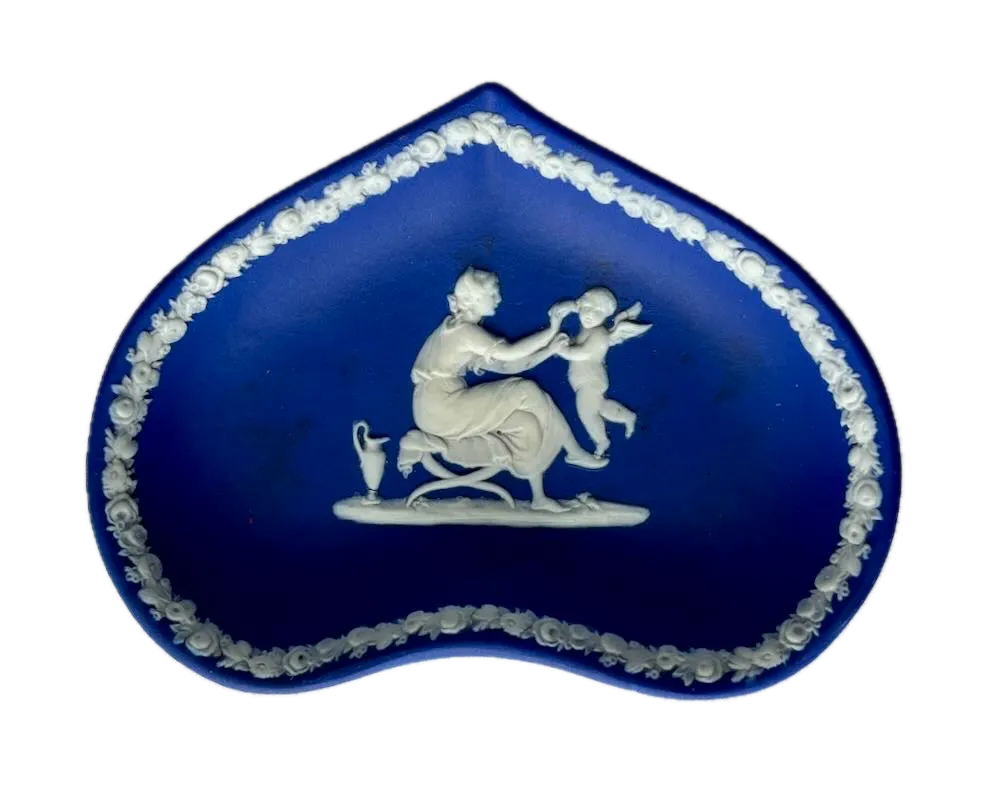
Wedgwood Dark Blue Jasperware Heart-Shaped Dish with Classical Figure and Cherub, England Circa 1891–1908
A refined and beautifully preserved Wedgwood dark blue jasperware heart-shaped dish, dating to the late 19th or early 20th century, circa 1891–1908. This elegant piece reflects the enduring influence of Wedgwood’s neoclassical tradition, first developed in the 18th century and continued into later production with remarkable consistency in quality and design.
Craftsmanship and Material
The dish is executed in Wedgwood’s distinctive jasperware body, a matte, unglazed ceramic perfected by Josiah Wedgwood in the 1770s. This innovation was celebrated for its durability and its ability to replicate the look of ancient cameo carvings. The deep cobalt blue ground—one of the most recognizable and desirable Wedgwood colorways—serves as a rich backdrop for the finely modeled white relief decoration applied in the classical “sprigging” technique. This process, in which individually cast elements are applied by hand to the surface, allows for exceptional detail and clarity, and remains one of the defining characteristics of authentic jasperware.
At the center, a neoclassical scene unfolds with a seated female figure—often interpreted as a muse or Venus—gently engaging with a winged cherub. This type of subject draws directly from ancient Greek and Roman art, themes that Wedgwood famously adapted through collaborations with designers such as John Flaxman Jr., whose work helped define the company’s visual identity. The composition is both intimate and balanced, framed by a delicate garland border of floral and foliate elements that follows the contours of the heart-shaped form with precision and elegance.
Marks, Dating, and Condition
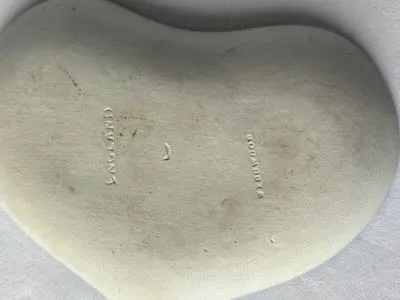
The underside bears the impressed WEDGWOOD and ENGLAND marks. The presence of ENGLAND without the later “Made in England” designation places production after 1891, when export marking became required, and before the early 20th-century shift in marking conventions. This supports a dating within the 1891–1908 period, placing the piece firmly within the late Victorian to early Edwardian era.
The condition is excellent, with no chips, cracks, or restoration observed. The relief remains crisp and well-defined, and the surface retains its original matte finish with only minimal, age-appropriate signs of handling. Pieces of this form were both decorative and functional, often used as small presentation dishes or personal items, and this example retains a quiet elegance that makes it equally suitable for display or use.
Wedgwood jasperware has long been collected for its combination of technical innovation, historical reference, and timeless design. While many examples were produced over time, earlier pieces with clear marks, strong color, and well-preserved relief continue to hold enduring appeal. The heart-shaped form adds a subtle decorative distinction, offering a softer and more sculptural alternative to the more commonly encountered round or oval dishes.