

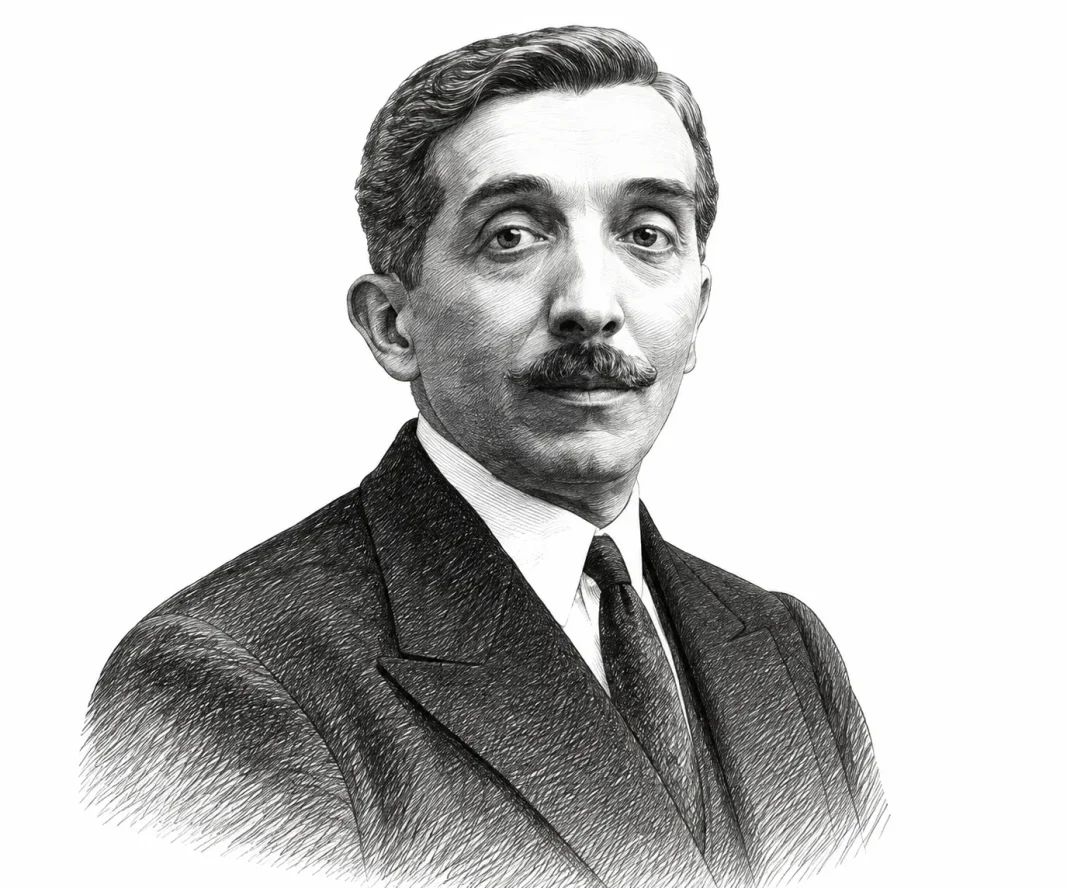
Few names in 20th-century French footwear combine craftsmanship, modern design and provocative visual culture quite like Charles Jourdan. From its beginnings in Romans-sur-Isère, the historic center of French shoemaking, the company developed from a regional manufacturer into an internationally recognized luxury house. Its shoes appeared under the Charles Jourdan name and were also produced for some of the most important designers in French fashion.
Yet the Charles Jourdan story extends well beyond shoes. Over the decades, the house embraced handbags and accessories, experimented with color and unconventional materials, collaborated with fashion designers, and transformed shoe advertising through its extraordinary relationship with photographer Guy Bourdin. At its height, Charles Jourdan represented a particularly French combination of technical craftsmanship and adventurous modern design.
Its history also reflects the changing fortunes of the French luxury footwear industry itself. Jourdan rose from the workshops of Romans, flourished internationally during the postwar decades, became one of the defining footwear names of the 1960s through the 1980s, and later struggled through ownership changes and the restructuring of European shoe manufacturing. The liquidation of the historic manufacturing company did not, however, bring the Charles Jourdan story to an end. New ownership eventually brought new attempts to revive the house, and contemporary designers have continued to look to its remarkable archive for inspiration.
Charles Jourdan and the Shoemaking Tradition of Romans-sur-Isère
The story begins in Romans-sur-Isère, in the Drôme region of southeastern France. Long before Charles Jourdan established his business there, Romans had developed an important leather-working tradition. The abundance of water encouraged tanning and leather preparation, while shoemaking eventually became deeply embedded in the city’s economic and cultural identity.
By the late 19th and early 20th centuries, industrial manufacturers had joined the city’s traditional craftspeople. Skilled cutters, stitchers, pattern makers and other specialized workers created an environment capable of supporting increasingly sophisticated shoe production.
Charles Jourdan entered this world as a leather cutter and shoemaker. The precise founding date of his enterprise varies according to historical sources. Some date the establishment of his shoe business to 1919, while French records associate 1921 with the creation of the Jourdan enterprise and its early brand development. Rather than representing a single moment, the business appears to have evolved from Jourdan’s work as an independent craftsman into an increasingly organized manufacturing operation during these early years.
Jourdan combined traditional shoemaking knowledge with an understanding that modern footwear could become a branded fashion product rather than an anonymous manufactured necessity. This combination of craftsmanship, design and branding would become central to the company’s growth.
From Workshop to French Footwear Manufacturer
Charles Jourdan gradually transformed his workshop into an industrial enterprise without abandoning the craftsmanship associated with fine French footwear. He established a factory on the edge of Romans’ Saint-Nicolas district, placing the company within a regional manufacturing network already known for leather and shoes.
Fine shoes are complicated objects. Their apparent simplicity conceals numerous components and highly specialized operations involving pattern cutting, shaping, stitching, lasting, heel construction, finishing and leatherwork. Jourdan’s ability to organize those skills at manufacturing scale eventually allowed the company to serve not only its own customers but other important fashion houses.
French records identify Seducta as Charles Jourdan’s first important brand. Sources vary on whether its formal introduction should be dated to 1921 or around 1930, another reminder that early company histories often developed less neatly than later corporate timelines suggest.
The name itself is revealing. Shoes were increasingly being sold not simply for durability or workmanship but for their ability to express femininity, elegance and attraction. Jourdan understood that footwear could possess an identity of its own, and eventually the Charles Jourdan name became the more powerful identity. Shoes carrying the creator’s name placed Jourdan within the broader 20th-century transformation in which designers and fashion houses themselves became recognizable brands.
Charles Jourdan, Christian Dior and French Couture
One of the most important chapters in Charles Jourdan history involves the company’s work for other designers. Jourdan became a leading French luxury shoe manufacturer that produced both its own designs and footwear for prominent designers, including Christian Dior and Pierre Cardin. Surviving museum examples document these relationships, identifying the fashion designer and Charles Jourdan as the manufacturer.
These associations demonstrate the reputation the Jourdan workshops had achieved. Producing shoes for a major couture house required more than manufacturing capacity. Footwear had to complement the proportions, materials and visual ideas of the clothing while meeting the technical demands of a wearable object.
The relationship between couture and specialist manufacturers formed an important part of the French fashion system. A celebrated fashion designer did not necessarily manufacture every object carrying the house’s design language. Specialist makers translated concepts into gloves, hats, jewelry, handbags and shoes, and Charles Jourdan occupied an important place within that ecosystem.
Charles Jourdan Comes to Paris
A decisive step came in 1957, when the first Paris boutique under the Charles Jourdan name opened. The move strengthened the company’s identity as a fashion house rather than simply a manufacturer based in Romans.
During the 1960s, Charles Jourdan expanded internationally. Boutiques eventually appeared in cities including London, Munich, New York, Los Angeles, Miami and Tokyo. A business rooted in a provincial French shoemaking center had become an international luxury name.
The 1960s represented an especially important period in Jourdan’s success. The company became known for producing a relatively concentrated selection of designs in an unusually broad variety of colors. Color would become one of the most memorable elements of the Charles Jourdan identity.
Color, Geometry and Modern Shoes
Charles Jourdan footwear from the 1960s reveals a company willing to experiment. Designers played with squared toes, sharply defined shapes, unusual heels, patent leather, contrasting surfaces and modern synthetic materials. Familiar shoe forms could become distinctly modern through angular construction, unexpected proportions or metallic heels.
Other surviving shoes demonstrate the range of Jourdan’s approach. Pointed heels could coexist with squared toes, brilliant kidskin could replace conventional neutral leather, and patent surfaces could contrast with satin or matte materials. These were not simply fashionable shoes decorated according to seasonal taste; shape itself became a design element.
That distinction helps explain why vintage Jourdan footwear remains interesting today. Many pieces can be understood almost as small architectural objects. Heel, sole, upper, opening and toe become a composition of planes, curves, proportions and contrasting materials.
The Jourdan Family and International Expansion
The company increasingly became a family enterprise, and Charles Jourdan’s sons played important roles in its expansion. Roland Jourdan, in particular, became closely associated with the company’s international development and modern image.
Under the younger generation, Jourdan moved confidently into a changing fashion environment. Postwar consumers had become increasingly aware of designers, magazines, celebrity culture and international trends. Shoes could no longer function merely as accessories chosen after an outfit; they could become the visual focus of the entire look. This understanding would lead to one of the most important relationships in fashion advertising.
Charles Jourdan and Guy Bourdin
The collaboration between Charles Jourdan and Guy Bourdin deserves a special place in both fashion and photographic history. Bourdin had already developed a distinctive presence at French Vogue when accessories editor Francine Crescent brought his work to Roland Jourdan’s attention in the early 1960s. Jourdan wanted a photographer for a new advertising campaign, and Bourdin reportedly agreed on the condition that he retain considerable artistic freedom.
Roland Jourdan accepted, and Bourdin photographed images for the company in 1964 and 1965 before undertaking a campaign in New York in 1966. The relationship ultimately became one of the most recognizable collaborations between a fashion brand and a photographer of the period.
When Shoe Advertising Became Visual Art
The resulting photographs did not behave like conventional shoe advertisements. Instead of simply placing a shoe against a neutral background and presenting it as merchandise, Bourdin constructed strange, seductive and sometimes unsettling visual narratives.
Shoes might appear almost incidentally within a larger scene. Cropped bodies, saturated colors, mysterious locations, unusual poses and surreal compositions encouraged viewers to imagine stories without ever being told exactly what those stories were. The strategy was daring because the advertisement sometimes seemed more interested in creating an atmosphere than explaining the product, yet that was precisely its power. Bourdin helped turn Charles Jourdan into a visual idea.
The campaigns also anticipated a broader change in luxury advertising. Fashion houses increasingly understood that they could sell a world, an attitude and an emotional response rather than simply document an object. The importance of the Bourdin campaigns therefore extends beyond their immediate commercial purpose: they helped establish the principle that the image surrounding a fashion object could become as culturally important as the object itself.
For Charles Jourdan, this was particularly effective because shoes lend themselves naturally to visual storytelling. They imply movement, departure, arrival, nightlife, sexuality and transformation, and Bourdin exploited all of these associations.
His images frequently separated the shoe from the straightforward logic of dressing. The viewer might see legs without a complete figure, a dramatic environment without an explanation, or a pair of shoes positioned within a composition that seemed almost cinematic. This approach gave Jourdan a sophisticated and unmistakably modern identity during a period when international fashion advertising was becoming increasingly competitive.
Charles Jourdan in the 1970s
The experimentation continued into the 1970s. Platforms, substantial heels, bold color combinations and geometric constructions reflected the changing proportions of fashion. Jourdan designs from the period demonstrate a changing vocabulary of curved uppers, thick platforms, cylindrical heels, substantial soles and unexpected combinations of leather and color.
The company did not follow a single visual formula, which is one reason reducing Charles Jourdan to one famous shoe shape is difficult. Jourdan repeatedly responded to changes in clothing and fashion while maintaining an interest in proportion, construction and surface. At the same time, the business expanded its range as men’s and women’s lines developed and accessories became an increasingly visible part of the Charles Jourdan world.
Charles Jourdan Handbags and Accessories
Although footwear remained central to the house, Charles Jourdan increasingly developed the broader vocabulary of a fashion brand. Handbags were a natural extension because both shoes and handbags depend heavily on leather quality, construction, hardware and proportion. A company already skilled in combining these elements could translate its design approach from the foot to an object carried on the body.
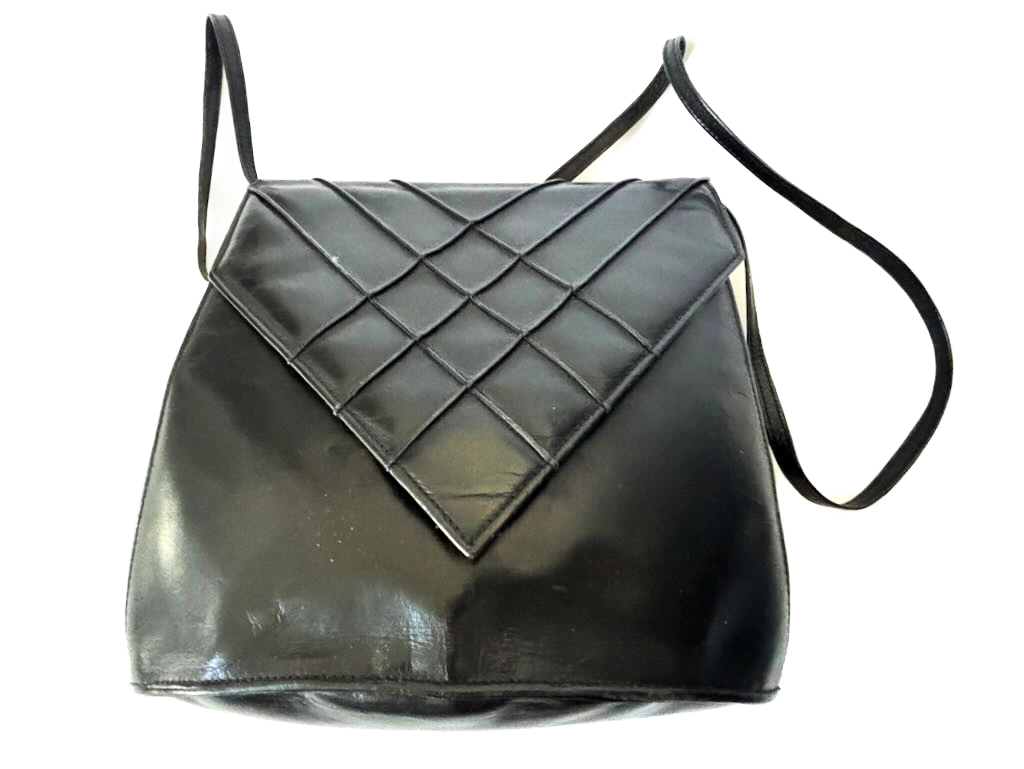
Jourdan handbags demonstrate considerable variety. Some emphasize smooth leather and restrained geometry, while others use folds, pleats, unusual closures or more sculptural construction. Rather than treating the handbag merely as an accessory carrying a logo, many designs make the leather construction itself the decorative element. This became particularly apparent in surviving pieces from the 1970s and 1980s, when fashion accessories increasingly explored architectural forms.
Charles Jourdan in the 1980s
The 1980s brought another important period for the company. Charles Jourdan had already established international recognition, and the brand’s shoes and accessories occupied a luxury market that was becoming increasingly global.
An important relationship developed with Karl Lagerfeld, who entrusted Charles Jourdan with footwear production during the decade. The association again demonstrates the technical reputation of the Jourdan manufacturing operation.
The company’s own designs responded to the decade’s taste for stronger silhouettes, sophisticated leather goods and more assertive fashion accessories. Yet many Jourdan pieces remained relatively restrained compared with the conspicuous branding that would increasingly characterize parts of the luxury market. For collectors today, this period can be particularly interesting because it combines the company’s established shoemaking heritage with a broader fashion-house identity.
Made in France — and Beyond France
A Charles Jourdan object does not necessarily carry a French country-of-origin mark. Like many international fashion companies, Jourdan used manufacturing resources outside France for certain product categories and periods. A handbag purchased directly from the company’s Paris boutique during the 1980s, for example, may legitimately carry a Made in Spain label.
Country of manufacture therefore needs to be considered alongside period, product category, labeling, construction and purchase history rather than used alone to judge a vintage Jourdan object. This becomes particularly important when evaluating vintage luxury goods because modern consumers sometimes assume that a French fashion name must always have manufactured every product in France. Historical luxury production was often considerably more complex.
Changing Fashion and a Changing Industry
The later decades of the 20th century brought substantial changes to fashion manufacturing. International competition increased, production moved across borders, department-store retail changed, and large luxury groups increasingly dominated the global market. Charles Jourdan continued to evolve within this changing environment.
Additional men’s and women’s lines appeared during the 1990s, while collaborations involved designers including Michel Perry and Claude Montana. These collaborations show that Charles Jourdan continued to view outside creative talent as part of its identity. The company had long worked at the intersection of specialized manufacturing and fashion design, whether producing shoes for Dior and Cardin or collaborating with later designers.
That pattern continued into the 2000s. Patrick Cox became involved in 2004, followed by Josephus Thimister in 2005. The relationship between creative direction and specialist production that had characterized Jourdan for decades remained visible, but design talent could not by itself solve the structural difficulties affecting the business.
The Decline of Charles Jourdan Manufacturing
The French luxury footwear industry faced profound economic pressure, and Romans-sur-Isère suffered particularly heavily as manufacturing declined or moved elsewhere. By the early 2000s, Charles Jourdan faced serious financial problems involving ownership, licensing arrangements, debt and corporate restructuring.
In 2005, Charles Jourdan France entered court-supervised restructuring while hundreds of jobs were at risk. Roland Jourdan died that same year, marking the loss of the family figure who had helped transform the company into an international name.
Attempts to rescue the business followed, but the problems continued. By 2007, the workforce had fallen dramatically from earlier levels, and the company again entered judicial restructuring. In December 2007, the commercial court in Romans ordered the liquidation of the French shoe manufacturer after attempts to find a viable buyer failed.
The collapse had meaning beyond one fashion company. Romans had built an international reputation around luxury footwear, and the decline of houses such as Charles Jourdan and Stéphane Kélian represented the disappearance of manufacturing jobs, specialized knowledge and an industrial culture developed across generations. But liquidation of the historic company would not prove to be the final chapter of the Charles Jourdan story.
Groupe Royer and the Charles Jourdan Name
French footwear specialist Groupe Royer acquired Charles Jourdan following the collapse of the original manufacturing business. The new ownership represented an important distinction in the history of the house: the vertically integrated Charles Jourdan company built by the Jourdan family, with its factories, specialized workforce and international network of boutiques, belonged to an earlier period, but the name, archive and design heritage survived.
There were also efforts to reconnect Charles Jourdan with its manufacturing roots. Limited footwear production returned to the Romans area, involving craftspeople who had worked within the region’s historic shoe industry. The scale could not approach that of the former Jourdan factories, but the effort demonstrated that the value of Charles Jourdan rested not only in a trademark but also in a tradition of footwear design and specialized knowledge associated with Romans-sur-Isère.
Groupe Royer subsequently made several attempts to return Charles Jourdan to contemporary fashion. These efforts would eventually shift the story away from simply preserving a historic name and toward actively reinterpreting its design heritage.
Charles Jourdan Returns to Paris
One of those efforts became particularly visible in 2017, when Charles Jourdan returned to Paris with a boutique at Place de la Madeleine. The reopening demonstrated an ambition to present Charles Jourdan as a contemporary fashion name rather than simply a historic label surviving through licensing and vintage objects.
The revival did not establish a permanent return to the extensive retail network the company had once operated, and the brand subsequently entered another quieter period. Charles Jourdan had not disappeared, however, and a more ambitious creative relaunch would follow.
Christelle Kocher and the Charles Jourdan Revival
In 2022, Charles Jourdan entered a new phase with the appointment of French designer Christelle Kocher, founder of Koché, as artistic director. The challenge was not simply to reproduce archival Jourdan shoes. A successful revival had to acknowledge the extraordinary design history of the house while creating footwear that belonged to contemporary fashion.
Kocher returned to characteristics that had made Charles Jourdan distinctive: sculptural heels, strong geometry, unexpected materials and color. New designs included architectural heel constructions and modern interpretations of the experimental spirit associated with Jourdan during the 1960s and 1970s.
The revival also brought the house back into prominent Paris retail through presentations at Le Bon Marché. The significance went beyond the appearance of another collection of shoes. For years, Charles Jourdan had increasingly been encountered through museum collections, vintage fashion and memories of Guy Bourdin’s photographs; the Kocher relaunch placed newly designed Charles Jourdan footwear before contemporary customers again.
Looking Back Without Reproducing the Past
Heritage brands face a particular difficulty. Their archives provide enormous creative resources, but simply reproducing famous designs can reduce a living brand to nostalgia. Charles Jourdan presents an especially interesting challenge because the house never depended upon one immutable design.
Its identity developed through experimentation with square toes, unusual heels, saturated colors, contrasting materials, geometric forms and unexpected proportions that changed repeatedly across decades. Guy Bourdin’s advertising reinforced precisely this sense of unpredictability.
A contemporary Charles Jourdan therefore does not necessarily need to look like a Charles Jourdan shoe from 1965 or 1975. Instead, it can recover something of the willingness to experiment that made those shoes interesting in the first place. That approach helps explain why the archive continues to attract contemporary designers.
Willy Chavarria and Charles Jourdan
The latest chapter has brought another creative name into the Charles Jourdan story. Designer Willy Chavarria turned to the Charles Jourdan archive for a collaboration connected with his Spring/Summer 2026 collection. Rather than treating Charles Jourdan simply as a historic logo, the project returned to surviving designs and archival material for inspiration.
That approach is particularly appropriate for Jourdan. The company’s history contains an unusually rich vocabulary of heel shapes, silhouettes, colors, materials and provocative imagery. It also offers the legacy of the Guy Bourdin years, when footwear, photography, sexuality and surrealism became inseparable parts of the brand’s visual identity.
The collaboration reinterprets that heritage through contemporary design rather than simply reproducing vintage shoes. More than a century after Charles Jourdan began making footwear in Romans-sur-Isère, designers are therefore still finding new possibilities within the ideas developed by the house.
Preserving Charles Jourdan in Romans-sur-Isère
While contemporary designers reinterpret the brand, Romans-sur-Isère has not forgotten its Charles Jourdan heritage. The city’s Musée de la Chaussure preserves an important collection of Jourdan footwear alongside objects representing the much longer history of shoe design. Its holdings allow researchers to follow changes in Charles Jourdan design across decades through documented examples rather than relying only on advertisements or surviving commercial pieces.
The city itself continues to identify closely with shoemaking. Monumental interpretations of significant shoes displayed around Romans pay tribute to designers and manufacturers associated with its history, including Charles Jourdan.
This preservation matters because shoes are particularly vulnerable historical objects. They were created to be worn, their materials deteriorate, styles change rapidly, and everyday examples are frequently discarded. Museum collections therefore provide essential evidence of how footwear design developed.
Collecting Vintage Charles Jourdan
Vintage Charles Jourdan deserves to be evaluated as design rather than simply as a recognizable designer label. Construction provides an excellent starting point: look at the relationship between the sole, heel and upper; the quality and treatment of the leather; the lining; stitching; closures and hardware. Jourdan frequently used these functional elements as part of the visual composition.
Period markings can also provide information, but they should be interpreted carefully. The company existed across many decades, produced multiple lines, manufactured for other designers and used production outside France for some products. A single label style or country mark cannot explain the entire history of an object.
Documented purchase history becomes especially valuable when it survives. An object purchased directly from a Charles Jourdan boutique, for example, may carry information that cannot be reconstructed from a model number decades later. Most importantly, collectors should resist the temptation to force every Jourdan object into one stylistic category because the company operated for too long and changed too often for that approach to work.
Why Charles Jourdan Still Matters
Charles Jourdan does not always receive the immediate recognition today given to the largest surviving luxury houses. Yet its influence extends through some of the central developments of 20th-century fashion. The company helped transform a regional French shoemaking tradition into an international luxury business, its workshops manufactured footwear for major couturiers, its designers explored color, geometry, materials and changing heel forms, and its advertising with Guy Bourdin altered expectations of what a shoe advertisement could be.
Jourdan also demonstrates something easily forgotten in an era dominated by global luxury conglomerates: important fashion innovation did not always originate inside enormous diversified houses. A specialist shoe manufacturer in Romans-sur-Isère could influence international fashion.
There is another way to understand the house’s importance. A shoe exists at the intersection of fashion and industrial design. It must respond to the anatomy of the foot, withstand movement and weight, incorporate several materials and components, and still communicate an aesthetic idea.
Jourdan’s strongest work makes those constraints visible rather than hiding them. A heel can become a geometric statement, a strap can determine the composition, patent leather can contrast with matte leather, and a square toe can change the visual relationship between a shoe and the clothing above it. The same thinking appears in some Jourdan handbags, where folds, seams, openings and closures become part of the design rather than merely serving construction. That approach helps explain why the best vintage Charles Jourdan pieces can still look remarkably modern.
The Continuing Charles Jourdan Story
Charles Jourdan’s history is not simply the rise and fall of a French shoe company. It is a story about Romans-sur-Isère and its extraordinary shoemaking culture; about craftsmanship becoming industry; about specialist manufacturers working with couture designers; about Paris becoming the stage for an international brand; about color and geometry transforming footwear; and about Guy Bourdin transforming advertising into visual art.
It is also a story about the fragility of manufacturing traditions. The skills that allowed a company such as Jourdan to flourish depended upon communities of specialized craftspeople and suppliers. Once those networks disappear, rebuilding them becomes extraordinarily difficult. The liquidation of the original manufacturing company therefore represents a genuine historical break: the Charles Jourdan of today is not the same industrial organization created by the Jourdan family in Romans.
But the history did not end there. Groupe Royer preserved and subsequently revived the Charles Jourdan name, Christelle Kocher approached its archive as the foundation for contemporary footwear, and Willy Chavarria has returned to that heritage again. Meanwhile, museums preserve documented examples, collectors preserve vintage shoes and accessories, and Guy Bourdin’s extraordinary photographs continue to introduce new audiences to the visual world Charles Jourdan helped create.
A pair of shoes, a handbag or another Charles Jourdan accessory can therefore preserve more than a designer’s name. It can preserve evidence of the materials, manufacturing skills, aesthetics and consumer culture of a particular period. The appearance of new Charles Jourdan designs adds another dimension to that legacy, connecting the historical archive to contemporary fashion.
More than a century after a shoemaker began building his business in Romans-sur-Isère, Charles Jourdan remains a name through which past and contemporary fashion continue to meet.
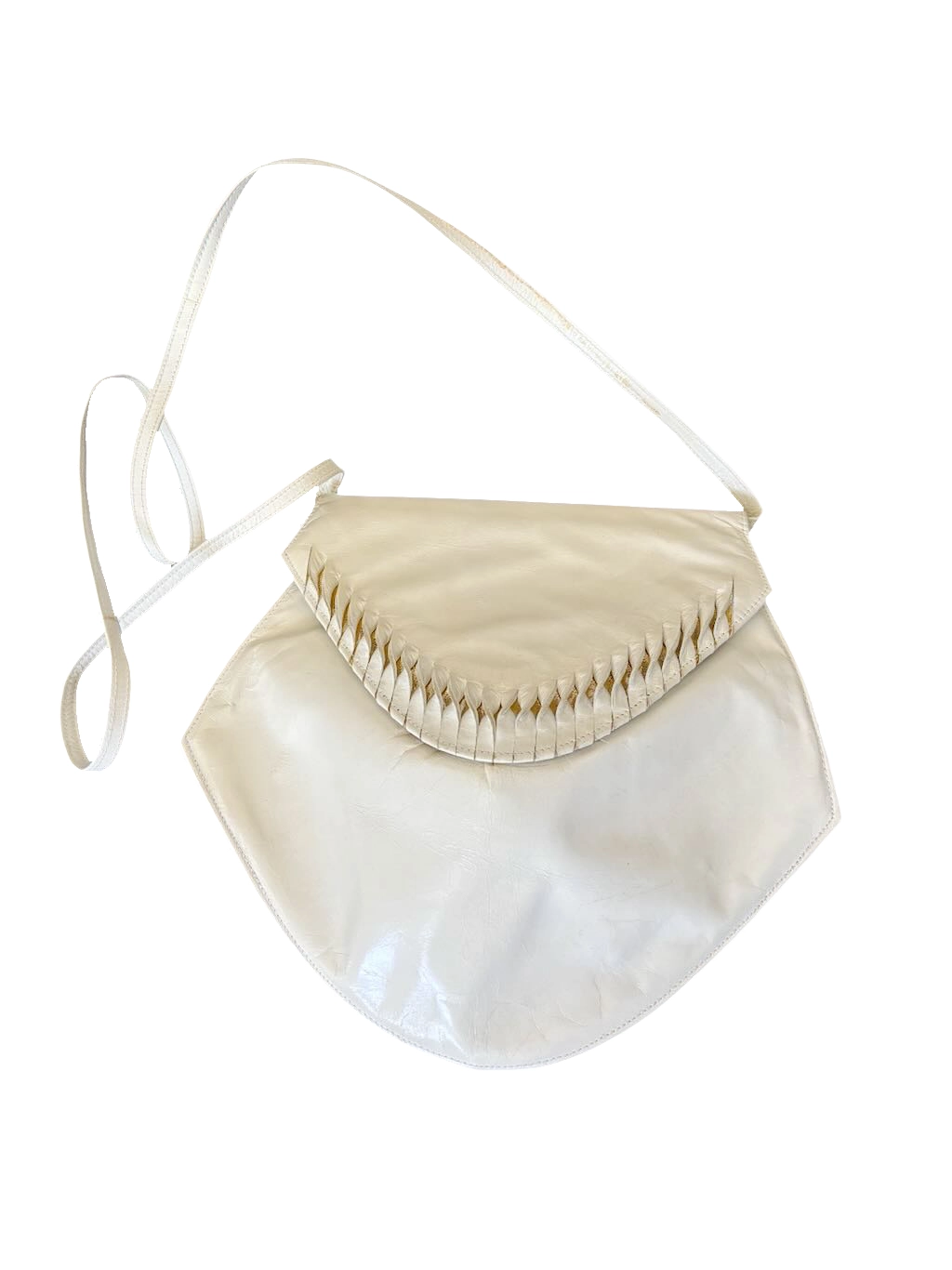
This sculptural white leather Charles Jourdan shoulder bag reflects the houses distinctive approach to leather construction and geometric form The softly shaped body is complemented by an unusual flap edged with intricate folded leatherwork creating a rhythmic three dimensional detail that turns the construction itself into decoration
Further Research
The Musée de la Chaussure in Romans-sur-Isère provides essential context for both Charles Jourdan and the city’s historic shoemaking industry. Its collections preserve numerous documented Jourdan designs spanning several decades.
The French Ministry of Culture’s POP/Joconde database provides detailed museum records for Charles Jourdan footwear, including examples manufactured for Christian Dior and Pierre Cardin and later collaborations with other designers.
The Metropolitan Museum of Art preserves Charles Jourdan footwear in the Costume Institute collection, including important examples from the 1960s that demonstrate the company’s use of color, geometry and unconventional materials.
Contemporary reporting by Le Monde documents the financial difficulties and restructuring that affected Charles Jourdan and the wider luxury shoe industry in Romans during the 2000s.
For the Charles Jourdan–Guy Bourdin relationship, The New Yorker provides particularly valuable historical reporting, including Roland Jourdan’s recollections of how the collaboration began.