
Description
Wedgwood Egyptian Collection Black Basalt Gilt Crocodile Lidded Box, Sobek Motif, England, 1978
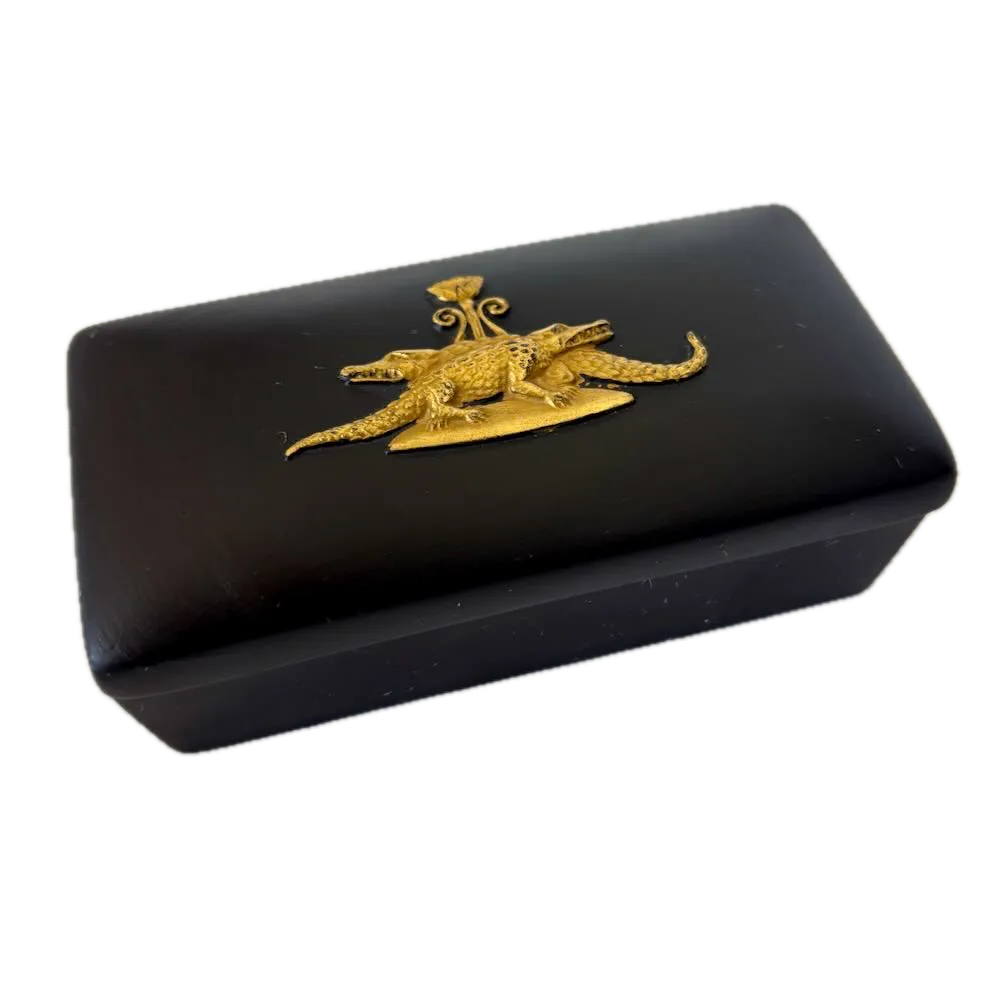
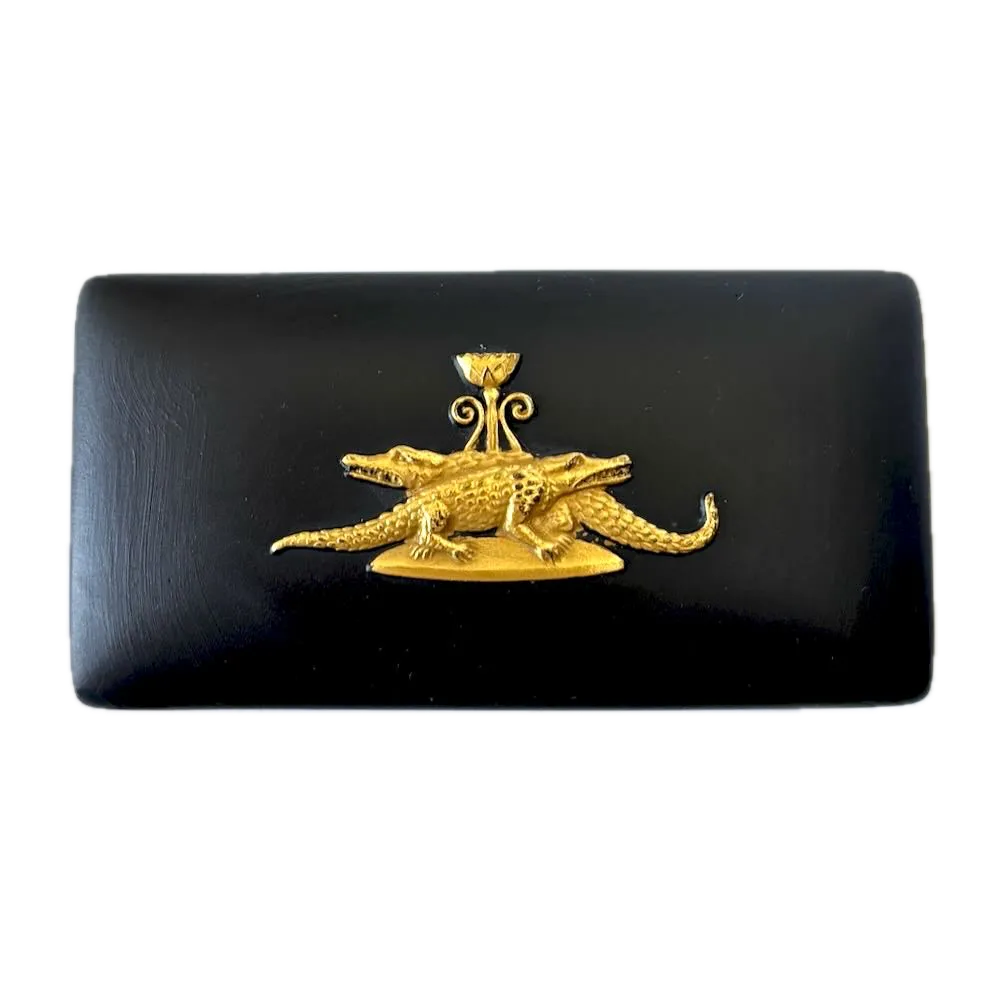
This is a Wedgwood Egyptian Collection lidded box in black basalt with applied gilt decoration, Sobek, produced in England in 1978. Compact in scale but deliberate in design, the piece shifts from simple surface decoration into a more functional object—one that holds and contains, while still carrying the symbolic language of the collection.
The matte black surface is characteristic of Wedgwood’s basalt body, a dense stoneware first developed in the 18th century and later reintroduced in collections such as the Egyptian series for its ability to absorb light and emphasize form. The gilt Sobek decoration sits sharply against this ground, not as ornament alone but as a focal point. Within the Egyptian Collection, this contrast defines the material approach—gilt is reserved for basalt pieces, while terracotta relief appears on jasperware. This relationship between material and design is explored further in our article on the Wedgwood Egyptian Collection.
A Symbol Drawn from the Nile
The lid centers on a crocodile rendered in low relief, paired with a stylized lotus element rising above. The image refers directly to Sobek, the crocodile deity associated with the Nile’s power, fertility, and control over unpredictable forces.
In Egyptian thought, Sobek carried a dual presence. He embodied both protection and danger, reflecting the nature of the river itself—essential for life, yet capable of destruction. Unlike more passive symbols, the crocodile introduces tension into the composition. It is not decorative in a neutral sense; it asserts presence.
Here, the form is controlled and symmetrical, almost emblematic. The body stretches outward while remaining anchored to a central base, giving the impression of contained strength rather than movement. The addition of the lotus reinforces the association with regeneration and continuity, placing the motif within a broader symbolic framework.
Form and Function
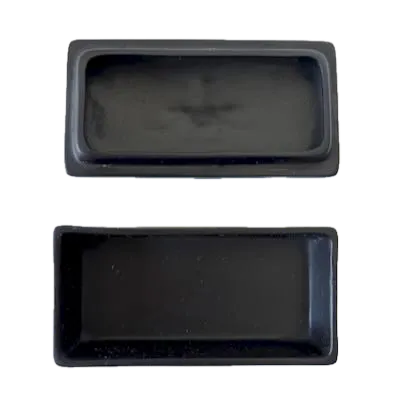
Unlike the plate, which presents the motif in isolation, this piece integrates it into a functional object. The rectangular form, softened at the edges, creates a contained volume that contrasts with the openness of a dish. The lid sits cleanly within the base, and the decoration becomes something revealed and handled rather than simply viewed.
This shift from display to use gives the piece a different presence. It reads as both a small container and a sculptural object, bridging decorative and functional design in a way that defines much of Wedgwood’s work from this period.
The Wedgwood Egyptian Collection
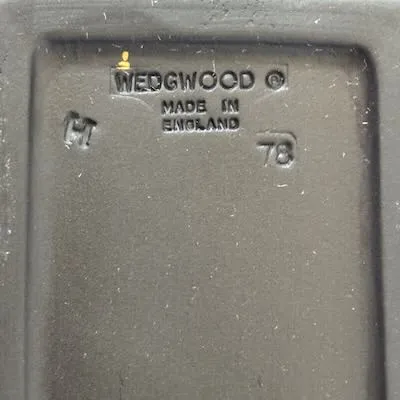
Produced in 1978, as indicated by the impressed date mark on the base, this box forms part of Wedgwood’s Egyptian Collection. The series emerged during a renewed cultural focus on ancient Egypt, influenced by the international exhibitions of Tutankhamun’s treasures.
Wedgwood translated Egyptian imagery into a controlled ceramic language, relying on contrast, proportion, and simplified forms rather than literal reproduction. In basalt pieces such as this, the emphasis falls on restraint—minimal color, strong silhouette, and symbolic clarity. The collection is documented within the original Wedgwood Egyptian Collection brochure (1978), which outlines the materials, design themes, and structure of the series.
Condition and Presence
The box is in very good condition. The basalt surface remains even with a consistent matte finish, and the gilt decoration is well preserved. The lid fits properly within the base, and no visible chips or damage are observed.
At this size, the piece carries a quiet presence. It works easily as a standalone object or alongside other elements from the Egyptian Collection, where repetition of motif and material builds a stronger visual narrative.